
Executive Overview
In the fast-paced, highly metric-driven world of modern children’s and young adult publishing, a clear-cut trajectory is often viewed as the gold standard. Authors typically establish themselves within a specific demographic—such as middle grade or young adult (YA)—and systematically build a brand tailored to that niche. Yet, the publishing journey of acclaimed author Megan E. Freeman shatters this conventional mold. As she prepares for the launch of her third young adult novel, The Secret to Belonging, industry observers and eager fans frequently ask a predictable question: Why make the strategic pivot from writing middle-grade fiction to crafting stories for young adults?
The inquiry makes logical sense when examining her bibliography at face value. However, behind the scenes, Freeman’s transition has been anything but linear. It is a nuanced narrative defined by decades of patient poetic development, strategic pivots, unexpected pandemic-era milestones, and a persistent refusal to be boxed into a single demographic category.
This deep dive explores Freeman’s remarkable evolution from a private poet and career educator into a New York Times bestselling author. By examining her unique publishing timeline, the organic growth of her ALONE universe, and her philosophy on creative resilience, this report uncovers how an author can successfully bridge multiple age categories while maintaining a cohesive, deeply resonant literary voice.
Read Also
Detailed Chronology: From the Classroom to the Bestseller List
The Decades-Long Apprenticeship in Poetry
Long before her name appeared on bestseller lists or book spines in middle school libraries across the country, Freeman was honing her craft quietly. For decades, she wrote poetry strictly for herself, maintaining a private relationship with her art while building a demanding career as a classroom educator.
The turning point arrived when her colleagues at the school where she taught demystified the submission process. Encouraged by this insider guidance, Freeman began testing the waters, successfully placing her poems in various literary journals and anthologies. She even published a chapbook with a small, independent poetry press. Yet, despite her growing success in short-form verse, Freeman harbored a larger ambition: she wanted to write a novel. She continuously experimented with both long- and short-form fiction, laying the foundational storytelling skills that would later inform her verse novels.
The Genesis of ALONE and a Career Reborn
Freeman’s breakout novel-in-verse, ALONE, underwent a rigorous evolutionary process before finding its permanent home. Originally drafted as a middle-grade project, she initially revised it as a young adult manuscript and submitted it to literary agents under that classification. However, after careful evaluation, Freeman and her agent mutually agreed that the emotional stakes and narrative voice aligned more naturally with a younger readership.
Another round of revision followed, and the book was pitched to publishers as "upper middle grade." The timing of the book’s acquisition coincided with a massive personal milestone: Freeman was just one month away from retirement after decades in education. Entering her early 50s, she watched her long, fulfilling career in education come to a close precisely as her professional writing career began.
Navigating Rejection and Finding the Right "Yes"
Adhering to the classic publishing adage that the best antidote to book-release anxiety is writing the next manuscript, Freeman remained remarkably productive. While ALONE was out on submission, she was already drafting a young adult manuscript. Once ALONE required final edits, she pivoted to a new middle-grade project, offering it to her publisher as her contractual option book.
Although she loved the story, it featured a unique setting, was written in traditional prose, and bore no thematic resemblance to ALONE. When the publisher requested editorial changes that Freeman felt compromised the integrity of the work, both author and publisher amicably parted ways on that specific project. Undeterred, she wrote another middle-grade novel featuring even younger characters, but market timing proved unfavorable once again.
Reflecting on these hurdles, Freeman and her agent maintained a philosophical outlook: securing a traditional book deal requires alignment—it takes the right project, at the right time, in the right place, for the right audience. Embracing this mindset, Freeman embarked on her fifth manuscript, a young adult story that would eventually evolve into The Secret to Belonging.
Supporting Context & Metrics: The Phenomenal Rise of ALONE
While Freeman navigated the standard trials of manuscript development, ALONE was quietly achieving extraordinary milestones in the marketplace. Released during the height of the COVID-19 pandemic in 2020, the novel explored heavy, universally resonant themes: profound loneliness, isolation, and survival.
The verse format proved remarkably accessible, captivating both enthusiastic readers and those who typically resisted long-form reading. School librarians and independent booksellers championed the novel, creating a powerful grassroots movement. Over a three-year span, ALONE earned spots on more than two dozen state reading lists and accumulated numerous prestigious literary awards and accolades.
The 36-Month Milestone
In the publishing industry, mid-list titles frequently experience a rapid shelf-life, fading from public consciousness months after publication. However, three years after its initial release, ALONE achieved the nearly impossible: it hit the New York Times Bestseller List.
For industry outsiders, the magnitude of this achievement requires context. As Freeman jokingly noted when explaining the milestone to her spouse, books categorized as middle grade rarely surge onto the New York Times list 36 months post-publication. This unprecedented trajectory stands as a testament to the enduring vitality of the school and library market, transforming Freeman into a bestselling author on the strength of a single title.
Official Statements & Creative Evolution: Expanding the Universe
The success of ALONE was not merely financial or critical; it fostered an ongoing dialogue with Freeman’s primary readership. During school author visits and conference presentations spanning three years, students consistently asked the same burning questions:
- What happened to the people who evacuated when the main character was left behind?
- What were the specific details of the "imminent threat" that triggered the mass evacuation?
These persistent inquiries revealed to Freeman that ALONE was not the isolated, stand-alone narrative she had originally envisioned. Recognizing an appetite for a broader narrative landscape, she set out to satisfy her readers’ curiosity.
Crafting Companion Novels: AWAY and AFAR
Rather than writing a traditional chronological sequel, Freeman penned AWAY, a multi-format, multi-point-of-view novel sold directly on proposal. Designed as a companion book rather than a sequel, AWAY unfolded simultaneously with the events of ALONE, allowing readers to experience the narrative universe in either order or independently.
The publishing timing aligned brilliantly. The month before AWAY hit shelves, ALONE re-entered the New York Times bestseller list. When AWAY subsequently debuted at number two on the list, Freeman’s reputation as a preeminent middle-grade author was firmly cemented.
Simultaneously, Freeman continued to honor her work in the young adult category, finalizing The Secret to Belonging. Furthermore, looking ahead to the future, a third book in the ALONE ecosystem—appropriately titled AFAR—was slated for publication, featuring a dual-perspective structure utilizing both verse and prose, with a title selected collaboratively by young readers themselves.
Future Outlook: Breaking Boundaries and Embracing Uncertainty
As The Secret to Belonging enters the literary marketplace, industry watchers may perceive a definitive pivot from middle-grade literature to young adult fiction. However, as Freeman’s historical timeline demonstrates, this categorization is largely an illusion; she has written across both age brackets from the very beginning of her fiction career.
Moreover, the perseverance that defined her early years has yielded unexpected dividends. Several of the manuscripts that languished during her early, unpublished years have recently found homes with publishing houses and are slated for upcoming releases.
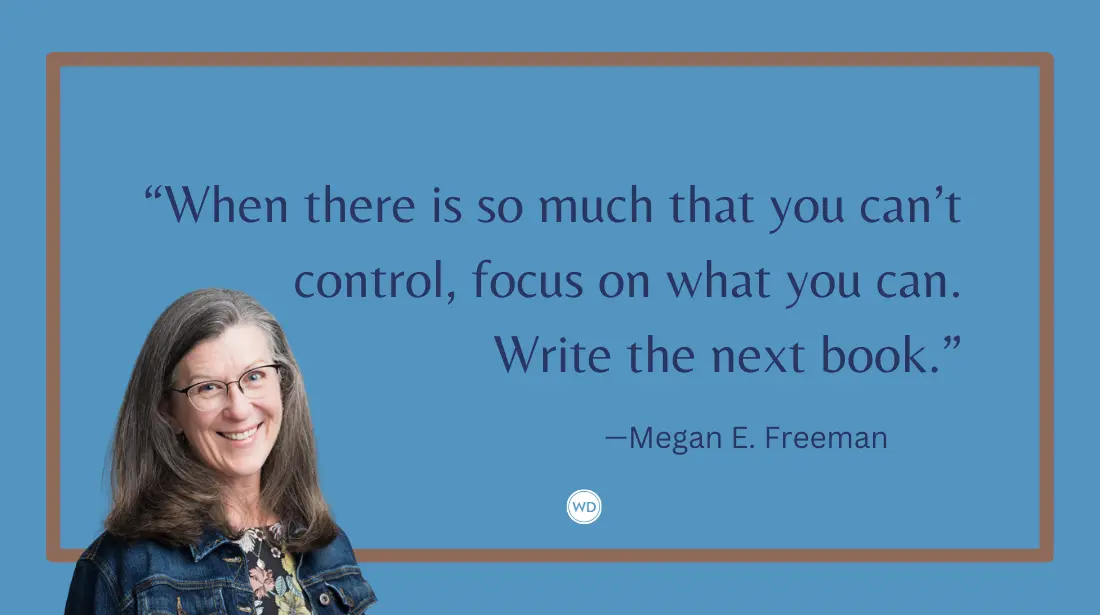
Freeman’s trajectory offers a masterclass for emerging and established writers alike. In an industry defined by shifting trends, algorithmic uncertainty, and elements far beyond an author’s control, Freeman’s ultimate takeaway is remarkably grounding: Focus exclusively on what you can control. Write the next book.
By pushing the boundaries of her creative curiosity—seamlessly blending poetry and prose, middle grade and young adult—Megan E. Freeman proves that authentic storytelling transcends strict demographic labels, finding its rightful audience when the work is driven by passion rather than formula.


Comments
Facebook App ID not configured. Please add it in the Customizer.