
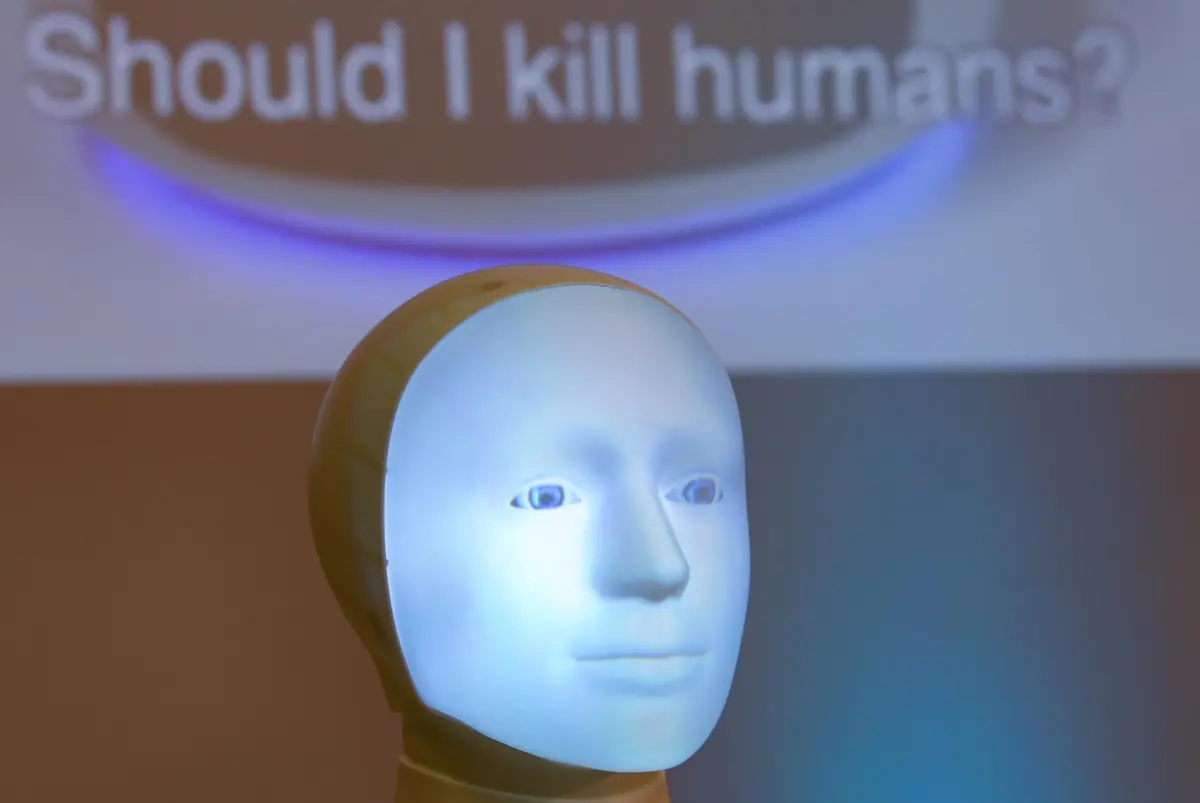
In an era defined by profound societal anxiety over the rapid proliferation of artificial intelligence, public sentiment remains deeply skeptical. According to a recent NBC News/Decision Desk poll, a striking 70 percent of American adults report feeling more worried than excited about the technology. Across nearly every sector of modern life—from creative industries to white-collar employment and national security—AI is viewed with a heavy cloud of apprehension.
Yet, nestled within this landscape of widespread distrust lies a singular, remarkably resilient exception: the realms of scientific research and medicine.
While everyday citizens and industry watchdogs raise red flags regarding algorithmic bias, data privacy, and workforce disruption, the medical community views artificial intelligence through a lens of profound optimism. This sentiment is not merely theoretical; it is actively reshaping clinical workflows, redefining administrative efficiency, and unlocking unprecedented pathways in pharmaceutical research. A watershed moment arrived in 2024, when the Nobel Prize in Chemistry was awarded to researchers who deployed an AI model to solve one of biology’s greatest puzzles: predicting complex protein structures.
Read Also
To explore this dichotomy, Dr. Dhruv Khullar—a practicing physician at Weill Cornell Medicine and a perceptive commentator for The New Yorker—recently joined Sean Rameswaram, co-host of the podcast Today, Explained. Their conversation delved into the transformative power of AI in healthcare, its tangible impacts on drug discovery, the inherent limitations of machine learning, and the delicate balance between embracing technological innovation and maintaining human oversight. This report synthesizes their insights, examining how AI is quietly revolutionizing medicine while navigating the treacherous waters of technological risk.
Detailed Chronology: The Accidental Integration of AI in Healthcare
The integration of artificial intelligence into Western healthcare systems has not followed the traditional, decades-long trajectory of medical device approval. Instead, it has occurred at a breakneck, almost organic pace.
Phase One: Administrative Relief and the Return of the Human Touch
Historically, the digitization of medicine—specifically the widespread adoption of Electronic Health Records (EHRs)—paradoxically drove clinicians further away from their patients. Physicians spent hours hunched over computer screens, furiously typing notes and clicking through drop-down menus, effectively turning medical consultations into data-entry exercises.
The first major wave of AI integration bypassed complex diagnostics entirely, targeting the administrative burden. Modern medical practices have rapidly adopted AI-powered ambient scribes. These tools passively listen to patient-doctor interactions, intelligently parsing clinical dialogue and generating structured medical notes in real-time.
For physicians, the impact has been revolutionary. Rather than staring at a terminal, doctors can now look patients directly in the eye, reestablishing a foundational element of the healing arts. Patients have responded with overwhelming approval, marking one of the rare instances where an enterprise AI tool has experienced frictionless consumer and professional adoption.
Phase Two: Streamlining Patient Navigation and Clinical Support
Beyond the exam room, artificial intelligence has begun serving as a sophisticated concierge for patient navigation. For individuals diagnosed with complex, chronic, or terrifying illnesses—such as oncology patients or those managing advanced heart failure—the modern healthcare ecosystem is a labyrinth of appointments, scans, dietary restrictions, and pharmaceutical regimens. AI-driven navigation systems are stepping in to bridge these gaps, helping patients orchestrate their care with unprecedented seamlessness.
Concurrently, clinicians are utilizing AI as a dynamic, real-time second opinion. Rather than flipping through dense medical textbooks or waiting days for formal departmental consults, physicians leverage clinical decision-support systems during rounds. These models can rapidly cross-reference a patient’s unique presentation with global medical literature, recent clinical trials, and diagnostic parameters, prompting doctors to consider alternative differential diagnoses or specialized tests they might otherwise have overlooked.
Phase Three: The New Frontier of Drug Discovery
While clinical assistants and administrative scribes represent the operational present of medical AI, pharmaceutical research represents its transformative future. For decades, drug discovery has been notoriously slow, staggeringly expensive, and defined by a staggering attrition rate. AI is systematically dismantling these historical bottlenecks.
Supporting Context & Metrics: The Mathematics of Medical AI
To understand why healthcare has embraced artificial intelligence despite broader societal skepticism, one must examine the baseline operational failures of the traditional medical system. As Dr. Khullar highlights, the American healthcare apparatus is widely perceived as unaffordable, inaccessible, inconvenient, and marked by uneven quality. It is a system ripe for structural disruption.
The optimism surrounding AI is grounded in the sheer scale of biological complexity that human researchers have historically struggled to map. Consider the quantitative realities of human biology:
- The Scale of the Human Genome: Human biology involves tens of thousands of active genes.
- Proteomic Complexity: Researchers must account for hundreds of thousands of distinct proteins.
- Cellular Architecture: The human body is composed of trillions of individual cells.
Historically, identifying a disease target within this vast biological matrix required years of painstaking, often ambiguous laboratory research. A scientist might spend a decade studying a specific protein pathway, only to discover that while the protein is disrupted, it is not the actual causative agent of the disease.
Artificial intelligence short-circuits this timeline. By ingesting petabytes of multi-omic data, machine learning models can rapidly analyze, weigh, and rank potential disease targets, generating a concise shortlist of high-probability targets in a fraction of the time.
Once a target is established, the next challenge is generating a molecule capable of modulating that target. The theoretical universe of drug-like molecules is virtually infinite. AI algorithms can scour vast chemical spaces, predict molecular interactions, and even help synthesize novel compounds designed to fit precisely into a molecular pocket.
Finally, AI excels in lead optimization. Once a promising molecular candidate is identified, the model can predict its pharmacokinetic properties—forecasting whether the molecule can be safely absorbed by the human body, whether it will successfully reach the target tissue, and whether it strikes the "Goldilocks" balance of safety and efficacy required for clinical viability.
Official Statements and Expert Perspectives
Despite the euphoric projections surrounding pharmaceutical AI, leading voices within the medical and scientific communities maintain a rigorous, pragmatic skepticism. The conversation between Dr. Dhruv Khullar and Sean Rameswaram illuminates the crucial boundaries between computational promise and biological reality.
The Myth of Full Automation
A prevailing fear among the general public is that artificial intelligence will soon render human professionals obsolete, leading to fully automated hospitals and self-directed research facilities. Dr. Khullar explicitly rejects this narrative:
"This is why I think the narrative around AI just replacing scientists or doctors or other workers is incorrect. Because you still need a lot of judgment. You need to be able to adjudicate the output of these models to figure out what is most promising and what is potentially dangerous."
The Reality of "Wet Labs" and Real-World Physics
AI models operate in digital realms, unconstrained by the messy, unpredictable physics of the physical universe. Dr. Khullar emphasizes that computational generation does not equal real-world manufacturability:
"Just because it dreams something up doesn’t mean you can actually make that thing in the real world. Some of the drugs that it proposes might actually be toxic in certain ways that it didn’t predict. And of course, then you have to take this thing into clinical trials. You have to recruit people who are willing to put this medication in their bodies…"
While the initial phase of identifying drug candidates has been radically accelerated, the second half of the drug development pipeline—navigating human biology, clinical trials, and regulatory frameworks—remains an inherently analog, human-driven process.
Preserving Human Agency and Preventing Atrophy
As algorithms become more sophisticated, healthcare providers face a subtle yet profound psychological risk: the erosion of their own cognitive faculties. Dr. Khullar raises a vital philosophical and professional concern:
"As you lean more on these machines, if you’re a doctor, inevitably some of the skills, the critical thinking, the reasoning that we put into coming up with the diagnosis that we honed over the course of years, that can start to atrophy. These are the types of things that we still need to sort through as we’re implementing more and more AI into the healthcare system."
Future Outlook: Navigating the Crossroads of Innovation and Caution
As the global technology sector grapples with calls to slow the development of "frontier models"—the most powerful, resource-intensive, and potentially unpredictable AI systems—policymakers must carefully calibrate their regulatory frameworks.
Dr. Khullar offers a nuanced distinction that should guide future governance. He argues that while society has every right to scrutinize, throttle, or place guardrails around the most dangerous edges of frontier artificial intelligence, applying a blanket moratorium to biotechnology, scientific research, and clinical care delivery would be a catastrophic mistake.
"If we’re talking about slowing the pace of the frontier and the most sophisticated and potentially dangerous models, fine. But if we’re talking about shutting down AI and not using it in biotechnology or not using it in scientific research or not using it in clinical care delivery, that’s where I would push back pretty hard."
Furthermore, healthcare does not require the bleeding-edge, speculative capabilities of tomorrow’s frontier models to achieve massive improvements today. Models that are already one or two generations old are entirely sufficient to revolutionize clinical workflows, streamline hospital administration, and assist in early-stage pharmaceutical research.
Conclusion
The trajectory of AI in medicine offers a rare beacon of pragmatic hope in an otherwise anxious technological landscape. By treating artificial intelligence not as an autonomous replacement for human expertise, but as a tireless, high-capacity assistant, the medical field is charting a path forward. As long as human physicians, scientists, and ethicists maintain their agency, critical judgment, and commitment to patient care, the integration of AI may well cure more than just the inefficiencies of modern healthcare—it may ultimately save countless lives.





Comments
Facebook App ID not configured. Please add it in the Customizer.