
Executive Overview
The landscape of E Ink device customization has undergone a significant paradigm shift with the introduction of Véra, a novel, browser-based jailbreak method tailored for modern Amazon Kindle e-readers. For over a decade, modifying Kindle firmware—colloquially known as "jailbreaking"—was regarded as an arcane, high-friction procedure restricted to legacy hardware running outdated system software. Users were typically required to source specific factory firmware versions, execute complex command-line scripts via a host computer, manage manual USB file transfers, and carefully guard their devices against automatic, over-the-air (OTA) updates that could instantly patch security exploits.
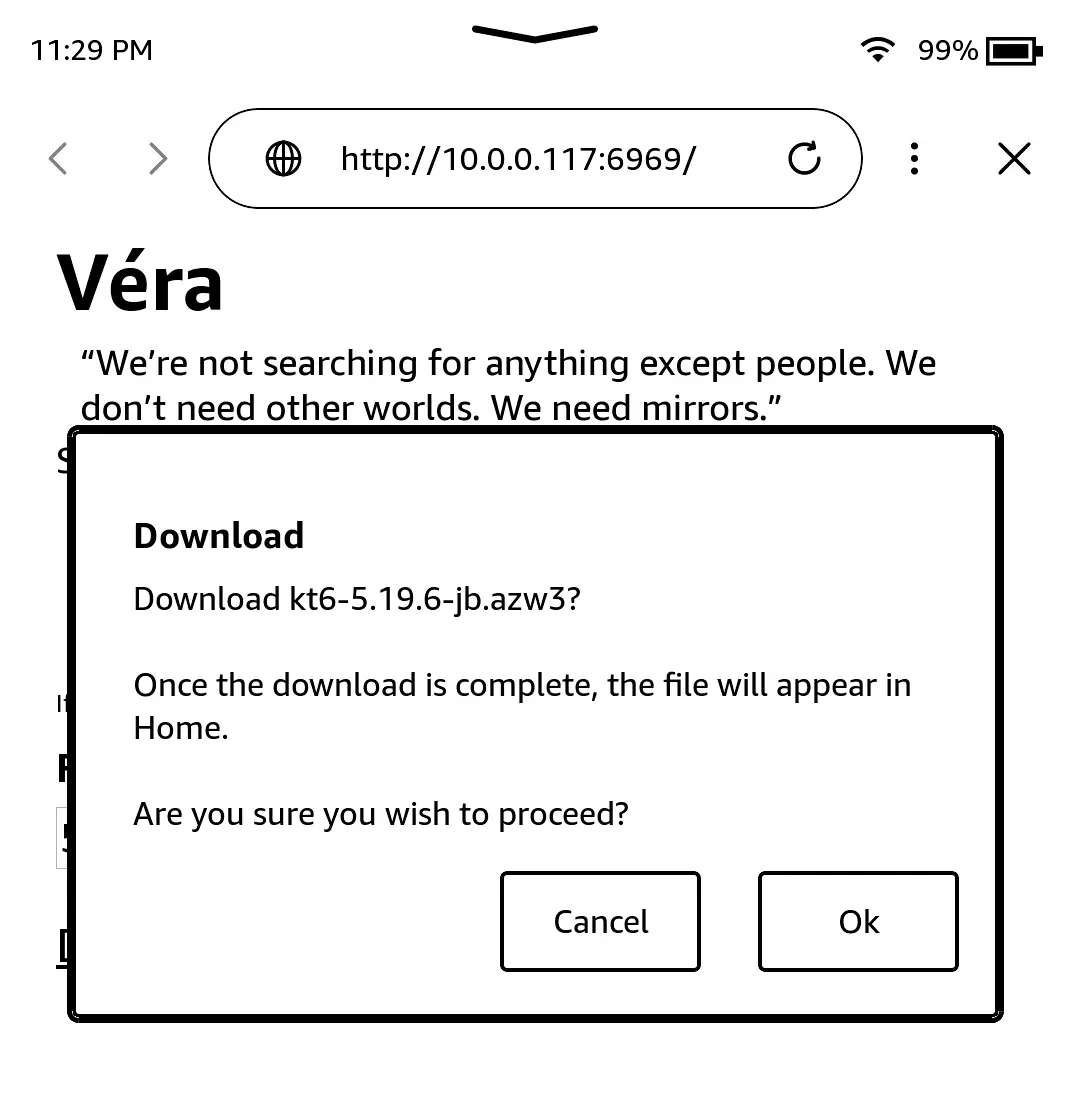
Véra fundamentally disrupts this historical narrative. Operating entirely through the Kindle’s native experimental web browser, the exploit chain allows users to bypass system restrictions on contemporary hardware—including the Kindle Colorsoft, the Kindle Scribe, and an expansive roster of 11th- and 12th-generation Kindle e-readers—running firmware versions ranging from 5.17.1 to 5.19.2. By eliminating the necessity for tethered computer connections and complex terminal commands, Véra lowers the technical barrier to entry, making device modification accessible to a broader demographic of digital readers.
Beyond the immediate mechanics of the exploit, the release of Véra revitalizes discussions surrounding hardware ownership, digital rights management (DRM), and software modularity within the consumer electronics sphere. Historically, tech giants like Amazon have designed tightly walled ecosystems centered around proprietary formats and restrictive interfaces. The deployment of a modern, accessible jailbreak facilitates the integration of powerhouse document viewers such as KOReader, radically expanding the functional capabilities of E Ink hardware. This report provides an exhaustive examination of the Véra jailbreak method, its technical framework, implications for the e-reader community, associated risks, and the future outlook for open-source software integration on dedicated reading devices.
Read Also
Detailed Chronology: The Road to Modern Kindle Customization
To fully appreciate the significance of the Véra exploit, it is crucial to examine the historical trajectory of Kindle modification. Since Amazon introduced its inaugural Kindle device in 2007, the platform has maintained a reputation for software rigidity. While the Android ecosystem fostered a culture of open sideloading and comprehensive system customization, Kindle devices remained locked down behind aggressive firmware updates and cryptographically signed operating systems based on customized Linux distributions.
The Era of Hardware-Tethered Exploits (2010–2020)
During the early years of E-Reader development, jailbreaking relied predominantly on physical entry points and static code execution flaws. Methods such as LanguageBreak or serial-port debugging required specialized hardware interfaces or specific, vulnerable firmware distributions. If a user updated their device past a certain security patch level, the exploit window closed permanently.
Furthermore, these older methods required users to keep their devices strictly offline to prevent forced background updates. This cat-and-mouse game between Amazon’s software engineers and the independent developer community (MobileRead forums being the primary historical hub) created a niche hobbyist environment where modifying a Kindle was viewed as a fragile, irreversible commitment suitable only for advanced programmers.
The Shift Toward Browser-Based Vulnerabilities
As Kindle firmware evolved into more robust iterations of embedded Linux, traditional local file execution vectors became increasingly difficult to exploit without root access. Consequently, independent modders shifted their focus toward browser-based attack surfaces—leveraging WebKit vulnerabilities inherent in the Kindle’s built-in experimental web browser.
While early browser exploits were occasionally conceptualized, they rarely achieved widespread practical deployment due to stability issues and rapid patching by Amazon. The introduction of Véra represents the culmination of years of collaborative reverse-engineering by the Kindle modding community (spearheaded by resources like KindleModding.org). By targeting the attack surface of firmware builds 5.17.1 through 5.19.2, Véra bridges the gap between older, easily modifiable devices and the latest generation of premium hardware.
The Execution Workflow of Véra
Unlike its predecessors, which demanded a multi-step sequence involving computer terminal commands, custom serial cables, or carefully timed factory resets, Véra streamlines the process into a localized web-based configuration:
- Device Readiness: The user ensures their target Kindle (such as an 11th/12th-generation device, Kindle Scribe, or Kindle Colorsoft) is operating on firmware version 5.17.1 up to 5.19.2.
- Network Initialization: The device connects to a local Wi-Fi network capable of accessing the specific local or hosted payload vector required by the exploit.
- Browser Execution: Navigating through the experimental browser to the designated Véra portal initiates the privilege escalation sequence.
- Persistent Hook Installation: The exploit leverages vulnerabilities within the browser engine to write persistent configuration hooks to the device’s file system, granting root-level permissions without requiring a physical PC connection.
Supporting Context & Metrics: Hardware Compatibility and Software Ecosystem
The breadth of Véra’s compatibility sets it apart from historical jailbreaks. While previous exploits were siloed to specific legacy models—such as the Kindle Paperwhite 3 or Kindle Voyage—Véra targets the modern hardware fleet that dominates current market share.

Hardware Compatibility Matrix
- Kindle Scribe: Amazon’s flagship large-screen note-taking and reading device benefits immensely from community software enhancements, unlocking advanced PDF rendering and document management capabilities.
- Kindle Colorsoft: As Amazon’s first venture into color E Ink technology, the Colorsoft represents a significant hardware investment for consumers; Véra enables early adopters to customize their color reading experience beyond factory constraints.
- 11th-Generation Kindles: Spanning standard Paperwhites, Paperwhite Signature Editions, and entry-level models, these devices form the backbone of the modern Kindle ecosystem.
- 12th-Generation Kindles: The newest iterations of Amazon’s hardware lineup are supported, proving that modern security measures implemented by Amazon can still be navigated by dedicated software modders.
The Catalyst: KOReader Integration
The primary driver for users seeking to jailbreak modern Kindles is the integration of KOReader. Stock Kindle software, while optimized for purchasing and reading books within the Amazon ecosystem, notoriously struggles with non-standard document formats, complex academic PDFs, and heavy reference materials.
KOReader is an open-source, feature-rich document viewer specifically engineered for E Ink displays. Its technical specifications include:
- Universal Format Support: Native rendering engines for EPUB, PDF, DjVu, XPS, CBT, CBZ, FB2, PDB, TXT, HTML, RTF, CHM, DOC, MOBI, and ZIP archives.
- Advanced PDF Reflow: Features robust text-reflow algorithms, multi-column document handling, and manual crop tools that render oversized academic papers legible on smaller screens.
- Dictionary and Translation Integration: Extensive support for offline dictionaries, Wikipedia lookups, and translation APIs.
- Cloud Synchronization: Built-in integration with personal storage solutions like Calibre, WebDAV, and Dropbox.
Despite the power of KOReader, the modular nature of the Véra installation ensures that user choice remains uncompromised. The stock Kindle interface, Kindle Store access, and native reading libraries remain completely functional. Users can seamlessly toggle between the native operating system and custom third-party applications, striking a balance between corporate ecosystem convenience and open-source versatility.
Official Perspectives, Risks, and Reversibility
As with any consumer electronics modification, the release of the Véra jailbreak prompts important considerations regarding device stability, warranties, and corporate digital rights management policies. While Amazon has not issued an official press release specifically targeting Véra at the time of writing, historical precedent dictates corporate posture toward unauthorized software modifications.
Warranty Implications and Reversibility
A common deterrent against jailbreaking has always been the fear of permanent device bricking or the forfeiture of manufacturer warranties. However, community documentation provided by groups such as KindleModding outlines clear safety nets for Véra users:
- Non-Destructive Modification: The exploit layers custom capabilities over the existing file system without stripping critical system binaries or core functionality.
- Un-Jailbreaking Protocols: Should a user need to return a device for hardware warranty repair or prepare it for resale on the secondary market, the reversal process is standardized. Users can restore standard OTA update channels, execute a factory reset, and manually flash an official firmware binary to return the device to factory-fresh stock condition.
- Risk Mitigation: As with any root-level exploit, improper execution or unexpected firmware interruptions carry a minor risk of rendering the device temporarily unresponsive (soft-bricking). Users are strongly advised to back up critical local data and strictly follow official community guidelines.
The Debate on Digital Ownership
Independent software modifications highlight a growing consumer movement advocating for the "Right to Repair" and device autonomy. When a consumer purchases a piece of hardware—whether a smartphone, tablet, or E Ink reader—the legal and ethical debate over software lock-in intensifies.
Proponents of jailbreaking argue that hardware owners should possess absolute control over how their devices process media, render files, and utilize internal computing resources. Conversely, manufacturers emphasize that locked ecosystems protect proprietary software, secure digital storefronts, and maintain a streamlined, uniform user experience for mainstream consumers.
Future Outlook: The Next Frontier of E-Reader Modding
The deployment of the Véra jailbreak signals a resilient future for independent E Ink software development. As E Ink technology diversifies into color displays, higher refresh rates, and larger canvas sizes (such as the Kindle Scribe and rival devices from Kobo, Boox, and PocketBook), the demand for adaptable document management software will only increase.
What Lies Ahead for Kindle Modding?
- Firmware Arms Race: Amazon will likely patch the underlying browser vulnerabilities utilized by Véra in future firmware releases (such as builds 5.19.3 and beyond). Consequently, the modding community faces an ongoing challenge to identify new exploit vectors as Amazon hardens its software stack.
- Expanded Feature Sets: Beyond KOReader, community developers are continuously porting additional utilities, custom screen savers, reading statistics trackers, and enhanced font-rendering engines that leverage the raw power of modern Kindle processors.
- Cross-Platform Parity: As open-source reading software continues to mature, the gap in user experience between proprietary ecosystems and open-source alternatives narrows, offering consumers unprecedented freedom in how they consume digital literature.
In conclusion, Véra represents more than a simple software exploit; it is a technical milestone that redefines how users interact with modern E Ink hardware. By democratizing the modification process and removing the technical barriers of the past, Véra ensures that the Kindle platform remains adaptable to the evolving needs of power users, researchers, and digital bibliophiles worldwide.


Comments
Facebook App ID not configured. Please add it in the Customizer.