
Executive Overview
In an era defined by hyper-digitized distractions, algorithmic content consumption, and the commodification of youthful attention, physical bookstores stand as radical spaces of tactile wonder. Recognizing this indispensable cultural ecosystem, the Women’s National Book Association (WNBA) has officially announced the triumphant return of the prestigious WNBA Pannell Award.
Having been placed on an enforced hiatus since 2020 due to the global COVID-19 pandemic and its complex socio-economic aftermath, the award is back with renewed urgency. Established over four decades ago in 1983, the Pannell Award remains the gold standard for recognizing excellence, innovation, and community leadership in children’s bookselling across the United States.
The revived program will once again honor two exceptional U.S. bookstores annually: one in the General Bookstore category and another in the Children’s Specialty Bookstore category. Selected by an expert panel of publishing professionals, winning stores receive a $1,000 cash prize paired with a bespoke, framed piece of original art created by a renowned children’s book illustrator. Penguin Young Readers proudly continues its vital role as the co-sponsor of the award, underscoring a shared corporate and institutional commitment to grassroots literary advocacy.
Read Also
As nominations officially open—running through September 30—industry stakeholders, educators, and literary advocates are viewing the return of the Pannell Award not merely as the resumption of a prize, but as a critical rallying cry for the protection of childhood imagination. This comprehensive report examines the history of the award, the current landscape of children’s literature retail, the mechanics of the revival, and the broader cultural implications of championing independent bookstores in the 21st century.
Detailed Chronology: From Lucile Micheels Pannell to the Post-Pandemic Revival
1983–1999: The Genesis of a Movement
To understand the weight of the WNBA Pannell Award, one must trace its roots back to the visionary educators and booksellers who shaped the American literary landscape in the late 20th century. The award is named in honor of Lucile Micheels Pannell, a legendary figure whose career spanned teaching, librarianship, and bookselling. As a founding member of a regional Women’s National Book Association chapter, Pannell was a tireless champion of putting books into the hands of young people. She understood that a child’s early encounters with literature could fundamentally alter their intellectual and emotional trajectory.
When the WNBA established the Pannell Award in 1983, independent bookstores were facing a transitional period marked by the rise of big-box retail chains. The award was explicitly designed to elevate stores that went above and beyond commercial transactions—those that served as community hubs, hosted innovative author events, partnered with local schools, and created inclusive, welcoming environments where children from all backgrounds could see themselves reflected on the page.
2000–2019: Two Decades of Industry Evolution
Throughout the 2000s and 2010s, the Pannell Award evolved alongside the retail industry. As independent bookstores weathered the existential threat of e-commerce giants and the digital e-reader revolution, children’s bookselling emerged as an unexpected anchor for indie survival. Unlike adult fiction or non-fiction, which readily migrated to digital screens, parents, educators, and children themselves consistently demonstrated a profound preference for physical children’s picture books and middle-grade novels.
During this period, Pannell Award recipients became blueprints for success. Winning stores implemented pioneering community outreach programs, established dedicated teen advisory boards, launched mobile bookstores to reach underserved rural and urban neighborhoods, and forged unbreakable bonds with local school districts. The award became a career-defining accolade for independent booksellers, validating years of grueling entrepreneurial labor and creative community-building.
2020–2023: The Pandemic Hiatus and Its Aftermath
The outbreak of the COVID-19 pandemic in early 2020 dealt a devastating blow to the global retail sector. Independent bookstores, many of which operated on razor-thin margins, were forced to temporarily close their physical doors, pivot overnight to curbside pickup and e-commerce, and navigate a labyrinth of federal, state, and local safety regulations.
In the face of unprecedented operational stress, supply chain bottlenecks, and economic uncertainty, the WNBA made the difficult decision to place the Pannell Award on indefinite pause. For four years, while bookstores fought valiantly for survival—pioneering virtual storytimes, launching crowdfunding campaigns, and adapting to shifting public health landscapes—the absence of the Pannell Award left a noticeable void in the children’s publishing calendar.
2024 and Beyond: The Relaunch
With the retail sector having achieved a semblance of stabilization—and with independent bookstores experiencing a remarkable cultural renaissance driven by a renewed public appreciation for local brick-and-mortar spaces—the WNBA determined that the time was right for the Pannell Award’s return. The resumption of the award signals a formal transition from pandemic-era crisis management to a proactive, forward-looking strategy aimed at fortifying the future of children’s literacy.
Supporting Context & Metrics: The State of Children’s Bookselling
To fully appreciate the significance of the WNBA Pannell Award’s return, one must analyze the complex macroeconomic and cultural forces currently shaping the children’s book market.
The Commodification of Young Minds
As WNBA President Elise Marie Collins astutely observed in her relaunch statement, children’s attention has increasingly become a heavily monetized commodity in the digital age. Today’s youth are targeted by sophisticated, data-driven algorithmic ecosystems designed to maximize screen time through social media feeds, short-form video platforms, and immersive mobile gaming. This relentless corporate capture of cognitive bandwidth has presented unprecedented challenges for educators, parents, and authors striving to cultivate deep reading habits.
Recent studies in developmental psychology and educational research paint a sobering picture. Average daily screen time among school-aged children has surged dramatically over the past decade, correlating with measurable declines in sustained reading endurance, reading comprehension, and empathetic engagement. In this high-stakes environment, physical books and independent bookstores do not merely represent commercial retail outlets; they function as cognitive sanctuaries.
The Independent Bookstore Renaissance
Paradoxically, the surge in digital saturation has been accompanied by a vibrant counter-movement: a resurgence of interest in physical, community-centric retail spaces. According to data from the American Booksellers Association (ABA), the number of independent bookstores in the United States has grown steadily over the past several years, driven largely by Gen Z and Millennial consumers who heavily prioritize local commerce, authentic human connection, and tactile experiences.
Children’s specialty bookstores and general bookstores with robust children’s sections have been at the vanguard of this renaissance. These spaces offer something that algorithms never can:
- Curated Human Expertise: Booksellers who know their regular young patrons by name, understand their specific reading fears and passions, and can hand-sell a transformative title based on a ten-minute conversation.
- Sensory Engagement: The physical architecture of children’s sections—child-sized reading nooks, vibrant displays, and accessible shelving—invites tactile exploration and wonder.
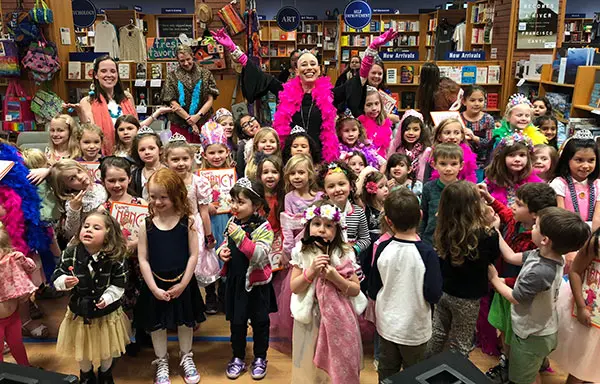
- Community Infrastructure: Story hours, drag queen story hours, young writer workshops, and pajama parties transform bookstores into secular community centers that combat the epidemic of youth loneliness and isolation.
The Economics of the Award
While the cash prize of $1,000 accompanying the WNBA Pannell Award may appear modest in an era of corporate mega-mergers, its actual value to independent booksellers is immeasurable. Independent bookstores operate on famously thin margins—often ranging from 1% to 5%. A cash infusion of $1,000 can directly fund inventory expansion, school outreach transportation, or accessibility upgrades.
More importantly, the national prestige associated with the Pannell Award serves as a powerful public relations engine. Winning stores routinely experience surges in local media coverage, spikes in web traffic, and increased foot traffic from families eager to support an award-winning community asset. Furthermore, the inclusion of a custom, framed piece of original art by a celebrated children’s book illustrator provides winning stores with a treasured physical artifact that visually anchors their commitment to the literary arts.
Official Statements and Industry Perspectives
The announcement of the Pannell Award’s return has generated widespread enthusiasm across the publishing ecosystem, from major corporate publishing houses to grassroots community organizers.
Elise Marie Collins on the Antidote to Digital Distraction
At the heart of the relaunch is a clear, philosophical manifesto articulated by WNBA President Elise Marie Collins. In her official statement, Collins framed the award not merely as a celebration of business acumen, but as a cultural defense mechanism:
“We are relaunching the WNBA Pannell Award at a time when children’s attention has become a commodity. Children’s books and bookstores are the antidote. They are magical spaces that capture children’s hearts, minds, and imaginations. We want to recognize children’s booksellers who spark a lifelong love of books and reading.”
Collins’s words strike at the core of why independent bookselling matters in the 2020s. By characterizing bookstores as "antidotes" to the commodification of attention, the WNBA elevates booksellers from retail workers to frontline cultural defenders.
The Role of Penguin Young Readers
The continued co-sponsorship of the award by Penguin Young Readers—one of the premier children’s book publishers in the world—highlights the vital symbiosis between major publishing houses and independent booksellers. While corporate publishers possess the capital and scale to produce world-class literature, it is independent booksellers who serve as the vital last mile, connecting those books directly with young readers through personal recommendations, school visits, and community advocacy.
In statements accompanying the relaunch, representatives from Penguin Young Readers emphasized that supporting independent booksellers is an existential necessity for the publishing industry at large. Without thriving local bookstores to champion mid-list titles, debut authors, and diverse narratives, the entire literary ecosystem risks homogenization.
Future Outlook: The Road Ahead for the Pannell Award
As the literary community looks toward the future, the relaunch of the WNBA Pannell Award establishes a robust framework for recognizing excellence in children’s literature retail for years to come.
The Nomination and Selection Process
With the nomination portal currently live via online submission forms and closing on September 30, the race to identify the nation’s finest children’s booksellers has officially begun. Nominations are open to the public, encouraging parents, teachers, authors, publishers, and avid readers to put forward bookstores that have transformed their local communities through exceptional children’s programming and curation.
Once the nomination window closes, an independent panel of publishing professionals—comprising editors, publicists, educators, and literary critics—will evaluate candidates based on several rigorous criteria:
- Community Impact: How deeply is the bookstore embedded in its local community? What initiatives does it undertake to serve underserved or economically disadvantaged youth?
- Programming and Outreach: Does the store offer innovative author events, school partnerships, book clubs, and literacy workshops?
- Store Environment and Curation: How thoughtfully designed is the children’s section? How diverse, inclusive, and expansive is the inventory?
- Resilience and Creativity: How did the store adapt during and after the challenges of the COVID-19 pandemic?
The 2025 Ceremony and Beyond
The announcement of the winners later this year will culminate in a celebratory ceremony that honors not only the winning proprietors, but the broader movement of independent bookselling. As these winning stores take their place in literary history alongside decades of past recipients, they will serve as beacons of hope for the entire industry.
Ultimately, the return of the WNBA Pannell Award is a testament to the enduring power of the printed word and the irreplaceable value of human connection. In a world increasingly dominated by cold algorithms and sterile digital interfaces, the independent bookstore remains a warm, vital sanctuary where a child’s imagination can ignite—and where a single book can change a life forever.





Comments
Facebook App ID not configured. Please add it in the Customizer.