
Executive Overview
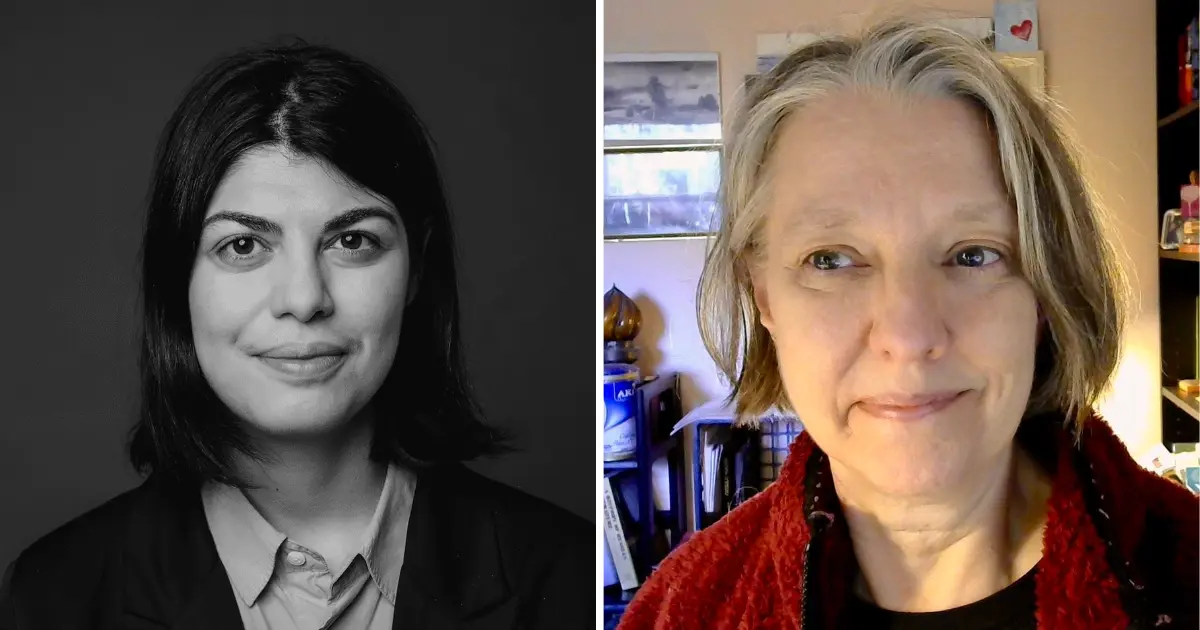
The intersection of literature, sociopolitical exile, and linguistic transmutation forms the crucible of Egana Djabbarova’s critically anticipated work, My Dreadful Body. Published by New Vessel Press and meticulously brought into English by veteran literary translator Lisa Hayden, the book stands as a towering testament to the resilience of marginalized voices operating under the heavy shadow of authoritarianism, xenophobia, and patriarchal oppression.
Originally written between 2022 and 2023 while Djabbarova was residing in Taipei, Taiwan, the book underwent a transcontinental and intercultural journey before reaching Anglophone readers. The text is not merely a work of fiction; it is an embodied archive of survival. Djabbarova, an Azerbaijani-born poet, essayist, and scholar who fled Russia in 2024 due to her outspoken LGBTQ+ activism and steadfast opposition to the war in Ukraine, uses the physical body as a primary narrative canvas. By anchoring her prose in the visceral realities of illness, structural discrimination, and intersectional identity crises, she constructs an inescapable testament to individual agency.
This feature explores the intricate genesis of My Dreadful Body, examining the collaborative translation process between Djabbarova and Hayden. Through an in-depth analysis of linguistic hurdles—such as translating post-Soviet xenophobic slurs into an American cultural context and maintaining the densely poetic register of the original Russian—this article illuminates the profound artistic and political stakes involved in bringing transnational literature across linguistic borders.
Read Also
Detailed Chronology: From Taipei Drafts to English Publication
The developmental timeline of My Dreadful Body traces a path across multiple continents, reflecting the displacement and shifting geographical realities of its author.
- The Formative Years (Teenage to Early Adulthood): The philosophical and conceptual groundwork for the book began long before a single word was committed to paper. Djabbarova grappled with an internal crisis of identity, questioning her sense of belonging as an ethnic minority navigating the systemic racism, xenophobia, and marginalization prevalent within Russian society.
- The Catalyst of Illness and Embodiment: A critical turning point occurred when Djabbarova faced a severe medical diagnosis. This physical trauma catalyzed an acute sense of embodiment, cementing her realization that subjecthood and the physical body are inextricably linked.
- The Writing Process (2022–2023): While teaching Russian as a foreign language in Taipei, Taiwan, Djabbarova wrote the manuscript. This dual distance—both temporal and geographical—provided the necessary perspective to synthesize decades of personal and political turbulence into a cohesive narrative structure.
- Editorial Acquisition and Assignment: Michael Wise, publisher and editor at New Vessel Press, identified the literary and cultural weight of Djabbarova’s manuscript. Wise approached Lisa Hayden, inviting her to undertake the monumental task of translating the novel into English.
- The Translation and Collaboration Phase: Operating in constant digital correspondence, Djabbarova and Hayden engaged in an iterative translation process. Hayden worked through multiple drafts, utilizing intuition while relying on Djabbarova to untangle the dense, polyphonic layers of the original text—which weaves Russian together with Azerbaijani and Turkish elements.
- Current Geopolitical Realities (2024–Present): Following her forced departure from Russia due to her political dissidence and human rights advocacy, Djabbarova established her base in Hamburg, Germany, where she continues her literary and scholarly pursuits as the book transitions into the global English-language market.
Supporting Context & Metrics: The Sociopolitical Architecture of the Text
To fully grasp the magnitude of My Dreadful Body, one must examine the socio-political frameworks that inform its narrative. Djabbarova’s work does not exist in a vacuum; it is deeply entwined with theories of decoloniality and the brutal realities of post-Soviet marginalization.
The Coloniality of Being and Bodily Inscription
Djabbarova explicitly draws upon the intellectual framework of decolonial thinker Nelson Maldonado-Torres and his concept of the "coloniality of being." Maldonado-Torres theorizes how the agency and fundamental humanity of colonized, displaced, or minoritized individuals are perpetually interrogated and denied by dominant societal structures.
Within the Russian Federation, ethnic minorities, diaspora communities, LGBTQ+ individuals, and political dissidents face a parallel erasure of humanity. To counteract this systemic denial, Djabbarova bypasses purely abstract philosophical arguments, instead constructing her narrative entirely through the physical body. By rendering marginalized existence visible, visceral, and inescapable, the body becomes an undeniable testament to self-determination and agency.
Linguistic Hurdles and Transnational Cultural Translation
One of the most formidable hurdles in bringing My Dreadful Body to an English-speaking audience involved Chapter VII ("TONGUE"), wherein the protagonist itemizes the derogatory slurs directed against her: "I’m black, blackie, black-ass, alien, monster, foreigner, foreign-born . . ."
Translating this sequence required navigating a minefield of cultural and political semantics:
- Post-Soviet Slurs: In the Russian linguistic ecosystem, terms like chernaya or chernozhopaya serve as violent xenophobic weapons designed to degrade people from the Caucasus, Muslim-majority regions of the former Soviet Union, and anyone possessing darker physical features.
- American Racial Dynamics: Conversely, direct literal translations of these terms within the United States historically and primarily evoke anti-Black racism.
Hayden and Djabbarova had to exercise extreme linguistic caution to ensure that Western readers understood the specific mechanics of post-Soviet ethnic discrimination and colorism without erroneously conflating them with American racial paradigms. Furthermore, formal translation constraints—such as the Russian passage’s string of derogatory terms all beginning with the Cyrillic equivalent of the "ch-" sound—forced Hayden to innovate creatively within English syntax.
Additionally, the text required the strategic integration of footnotes. While Hayden generally seeks to avoid ancillary explanations that can weigh down a narrative, terms specific to the culture and ecology—such as the plant Peganum harmala (transliterated as uzerlik) and various traditional foods—necessitated careful glossing to prevent overwhelming the primary text while maintaining absolute fidelity to Djabbarova’s cultural universe.
Official Statements and Collaborative Insights
The creative synergy between author Egana Djabbarova and translator Lisa Hayden reveals a masterclass in literary partnership. Their reflections underscore the emotional depth, technical precision, and mutual trust required to bridge two distinct linguistic worlds.
Egana Djabbarova on Writing from Exile and Poetic Compression
Reflecting on the generative conditions of the book, Djabbarova emphasizes how physical displacement enabled artistic clarity:
"This book was written under very unusual circumstances. During the writing process, from 2022 to 2023, I was living in Taipei, Taiwan… It is very likely that this dual distance—both temporal and geographical—helped me look at my own life as a cohesive narrative and reshape it into a work of fiction."
Addressing the stylistic density of the prose, Djabbarova notes that her choice to infuse prose with the structural demands of poetry was entirely deliberate:
"A central challenge of this process was the fact that the novel is written in a deeply poetic register. It was a conscious aesthetic choice on my part to approach prose through the lens of poetry, utilizing its inherent metaphoric weight, emotional intensity, and linguistic density."
Regarding her collaboration with Hayden, Djabbarova expresses unreserved confidence:
"The process of translating the novel together with Lisa Hayden was an incredible journey. We stayed in constant contact throughout, and Lisa’s approach to the work absolutely amazed me with its profound responsibility, sensitivity, and tenderness. I trusted her one hundred percent, and I still do!"
Lisa Hayden on the Translator’s Intuition and Coiled Energy
Lisa Hayden details how her initial engagement with the manuscript evolved into a transformative professional and personal milestone:
"I didn’t realize at the time that My Dreadful Body would become such an important book for me. I love first readings, but it’s subsequent readings… that open up a book’s depths and dimensions, turning them into permanent parts of my life."
Hayden describes her methodology as deeply intuitive, requiring her to "hear" the polyphonic voices embedded within the source text:
"Since the translator’s job involves both reading and somehow hearing the voice(s) in a text, I’ve always felt that the author is involved in my entire translation process. Even if I’ve never met them, they’ve always been with me as I’ve typed, looked up words, and, yes, stared out the window."
Metaphors of the Text: Carpets, Roots, and Coiled Springs
When asked to encapsulate My Dreadful Body through metaphor, both creator and translator offered vivid imagery that illuminates the mechanics of their work:
- Egana Djabbarova: "I would suggest the metaphor of a woven carpet or the tangled roots in a garden. In a way, a traditional carpet is a garden in its own right…"
- Lisa Hayden: Expanding upon this, Hayden notes how translations themselves function as interlacings of culture and perspective, adding her own mechanical and natural metaphors: "Like a spring, Egana’s text is very compact, but it stores lots of power, tremendous energy… I realized the kind of spring that contains water makes sense, too. Like Egana’s text, that spring is fluid, sparkly, and tremendously fresh, rising out of a deep source."
Future Outlook: The Global Resonance of My Dreadful Body
As My Dreadful Body enters the international literary marketplace under the banner of New Vessel Press, its release arrives at a critical historical juncture. In an era marked by rising authoritarianism, intensifying state crackdowns on bodily autonomy, and the displacement of dissident artists, Djabbarova’s work offers a vital vocabulary for resistance.
The book’s reception in the West will undoubtedly test the capacity of Anglophone criticism to engage with non-Western formulations of marginality, trauma, and identity. By refusing to flatten her experiences into easily digestible tropes of victimization, Djabbarova—fortified by Hayden’s rigorous and empathetic translation—demands that readers confront the raw, unmediated reality of bodies subjected to political and social violence.
For Djabbarova, now based in Hamburg, Germany, the publication marks a crucial milestone in her ongoing literary career—proving that while authoritarian regimes can force writers into geographical exile, they cannot sever the unbreakable bond between a creator, their body of work, and the universal quest for human dignity.





Comments
Facebook App ID not configured. Please add it in the Customizer.