
Executive Overview
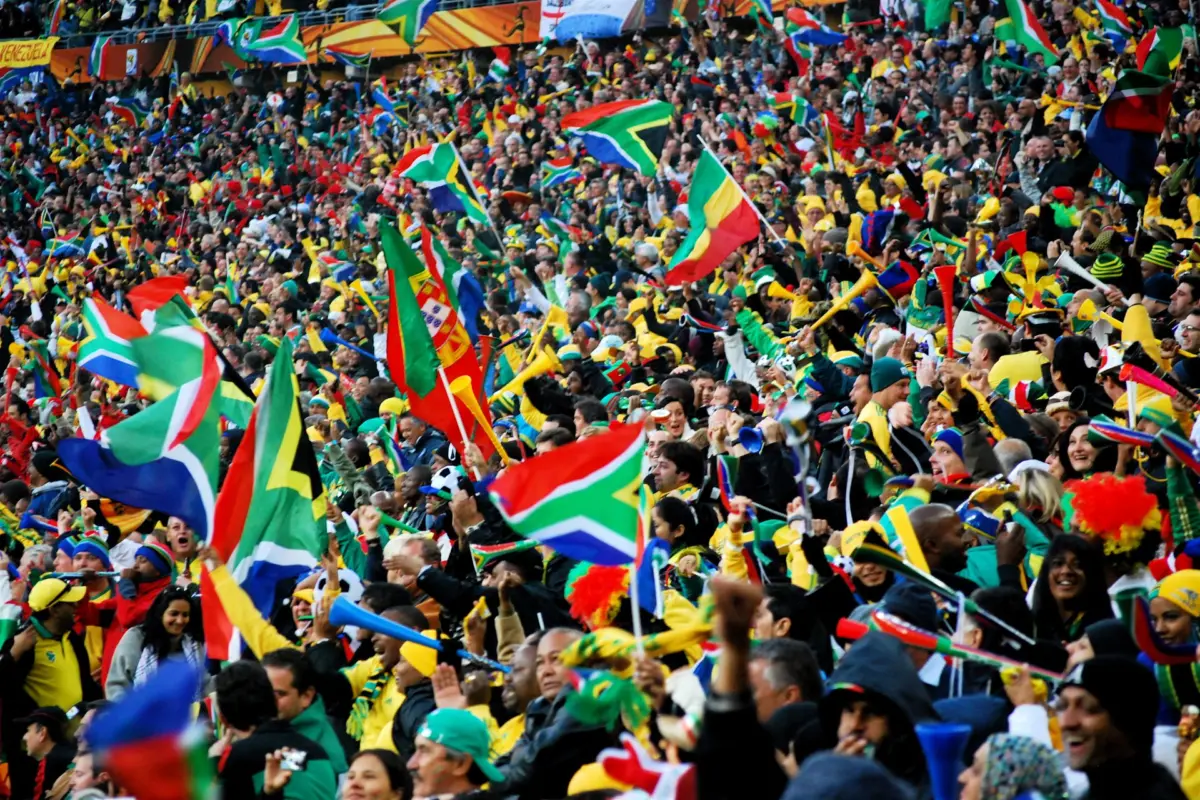
When the 2026 FIFA World Cup kicked off with a familiar fixture—co-host Mexico facing South Africa—the match served as more than a mere athletic contest. For a global audience, it was an echo of the historic 2010 tournament in Johannesburg. For South Africans, however, it was a mirror reflecting a nation grappling with profound political, social, and economic turmoil. Watched from a crowded German restaurant in Brooklyn by a multicultural diaspora, the opening match crystallized the complex realities of modern South Africa: a country oscillating between the unifying power of international sport and the deep, corrosive scars of xenophobia, state failure, and historical inequality.
While the South African national team—Bafana Bafana—ultimately carved out an unprecedented path to the knockout stages, their tournament was overshadowed by domestic tumult. Months of escalating anti-immigrant sentiment, organized nativist protests, and political posturing back home created an atmosphere of profound unease. This report investigates the intersection of football and politics during South Africa’s 2026 World Cup campaign, analyzing how the beautiful game continues to expose the fractures within a post-apartheid society struggling to fulfill its democratic promises.
Detailed Chronology: From Hanover Park to the Brooklyn Bar
The narrative of South African football is inextricably linked to the geography of its socio-political history. To understand Bafana Bafana is to understand the legacy of apartheid spatial engineering and the generational resilience required to transcend it.
Read Also
The Legacy of Benni McCarthy
At the Brooklyn screening venue, the author wore a vintage 1998 South Africa jersey bearing the name of the country’s most decorated player, Benni McCarthy. Born in 1977 in Hanover Park—a township classified by the apartheid regime under the Population Registration Act as a "coloured" group area—McCarthy’s early life was defined by forced displacement. Hanover Park, like much of the Cape Flats, served as a dumping ground for Black and coloured residents forcibly removed from verdant suburbs like Kirstenbosch, Claremont, Newlands, and Constantia.
McCarthy rose from these systemic constraints to become South Africa’s all-time leading goalscorer with 31 international goals, achieving legendary status by winning the UEFA Champions League with FC Porto under José Mourinho. His career symbolized the vast, untapped potential of a post-apartheid nation stepping onto the global stage. Yet, the generation of players following in his footsteps now carries the weight of a society that has failed to fully deliver on the economic liberation promised in 1994.
The 2026 Tournament Opener
On the pitch, the opening match at the 2026 World Cup offered little tactical comfort. Facing a buoyant Mexican side in front of a partisan crowd, South Africa struggled to execute coach Hugo Broos’s defensive strategy. Broos, a veteran Belgian tactician, had deployed a conservative 5-2-3 formation designed to absorb pressure and launch rapid counterattacks via disciplined wingbacks.
The tactical blueprint disintegrated under the weight of indiscipline. Brazilian refereeing decisions led to two red cards: Yaya Sithole was dismissed in the 50th minute, and Themba Zwane received his marching orders in the 84th minute, resulting in a suspension for the remainder of the tournament. Reduced to nine men, Bafana Bafana succumbed to goals from Julián Quiñones in the eighth minute and Raúl Jiménez in the final quarter, sealing a 2-0 defeat.
The Pan-African Fracture
Historically, World Cups hosted on or involving the African continent fostered a strong sense of Pan-African solidarity. In 2010, the continent united behind Ghana’s heroic run to the quarterfinals. In 2022, Morocco’s historic march to the semifinals galvanized fans across Africa and its diasporas.
In 2026, however, that solidarity was starkly absent. Both online and in physical viewing spaces, scores of African football fans openly rooted for Mexico against their continental neighbor. This shift was not accidental; it was the direct consequence of a wave of violent xenophobic rhetoric and protests that had roiled South African cities in the months leading up to the tournament, alienating continental migrants and expatriates alike.
Supporting Context & Metrics: The Anatomy of State Failure
To comprehend why African fans turned away from South Africa, one must examine the socio-economic tinderbox that has consumed the nation in recent years.
The Rise of Nativism and "March and March"
In the spring of 2026, a self-described citizen-led movement known as "March and March" organized massive demonstrations against undocumented African migrants in Pretoria, Johannesburg, and Durban. Operating independently of formal political parties, the group instituted a schedule of weekly Thursday protests with an explicit ultimatum: every undocumented migrant must leave the country by June 30, 2026.
The movement’s rhetoric mirrors far-right nativist platforms globally. Blaming undocumented immigrants for the nation’s severe socioeconomic malaise, March and March has capitalized on public frustration over systemic failures. Key metrics underscoring this desperation include:

- Unemployment Rate: Persistently high at 32.7%, disproportionately affecting youth.
- Economic Inequality: South Africa remains one of the most unequal societies in the world, measured by the Gini coefficient.
- Infrastructure Deficits: Widespread rolling blackouts (load shedding), municipal water crises, and failing public health systems.
While white expatriates and remote workers who earn in pounds or dollars are often welcomed as foreign direct investment assets, African migrants from nations such as Zimbabwe, Malawi, Nigeria, and Mozambique have been scapegoated for crime, drug trade, and resource scarcity. This scapegoating echoes the dark history of the 2008, 2009, and 2015 xenophobic pogroms, proving that the state’s failure to deliver "A Better Life for All"—the foundational slogan of Nelson Mandela’s African National Congress (ANC)—has spawned a dangerous internal fratricide.
The Rhetoric of Exclusion
The June 30 deadline echoed political slogans popularized during national election campaigns, most notably sports and culture minister Gayton McKenzie’s 2023 "Abahambe" (They must go) platform. As the deadline approached, alarming parallels to apartheid-era oppression emerged: digital messaging applications circulated warnings urging foreign nationals to carry their identity papers at all times, eerily reminiscent of the hated passbooks (dompas) forced upon Black South Africans under white minority rule.
Although the June 30 protests ultimately ended largely peacefully—partly due to last-minute distancing by political figures like McKenzie aiming to protect their political standing—the damage to the nation’s social fabric was profound. Sporadic violence, targeted arrests, and at least one reported death underscored the reality that, 32 years into democracy, South Africa continues to reproduce the violence of its past.
Official Statements and Institutional Responses
The disconnect between South Africa’s sociopolitical crisis and its sporting establishment was laid bare during press conferences and international reactions.
Captain Ronwen Williams’s Defensive Stance
Ahead of South Africa’s second group-stage match against Czechia, Bafana Bafana captain Ronwen Williams was questioned about the widespread lack of Pan-African support for his team. His response was revealing in its evasion:
"We’ve all got our own politics, our own problems, and our own fights that we deal with back home. Every country has that. I don’t know where that stems from. It does hurt. I have been attacked . . . my country as well, for things that are going on back home."
Williams’s comments stood in stark contrast to the historical tradition of South African sports activism. During the apartheid era, the South African Council on Sport (SACOS)—founded on the rallying cry "No normal sport in an abnormal society"—leveraged international boycotts to help dismantle the regime. Figures like Dennis Brutus and the South African Non-Racial Olympic Committee (SANROC) recognized that athletes could not separate athletic competition from human rights abuses.
Contrasting Global Activism
In modern international football, prominent players have occasionally used their platforms to address systemic injustices:
- Didier Drogba: Following Côte d’Ivoire’s qualification for the 2006 World Cup, Drogba famously dropped to his knees on live television to plead for an end to his country’s civil war, an intervention widely credited with helping broker a ceasefire.
- Kylian Mbappé: The French superstar has repeatedly spoken out against far-right extremism and figures like Marine Le Pen, despite facing racist backlash and xenophobic attacks from political actors abroad.
- Pep Guardiola: The elite manager has consistently used his platform to voice solidarity with refugees, victims of conflict in Ukraine and Palestine, and immigrants targeted by state authorities.
By contrast, the modern South African leadership—both athletic and political—displayed a troubling political inertia. Plagued by the commercialized corruption and moral bankruptcy of global sporting bodies (exemplified by FIFA president Gianni Infantino’s controversial engagements and a historical legacy of hosting tournaments in politically compromised nations like Argentina in 1978, Russia in 2018, and Qatar in 2022), contemporary players find themselves unequipped to engage meaningfully with the structural crises unfolding in their own backyard.
Future Outlook: The Road Ahead for South African Football and Society
Despite the political weight hanging over their campaign, Bafana Bafana showed flashes of competitive resilience on the pitch. After drawing 1-1 with Czechia and securing a dramatic victory over South Korea by abandoning their overly cautious defensive setup, South Africa advanced to the Round of 32 for the first time in their history.
However, their historic run ended abruptly when they faced an unyielding Canadian side. Shrinking under the magnitude of the knockout stage, the team’s elimination highlighted a deeper truth: their greatest weakness was not tactical, but political.
Key Takeaways for the Future
- The Myth of the "Rainbow Nation": The tournament exposed the fragility of Desmond Tutu’s Rainbow Nation ideal. Without substantive economic redistribution and structural reform, superficial displays of unity during sporting events will continue to fracture under economic pressure.
- The Danger of Nativist Populism: Unless the South African government effectively addresses systemic unemployment, service delivery failures, and lawful integration, movements like March and March will continue to exploit public grievances, destabilizing the nation’s standing as a continental leader.
- The Role of Athletes: As international sports become increasingly financialized, a return to the activist lineage of SACOS and anti-apartheid sports organizers is necessary if athletes are to serve as genuine moral compasses for their societies.
As the 2026 World Cup marches toward its conclusion, South Africa remains a nation suspended between the promise of its liberation and the persistent ghosts of its apartheid past. Whether the country can reconcile its internal contradictions before it next takes the global stage remains the defining question of its modern democratic era.


Comments
Facebook App ID not configured. Please add it in the Customizer.