
In the contemporary literary landscape, independent publishing houses face a relentless, existential challenge: discoverability. As major commercial conglomerates crowd retail algorithms and high-profile media channels with uniform blockbusters, independent presses must carve out space through sheer originality, eccentric subject matter, and fearless curation. According to Grove Atlantic Vice President and Deputy Publisher Peter Blackstock, the struggle for visibility is universal across houses big and small. Yet, this fall, independent publishers are defying the odds by leaning into unconventional, vividly specific narratives.
From competitive kettlebell memoirs and rogue northern border inn owners to high-stakes EU legal thrillers and competitive quilting subcultures, the upcoming publishing season showcases the vitality of the indie sector. These publishers are taking profound creative and financial risks, betting on books that commercial New York houses might initially pass over. The resulting line-up is an eclectic mosaic of muscular feats, woven tales, border conflicts, and profound meditations on grief. This report investigates how independent publishers are navigating the contemporary marketplace, highlighting the standout titles, behind-the-scenes editorial discoveries, and strategic risks defining the fall publishing calendar.
Detailed Chronology: The Fall Lineup
The upcoming publishing season unfolds through a series of distinct thematic arcs, tracking everything from physical endurance and systemic legal frameworks to delicate craftwork and personal loss.
Read Also
Feats of Strength: September & August Releases
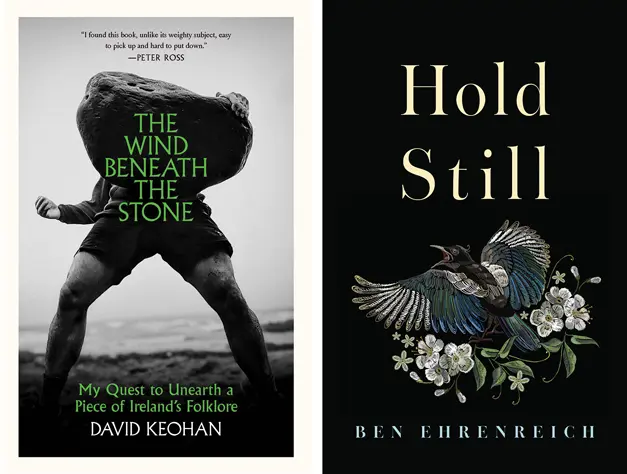
The season opens with physical and cultural endurance, highlighted by Chelsea Green Publishing’s September release of The Wind Beneath the Stone. Written by competitive kettlebell athlete David Keohan, the memoir chronicles his quest to locate and hoist the "cloch nirt"—historic lifting stones scattered across rural Ireland. These massive stones, deeply embedded in Gaelic folklore, served as community rites of passage until the practice dwindled following the Great Famine. Chelsea Green Deputy Publisher Matthew Derr notes that Keohan’s fusion of cultural anthropology and athletic persistence taps into an ancient human desire to connect with physical history.
Running parallel to Keohan’s memoir is Hub City Press’s August debut, Daytona Teddy Riggs by Drew Buxton. Set in 1990s Texas, the novel follows a 24-year-old former high school football star banned from local gyms for violent outbursts as he trains for the World’s Strongest Man competition. Despite his oafish exterior, the narrator possesses a surprising emotional depth that captured associate publisher Kate McMullen during the press’s open submissions window.
Woven Tales and Institutional Webs: September & October Releases
Shifting from brute force to nimble fingers, Torrey House Press delivers Eli McCann’s Stitched in September. The novel explores the competitive subculture of senior quilting circles as they welcome two younger gay men into their fold ahead of a national championship. Despite initial hesitation from New York scouts regarding the elderly protagonists and Utah setting, Torrey House leaped at the manuscript, resulting in unprecedented preorders that necessitated five revisions to their print run.
In October, New York Review Books (NYRB) expands its contemporary roster with Tom McCarthy’s The Rhyl Poster. Following a référendaire (a high-powered law clerk) at the EU Court of Justice in Luxembourg, McCarthy’s novel plays out like a John le Carré thriller crossed with 19th-century realism. This focus on institutional bureaucracy joins Verso’s September publication of Itamar Vieira Junior’s Saving the Fire, translated by Johnny Lorenz. As the second conceptual part of the Brazilian author’s major literary project following his International Booker-shortlisted Crooked Plow, the novel explores rural Brazilian life and colonial trauma through the lens of a hunchbacked laundress named Luzia.
Grove Atlantic enters the fall with Will Maclean’s dark campus gothic Solace House in October, alongside Tom Drury’s Midwestern tragicomic tale West of Lowland in November. Blackstock describes Maclean’s novel—which follows a student clearing out an abandoned asylum and a recluse’s mansion—as a "trippier" evolution of the dark academia genre.
Border Wars and Political Realities
Nonfiction and hybrid projects tackle modern geopolitical friction points. Prometheus Books publishes Smuggler: Drugs, Gangs, and Refugees at America’s Northern Border in October by Reece Jones and Greg Boos. The book details the legal battles of Bob Boulé, owner of Washington State’s Smuggler’s Inn, who operated as a federal informant while sheltering refugees seeking asylum in Canada. Prometheus Deputy Publisher Jake Bonar emphasizes the project’s urgency, noting that while northern border policies lack the media saturation of the southern border, they profoundly impact national immigration law.
Simultaneously, Milkweed Editions releases Fady Joudah’s Exhibit G in September. Blending poetry, prose, and photographs from the Gaza Soup Kitchen, Joudah creates a visual and literary meditation on Palestinian resilience. Milkweed CEO Daniel Slager highlights the unique synthesis of Joudah’s intersecting identities as a Palestinian American, physician, and poet.
Lessons in Grief and Mortality
The season concludes with introspective accounts of degeneration and loss. In September, Spiegel & Grau publishes Barry Michels’s Ahead of All Parting. Michels, a prominent psychotherapist diagnosed with Lewy body dementia in 2023, documents his creative liberation following a terminal prognosis. In October, City Lights Books releases Ben Ehrenreich’s Hold Still, a collection of fable-like stories and diaristic prose poems written as a daily kaddish following the 2022 death of his mother, writer and activist Barbara Ehrenreich.
Supporting Context & Metrics
The economics of independent publishing rest on high-risk, high-reward bets where a single breakout title can outpace an entire annual operating budget.
- Print Run Adjustments: Torrey House Press experienced a historic anomaly with Eli McCann’s Stitched, revising its initial print run five times due to unprecedented preorders. Co-founder Kirsten Johanna Allen revealed that this single title accounts for one-and-a-half times the press’s entire annual print budget.
- Open Submissions ROI: Hub City Press sources approximately 30% of its annual book list through open submission periods, proving that democratic acquisition models remain vital discovery engines for fresh literary voices.
- Curated Imprint Strategies: Verso’s dedicated fiction list, established in 2019 under publishing director Nicole Aschoff and fiction editor Cian McCourt, has cultivated high-impact breakout hits such as Marlowe Granados’s Happy Hour (2021) and Itamar Vieira Junior’s translated works, proving that academic and political presses can successfully capture mainstream literary acclaim.
- Design and Production Investments: Presses like Milkweed Editions allocate substantial capital to exceptional bookmaking, partnering with premier designers like creative director Mary Austin Speaker to elevate hybrid visual-literary works into physical art objects.
Official Statements & Industry Perspectives
Key stakeholders across the independent publishing ecosystem have shared insights regarding their curatorial philosophies and the hurdles of market discoverability:
- Peter Blackstock (Grove Atlantic): Addressing the overarching industry hurdle, Blackstock noted, "I think the challenge that we all face, big houses and small, is discoverability." Regarding Will Maclean’s Solace House, he added that booksellers have confirmed its unique standing: "It’s trippier than Donna Tartt’s novel, more in line with David Mitchell’s intricate constructions."
- Matthew Derr (Chelsea Green Publishing): Emphasizing the cultural value of David Keohan’s memoir, Derr observed, "It shows how there are still these opportunities to find something ancient that attracts new generations… There’s tradition, there’s history, there’s complexity, but there’s also this deep connection to place, which is what Chelsea Green loves to publish."
- Kate McMullen (Hub City Press): Reflecting on the acquisition of Drew Buxton’s Daytona Teddy Riggs from an open submission pile, McMullen laughed, "We’re an office full of women, so I was like, Trust me, this is really good."
- Will Neville-Rehbehn (Torrey House Press): On securing Eli McCann’s novel about competitive quilting despite New York publishers’ hesitations, Neville-Rehbehn remarked, "We’re the only press founded to publish this book."
- Edwin Frank (New York Review Books): Discussing the inclusion of contemporary novelists alongside classic reprints, Frank praised authors like Tom McCarthy for having an "essayistic mind and a wonderful way of making you see the texture of reality rather differently."
- Elaine Katzenberger (City Lights Books): Evaluating Ben Ehrenreich’s unclassifiable grief journal, Katzenberger noted, "The pain doesn’t leave, but there is this personal renewal from going through loss."
Future Outlook
As the publishing industry moves deeper into an algorithmic age dominated by retail consolidation, the survival and success of independent presses hinge on their willingness to champion the idiosyncratic. The fall lineups from Chelsea Green, Hub City, Torrey House, NYRB, Verso, Grove Atlantic, Prometheus, Milkweed, Spiegel & Grau, and City Lights demonstrate that readers are actively hungering for authenticity, narrative risk, and deep cultural specificity.
By prioritizing books that major conglomerates deem too niche, regional, or formally experimental, independent publishers are not merely surviving the discoverability crisis—they are actively redefining the boundaries of contemporary literature. If this season’s unprecedented preorders, international prize shortlists, and creative triumphs are any indication, the future of publishing belongs to those bold enough to embrace the margins.





Comments
Facebook App ID not configured. Please add it in the Customizer.