
Executive Overview
To generations of readers who grew up browsing the paperback racks of book fairs and local libraries in the late twentieth century, the teen horror boom of the 1980s and 1990s is remembered primarily for its breathless pacing, inventive gore, and lurid covers. Spearheaded by prolific architects of adolescent nightmare such as R.L. Stine, Christopher Pike, and Diane Hoh, these novels fed an insatiable appetite for murder, mayhem, and supernatural terror.
Yet, decades later, a retrospective glance reveals a striking and frequently overlooked thematic engine driving these stories: the inescapable, stratified architecture of class and capital.
While the foreground of these narratives was dominated by masked slashers, haunted prom venues, and vengeful spirits, the background hummed with the harsh realities of economic disparity. Authors embedded meticulous details concerning the prohibitive cost of social currency—such as designer wardrobes—alongside sobering explorations of post-graduation survival. For many protagonists, the transition to adulthood was not merely a matter of choosing a university, but of securing immediate employment to stave off familial ruin.
Read Also
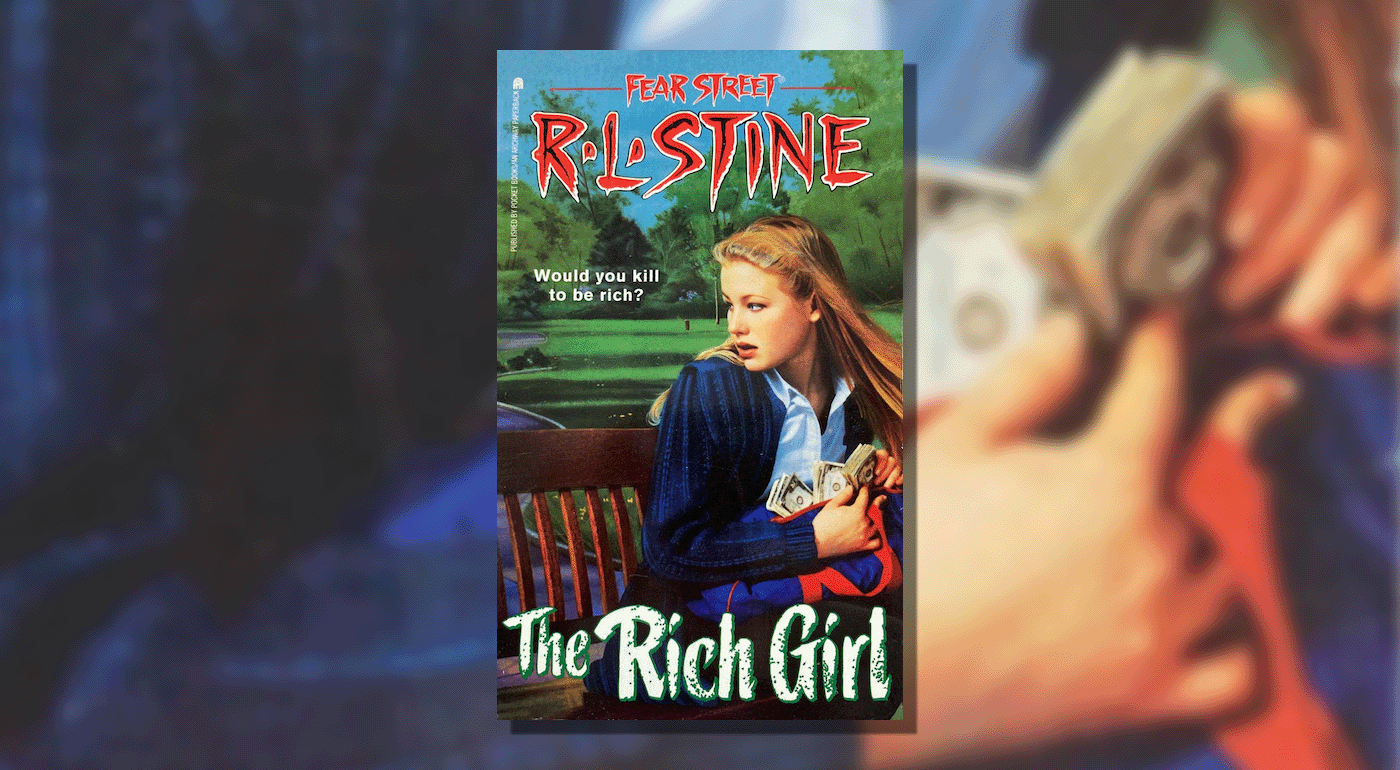
Nowhere is this invisible socio-economic infrastructure brought into sharper or more brutal focus than in R.L. Stine’s 1997 Fear Street entry, The Rich Girl. By positioning class disparity at the very heart of a psychological thriller involving a dumpster-dived fortune, simulated homicide, and profoundly defective currency, Stine peeled back the glossy veneer of adolescent fiction to expose a chillingly transactional world. In The Rich Girl, financial desperation does not merely motivate characters; it distorts their morality, turns best friends into adversaries, and ultimately reveals that in the unforgiving economy of Shadyside, illusions of wealth are far more dangerous than poverty itself.
Detailed Chronology: Anatomy of a Betrayal
The events of The Rich Girl unfold against a stark economic backdrop that dictates every choice made by lifelong friends Emma Naylor and Sydney Shue. While Sydney enjoys a sprawling five-acre estate in North Hills funded by parents who explicitly discourage her from working for survival, Emma shares a tiny, dilapidated home in the Old Village with her chronically ill mother. For Emma, labor is not a character-building exercise; it is a vital mechanism for keeping a roof over their heads and securing medical intervention.
The Inciting Incident: The Dumpster Discovery
The narrative pivots during a late shift at the local movie theater. While taking out the trash, Emma and Sydney stumble upon a discarded duffle bag resting in a dumpster. Upon unzipping it, they are met with a staggering sight: neat bundles of fifty-dollar bills totaling an estimated $100,000.
Predictably, the discovery shatters their fragile egalitarian dynamic:
- Sydney’s Reaction: Steeped in the security of her upbringing, Sydney immediately defaults to institutional trust, arguing that they must surrender the cash to local authorities.
- Emma’s Reaction: Paralyzed by the immediate threat of her mother’s impending unemployment due to unmanaged health crises, Emma recognizes the bag as an existential lifeline. It represents college tuition, freedom from scholarship anxiety, and basic human dignity.
An explosive argument ensues, during which Emma confronts Sydney with a bitter truth: Sydney’s safety net blinds her to the terror of genuine destitution. Though Sydney attempts introspection, realizing that she can simply walk away from hardship while Emma cannot, an ideological chasm opens between them. They ultimately compromise by burying the cash beneath a willow tree in the ominous Fear Street woods, agreeing to wait two weeks before claiming it.
Escalation and Psychological Warfare
Unable to keep the secret entirely safe, Sydney confides in her volatile, possessive boyfriend, Jason. Unbeknownst to Sydney, Jason harbors expensive tastes—spanning high-end sneakers and luxury electronics—that his middle-class parents refuse to bankroll. When Jason learns of the hidden fortune, his response is immediately lethal: he suggests murdering Emma to eliminate witnesses.
Though played off as dark humor, the threat quickly materializes:
- The Fall: Emma suffers a suspicious stairwell accident at school, identifying Jason as the culprit.
- The Sabotage: In a calculated maneuver, Jason attempts to make amends by repairing Emma’s dilapidated car, only to covertly sever her brake lines—a move that nearly results in a fatal crash for both girls.
Desperate to appease a potential killer, Emma proposes cutting Jason in for a third of the cash. However, this logic backfires in a horrific confrontation by the burial site. Sydney, fetching a sweater from her vehicle, hears a violent struggle and returns to find Jason dead and Emma standing over his body with a blood-soaked shovel.
Traumatized and panicked, the girls weigh Jason down with rocks and sink his body in the murky depths of Fear Lake before re-burying the money.
The Unravelling and the Twist
What follows is a psychological descent into paranoia. Convinced they are murderers, Sydney begins receiving anonymous threatening notes and horrifying nocturnal visits from what she believes to be Jason’s decaying corpse. Emma dismisses her terror as mental instability, confident that Sydney’s wealthy parents will eventually commit her to an elite psychiatric facility—a luxury facility whose exorbitant cost causes Emma no moral distress because, as she notes, "they can afford it."
The truth, however, is far more cynical. Jason is not dead. He and Emma have been engaged in a clandestine affair, bound together by mutual greed and financial ambition. Capitalizing on Sydney’s empathy and guilt, they orchestrated the elaborate hoax to shatter her sanity, clear her out of the way, and claim the fortune unhindered.
The Climax: The Illusion of Wealth
With Sydney psychologically neutralized, Emma and Jason race to the woods, unearth the duffle bag, and head directly to the local mall to indulge their long-suppressed consumerist fantasies. Emma reaches for a luxurious leather jacket, pulling a stack of bills from the bag to pay the clerk.
It is here that the narrative delivers its final, devastating punchline. The money is not merely stolen; it is a crude, laughably botched counterfeit operation. Scrutinizing the bills reveals blatant typos—including "UNTIED STATES OF AMERICA"—alongside a portrait of Benjamin Franklin wearing a backwards baseball cap over his wig. Consumed by tunnel-visioned greed, neither Emma, Jason, nor Sydney ever bothered to inspect the actual currency.
Supporting Context & Metrics: Class Divides in ’90s YA Horror
To fully appreciate the thematic weight of The Rich Girl, one must examine the broader socio-economic geography constructed by Stine, Pike, and Hoh during the golden age of teen horror. These authors utilized fictional landscapes as sociological battlegrounds:
- Shadyside vs. Sunnyvale: In Stine’s universe, the geographical tension between impoverished Shadyside and affluent Sunnyvale serves as a masterclass in class anxiety. As later adapted in Netflix’s 2021 Fear Street film trilogy, this divide is not just a backdrop; it is a catalyst for generational violence and systemic neglect.
- The Price of Survival: In titles like Diane Hoh’s Nightmare Hall series (e.g., Deadly Attraction), wealthy heirs like Robert Q. Parker absorb catastrophic losses—such as a torched sports car—without a blip in their lifestyle, while scholarship students work grueling campus double-shifts simply to remain enrolled.
- The Empathy Gap: Psychological studies of adolescent literature indicate that socio-economic status heavily influences characters’ risk assessment. Privileged characters prioritize abstract ethics (like returning found money to the police), whereas disadvantaged characters operate under survival imperatives that override conventional legal frameworks.
| Author / Series | Character Archetype | Socio-Economic Indicator | Plot Impact |
|---|---|---|---|
| Christopher Pike (Weekend) | Robin & Lena Carlton | Heirs to generational wealth; Mexican vacation homes | Unlimited access to elite medical care following poisoning. |
| R.L. Stine (Fear Street) | Reva Dalby | Department store dynasty heir | Inherited corporate success without foundational labor. |
| R.L. Stine (The Rich Girl) | Emma Naylor | Single-parent household in Old Village; no health insurance | Drives hand-me-down car; forced to work for mother’s surgery. |
| Diane Hoh (Nightmare Hall) | Robert Q. Parker | Trust-fund recipient | Material losses replaced instantly by parental wealth. |
Official Statements and Literary Analysis
Literary critics and cultural historians have increasingly turned their attention to the subversive economic undertones of 1990s pop-horror. While publishers marketed these books as disposable pulp thrills, contemporary analysts argue they functioned as essential processing centers for adolescent anxiety during an era of widening economic stratification.
"The horror in these novels is rarely confined to the supernatural. The true terror frequently stems from the realization that the socioeconomic ladder is rigged, and that one’s life value is uncomfortably tethered to a ledger sheet. When characters like Emma Naylor cross ethical boundaries, they are reacting to a system that has already marginalized them."
— Dr. Aris Thorne, Professor of Modern American Literature & Cultural Studies
Scholarly consensus points out that The Rich Girl subverts the classic morality play. In traditional pulp fiction—such as classic E.C. Comics—transgression is met with poetic, often supernatural retribution. Yet, Stine’s conclusion leaves readers in a state of unresolved moral ambiguity:
- The perpetrators of the psychological torture (Emma and Jason) face no systemic punishment, save for the public humiliation of attempting to spend counterfeit bills.
- The innocent victim (Sydney) remains psychologically devastated, her trust permanently shattered.
- The title itself becomes an ironic riddle: If Sydney is the rich girl, her capital offers zero defense against emotional betrayal. If Emma is the rich girl—wealthy only in her desperate imagination—that wealth is revealed to be a cruel, worthless mirage.
Future Outlook: The Enduring Legacy of Socio-Economic Horror
As contemporary horror continues to pivot toward socio-economic critique—exemplified by cinematic works like Parasite, Get Out, and modern literary thrillers—the groundwork laid by 1990s teen horror authors appears remarkably prescient. Today’s YA and adult horror markets increasingly demand stories where systemic inequality, debt, and housing insecurity are woven directly into the fabric of the macabre.
The enduring fascination with R.L. Stine’s Fear Street canon proves that readers remain captivated by narratives examining how money shapes human behavior under duress. Whether through streaming adaptations or scholarly re-examinations of vintage paperbacks, the message of The Rich Girl resonates as strongly today as it did in 1997:
In a world driven by capital, the pursuit of wealth—whether through desperate theft or cynical deception—often blinds us to the counterfeit nature of our own ambitions. When the smoke clears and the fake Ben Franklins are laid bare on a retail counter, the characters are left with nothing but the ash of their own ruined relationships, proving definitively that all that glitters in the dark is far from gold.





Comments
Facebook App ID not configured. Please add it in the Customizer.