
Executive Overview
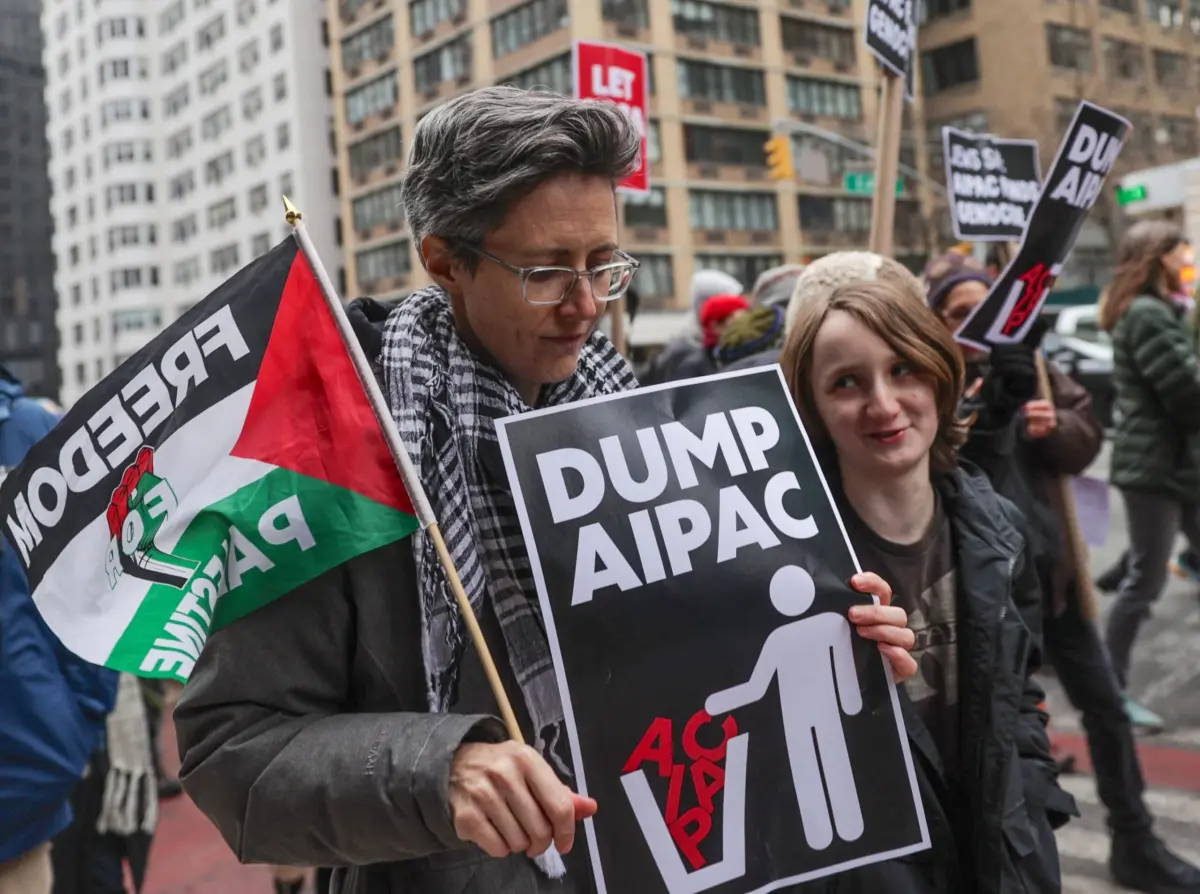
As the United States hurtles toward a critical and highly volatile midterm election cycle, the political landscape is experiencing a profound paradigm shift. For months, the primary season was defined by fierce intra-party battles, particularly within the Democratic fold, where centrists and progressives clashed bitterly over military aid to Israel, the humanitarian catastrophe in Gaza, and the outsized financial influence of pro-Israel lobbying groups like the American Israel Public Affairs Committee (AIPAC).
Yet, as the nation stands on the precipice of Election Day, the prominence of the Israeli-Palestinian conflict within the domestic US political discourse has seemingly receded. General election voters, facing immediate and tangible domestic pressures, are training their sights elsewhere. While foreign policy debates captivated political junkies earlier in the election cycle, current polling indicates that the average American voter is primarily motivated by the rising cost of living, economic insecurity, and domestic political norms.
Compounding this dynamic is a historic evolution in campaign finance. While AIPAC has historically anchored fierce ideological battles through aggressive spending in Democratic primaries, the general election has been dominated by a massive influx of capital from major business and technology donors favoring the Republican Party. Adding a stunning twist to the final stretch of the campaign, AIPAC announced a historic pivot: halting political endorsements and direct campaign contributions altogether.
Read Also
This comprehensive report examines the complex interplay between shifting public sentiment toward Israel, the mechanics of modern campaign finance, the broader stakes of the upcoming congressional midterms, and what these converging forces mean for the future of Washington’s foreign policy framework.
Detailed Chronology: From Primary Clashes to the General Election Stalemate
To understand how Israel transformed from a central flashpoint in the primary season to a secondary consideration in the general election, one must trace the trajectory of the 2026 campaign cycle.
Phase One: The Primary Battles (Spring and Summer 2026)
During the early months of the year, congressional primaries—particularly on the Democratic side—served as a referendum on America’s historic alliance with Israel. The devastation in Gaza and the ongoing debate surrounding unconditional military aid created an unbridgeable chasm between progressive factions advocating for Palestinian rights and traditional centrists committed to the longstanding bipartisan consensus.
Concurrently, external spending reached unprecedented levels. Super PACs and advocacy organizations poured millions into local races to shape the ideological composition of the next Congress. Candidates were forced to take definitive stances on foreign aid, international law, and the role of lobbying groups in American democracy. For a brief window, it appeared that foreign policy might genuinely usurp domestic concerns as the defining litmus test for Democratic primary voters.
Phase Two: The Shift in Public Sentiment (Late Summer 2026)
Over the past 18 months, sociological and political data have registered a significant erosion in public support for Israel’s military strategies, particularly among younger demographics and independent voters. This nosedive in polling numbers laid the groundwork for the fierce primary contests. However, political analysts quickly realized that a wedge issue inside a localized primary does not necessarily translate into a top-tier priority for a broad general electorate.
Phase Three: The General Election Focus (October 2026)
As the general election approaches, the political oxygen has been thoroughly consumed by domestic economics. When voters cast their ballots in less than two weeks, they will decide not only which political party secures control of Congress but also whether to establish a meaningful check on a presidential administration that has repeatedly challenged institutional norms and historical limits on executive power.
Consequently, foreign policy debates have been pushed to the periphery. A Google search for "Israel US elections" yields results dominated not by American domestic debates, but by upcoming foreign parliamentary elections—a testament to how rapidly the American news cycle moves when voters confront immediate kitchen-table anxieties.
Supporting Context & Metrics: What Voters Actually Care About
While political pundits and activists remain deeply focused on international affairs, empirical data from major polling institutions reveals a stark disconnect between Washington’s foreign policy debates and the priorities of the American electorate.
Polling Data: Domestic Pressures Dominate
According to an exhaustive poll conducted earlier this month by the Associated Press and the NORC Center for Public Affairs Research, the hierarchy of voter concerns is overwhelmingly domestic:
- Cost of Living: Approximately 80 percent of registered voters stated that Congress should make the rising cost of living its highest priority during the upcoming legislative term. Inflation, housing affordability, and everyday expenses remain the defining issues of the cycle.
- Foreign Entanglements and National Security: Roughly 70 percent of respondents emphasized the importance of bringing long-standing conflicts to a close, specifically pointing toward diplomatic resolutions regarding Iran and regional stability.
- Aid to Israel: By stark contrast, fewer than one-third of voters (less than 33 percent) ranked cutting off military aid to Israel as a top legislative priority.
This statistical reality explains why general election candidates, particularly in competitive swing districts, have pivoted away from foreign policy minutiae. While the base is energized by ideological debates over international alliances, the median voter is primarily calculating their economic survival.
The Evolution of Campaign Finance and AIPAC’s Pivot
Beyond voter sentiment, the financial architecture of the 2026 midterms has undergone a dramatic transformation. Historically, political action committees tied to foreign policy lobbying—most notably AIPAC—wielded immense influence through direct contributions and independent expenditures, turning democratic primaries into battlegrounds.
However, in the general election theater, AIPAC’s financial footprint has been thoroughly overshadowed by a massive influx of capital from conservative and mainstream business donors, particularly within the booming technology sector. These corporate contributions have provided Republican candidates with a historic fundraising and spending advantage across numerous competitive congressional districts.
In a stunning policy reversal, AIPAC announced a definitive shift in strategy: the prominent lobbying group will no longer endorse political candidates or make direct campaign contributions. This decision marks the end of an era in American political fundraising, signaling that even the most deeply entrenched single-issue organizations are being forced to adapt to a campaign environment dominated by massive corporate super PACs and hyper-polarized national narratives.
Official Statements and Expert Analysis
To grasp the long-term policy implications of the upcoming elections, foreign policy experts and institutional analysts have begun evaluating how a shift in congressional power could alter Washington’s approach to the Middle East.
Writing in a recent analysis for Chatham House, Hady Amr, the former US Special Representative for Palestinian Affairs, addressed the limits and potentials of a congressional power shift:
"Whatever happens in the midterms won’t likely transform US policy toward Israel overnight. President Donald Trump remains firmly in charge of the executive branch’s foreign policy apparatus. Even if Democrats manage to flip the House of Representatives, their immediate ability to reverse or rewrite the administration’s overarching agenda will remain severely constrained."
However, Amr emphasized that a newly empowered Democratic majority would not be entirely powerless. While the legislative tools at their disposal may lack immediate legislative drama, they carry significant long-term weight:
"A Democratic majority would secure new congressional tools to act on Israel-Palestine issues. These aren’t flashy mechanisms—think rigorous committee hearings, targeted funding restrictions, and enhanced reporting requirements. Nevertheless, they could certainly set the structural stage for a broader, more consequential policy shift under a future Democratic president."
These insights underscore a fundamental truth of the American constitutional system: while elections have immediate consequences for legislative oversight, the structural inertia of executive-controlled foreign policy ensures that dramatic reversals require prolonged political struggles across multiple branches of government.
Future Outlook: The Intersection of Midterms and Foreign Policy
As Americans prepare to head to the ballot boxes, the 2026 midterms represent a complex crossroads of domestic anxiety and international accountability.
The Domestic Ripple Effects
The erosion of public support for Israel’s military actions—while not a top-tier voting issue for 80% of the electorate—has permanently altered the internal dynamics of the Democratic Party. Progressive politicians have demonstrated that challenging traditional bipartisan orthodoxy on foreign aid is no longer politically fatal within their base. Conversely, the Republican Party’s consolidation of business and tech funding has solidified its financial dominance in the general election, creating a formidable hurdle for Democrats fighting to reclaim legislative majorities.
The Legislative Horizon
Should Democrats capture the House, the nature of Capitol Hill will change overnight. Congressional oversight committees will likely launch aggressive investigations into arms transfers, humanitarian aid distribution, and human rights compliance. While these actions may not halt ongoing conflicts in the near term, they will institutionalize a growing skepticism toward unconditional foreign aid within the American legislative branch.
Ultimately, the 2026 midterms may not serve as the direct graveyard of America’s traditional Middle East policy, but they will very likely write the opening chapter of its transformation. As public opinion continues to diverge from historical consensus, the political cost of maintaining the status quo is rising—a reality that no future administration, regardless of party, will be able to ignore indefinitely.




Comments
Facebook App ID not configured. Please add it in the Customizer.