
Executive Overview
In an era where the trajectory of a modern musician is often meticulously mapped out by algorithms, public relations firms, and talent incubators, Abdul Hannan’s ascent to the upper echelons of South Asian music feels strikingly anomalous. Trading the predictable, albeit rigid, corridors of tech infrastructure for the mercurial landscape of the independent music industry, Hannan has rewritten the playbook for contemporary Pakistani pop-folk.
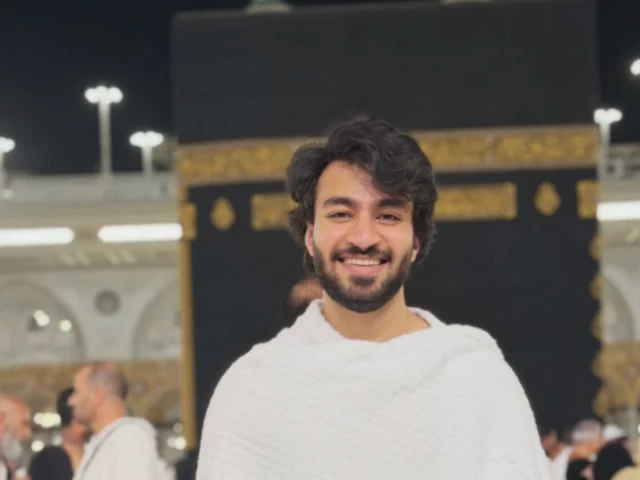
Marking a contemplative milestone, the singer-songwriter celebrated his 30th birthday on September 4 not through the glitz and high-octane celebration typical of modern pop royalty, but with a deeply personal pilgrimage to Makkah. Sharing the quiet, profound moments of his spiritual journey via Instagram with the caption, "Alhamdulillah! This is how I decided to enter my 30’s. Prayed for everyone," Hannan signaled a maturity that mirrors his meteoric rise.
This grounding is emblematic of a career built on deliberate choices—most notably, turning down a lucrative corporate engineering post in Berlin during the height of the COVID-19 pandemic to bet entirely on his creative instincts. Today, as one of Pakistan’s most-streamed artists, Hannan sits comfortably at the nexus of traditional acoustic lyricism and modern bedroom-pop production. His breakout singles, Iraaday and Bikhra, defied standard industry life cycles, dominating streaming charts for over 100 consecutive weeks.
Read Also
With a monumental feature on Coke Studio season 15 alongside legendary act Kaavish, and ambitious visions to completely revolutionize Pakistan’s live concert culture through immersive production, Abdul Hannan represents the new vanguard of South Asian sound—one where raw computer science logic meets unbridled, poetic artistry.
Detailed Chronology: The Making of a Reluctant Star
The Laboratory to the Studio: Academic Foundations
Long before his soft-spoken vocals echoed across car stereos from Karachi to Lahore, Hannan’s life was defined by logic gates, coding syntax, and complex mathematics. A proud alumnus of the prestigious Ghulam Ishaq Khan Institute of Engineering Sciences and Technology (GIKI)—one of Pakistan’s premier engineering incubators—Hannan earned a degree in computer science.
To the casual observer, he was on a well-worn, highly respectable path: graduate from a top-tier STEM institution, secure a stable corporate job, and build a career within the burgeoning global tech sector. Indeed, as the world ground to a halt during the unprecedented lockdowns of the COVID-19 pandemic, Hannan faced a life-altering crossroads. Armed with his degree, he received a formal offer for a corporate engineering position based in Berlin, Germany.
For many, an engineering job in Europe during a global economic crisis would have been an unmissable golden ticket. But for Hannan, the prospect of writing code within a corporate ecosystem felt fundamentally misaligned with his internal compass. Behind the computer science graduate lay an insatiable songwriter quietly layering acoustic guitar melodies, crafting verses in his bedroom, and exploring the intersections of indie-pop and regional folk.
In a quiet yet radical act of self-determination, Hannan declined the Berlin offer. He chose instead to step into the uncertain, often precarious waters of full-time musicianship—a gamble that would permanently alter the soundscape of contemporary Pakistani music.
The Breakthrough: Iraaday, Bikhra, and the 100-Week Reign
The transition from amateur bedroom producer to chart-topping sensation did not happen overnight, but when the breakthrough arrived, its impact was seismic. Operating largely independently without the backing of a major traditional record label at the outset, Hannan began releasing tracks that captured a distinctly melancholic, deeply atmospheric mood.
His early singles, Iraaday and Bikhra, hit the public consciousness with uncanny precision. Featuring hypnotic vocal delivery, stripped-down guitar chords, and intensely relatable lyrics about longing, modern relationships, and existential drift, the tracks resonated with a generation of listeners navigating similar uncertainties.
Rather than experiencing the brief, volatile surge typical of viral internet hits, Iraaday and Bikhra displayed unprecedented staying power. Both tracks maintained their positions at the pinnacle of Pakistan’s streaming charts for an astonishing duration of over 100 weeks. They transcended casual listening to become cultural touchstones, soundtracking everything from late-night highway drives to viral TikTok reels, and cementing Hannan as a foundational pillar of the new indie-pop wave in South Asia.
Crossing the Mainstream Rubicon: The Coke Studio Epoch
For independent artists in Pakistan, crossing over from the digital streaming underground into the traditional mainstream media ecosystem has historically required navigating rigid institutional gatekeepers. For Hannan, that bridge was crossed definitively in 2024 with his inclusion in Coke Studio, Pakistan’s premier musical institution.
Collaborating with the legendary indie-pop pioneers Kaavish, Hannan lent his distinct vocal stylings to the track O Yaara. The pairing was a masterclass in inter-generational musical dialogue: the wistful, nostalgic aesthetic of Kaavish blended seamlessly with Hannan’s modern, atmospheric indie sensibilities.
The appearance served as a critical validation of his artistic weight. While his digital streaming numbers had already proven his mass appeal, Coke Studio introduced Hannan to demographics outside the digital-native youth, solidifying his status as a nationally recognized artist capable of holding his own alongside heritage acts.
Supporting Context & Metrics: Decoding the "Hannan Phenomenon"
Spotify Data and Regional Listening Habits
To understand the true scale of Abdul Hannan’s reach, one must look beyond anecdotal success and examine the cold, hard metrics provided by global streaming giants. Regional consumption data released by Spotify over recent years paints a vivid picture of a cultural shift in Pakistani listening habits.
A comprehensive breakdown of listening trends revealed that Hannan was firmly entrenched among the five most-streamed local artists across the province of Sindh, keeping elite company alongside veteran icons like Atif Aslam, hip-hop powerhouses Young Stunners, and fellow contemporary indie stars Hasan Raheem and Asim Azhar.
In the bustling metropolis of Karachi—a cultural melting pot with notoriously diverse musical tastes—Hannan’s dominance was particularly pronounced. Both Iraaday and Bikhra anchored themselves firmly in the city’s top-played tracks, rubbing shoulders on algorithmic playlists with international heavyweights, trailing only global hits like King’s Tu Aake Dekh Le.
This data illustrates a profound decentralization of Pakistani music. No longer is the mainstream dictated solely by television broadcasts or film soundtracks; instead, localized, algorithm-driven streaming preferences are crowning artists based on intimate, personal connections forged through headphones and smartphone screens.
The Independent Blueprint
Hannan’s success serves as a vital case study in the modern democratization of music production and distribution. Armed with a computer science background, his technical literacy likely afforded him an intuitive understanding of digital metadata, platform algorithms, and self-distribution tools. By leveraging digital-first ecosystems rather than relying on legacy television networks or physical distribution, Hannan was able to bypass traditional gatekeeping mechanisms. He built a direct, unmediated relationship with his fanbase—a blueprint that subsequent independent artists across South Asia continue to study and emulate.
Official Statements and Artistic Philosophy
Despite the dizzying velocity of his rise, Abdul Hannan has maintained a remarkably grounded public persona, often using interviews and social media dispatches to reflect on the philosophical underpinnings of his career choices.
Reflecting on his decision to turn down the corporate engineering path in Berlin during the pandemic, Hannan has frequently emphasized the importance of authenticity over security. In various reflections, he has noted that the structural certainty of a 9-to-5 engineering career offered financial peace of mind, yet felt utterly devoid of the emotional resonance he found in songwriting.
"Alhamdulillah! This is how I decided to enter my 30’s," Hannan shared on Instagram alongside his recent pilgrimage imagery, underscoring a worldview that places spiritual grounding and personal introspection far above the superficial metrics of celebrity.
Furthermore, Hannan has been vocal about the responsibilities of modern artists in shaping public spaces. Rather than viewing music as a purely solitary, digital endeavor consumed through isolated earbuds, he views performance as a communal, sacred experience—one that demands the highest levels of artistic integrity and logistical ambition.
Future Outlook: "The Abdul Hannan Experience" and Live Production
Having conquered the streaming charts and established his presence on heritage platforms like Coke Studio, Abdul Hannan’s ambitions are now pivoting toward a vastly more complex frontier: the live concert experience in Pakistan.
Hannan has been candidly critical of the current state of live entertainment within the country. Historically, Pakistan’s live music circuit—while rich in passion and energy—has often struggled with technical limitations, subpar sound engineering, inconsistent staging, and a lack of holistic visual storytelling. For an artist whose music is so deeply textured and atmospheric, standard concert setups often fail to capture the immersive emotional depth of his recorded work.
To combat this, Hannan has begun formulating plans to radically overhaul the domestic live touring infrastructure. Drawing inspiration from global arena pioneers like Coldplay—renowned for their integration of immersive visual projections, interactive wristbands, and multi-sensory audience engagement—Hannan has floated the concept of "The Abdul Hannan Experience."
This hypothetical initiative aims to shift the paradigm of Pakistani concerts from simple stage performances to fully immersive audio-visual journeys. By investing heavily in state-of-the-art sound production, custom lighting design, and narrative-driven stage shows, Hannan hopes to elevate the standard for all touring acts in the region.
As he steps into his fourth decade, the former computer science student stands at the intersection of logic and magic. Whether he is programming synthesizers in a studio, scripting algorithms for his digital releases, or engineering the future of South Asian live performance, Abdul Hannan’s trajectory suggests that his most ambitious compositions are still yet to be written.




Comments
Facebook App ID not configured. Please add it in the Customizer.