
Executive Overview
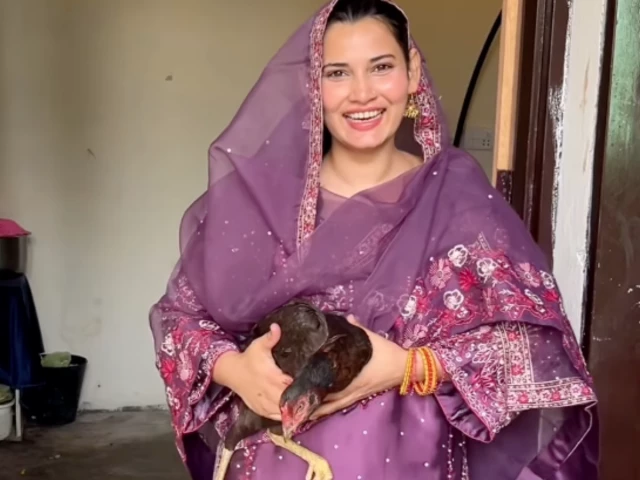
In the modern digital economy, the boundary between the mundane and the extraordinary has been fundamentally reshaped by social media platforms. Across the globe, everyday individuals are converting personal routines into powerful engines for social mobility, brand building, and community engagement. Yet, few narratives capture this cultural phenomenon quite as vividly as that of the viral content creator widely recognized across South Asian digital spheres as "DHA Wali Maid."
Operating out of Lahore, Pakistan’s affluent Defence Housing Authority (DHA) district, this domestic worker turned digital personality has captured the public imagination. What began as a traditional, grueling schedule involving domestic labor across multiple households has evolved into a thriving online enterprise. More importantly, this transition has not merely served as a vehicle for personal celebrity; rather, it has acted as a catalyst for profound socio-economic transformation, directly reshaping the educational trajectory and life prospects of her children.
This case study examines the intersection of digital democratization, economic precariousness, and social mobility. By analyzing the trajectory of the DHA Wali Maid, this report explores how informal labor markets interact with the creator economy, the structural challenges faced by domestic workers in urban South Asia, and the tangible metrics of success that differentiate genuine socioeconomic empowerment from transient internet virality. Through a journalistic lens, we examine how a simple employer-employee suggestion blossomed into a platform capable of dismantling generational educational barriers.
Read Also
Detailed Chronology: The Evolution of a Digital Trailblazer
The Foundation of Precarity: The Early Labor Conditions
Long before ring lights, viral video trends, and brand collaborations entered her vocabulary, the creator’s life was defined by the relentless physical demands of the informal domestic labor sector in Lahore. Like millions of women in developing economies, she navigated a grueling daily routine characterized by underpaid, exhausting physical labor across disparate private residences.
In her early days in the workforce, her primary source of income was a meager Rs 6,000 monthly salary earned at a single employer’s residence, supplemented by concurrent jobs in three additional households. This staggering division of labor yielded an income insufficient to break the cycle of generational poverty. Her children were enrolled in local government-funded institutions—schools frequently plagued by infrastructural deficits, high student-to-teacher ratios, and limited upward academic mobility. For years, the prospect of enrolling her children in a reputable private academy remained an unattainable aspiration, deferred indefinitely by the harsh realities of survival economics.
The Catalyst: An Employer’s Vision
The turning point in this narrative arrived not through a structured government intervention or a labor union initiative, but through an unexpected catalyst: her primary employer. Recognizing an authenticity and natural charisma in her daily interactions, the employer suggested an unconventional path—documenting her lived reality as a domestic worker on Instagram.
Initially, the endeavor was modest. The content captured unvarnished, everyday routines: cooking meals, managing household chores, and reflecting on the realities of working-class life in an upscale neighborhood. However, the digital landscape proved hungry for genuine, unfiltered representation. In a digital ecosystem saturated by hyper-curated lifestyles and manufactured luxury, the raw authenticity of the DHA Wali Maid struck a profound chord with audiences.
Exponential Growth and Digital Crossover
As the follower count climbed, so did the nature of the content. What started as simple documentation evolved into a sophisticated blend of lifestyle content, relatable commentary, and digital trend participation. The creator began experimenting with viral Gen Z trends, light-hearted comedy, and fashion showcases—all while maintaining the grounding presence of her domestic reality.
Crucially, this growth translated into tangible economic shifts. Recognizing her rising value and the expanding demands of her digital presence, her primary employer transitioned her to a full-time role with an enhanced compensation structure. Combined with monetization opportunities from her burgeoning social media platforms, this financial elevation provided the liquidity necessary to pivot from mere survival to long-term generational investment.
Breaking Barriers: The Milestone of Educational Access
The culmination of this multi-year journey manifested in a milestone shared with her digital community: the successful enrollment of her children into a private educational institution.
In a widely circulated Instagram post, she documented the emotional reality of this transition. Surrounded by the familiar domestic tools of her labor—preparing meals in a modest kitchen—she reflected on the journey from earning Rs 6,000 across multiple households to securing admissions in some of Lahore’s most prestigious academic corridors. Her search for an educational institution extended across the elite educational landscape of Defence, Lahore, encompassing historic institutions such as Aitchison College, Beaconhouse School System, and The City School.
Her documentation of school visits, campus tours, and playful interactions with academic environments transformed her personal victory into a public masterclass in aspiration. Followers did not merely watch; they celebrated her as an "inspiration" and a "super mama," recognizing that her digital success was being funneled directly into the bedrock of her children’s futures.
Supporting Context & Metrics: The Creator Economy and Informal Labor
The Socio-Economic Landscape of Domestic Labor in Pakistan
To fully comprehend the magnitude of the DHA Wali Maid’s achievement, one must examine the broader socio-economic realities governing domestic labor in South Asia. According to data from the International Labour Organization (ILO), millions of informal domestic workers—predominantly women—form the invisible backbone of urban households in Pakistan. Despite their essential role in maintaining the urban middle and upper classes, these workers frequently operate outside the protective umbrella of labor laws, lacking minimum wage guarantees, health insurance, social security, and paid leave.
[Traditional Informal Labor] ---> [Employer Encouragement] ---> [Digital Content Creation]
          |                                                              |
          v                                                              v
   (Subsistence Wages)                                          (Monetized Platforms)
          |                                                              |
          v                                                              v
(Government Schooling)                                        (Elite Private Education)
The economic disparity between government-funded public schools and elite private institutions in Pakistan is stark. While public schools often suffer from systemic underfunding and high dropout rates, private academies like Beaconhouse, The City School, and Aitchison College offer rigorous curricula, English-medium instruction, and robust extracurricular ecosystems that dramatically increase a student’s probability of higher education and white-collar employment. By bridging this educational divide through digital earnings, the creator effectively compressed a multi-generational climb into a single career pivot.
The Democratization of Digital Media
The rise of short-form video platforms in South Asia has fundamentally altered the traditional gatekeeping mechanisms of media and entertainment. Historically, upward economic mobility through media required formal education, elite linguistic capital, and access to capital-intensive production studios.
Platforms such as Instagram Reels and TikTok have lowered these barriers to entry to near-zero. Armed with little more than a smartphone and internet connectivity, marginalized individuals can bypass traditional media houses to build direct-to-consumer audiences. In the case of the DHA Wali Maid, her success validates the thesis that hyper-local, authentic narratives possess global currency in the attention economy. Her audience values her precisely because she defies the archetype of the polished influencer, offering instead a bridge between two vastly different socioeconomic worlds.
Comparative Economic Metrics
| Metric Category | Pre-Digital Era | Post-Digital Evolution |
|---|---|---|
| Primary Income Source | Multiple part-time domestic jobs (Rs 6,000 base + auxiliary) | Full-time employment + social media monetization |
| Educational Access | Under-resourced local government schools | Elite private institutions (Beaconhouse, The City School, etc.) |
| Social Capital | Isolated within informal labor networks | Tens of thousands of engaged digital followers and brand allies |
| Generational Trajectory | Perpetuation of manual, informal labor | Access to white-collar academic pipelines |
Official Statements and Social Commentary
The cultural resonance of the DHA Wali Maid’s journey has sparked widespread discourse across digital forums, cultural commentary columns, and social work networks. While formal institutional statements from government bodies regarding this specific case remain sparse, the sociological response provides a robust framework for understanding its impact.
Public Reception and the "Super Mama" Archetype
Commentary across her social media channels highlights a profound shift in how audiences consume working-class narratives. Rather than viewing domestic labor through a lens of pity—a historical failing of traditional media—audiences have embraced her through an empowerment framework.
Sociologists note that her branding as a "super mama" reframes motherhood not as a passive state of sacrifice, but as an active, entrepreneurial campaign for child welfare. In her caption announcing her children’s school admission, the juxtaposition of her labor—chopping vegetables and preparing meals while showcasing affordable fashion—humanized the influencer economy. It sent a clear message: economic uplift does not require erasing one’s roots or daily labor; rather, it can be built upon the dignity of honest work amplified by modern digital tools.
Digital Ethics and the Creator-Employer Dynamic
The narrative also sheds light on the evolving dynamics of modern employment in urban households. The intervention of her employer—encouraging digital documentation rather than suppressing it—serves as a case study in progressive employer-employee relations in the digital age.
While critics in digital spaces occasionally debate the ethics of filming domestic spaces or the potential risks of public exposure, the prevailing sentiment among labor advocates is largely positive. When employers actively facilitate digital literacy and platform creation for marginalized workers, the power imbalance inherent in domestic service is subtly reconfigured. The worker transitions from a subordinate helper to an independent economic actor.
Future Outlook: Sustainability, Legacy, and the Road Ahead
As the DHA Wali Maid continues to navigate her dual identity as a domestic worker and an emerging digital personality, several critical questions define her future trajectory and the broader implications of her journey.
Scaling the Digital Enterprise
The primary challenge facing accidental influencers who capture lightning in a bottle is long-term content sustainability. Virality driven by novelty eventually matures into a demand for structured content strategy, brand partnerships, and diversification of revenue streams.
To secure long-term financial independence for her family—moving beyond the fluctuations of algorithm-driven ad revenue—transitioning toward formal brand ambassadorships, sponsored lifestyle content, and community-driven merchandising will be essential. Furthermore, establishing financial literacy and savings vehicles will ensure that current earnings translate into permanent, inflation-resistant assets, particularly as her children enter advanced academic stages requiring higher tuition fees.
Redefining the Next Generation
The ultimate metric of the creator’s success will not be measured by follower counts, media interviews, or viral reach, but by the academic and professional achievements of her children. By stepping inside the gates of Lahore’s premier private schools, her children enter a competitive ecosystem designed to produce the nation’s future leaders, engineers, and entrepreneurs.
The narrative forged by their mother ensures that they carry forward a unique synthesis of working-class resilience and elite educational access—a powerful combination in any society.
Broader Implications for Informal Workers
Finally, the story of the DHA Wali Maid serves as a blueprint for informal workers globally. As the gig economy and digital platforms expand into developing nations, the potential for decentralized digital entrepreneurship to bypass traditional class barriers becomes increasingly viable. While digital platforms cannot replace systemic labor reforms, robust minimum wage laws, and equitable public education, they offer an immediate, agile weapon for individuals willing to claim space in the digital public square.
In the final analysis, her journey offers a vital reframing of contemporary digital culture. In an era where social media is frequently indicted for breeding superficiality, vanity, and social division, the story of the DHA Wali Maid stands as a testament to its redemptive power: a space where a smartphone, an authentic voice, and an unbreakable maternal resolve can fundamentally rewrite a family’s destiny.





Comments
Facebook App ID not configured. Please add it in the Customizer.