
Executive Overview
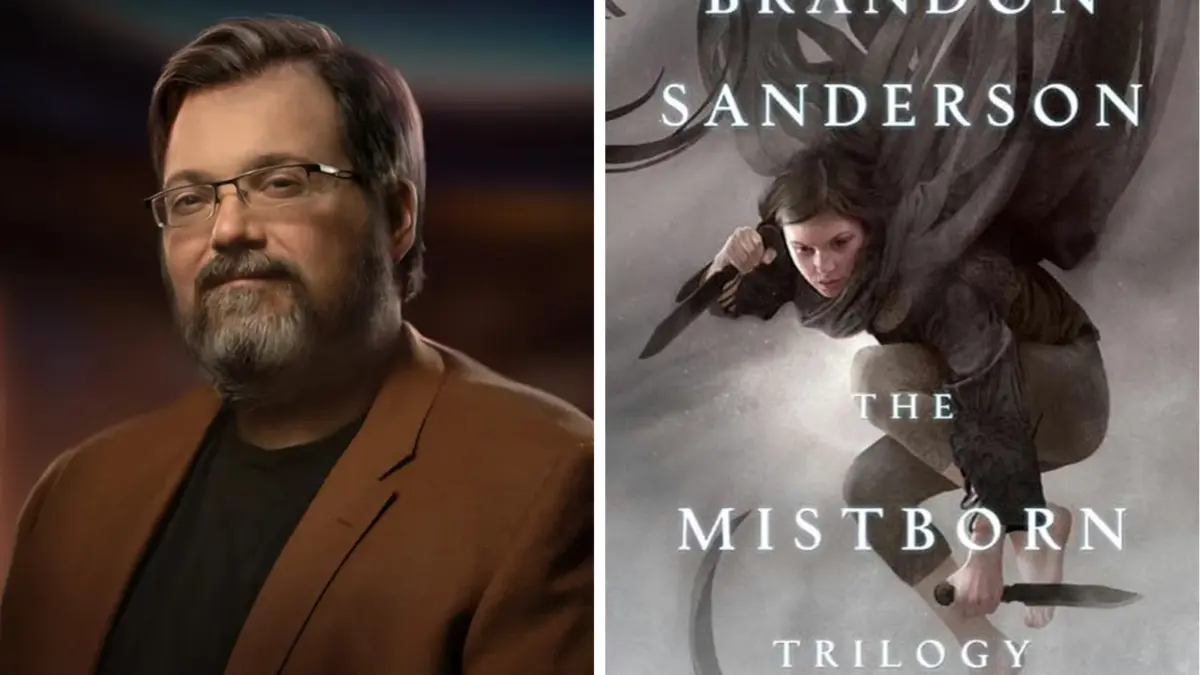
Earlier this year, the entertainment industry buzzed with a monumental announcement: Apple secured the coveted adaptation rights to Brandon Sanderson’s expansive, multi-million-selling Cosmere universe. The landmark deal designated monumental plans to split the author’s primary intellectual properties across distinct mediums, envisioning Mistborn as a high-octane theatrical feature film and The Stormlight Archive as a prestige, long-form television series for Apple TV+.
Now, in a development that defies standard Hollywood timelines, Sanderson has officially confirmed the completion and submission of the first draft for the Mistborn feature screenplay. For a literary universe known for its intricate world-building and dense magical topologies, translating prose into a screenplay is typically a protracted, arduous exercise. Yet, Sanderson’s legendary productivity—a trait that has earned him near-mythic status among modern fantasy writers—has seemingly broken the barrier of a notoriously sluggish medium.
While the ink on this initial draft has barely dried, Sanderson has maintained his trademark transparency, offering fans a granular play-by-play of the adaptation process over the preceding months. Though these updates were small individually, they coalesce into a fascinating retrospective of how a master world-builder approaches Hollywood. As the production pipeline stands on the precipice of pre-production, this comprehensive analysis explores the triumphs, trials, and structural revisions shaping the cinematic birth of Scadrial.
Read Also
Detailed Chronology: The Breakneck Pace of the Mistborn Script
From Concept to Completion in Record Time
The journey of the Mistborn screenplay from a blank page to a submitted draft is a study in relentless focus. Back in February, Sanderson casually revealed that the script sat at a modest 2 percent completion rate. By late July, the author officially signaled that the milestone first draft had crossed the finish line.
To industry outsiders, a turnaround measured in mere months for a tentpole blockbuster script sounds impossibly rushed. However, Sanderson’s output has consistently shattered conventional writing norms. The real narrative behind the completion date lies in the recursive nature of his drafting process. Sanderson noted that the final stretch of writing was slightly elongated by his compulsion to leap backward and revise foundational material laid down months prior. Consequently, the incremental "percentage updates" he shared with his readership throughout the spring and summer mapped out only newly minted text, masking the heavy lifting of structural overhauls and micro-revisions happening beneath the hood.
A True First Draft
Despite the rapid momentum, Sanderson has been quick to temper fan expectations, emphasizing that the document is, unequivocally, a raw first draft. The journey from script to screen is an endurance race, not a sprint. The completion of this draft represents the end of step one in a multi-year gauntlet involving studio notes, director attachments, casting chemistry reads, and visual effects budgeting. Principal photography for Mistborn remains a distant horizon; the production machinery is still far from mobilizing cameras on a physical set.
Supporting Context & Metrics: Tackling the Adaptation Obstacles
Adapting a 500-page high-fantasy epic into a standard 140-page screenplay requires brutal structural triage. In navigating this transition, Sanderson revealed the unique hurdles he faced and the tactical decisions that defined his first major foray into screenwriting.
The Problem of the Internal Monologue
Early in the writing process, Sanderson correctly anticipated that the most agonizing casualty of adaptation would be sheer volume—deciding what material to cut entirely. However, he found a surprising creative anchor by leaning into the structural rhythms of his early inspirations: heist thrillers like Sneakers and Ocean’s 11, which fundamentally influenced the architecture of the original Mistborn novel.
Instead of the plot mechanics, the most formidable roadblock proved to be internal monologues. Literature allows authors to effortlessly bleed characters’ inner thoughts, insecurities, and philosophical musings directly onto the page. On film, however, this psychological real estate vanishes unless reliance is placed on clunky, expository voiceovers. Sanderson confessed that he had to meticulously deconstruct and rewrite the script "line by line" to circumvent this cinematic limitation, opting for externalized visual storytelling over internal exposition.
Script Economics: Continuity and the "Clubs" Dilemma
Faced with the mathematical impossibility of translating every single page of a sprawling fantasy novel to a visual format, Sanderson made a conscious choice: the Mistborn film will not strive to be a 1:1 literal translation of the book.
Instead, the film will establish a "new continuity." This alternate canon will remain compatible with the overarching lore of the books while operating under strict cinematic economy. Characters who are beloved in print may see their roles severely truncated on screen. As a prime example, Sanderson noted that the crew member Clubs will likely not function as a major dramatic character in the movie. This does not mean Clubs is erased from the universe; rather, he may occupy background space in scenes, existing in the room to maintain canonical integrity without draining precious runtime on auxiliary subplots.
The James Gunn Philosophy: Mitigating Reshoots
Though Sanderson’s exact leverage within the wider studio apparatus remains untested, he has openly voiced a strategic desire to mirror the methodology of filmmaker James Gunn. The core of this philosophy is simple: invest disproportionate effort into locking down a bulletproof, airtight script before filming begins to bypass the need for costly, disruptive reshoots.
Reshoots are notorious for bloating budgets, fracturing continuity, and introducing production chaos. By sweating the details of the narrative architecture now, Sanderson hopes to insulate the production from the reactionary rewrites that plague modern blockbuster filmmaking—even if the film still lacks an officially attached director to weigh in on the blueprint.
Official Statements: Key Creative Overhauls
In various public appearances, podcasts, and interviews over the preceding months, Sanderson has dropped major bombshells regarding how the world of Scadrial will be visually and structurally altered for the silver screen.
1. The Magic System Gets Streamlined
One of the most defining pillars of Sanderson’s literary career is "Hard Magic"—systems governed by strict, scientific rules. In Mistborn, Allomancy allows practitioners to burn specific metals to grant superhuman physical and mental abilities. Translating every single facet of this complex metallurgical magic system to film risked alienating general audiences.
During an appearance on the Very Really Good podcast, Sanderson addressed this directly:
"I think I’m going to have to downplay a few of the abilities… I don’t want to have so many things for people to keep track of. I’m looking at sort of… doing things where the things you like from the book are there behind the scenes, but we’re not talking about them. Like, all the powers are there, but we’re emphasizing a few of them. We may not even mention the other powers, but you’ll be able to, if you’ve read the books, see that they are still canon…"
This philosophy mirrors his handling of minor characters: the comprehensive lore remains intact for eagle-eyed readers, but the surface-level cinematic presentation will streamline the mechanics to keep the narrative pacing taut and digestible.
2. Aging Up Vin
In the pages of the original 19th-century-inspired novel, protagonist Vin is introduced as a hardened street urchin of roughly 16 years of age. In the upcoming film adaptation, Vin is slated to be aged up to 18 or 19, with the expectation that the role will be cast with an actor in their early twenties.
Sanderson reflected on this retroactive adjustment, admitting that if he were writing the book today, he would have made her older from the start. Much of her dialogue, emotional weight, and agency inherently align better with early adulthood. Furthermore, her younger age in the original manuscript was a product of a literary era enamored with youth tropes (such as Disney’s The Little Mermaid), a narrative device Sanderson now views as over-exhausted.
3. Preserving Iconic Beats Over Invented Filler
Addressing misconceptions about how adaptations should bridge the gap between literature and film, Sanderson pushed back against the Hollywood convention that adapting a massive book requires inventing entirely new narrative arcs or filler scenes.
Instead, his screenwriting philosophy revolves around identifying the absolute most iconic, resonant set-pieces from the source material and building the narrative scaffolding outward from those immutable anchors. While alterations are inevitable due to structural cuts, the goal is to honor the moments fans cherish most rather than diluting the runtime with newly fabricated plot points.
Future Outlook: Creative Freedom Under the Apple Banner
As the dust settles on the completion of the first draft, a vital question remains: how much creative control does Brandon Sanderson truly wield?
Early indicators point to an unusually collaborative, hands-off approach from the studio. Sanderson revealed that Apple executives offered minimal feedback during the early and middle stretches of the writing process, only beginning to request targeted revisions when the script was roughly 90 percent complete.
This level of autonomy is precisely what Cosmere fandom prayed for when the massive Apple partnership was inked. While Hollywood history is littered with promising fantasy adaptations that derailed in the transition from page to screen, Sanderson’s direct stewardship of the Mistborn script offers a rare shield against misinterpretation.
With the first draft successfully submitted, the project now enters the unpredictable waters of pre-production. Directors will be courted, casting sheets will be drawn up, and the sprawling ash-choked empire of the Final Empire inches one step closer to becoming a tangible reality on screens worldwide. For now, the author’s legendary velocity has given the monumental undertaking the strongest possible start.



Comments
Facebook App ID not configured. Please add it in the Customizer.