
Executive Overview
In the contemporary literary landscape, the responsibilities of a successful author extend far beyond the solitary act of writing prose. For middle-grade maestro and multi-bestselling author James Ponti, the creation of a novel is merely the foundational first step in a complex, multidisciplinary enterprise. Over the course of penning 16 acclaimed novels—including the hit series City Spies, Spy School, and The Sherlock Society—Ponti has discovered that modern authorship requires wearing an astonishing array of professional hats: web designer, podcaster, social media strategist, content creator, graphic artist, video editor, and marketer.
This paradigm shift in publishing demands that creators engage audiences across multiple digital and physical touchpoints. In this deep dive, we explore Ponti’s recent campaign for his latest page-turner, The Sherlock Society: Art Attack (published by Simon & Schuster). By bridging the worlds of middle-grade detective fiction and authentic Miami street art, Ponti orchestrated a masterclass in promotional strategy. Through a unique collaboration with professional graffiti artist Santiago Conde, Ponti successfully blurred the lines between fiction and reality, proving that innovative, out-of-the-box marketing is no longer optional for authors aiming to capture the imaginations of today’s digitally native young readers.
Detailed Chronology: From Concept to Concrete Murals
The journey of The Sherlock Society: Art Attack offers a fascinating case study in how literary inspiration, field research, and strategic marketing intertwine. The timeline of this unique project illustrates the organic evolution of a book launch from a simple conceptual spark to a sprawling, multi-platform promotional campaign.
Read Also
Phase 1: The Inciting Incident and Research in Miami
Like many of Ponti’s gripping narratives, Art Attack began with a single, compelling "what if" question: What if Banksy witnessed a serious crime, but couldn’t tell the police about it without revealing his identity and incriminating himself?
This creative query took root during a routine research trip to Miami, the vibrant setting for The Sherlock Society series. Ponti routinely visits the coastal metropolis twice a year to conduct field research for current projects while simultaneously scouting inspiration for future installments. During one particular excursion, he explored the city’s famed Wynwood neighborhood—an area that has transformed from an abandoned RC Cola bottling factory into one of the largest concentrations of street art in the world. Spanning 50 blocks of breathtaking, vibrant murals, Wynwood serves as a testament to Miami’s status as a premier global art capital.
Phase 2: Hitting the Pavement and Learning the Craft
While immersing himself in Wynwood’s creative ecosystem during the development of Art Attack, Ponti decided to experience the medium firsthand. He enrolled in a graffiti workshop taught by talented local street artist Santiago Conde.
While Ponti admits his own attempts at wielding a spray can yielded thoroughly underwhelming artistic results, the session sparked a pivotal brainstorm. Recognizing an opportunity for future promotional content, Ponti asked Conde to quickly spray-paint the words "Sherlock Society" onto a practice wall, capturing the moment with a quick snapshot. At the time, he had no idea that this single photograph would become the cornerstone of his upcoming launch campaign.
Phase 3: Merging Fiction with Reality
In Art Attack, the plot centers on an activist artist who protests the corrupt misdeeds of local politicians and corporate leaders by leaving taunting graffiti signed by a mysterious character named "Funky Munky." When the entire city of Miami becomes obsessed with unmasking the artist, the youthful members of the Sherlock Society are hired to crack the case.
When it came time to design the marketing plan for the book, Ponti envisioned bringing the novel’s fictional street art into the physical world. However, recognizing his own artistic limitations, he remembered the photograph of Santiago Conde’s tag. Reaching out to Conde alongside his publishing marketing director, Ponti proposed a daring collaboration: to bring the fictional graffiti from the pages of Art Attack into the tangible streets of Miami.
Phase 4: Execution and Immortalization
Conde immediately jumped at the opportunity. Working closely from the manuscript, Conde paid careful attention to the specific color palettes and character descriptions outlined in the text—elements crucial to how the fictional mystery is ultimately solved.
After refining the initial pencil sketches, Conde produced a dynamic suite of digital assets, social media videos, and promotional graphics utilized across Ponti’s book tour, digital channels, and official book trailer. The crown jewel of the campaign materialized on 24th Street between 2nd and 5th Avenues in Wynwood, where Conde painted a massive, authorized mural of the book’s fictional street art. This physical installation successfully bridged the gap between reader and writer, transforming a fictional narrative into an indelible landmark.
Supporting Context & Metrics: The Four Pillars of Authorial Marketing
To manage the overwhelming demands of cross-platform promotion without sacrificing his primary duty as a writer, James Ponti adheres to four strict guiding principles. These metrics of engagement and strategic rules serve as a blueprint for contemporary creators navigating the digital age.
Rule #1: Make It Look Like You Weren’t the One Who Made It
Ponti maintains a rigorous standard for all self-produced promotional materials, including author websites, social media graphics, and digital video trailers. The goal is to project the polish of a multi-million-dollar publishing house rather than the scrappy output of an untrained writer operating on a tight budget. Achieving this aesthetic requires immense patience, continuous trial-and-error, and a willingness to master basic design principles. The ultimate validation for Ponti is when fellow authors inspect his homemade promotional swag and ask whether it was produced by his official publishing team.
Rule #2: Expand the Book Beyond the Page
For authors writing for children and young adults, fostering a sense of immersion is paramount. Ponti actively seeks ways to make his fictional worlds overlap with his readers’ everyday lives.
A prime example of this strategy occurred during the promotional rollout for his City Spies series. Ponti collaborated with Spy School author Stuart Gibbs to host a sprawling 90-minute virtual event featuring two retired CIA agents. By comparing and contrasting their fictional spies with real-life intelligence operatives, the authors delivered an educational, highly entertaining experience that culminated in the former Deputy Director of the CIA publicly praising his favorite City Spies character—an unforgettable moment that electrified the audience and drove massive engagement.
Rule #3: Work Closely with Your Publishing Team
An author’s promotional efforts should never operate in a vacuum; they must harmonize seamlessly with the broader release schedule orchestrated by traditional publishers. Ponti maintains constant communication with the publicity and marketing departments at Simon & Schuster, sharing upcoming initiatives to ensure structural alignment.
This collaborative synergy was vividly demonstrated during the rollout of The Sherlock Society. Because the story revolves around an after-school detective club meeting in a middle school library, Ponti proposed allowing real-world middle school libraries to form official chapters of the Sherlock Society. The Simon & Schuster marketing team enthusiastically embraced the concept, designing official certificates for participating libraries and personalized membership cards for students—a brilliant initiative born from cross-team communication.
Rule #4: Be Creative
In an industry driven by imagination, creative marketing is the ultimate litmus test for an author’s ingenuity. It is exceptionally easy for creators to fall into repetitive traps: social media feeds begin to mirror one another, book trailers rely on predictable narrative scripts, and author websites frequently bleed into generic templates.
To combat creative fatigue, Ponti insists that promotional stunts must remain entirely organic to the themes of the books themselves. Just as a panel featuring retired intelligence agents made logical sense for a spy thriller, partnering with a professional street artist to tag a real-world wall was the most authentic way to market a middle-grade novel about graffiti and mystery.
Official Statements and Industry Insights
Reflecting on the shifting paradigms of modern authorship, publishing analysts frequently point to Ponti’s multifaceted approach as a benchmark for contemporary author branding. In interviews discussing the intersection of traditional storytelling and digital enterprise, Ponti has consistently emphasized the necessity of adaptability.
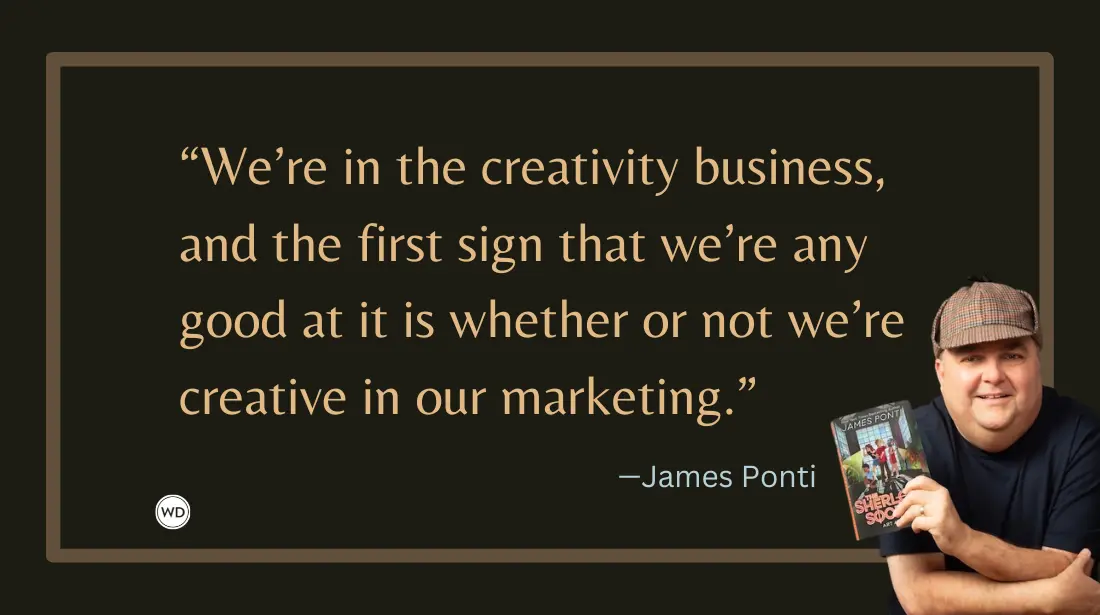
"I’m continually amazed by how much of my job involves things other than writing books," Ponti notes, reflecting on his extensive bibliography. "Over the course of 16 middle-grade novels, I’ve come to learn that being an author also means being a web designer, podcaster, social media strategist, content creator, graphic artist, video editor, and marketer."
Industry insiders at major publishing houses have similarly lauded the campaign for The Sherlock Society: Art Attack as a stellar example of grassroots promotional innovation. By empowering local artists and utilizing physical urban spaces to advertise a literary work, the collaboration between Ponti, Conde, and Simon & Schuster demonstrates how traditional marketing models can be successfully supercharged through community engagement and multimedia experimentation.
Future Outlook: The Future of Experiential Book Promotion
As the publishing industry continues to evolve in response to shifting consumer habits and digital saturation, traditional book tours and static print advertisements are no longer sufficient to guarantee breakout success. The future belongs to experiential marketing—campaigns that invite readers to actively step inside the narrative universes crafted by their favorite authors.
James Ponti’s groundbreaking work with The Sherlock Society: Art Attack signals a clear roadmap for the next generation of storytellers. By treating promotional campaigns as living, breathing extensions of the narrative text, authors can forge deeper emotional connections with their audiences. Whether through virtual reality integrations, interactive school library partnerships, or authorized street art murals adorning the walls of cultural hubs like Wynwood, the boundary between fiction and reality is officially porous.
As Ponti looks toward his upcoming literary endeavors, one thing remains certain: the tools of the authorial trade will continue to expand, proving that the most compelling stories often begin long before the first word is ever typed onto the page—and sometimes, they are painted directly onto the concrete.




Comments
Facebook App ID not configured. Please add it in the Customizer.