
Executive Overview
In the contemporary literary landscape, the intersection of digital community engagement and traditional poetic craftsmanship has birthed a dynamic new ecosystem for writers. At the center of this movement is the long-running writing prompt series hosted by Writer’s Digest, spearheaded by the publication’s resident poetry expert, Robert Lee Brewer. This initiative has consistently challenged both novice and seasoned wordsmiths to transcend creative blocks by deploying structured, thematic constraints designed to spark immediate, visceral verse.
This week’s installment leverages a deceptively simple syntactic framework: the declarative phrase "I Can [Blank]." By tasking participants with substituting the blank with a novel word, phrase, or provocative statement to serve as the title of their poem, the prompt acts as a psychological and artistic springboard. Far from imposing restrictive boundaries, the exercise encourages a wide spectrum of tonal exploration—ranging from the deeply confessional and socio-political to the delightfully absurd and self-deprecating.
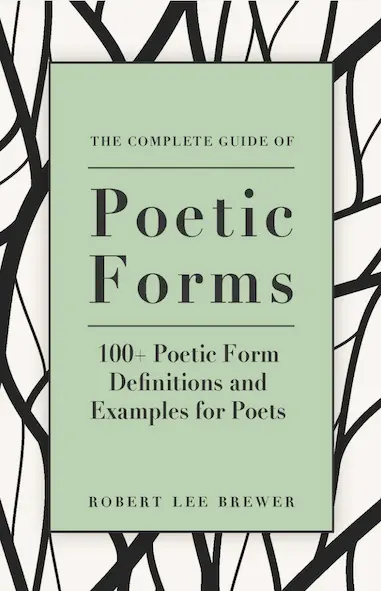
Simultaneously, this literary exercise unfolds against a broader backdrop of renewed interest in classical and experimental poetic forms. To contextualize the ongoing dialogue surrounding poetic structure, this report examines Brewer’s comprehensive reference work, The Complete Guide to Poetic Forms. Detailing more than 100 distinct structures, this resource serves as both an educational anchor and an inspirational catalyst. Furthermore, this investigation explores the mechanics of the weekly prompt, analyzes the structural anatomy of Brewer’s accompanying exemplar poem—titled "I Can Hold My Tongue"—and assesses the technical nuances of community-driven literary engagement in the digital age.
Read Also
Detailed Chronology
The Evolution of the Digital Writing Prompt
The genesis of the modern online writing prompt traces back to the early days of literary blogging, when platforms sought to cultivate active, engaged communities of creators. Over the past two decades, Writer’s Digest transitioned its educational outreach from static print media to interactive digital spaces, creating a virtual workshop environment where poets from across the globe could share work, receive peer feedback, and refine their craft in real time.
- Phase One: Conceptualization and Community Building (Early 2010s): Weekly prompts were initially introduced as simple exercises to drive blog traffic and encourage daily writing habits. Over time, these prompts evolved from generic thematic suggestions (e.g., "write about autumn") into highly stylized, psychologically nuanced structural challenges.
- Phase Two: The Integration of Form and Spontaneity (Mid-to-Late 2010s): Under the editorial guidance of Robert Lee Brewer, the prompts began synthesizing rigorous structural elements from global poetic traditions with accessible, contemporary entry points. Poets were invited to experiment with forms ranging from the pantoum and the ghazal to invented structures.
- Phase Three: The "I Can [Blank]" Paradigm (Present Day): The current iteration of the prompt series strips away the intimidation factor of poetry by anchoring the creative process in a familiar linguistic construction. By forcing the writer to complete an assertion of personal agency or limitation ("I Can Write a Poem," "I Can Get Out and Vote," "I Can Pretend I’m Listening"), the prompt immediately establishes a narrative voice, a rhythmic heartbeat, and a thematic direction.
The Anatomy of This Week’s Exercise
The rollout of the current prompt followed a meticulous pedagogical blueprint designed to maximize creative output while minimizing writer’s anxiety:
- The Core Mandate: Participants are instructed to take the foundational phrase "I Can (blank)", fill the blank with an inventive conceptual phrase, and transform that completed thought into the title of an original poem.
- The Illustrative Examples: To guide participants without boxing them in, Brewer offered a diverse array of potential titles:
- "I Can Write a Poem" (Meta-poetic and self-referential)
- "I Can Talk Out the Side of My Mouth" (Colloquial and performative)
- "I Can Be the Very Best" (Aspirational and pop-culture-adjacent)
- "I Can Get Out and Vote" (Civic and urgent)
- "I Can Pretend I’m Listening to You Right Now Instead of Thinking About Something Else" (Humorous, cynical, and hyper-relatable)
- The Pedagogical Disclaimer: A vital component of the prompt’s release was the explicit reminder that rules and prompts are designed to be broken, bent, or entirely subverted. They are intended as springboards to expand artistic horizons rather than cages to limit expression.
Supporting Context & Metrics
Quantitative Metrics of Online Poetry Engagement
The viability and cultural footprint of digital poetry prompts can be measured through various engagement indicators across publishing platforms, educational resource sales, and community interaction metrics:
- Community Participation Rates: Weekly prompts on the Writer’s Digest blog routinely generate dozens of distinct, highly engaged comment submissions, with a core community of recurring writers sharing full-length poems directly within the Disqus-powered comment sections.
- Resource Demand for Poetic Forms: Educational compendiums addressing poetic structures—most notably Brewer’s The Complete Guide to Poetic Forms—have seen steady demand among MFA candidates, independent writers, and high school educators seeking comprehensive definitions and examples for more than 100 poetic forms.
- Demographic Spread: Analytics across literary blogs indicate that modern poetry prompts attract a remarkably diverse demographic base, spanning retirees discovering creative writing later in life, tech professionals seeking analog creative outlets, and younger writers utilizing social media platforms (such as Instagram and TikTok) to bridge traditional forms with contemporary sensibilities.
The Role of Poetic Forms as Structural Scaffolding
While prompts provide the spark, poetic forms provide the architectural integrity. In The Complete Guide of Poetic Forms, Brewer emphasizes that constraints are not shackles, but rather liberating frameworks. Understanding the mechanics of form allows a poet to manipulate pacing, emotional resonance, and thematic delivery with surgical precision.
When a writer combines a prompt like "I Can [Blank]" with a strict structural form—such as a sonnet, a villanelle, or a Sestina—the tension between the colloquial prompt and the rigid form creates a dynamic literary push-and-pull. This interplay forces unexpected linguistic choices, preventing clichéd phrasing and compelling the writer to discover fresh imagery.
Official Statements and Expert Analysis
Robert Lee Brewer on the Philosophy of Prompt-Based Writing
In discussions surrounding his pedagogical methodology, Robert Lee Brewer has consistently argued that the primary enemy of the writer is not a lack of talent, but the paralyzing expanse of the blank page.
"Prompts are designed to remove the crushing weight of infinite possibility," Brewer notes in his editorial commentaries. "When you tell someone to ‘write a poem about anything,’ they freeze. When you give them a linguistic sandbox—such as forcing them to boldly declare what they can or cannot do right in the title—you instantly give them a character, a voice, and an immediate dramatic situation to resolve."
This philosophy is vividly demonstrated in Brewer’s own exemplar poem published alongside the prompt, titled "I Can Hold My Tongue."
Critical Deconstruction of "I Can Hold My Tongue"
Brewer’s poem serves as a masterclass in tonal shifting, bridging conversational intimacy with high literary allusion:
If I’m being completely honest,
I can hold my tongue
some of the time
but not always
obviously
because here I am
laying it all out on the table again
The poem opens with disarming candor, adopting the cadence of a casual coffee-shop confession. Yet, it swiftly pivots into profound literary territory, invoking T.S. Eliot’s iconic modernist masterpiece, The Love Song of J. Alfred Prufrock:
like one of those etherized patients
that is actually the evening sky in
a T. S. Eliot poem,
so let’s go then and pretend
we’re not aging
when we are
and that we’re not fretting
when we are
all just waiting for our 15 minutes
or 30 seconds
or whatever the going rate is
for fame nowadays
on television
in the newspaper
or social media,
By seamlessly weaving high modernist ennui ("etherized patients," the evening sky) with hyper-modern anxieties about digital validation ("fame nowadays / on television / in the newspaper / or social media"), Brewer illustrates how a simple prompt can tackle complex cultural critiques. The poem concludes with a resolute declaration of authentic self-expression:
and honestly again
(because you know that we are friends)
I can hold my tongue
(heck, I can bite it clean off)
but I won’t
when I don’t
think it’s the right thing to do.
Through this final stanza, the poem transforms from a meditation on self-restraint into a manifesto for artistic and personal integrity. It demonstrates precisely what the weekly prompt aims to achieve: taking a mundane, everyday idiom and elevating it into an examination of human conscience.
Future Outlook
The Trajectory of Digital Literary Communities
As artificial intelligence increasingly encroaches upon commercial copywriting and baseline content creation, human-driven literary communities are experiencing a cultural renaissance. Platforms that foster authentic human interaction, peer-to-peer critique, and vulnerable creative exploration—such as the Writer’s Digest prompt boards—are becoming vital sanctuaries for authentic artistic expression.
Looking forward, several key trends are anticipated to shape the landscape of poetry prompts and digital writing exercises:
- Cross-Disciplinary Prompts: Future writing exercises are expected to increasingly blend textual poetry with multimedia elements, encouraging poets to pair their verse with digital art, ambient soundscapes, or short-form video performances.
- Globalized Collaborative Projects: As online poetry communities continue to break down geographic barriers, prompts may evolve into cross-cultural collaborative endeavors, allowing poets from different continents to co-create works based on shared linguistic frameworks.
- The Preservation of Classical Forms in Digital Spaces: Despite the fast-paced nature of social media consumption, the hunger for rigorous artistic discipline remains strong. Reference guides like The Complete Guide to Poetic Forms will continue to serve as essential navigational tools for writers seeking to master classical meters and stanzas within modern thematic contexts.
Conclusion
The weekly poetry prompt series hosted by Writer’s Digest and guided by Robert Lee Brewer is far more than a simple blogging exercise; it is a thriving, participatory workshop that democratizes the poetic craft. By offering accessible springboards—such as the "I Can [Blank]" challenge—the initiative empowers writers of all skill levels to bypass hesitation, interrogate their inner lives, and transform everyday speech into resonant art. As long as writers grapple with the eternal challenge of the blank page, structured prompts and comprehensive pedagogical resources will remain indispensable beacons for the literary community.


Comments
Facebook App ID not configured. Please add it in the Customizer.