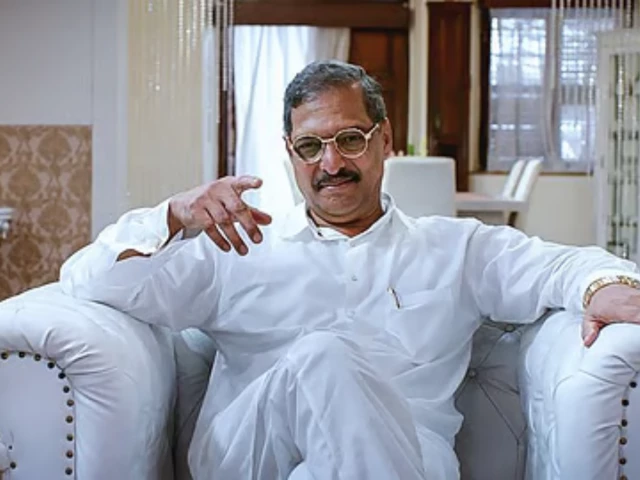
The Indian film fraternity is mourning the loss of Vishwanath "Nana" Patekar, who passed away on October 8 at the age of 75 following a sudden cardiac arrest at his residence in Goa. Patekar’s death marks the end of an extraordinary, nearly five-decade-long career that redefined the boundaries of performance in both Hindi and Marathi cinema. A recipient of three National Film Awards and the prestigious Padma Shri, Patekar was not merely an actor; he was a cultural institution, a stylistic maverick, and an uncompromising artist who approached his craft with a raw, unpredictable intensity.
Across his storied filmography, Patekar moved effortlessly between gritty crime dramas, socially charged manifestos, psychological thrillers, and slapstick comedies. His characters rarely felt like calculated cinematic performances; rather, they felt like breathing, volatile human beings inadvertently caught on camera. Whether he was whispering terrifying threats as an unhinged underworld don or reducing audiences to laughter as a short-tempered mobster trying to reform, Patekar possessed a rare, chameleon-like ability to command the screen. As tributes pour in from colleagues, critics, and millions of admirers worldwide, this retrospective examines the life, career defining roles, and enduring legacy of a man who consistently refused to conform to the conventional molds of stardom.
Detailed Chronology: Five Defining Masterclasses
To understand the scope of Nana Patekar’s genius is to traverse a cinematic landscape of staggering contradictions. His career can be mapped through five iconic performances that trace the evolution of his screen persona from a terrifying harbinger of menace to a beloved comedic icon.
1. Parinda (1989) — Anna: The Genesis of Modern Cinematic Menace
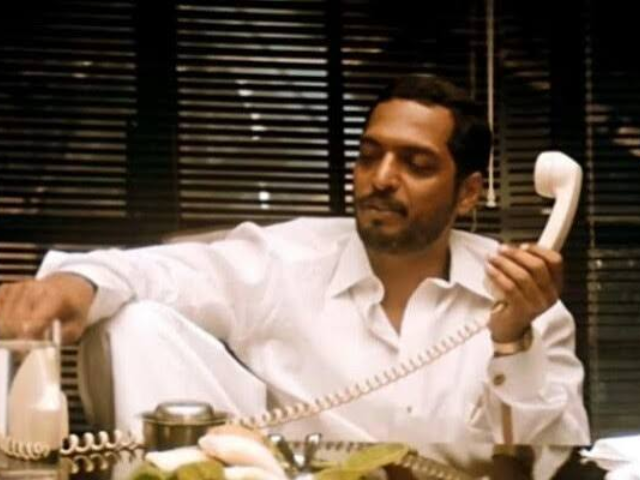
Patekar’s mainstream breakthrough as an undeniable force in Hindi cinema came with Vidhu Vinod Chopra’s critically acclaimed 1989 crime drama, Parinda. In the film, Patekar played Anna, a psychotic, deeply paranoid underworld boss who controlled the grim underbelly of Mumbai with an iron fist.
The film follows two orphaned brothers, Kishen and Karan. Kishen falls deep into Anna’s criminal syndicate to protect his younger brother, while Karan returns from abroad only to be sucked into the same vortex of violence. Anna was terrifying not because he wore flashy clothes or barked orders, but because of his chilling unpredictability. He could appear tender, almost paternal, one second, and fly into a murderous rage the next. His pathological fear of fire became the defining psychological anchor of his character, culminating in one of the most harrowing climaxes in Indian cinematic history.
Patekar’s commitment to the role was legendary. According to industry reports, he was severely injured during the filming of the climactic fire sequence, resulting in a two-month hospital stay. His harrowing portrayal earned him both the National Film Award and the Filmfare Award for Best Supporting Actor. Anna established a template that would follow Patekar for years: a masterclass in making menace feel deeply personal and psychologically authentic.
2. Krantiveer (1994) — Pratap Narayan Tilak: The Voice of the Disillusioned Masses
If Parinda proved Patekar’s mastery of quiet, menacing restraint, 1994’s Krantiveer unleashed his formidable theatricality and emotional force. Directed by Mehul Kumar, the film cast Patekar as Pratap Narayan Tilak, a cynical, unemployed man living in a cramped Mumbai chawl who ultimately transforms into a fierce crusader against political corruption, societal apathy, and communal violence.
Pratap was loud, raw, and unapologetically furious. Where Anna whispered his threats, Pratap screamed his truths from the rooftops. Patekar utilized his extensive background in theater to deliver blistering, impassioned monologues that lambasted corrupt politicians, the judiciary, and indifferent citizens. These speeches quickly became cultural touchstones, turning Pratap into the definitive "angry young man" archetype of 1990s Hindi cinema.
The role earned Patekar the National Film Award for Best Actor. Krantiveer demonstrated that Patekar could shoulder an entire socio-political drama through the sheer gravitational pull of his vocal delivery and righteous fury.
3. Agni Sakshi (1996) — Vishwanath: Exploring the Depths of Psychological Darkness
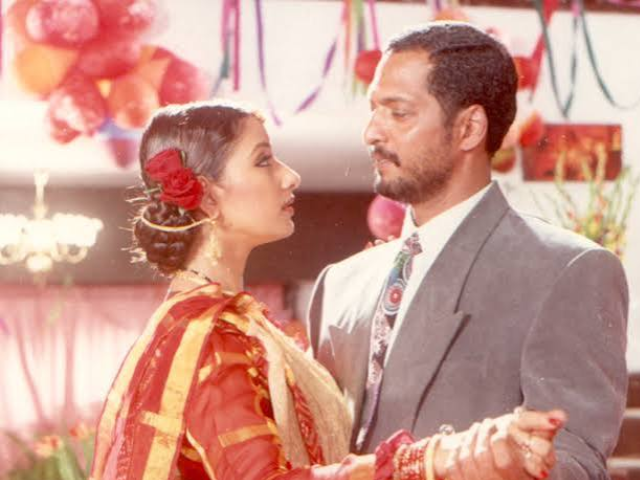
In 1996, Patekar collaborated with director Partho Ghosh on Agni Sakshi, a psychological thriller that explored domestic abuse and trauma. Patekar played Vishwanath, the violently possessive and psychologically unhinged former husband of Shubhangi (played by Manisha Koirala), who tracks her down after she assumes a new identity and remarries.
Vishwanath was a departure from conventional cinematic villains. He did not broadcast his malice through melodramatic laughter or physical posturing; instead, his menace was woven into moments of unsettling calm. He could switch from gentle persuasion to outright terror without a moment’s notice, making his psychological torture far more disturbing than any physical violence.
The film further cemented Patekar’s reputation for inhabiting dark, morally complex spaces. His performance in Agni Sakshi stands as one of the most chilling portrayals of toxic obsession in Indian cinema, proving that Patekar did not need explosions or car chases to dominate a thriller.
4. Ab Tak Chhappan (2004) — Inspector Sadhu Agashe: The Triumph of Understatement
By the turn of the millennium, Patekar’s artistic sensibilities had matured into a profound minimalism. In 2004’s Ab Tak Chhappan, directed by Shimit Amin and produced by Ram Gopal Varma, Patekar delivered arguably his most sophisticated performance as Inspector Sadhu Agashe, an encounter specialist in the Mumbai Police Crime Branch credited with eliminating 56 criminals.
Loosely inspired by real-life encounter specialist Daya Nayak, Inspector Agashe was a study in weary fatalism. Stripped of the operatic monologues of Krantiveer or the fiery outbursts of Parinda, Patekar played Agashe with a dry, matter-of-fact exhaustion. To Agashe, taking a life was not a heroic act or a moral crusade—it was a bureaucratic chore, a messy job that needed to be done.
This profound understatement made the character intensely compelling. Agashe was neither hero nor villain; he operated in the murky gray areas of extrajudicial justice. The role proved that Patekar no longer needed to raise his voice to command the screen; a sidelong glance, a heavy sigh, or a quiet pause spoke volumes.
5. Welcome (2007) — Uday Shetty: The Accidental Comic Genius
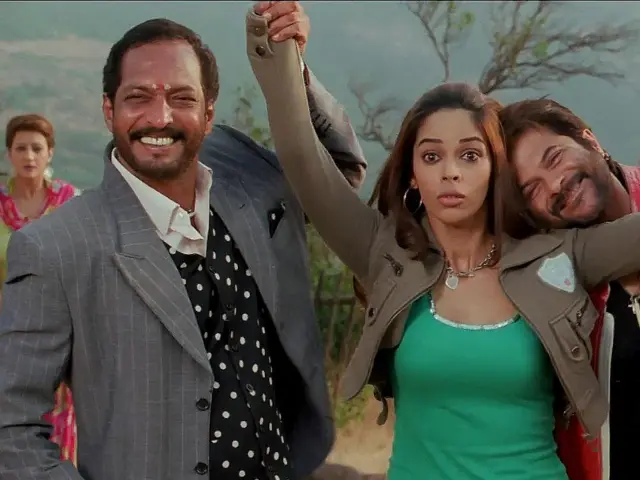
For an actor whose career had been forged in the fires of gritty crime and socio-political tragedy, Anees Bazmee’s 2007 mega-hit Welcome offered an entirely unexpected trajectory. Patekar stepped into the realm of pure farce to play Uday Shetty, a wealthy, soft-hearted Mumbai underworld don desperate to find a respectable groom for his sister, while secretly nurturing delusions of becoming a film star.
Patekar’s deadpan delivery, combined with his immaculate comic timing and his legendary on-screen chemistry with co-star Anil Kapoor (who played Majnu Bhai), created a comedic phenomenon. Uday Shetty was a man whose terrifying criminal authority constantly clashed with the utterly absurd domestic crises orchestrated by his family.
Welcome introduced Patekar to an entirely new generation of viewers who knew him primarily as a comedic powerhouse rather than a dramatic heavyweight. It proved that the same intensity that once terrified audiences could, with a slight shift in comedic rhythm, leave theaters convulsing with laughter.
Supporting Context & Metrics: A Legacy in Numbers and Accolades
Nana Patekar’s career cannot be measured solely by box office receipts or cult status; it is underscored by a glittering array of critical accolades and professional milestones that place him in the pantheon of Indian acting royalty.
Key Accolades and Honors
National Film Awards: Three-time winner, recognized for his extraordinary contributions to Indian cinema across diverse genres and regional languages.
Padma Shri: Awarded India’s fourth-highest civilian honor by the Government of India in recognition of his artistic achievements and cultural impact.
Filmfare Awards: Multiple wins and nominations spanning Best Supporting Actor (Parinda) and Best Actor categories.
Linguistic Versatility
While Patekar is predominantly celebrated for his monumental contributions to Hindi cinema, his work in Marathi cinema remains equally vital. Films such as Dr. Babasaheb Ambedkar (1998), Natsamrat (2016), and Deool Band (2015) showcased his deep roots in regional theater and his ability to articulate the nuances of Maharashtrian socio-cultural realities with unmatched authenticity. In Natsamrat, his portrayal of an aging Shakespearean actor facing familial betrayal and irrelevance is widely regarded as a masterclass in tragic performance, cementing his status as a theatrical titan.
Philanthropy and Social Activism
Beyond his celluloid triumphs, Patekar was a man of profound social conscience. Along with actor Makarand Anaspure, he established the Naam Foundation in 2015, a non-governmental organization dedicated to supporting drought-stricken farmers in Maharashtra and providing financial aid to the families of martyred soldiers. Patekar’s commitment to grassroots philanthropy was unostentatious; he frequently visited rural areas, poured his personal earnings into relief efforts, and used his public platform to demand systemic accountability for agrarian crises.
Official Statements and Industry Tributes
The news of Patekar’s passing sent shockwaves through the Indian entertainment industry, prompting an outpouring of grief, reverence, and fond remembrance from peers, directors, and political leaders alike.
Prime Minister Narendra Modi took to social media to express his condolences, writing:
"Shri Nana Patekar was a stalwart of Indian cinema whose versatility, intensity, and depth left an indelible mark on the cultural fabric of our nation. From intense dramas to unforgettable comic roles, his performances reflected the full spectrum of human emotion. His dedication to social causes, particularly our farmers, further endeared him to millions. My thoughts are with his family, friends, and countless admirers. Om Shanti."
Filmmaker Vidhu Vinod Chopra, who directed Patekar in his breakthrough film Parinda, shared a deeply emotional memory:
"Nana was not just an actor; he was a force of nature. When we made Parinda, he didn’t just play Anna—he became Anna. His dedication was total, often dangerous, and always uncompromising. We have lost a unique soul, an artist who could never be replaced because they simply don’t make them like him anymore."
Co-star Anil Kapoor, whose comedic partnership with Patekar in Welcome defined a generation of Indian comedy, posted:
"My brother, my partner in crime, my friend. We shared everything from intense dramatic workshops to laughing until our stomachs hurt on comedy sets. Nana was a complex, brilliant man with a heart of gold. The screen feels a little emptier today without his shadow."
Future Outlook: Preserving the Iconoclast’s Legacy
As the dust settles on the immediate grief of his passing, film historians, critics, and cultural institutions are already looking toward how Nana Patekar’s legacy will be preserved for future generations. Film archives and academic institutions are expected to launch retrospective screenings of his masterworks—ranging from the theatricality of Krantiveer to the minimalist restraint of Ab Tak Chhappan—to educate aspiring actors on the anatomy of cinematic truth.
Furthermore, the Naam Foundation has announced that its agricultural and social welfare initiatives will continue with renewed vigor, ensuring that Patekar’s humanitarian footprint remains as permanent as his celluloid one.
Nana Patekar’s life was a testament to the power of artistic integrity. In an industry frequently obsessed with gloss, box-office formulas, and manufactured stardom, Patekar stood as an unyielding oak—rugged, deeply rooted, and entirely his own. He never sought to be liked; he sought to be real. And in doing so, he achieved something far greater than mere popularity: he achieved immortality.







Comments
Facebook App ID not configured. Please add it in the Customizer.