
Executive Overview
In the modern democratic landscape, the friction between artistic expression, political consequence, and state power has rarely been more pronounced. Across Western Europe, the cultural authority of the writer is increasingly tested not merely by critical reception or shifting literary tastes, but by the muscular reach of the legal system and the rigid parameters of state security frameworks.
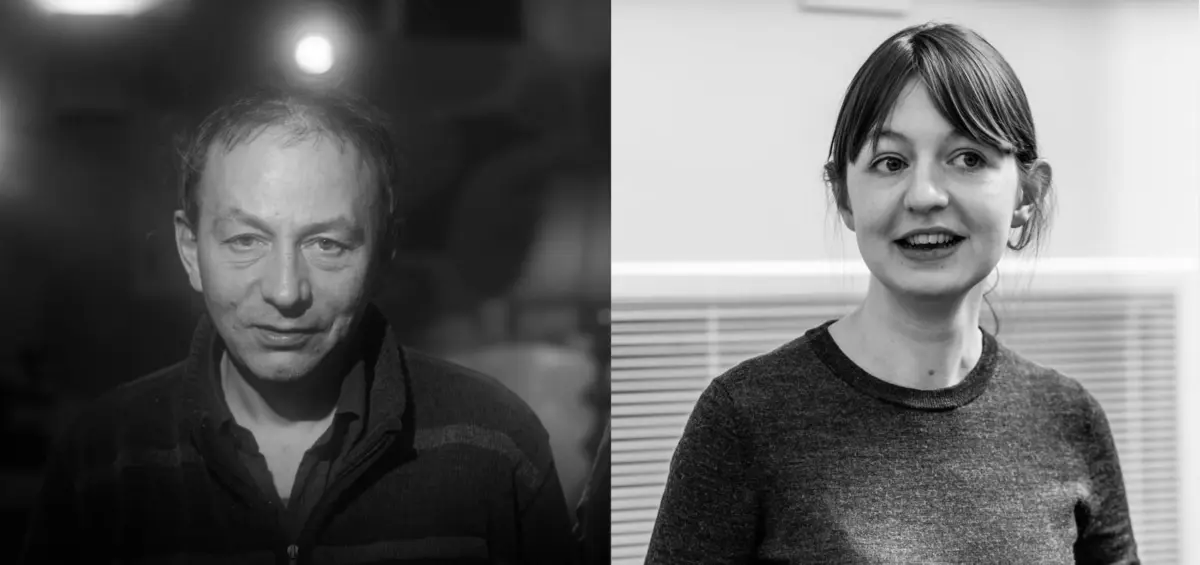
Nowhere is this tension more vividly illustrated than in the contrasting cases of French provocateur Michel Houellebecq and Irish literary darling Sally Rooney. While Houellebecq finds himself formally ensnared in a criminal investigation in Nanterre for speculative demographic commentary—a prosecution critics argue represents an institutional overreach into the domain of social criticism—Rooney has voluntarily navigated a withdrawal of her works from U.K. retailers. Her actions stem directly from her financial entanglement with Palestine Action, an entity proscribed under British counter-terrorism legislation.
These two divergent controversies lay bare a profound philosophical fracture in contemporary letters. They force a rigorous examination of the boundaries separating provocative thought from criminal incitement, and political posturing from material lawbreaking.
Read Also
Detailed Chronology
The Houellebecq Prosecution: From Print to Prosecutor
The legal jeopardy facing Michel Houellebecq did not materialize in a vacuum; it is the culmination of years of escalating cultural friction between the author’s pessimistic worldview and the legal frameworks governing public speech in France.
- Late 2022: Houellebecq sits down for an extensive, wide-ranging dialogue with intellectual Michel Onfray for the French periodical Front Populaire. Within this conversation, the author reflects upon the long-term societal reverberations of Muslim immigration, mapping out the thematic architecture that has long defined his acclaimed fiction. He posits a grim future scenario: “When entire territories come under Islamist control, I think acts of resistance will take place. There will be attacks and shootings in mosques, in cafés frequented by Muslims—in short, Bataclan in reverse.”
- Subsequent Months: Legal complaints are filed by various civic and religious organizations, setting the wheels of the French judiciary in motion. Investigators scrutinize whether the commentary crosses the threshold from speculative sociological pessimism into the penal code violations of incitement.
- Late 2026: Judicial authorities in Nanterre formally place Houellebecq under criminal investigation for “complicity in incitement to discrimination, hatred or violence.” This development marks a dramatic escalation from his 2002 trial and subsequent acquittal over remarks labeling Islam “the dumbest religion,” signaling a hardening legal climate regarding discourse surrounding integration and demographic shift.
The Rooney Pull: Financial Compliance and Ideological Posturing
Simultaneously, the Anglophone literary world was rocked by a self-imposed supply restriction involving one of its most commercially successful contemporary voices.
- July 2025: The British government officially proscribes Palestine Action as a terrorist organization under the Terrorism Act of 2000, citing a sustained campaign of break-ins, property damage, and sabotage targeting defense contractors and research facilities.
- Mid-October 2026: Following public declarations from author Sally Rooney affirming her ongoing material and financial support for Palestine Action—including the explicit intention to funnel book royalties directly to the proscribed group—publishing house Faber issues a decisive corporate statement.
- October 14, 2026: Faber announces it will no longer supply Rooney’s books to U.K. retailers in any format. The publisher notes that passing royalty earnings to an outlawed organization is a legal impossibility, leading to a mutual agreement to halt new distribution while existing stock remains legally salable through third-party vendors.
Supporting Context & Metrics
To fully grasp the gravity of these concurrent literary controversies, one must examine the socio-political environments from which they emerge.
The Demographic Pressures of Modern France
Michel Houellebecq’s literary and public pronouncements are inextricably linked to the demographic and cultural transformations reshaping urban France. Paris and its surrounding banlieues have experienced persistent social unrest, high-school protests, and ideological polarization.
| Metric / Indicator | Contextual Overview |
|---|---|
| Literary Precedent | Submission (2015), envisioning a democratically elected Islamist government in France, sold hundreds of thousands of copies globally, proving prophetic in its structural critique of political complacency. |
| Judicial Threshold | French law strictly penalizes speech perceived as inciting hatred, creating a permanent tension with the Enlightenment tradition of absolute freedom of expression (la liberté d’expression). |
| Civil Unrest Index | Ongoing clashes in high schools and public squares across French urban centers provide the combustible backdrop against which Houellebecq’s pessimistic predictions are evaluated by prosecutors. |
The U.K. Counter-Terrorism Framework and Publishing Economics
Sally Rooney’s confrontation with the British market highlights the intersection of modern corporate compliance and radical political activism.
- The Terrorism Act 2000: Under U.K. law, providing money or other property with reasonable cause to suspect it may be used for terrorism purposes—or directly funding a proscribed organization—constitutes a serious criminal offense.
- Corporate Risk Mitigation: Major publishing houses like Faber operate under strict legal oversight. When an author publicly commits to violating financial sanctions or counter-terrorism prohibitions by redirecting corporate-generated revenues to blacklisted groups, publishers face an untenable dilemma.
- Market Impact: While new U.K. shipments of Rooney’s novels (Normal People, Conversations with Friends, Intermezzo) have ceased from her primary publisher, the secondary market and existing inventories ensure continued reader access, neutralizing fears of a traditional literary "ban."
Official Statements
The contrasting nature of these two cases is further illuminated by the public posture struck by the key institutional and intellectual players.
Faber’s Corporate Realities
In its October 2026 announcement, Faber addressed the core logistical and legal impossibility underpinning the Rooney controversy without indulging in melodramatic rhetoric about artistic suppression:
"To sell a writer’s work and not be able to pass on earnings is an unconscionable situation for a publisher. As such, and in full agreement with Sally, we have taken the decision that we can no longer supply her works in the U.K. in any format."
This calculated statement emphasizes that the restriction was not content-based—the U.K. government did not ban Rooney’s prose—but rather financial and legal, driven entirely by the author’s choice to fund a proscribed organization.
Intellectual and Critical Commentary
Cultural critics have been quick to dissect the posturing surrounding both affairs. Writing in The Ruffian, analyst Ian Leslie captured the fundamental dissonance of the Rooney narrative:
"Who wants to have that rather tedious and confined argument when we can ride the high horse of artistic expression?… Where authors like Aleksandr Solzhenitsyn and Salman Rushdie faced actual persecution for their work, Rooney has taken persecution upon herself."
Meanwhile, legal scholars and free-speech advocates monitoring the Houellebecq investigation have raised alarms over the criminalization of cultural pessimism. By prosecuting an author for forecasting social violence derived from demographic friction, the French state risks transforming dystopian fiction
into actionable thought crime.
Future Outlook
As these legal and cultural dramas unfold, their long-term implications for the Republic of Letters are profound.
- The Erosion of Speculative Fiction: The criminal investigation into Houellebecq establishes a chilling precedent for novelists and essayists across Europe. If an author’s fictional explorations or sociological interviews can be formally indicted as complicity in incitement, the scope of permissible intellectual inquiry contracts sharply. The European legal landscape may increasingly penalize dark prognostications, confusing the author who diagnoses a social malaise with the agent who causes it.
- The Commercialization of Martyrdom: Conversely, the Rooney episode illustrates how modern authors can leverage regulatory compliance into a performative spectacle of political radicalism. By agreeing to halt direct U.K. supplies while maintaining global sales and media prominence, Rooney secures the cachet of a dissident intellectual without enduring genuine state persecution. This trend suggests that future literary controversies will increasingly blend corporate risk-management with sophisticated digital-age brand positioning.
- The Divergence of Free Speech Standards: Ultimately, these cases highlight a widening chasm between real legal jeopardy—such as the state power bearing down upon Houellebecq for politically sensitive demographic commentary—and manufactured martyrdom, exemplified by Rooney’s financial entanglement with a proscribed terror group.
As Western societies grapple with internal security, cultural fragmentation, and ideological polarization, the writer’s pen remains a contested instrument. Whether the European judiciary chooses to protect the abrasive iconoclast or muzzle the dissenting voice will largely determine the future vitality of Western literature.



Comments
Facebook App ID not configured. Please add it in the Customizer.