
Executive Overview
For generations, the conventional narrative of modern Christian expansion has rested on a clean, binary chronology. In this standard historical framework, the opening centuries of the global era—roughly spanning 1520 to 1760—belonged almost exclusively to the Catholic Church. Propelled by sprawling Iberian empires and masterminded by dynamic religious orders like the Jesuits, Catholic missionaries captured the global imagination. Figures such as Francis Xavier and Matteo Ricci symbolized an era of epic conversions across the Americas, parts of East Asia, and Central Africa. In contrast, early modern Protestantism was long viewed as a largely insular phenomenon, sequestered within its European heartlands, appearing “strangely late to the missionary party” until the rise of the British Empire and missionary celebrities like William Carey in the late eighteenth century.
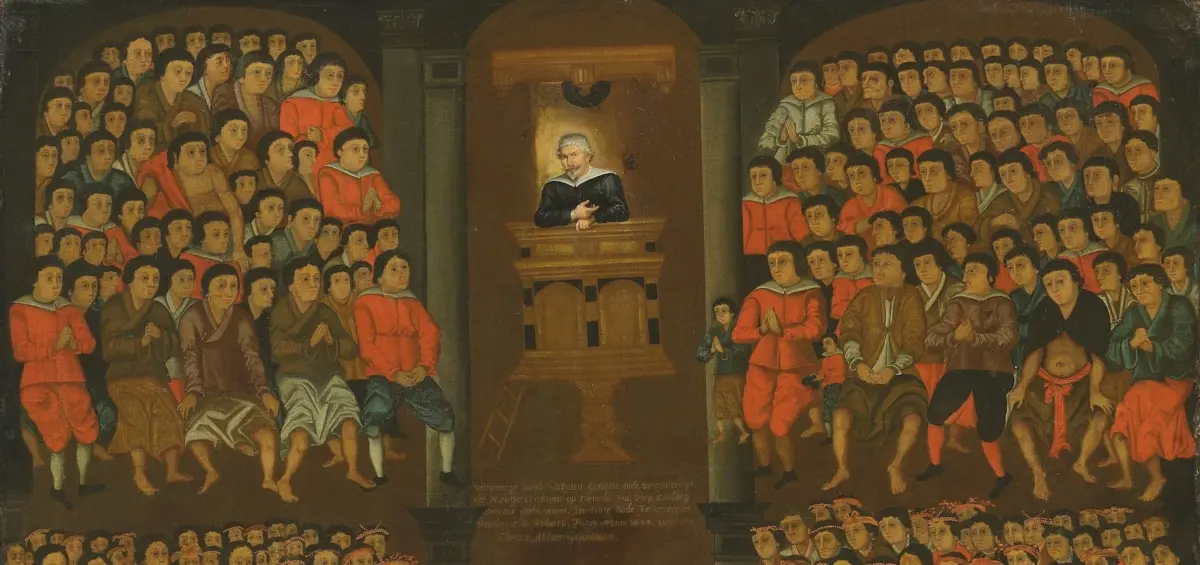
A monumental new study, The World’s Reformation: How Protestantism Became a Global Religion by Alec Ryrie (published by Yale University Press, 576 pages, $45), systematically dismantles this tidy historiographical consensus. Ryrie demonstrates through exhaustive, globally sweeping research that Protestants were actively engaged in cross-cultural missions much earlier than previously acknowledged—operating from Lapland to Chile, and from Barbados to Taiwan.
While Ryrie readily concedes that these early Protestant initiatives often yielded dismally few lasting conversions, his work forces a profound reassessment of how historical memory is constructed. Far from being an isolated European movement until the Enlightenment, early modern Protestantism possessed a global vision, deeply intertwined with the ideologies of emerging empires, colonial anxieties, and a complex theological framework. Ryrie’s study is not merely a chronicle of forgotten missions; it is an interrogation of historical amnesia itself, revealing how archival biases and selective memory shaped our understanding of world Christianity.
Read Also
Detailed Chronology: Rethinking the Phases of Global Christianity
To fully appreciate the weight of Ryrie’s contribution, historians must re-examine the traditional timeline of missionary activity. For centuries, the historiography of early modern globalization has been dominated by Catholic triumphs and structural advantages.
The Catholic Monopoly and the Early Global Axis
The narrative of early modern Catholic missions is one of immense ambition and cultural transformation. Backed by the Spanish, Portuguese, and later French empires, Catholic clergy did not merely convert populations; they reshaped the linguistic, cultural, and institutional landscapes of entire regions. From the high Andes of Bolivia to the urban centers of Vietnam and Tamil South India, the Jesuits and other religious orders acted as primary diplomats, translators, and cultural brokers.
A symbolic watershed moment for global Christianity occurred in the 1570s with the establishment of the Catholic diocese of Manila as a suffragan see of Mexico City. For three centuries, the vital trans-Pacific trade route linking Manila to Acapulco functioned as the primary infrastructural axis for Catholic missions. Catholic archives—meticulously maintained by centralized religious orders acting as documentary pack-rats—have long allowed researchers to trace these monumental efforts with precision.
The Protestant Delay and Archival Asymmetry
By contrast, early modern Protestants seemed conspicuously absent from this theater of global expansion. Catholic polemicists historically delighted in contrasting their own global reach—symbolized by tropical pineapples—with the localized diet of their Protestant rivals, confined, as the joke went, to herring.
Ryrie explores the structural and archival reasons behind this perceived absence. Protestant missionary efforts were chronically decentralized, diffuse, and erratic. Lacking the centralized administrative machinery and bureaucratic record-keeping of the Catholic religious orders, early Protestant endeavors often left behind sparse, fragmented documentation.
However, Ryrie’s work builds upon recent historiographical shifts—such as Charles H. Parker’s 2022 study Global Calvinism: Conversion and Commerce in the Dutch Empire, 1600–1800—which demonstrated that Protestant powers like the Dutch Republic were far more religiously active across their global commercial networks in places like New Amsterdam, Suriname, Jakarta, and the Cape of Good Hope than previously acknowledged. Ryrie pushes this further, mapping a sprawling, albeit frequently frustrated, Protestant missionary footprint that predated the British imperial hegemony of the nineteenth century by generations.
Supporting Context & Metrics: The Mechanics of Early Protestant Missions
Spanning 576 pages, Ryrie organizes his monumental study thematically rather than strictly chronologically, allowing for profound comparative analysis across diverse European societies. The book is structured into four core analytical pillars: Principles, Templates, Approaches, and Outcomes.
1. Principles: Apocalyptic Urgency and the Anti-Roman Struggle
In the opening section, Ryrie maps the theological motivations driving early Protestants abroad. Far from operating out of detached humanitarian or purely spiritual impulses, these believers were galvanized by intense apocalyptic expectations. The drive to spread the Gospel was frequently intertwined with an urgent struggle against the Antichrist—identified directly with the Roman Catholic Church—and a fierce desire to claim global territory before the end of the age.

2. Templates: Internal "Barbarians" and the Slavery Dilemma
The section on "Templates" examines how Protestants categorized and approached non-Christian or heterodox populations. Interestingly, Protestant societies often applied identical conceptual frameworks to foreign polytheists and to populations they deemed "barbaric" on their own domestic fringes.
- In the British context, the Catholic populations of Ireland and the Scottish Highlands were viewed through a lens not radically different from how Scandinavian authorities viewed the indigenous Sami populations of the far north.
- Demonstrating this cross-cultural anxiety, early eighteenth-century English translators produced a functional Bible in Tamil for Indian missions before they successfully translated the Scriptures into Scots Gaelic.
Furthermore, Ryrie tackles the acute moral and political crisis Protestant missionaries faced regarding the evangelization of enslaved populations. While slaves represented a captive demographic to whom missionaries had direct access, plantation owners fiercely resisted their baptism, fearing that Christianization would stoke legitimate demands for legal emancipation and destabilize the colonial economic order.
3. Approaches: Literacy, "Civilizing" Forces, and Bibliolatry
In "Approaches," Ryrie investigates the tactical methods deployed to secure conversions and ensure religious retention. Early Protestants placed an immense, nearly absolute emphasis on literacy, education, and the widespread dissemination of vernacular Scripture.
However, this strategy bore intrinsic flaws. Protestant evangelists often operated under the assumption that translating the Bible into a local language would automatically and infallibly conquer a territory—an approach bordering on bibliolatry. Moreover, these missions struggled deeply with cultural translation. Missionaries frequently failed to distinguish between what was essentially Christian and what was merely European or Anglo-Dutch, inadvertently demanding that converts adopt entire foreign lifestyles alongside the faith.
4. Outcomes: Empire, Plantation, and Historical Legacy
In the concluding section, Ryrie evaluates the tangible outcomes of these missions. He illustrates how the language of "planting" religion continually shaded into the brutal realities of colonial "plantation." While validating the argument that early Protestants were far more active than previously thought, Ryrie concedes that a qualitative shift occurred in the late eighteenth century, where Protestant missions finally scaled up in tandem with the administrative machinery of the British Empire.
Official Statements & Critical Analysis
Academic reception of The World’s Reformation highlights its undeniable brilliance as a work of historical synthesis and myth-busting, while maintaining important boundaries regarding the scale of early Protestant impact compared to its Catholic counterpart.
Scholars emphasize that while Ryrie successfully proves early Protestant global engagement, it would be an analytical error to draw a false parity between Protestant and Catholic achievements in the early modern era. Catholic missions in regions like Ming-Qing China and feudal Japan achieved unprecedented levels of political access, cultural integration, and intellectual exchange within elite imperial courts. Protestant missions of the seventeenth and early eighteenth centuries rarely approached such heights of institutional penetration, nor did they grapple with complex interfaith theological debates on the same massive scale.
Nevertheless, experts praise the book’s profound contribution to historiographical self-awareness. As noted by reviewers and historians of Christianity, Ryrie’s work serves as an indispensable masterclass in how institutional archives and cultural biases dictate what societies choose to commemorate—and what they conveniently consign to oblivion.
Future Outlook: Implications for Historiography and Global Theology
The publication of The World’s Reformation marks a turning point in the study of world Christianity and imperial history. By unsettling the long-entrenched narrative of late-blooming Protestant internationalism, Alec Ryrie forces contemporary historians, theologians, and educators to rewrite their syllabi and re-evaluate the complex intersections of faith, empire, and globalization.
Moving forward, historians of religion are likely to adopt a more integrated, transnational methodology when examining the early modern era. Rather than viewing Catholic and Protestant global expansions as operating in entirely separate universes, future scholarship will increasingly explore how these rival movements cross-pollinated, reacted against one another, and navigated the brutal realities of mercantile capitalism and colonial conquest.
Ultimately, The World’s Reformation reminds us that the history of global religion is not a straightforward trajectory of inevitable triumphs, but a messy, frequently tragic tapestry of high-minded ideals, frustrated ambitions, and forgotten sacrifices. In redefining how we map the Protestant past, Ryrie illuminates the complex, contested roots of our modern religious landscape.





Comments
Facebook App ID not configured. Please add it in the Customizer.