
Executive Overview
The contemporary American socio-political landscape is characterized by a pervasive, corrosive cynicism. At every level of public and private life—from the highest offices of the executive branch to the ivy-covered quadrangles of elite universities—the foundational norms of honesty, accountability, and public service appear to be eroding. This institutional rot is not merely a byproduct of partisan politics; it is the manifestation of a systemic "fraud economy" that rewards manipulation, hypocrisy, and self-enrichment while punishing sincerity.
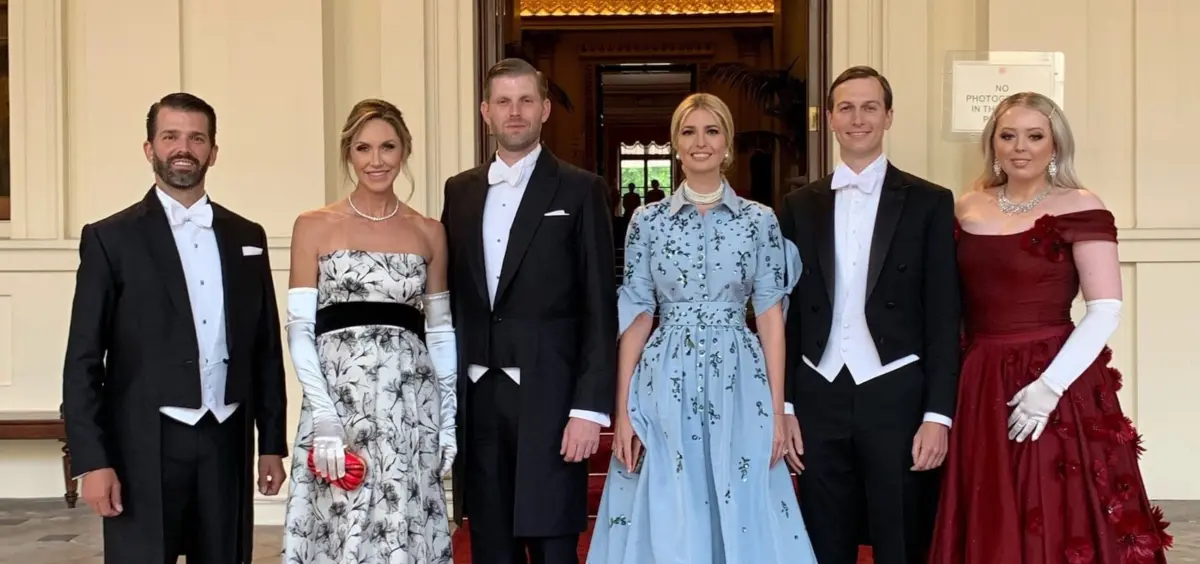
The return of Donald Trump to national prominence, accompanied by the unabashed commercialization of political access by his family members, mirrors a broader cultural collapse. When multi-million and multi-billion-dollar investments flow into family-operated ventures with transparent expectations of political influence, foreign policy becomes a transactional commodity. Yet, this transactionalism does not exist in a vacuum. It is sustained by a public that has grown deeply, and perhaps justifiably, cynical about the moral authority of its governing and cultural elites.
From elite universities like Stanford and Harvard, where institutional survival requires ritualistic compliance with hollow pieties and where academic fraud is met with multi-billion-dollar golden parachutes, to the public health establishment’s political maneuverings during the COVID-19 pandemic, the message sent to the younger generation is unequivocal: You gotta pay to play.
Read Also
This comprehensive investigative report examines the convergence of political corruption, higher education scandals, and elite hypocrisy. It explores how the normalization of ethical breaches across multiple sectors has created a crisis of legitimacy, demanding a profound reckoning and a return to leadership anchored in honor rather than self-aggrandizement.
Detailed Chronology of Institutional Decay
To understand the current state of American public life, one must trace the compounding sequence of ethical failures, financial entanglements, and administrative cover-ups that have systematically degraded institutional trust over the past decade.
The 2016 Paradigm Shift and the Trump Family Enterprise
- November 2016: Following Donald Trump’s initial presidential victory, political observers immediately raised alarms regarding potential conflicts of interest. Commentators like Kevin Williamson famously drew parallels between the transactional nature of the administration’s inner circle and foreign autocracies, noting how familial proximity to executive power could be leveraged for private capital accumulation.
- 2017–2021: Throughout the first presidential term, domestic and international actors routinely patronized Trump-branded properties, signaling a new era where political proximity could be purchased through hospitality and real estate investments.
The Academic "Fraud Economy" Era
- 2019: The "Varsity Blues" college admissions scandal burst into the public consciousness, exposing a sprawling criminal network where wealthy parents paid millions in bribes to secure fraudulent athletic credentials for their children at elite institutions, including Stanford University. The scandal laid bare the transactional underbelly of American higher education.
- 2020–2023: As the COVID-19 pandemic unfolded, public health institutions, federal agencies, and mainstream media outlets engaged in shifting public messaging regarding virus transmission, lockdown efficacy, and pharmaceutical interventions. The resulting disconnect between official pronouncements and evolving scientific data severely damaged public trust in expertise.
- 2022–2023: Investigative reporting by undergraduate journalist Theo Baker at Stanford University exposed significant scientific data manipulation in research papers overseen by university president Marc Tessier-Lavigne. The revelations led to Tessier-Lavigne’s resignation from the presidency, though he retained his tenured professorship and subsequently secured massive funding for a new biotech venture.
- Late 2023 – Early 2024: Harvard University President Claudine Gay faced intense public scrutiny following a congressional hearing on campus antisemitism, which quickly compounded with widespread allegations of academic plagiarism in her doctoral dissertation and published works. Her subsequent resignation cemented her status as a lightning rod for debates surrounding affirmative action, credentialism, and ideological conformity in elite institutions.
The Expansion of Transnational Financial Entanglements
- Early 2024 – Present: The financialization of the Trump family brand reached a new plateau with the launch of World Liberty Financial, a cryptocurrency venture that reportedly attracted a staggering $500 million investment from powerful political and financial figures in Abu Dhabi and the United Arab Emirates. This infusion of foreign capital into a venture controlled by the president’s family intensified longstanding bipartisan concerns regarding the potential monetization of American foreign policy in the Middle East.
Supporting Context & Metrics
The erosion of institutional integrity is not merely anecdotal; it is reflected in quantitative shifts in public trust, higher education financing, and the ballooning capital of the modern fraud economy.
The Financial Scale of the Fraud Economy
The convergence of private capital and institutional prestige generates staggering financial sums that insulate elites from the consequences of ethical breaches:
- $500 Million: The capital injection from high-net-worth investors and state-linked entities in Abu Dhabi and the UAE into World Liberty Financial, highlighting the intersection of foreign geopolitical strategy and domestic political profiteering.
- $6.5 Million: The astronomical sums funneled by single affluent families to corrupt intermediaries during the Varsity Blues admissions scandal to bypass meritocratic hurdles at elite universities.
- $1 Billion: The initial venture capital funding secured by former Stanford President Marc Tessier-Lavigne’s new biotech startup, Xaira Therapeutics, following his departure from university administration amid scientific integrity investigations.
The Metrics of Institutional Cynicism
Public opinion polling over the past decade underscores a catastrophic collapse in confidence across nearly every major American institution:
[Institutional Trust Metrics - Longitudinal Decline]
+-----------------------------------+---------------+---------------+
| Institution                       | Trust (2014)  | Trust (2024)  |
+-----------------------------------+---------------+---------------+
| Presidency / Executive Branch     | 42%           | 28%           |
| Higher Education                  | 57%           | 36%           |
| Mass Media                        | 40%           | 31%           |
| Major Corporations                | 48%           | 35%           |
+-----------------------------------+---------------+---------------+
This data illustrates that the defense mechanism of "everybody does it" has taken deep root in the American psyche. When citizens observe foreign policy decisions potentially influenced by cryptocurrency investments, university admissions bought by the wealthy, and university presidents failing upward after scientific scandals, cynicism ceases to be a cynical stance—it becomes a rational adaptation to a corrupt environment.
Official Statements & Intellectual Perspectives
The debate over the origin and remedies of this systemic rot has engaged prominent public intellectuals, investigative journalists, and political commentators.
The Critique of Dynastic Profiteering
Observers tracking the Trump family’s business ventures have repeatedly highlighted the unprecedented nature of blending executive authority with private enterprise. Writing on the involvement of Donald Trump Jr. and Eric Trump in international ventures backed by foreign potentates, critics have argued:
"The Trump family’s exploitation of every opportunity to enrich themselves demoralizes me… harvesting great sums from investors who seem interested in influencing the White House. I find myself wondering if America’s Middle East foreign policy is for sale."
Higher Education and the Culture of Compliance
In his analysis of Theo Baker’s reporting on Stanford University, journalist Christian Parenti articulates how administrative rituals serve to corrupt young minds long before they enter the corporate or political world. Commenting on the mandatory recitations of legalistic consent policies and land acknowledgements enforced at student gatherings, Parenti emphasizes the psychological toll of institutional hypocrisy:
"It’s a small thing—a brief loyalty oath before getting on with the fun—but the ritual is corruptive. It’s part of a larger system, one that encourages young people to mouth pieties that they know to be ridiculous. A Stanford student learns that, one way or another, you gotta pay to play."
Parenti’s broader thesis posits that the "fraud economy" extends far beyond isolated administrative overreach, shaping a generation’s worldview:
"Through experience, students learn that successful people are manipulative, self-aggrandizing, hypocritical, and dishonest."
The Historical and Philosophical Imperative
Reflecting on the deeper moral dimensions of public corruption, traditionalist thinkers often return to Joseph de Maistre’s famous 18th-century maxim:
"Every country gets the government that it deserves."
Applying this dictum to the modern era requires an unflinching examination of the electorate’s complicity. While voters may champion certain policy victories—such as conservative judicial appointments, measures aimed at industrial reshoring, or the rollback of divisive Diversity, Equity, and Inclusion (DEI) bureaucracies—they simultaneously normalize a baseline of mendacity. The ethical calculus of the modern voter frequently boils down to a transactional trade-off: policy efficacy in exchange for personal integrity.
Future Outlook: Rebuilding Institutional Integrity
The normalization of prevarication, self-dealing, and institutional hypocrisy presents an existential threat to the long-term stability of the American republic. As the defense of "everybody is doing it" becomes the default rationalization for ethical misconduct, the structural foundations of democracy begin to fray.
The Path Forward
Repairing the deep rot within American institutions will require more than cyclical changes in political administration or superficial administrative reforms. The path toward institutional renewal involves several critical imperatives:
- Rejection of Moral Relativism: Public figures and voters alike must recognize that the ethical failings of political opponents do not excuse transactional corruption or dishonesty within one’s own ranks. The mantra "everybody does it" must be rejected as both factually incorrect and morally bankrupt.
- Restoring Merit and Transparency: Higher education and corporate governance must dismantle systems of credentialism and ideological compliance that reward sycophancy over excellence. True meritocracy cannot survive in an environment where access is traded for financial contributions or ideological conformity.
- Elevating Leadership of Honor: Ultimately, systemic repair requires the cultivation and election of leaders who prioritize honor, public service, and constitutional fidelity over personal wealth accumulation and political self-aggrandizement.
Until the nation’s political, economic, and cultural elites are held to a standard higher than mere utility and self-preservation, the American experiment will remain vulnerable to the corrosive effects of the fraud economy. The restoration of civic trust is not an impossible dream, but it demands an uncompromising commitment to truth from those who seek to govern.



Comments
Facebook App ID not configured. Please add it in the Customizer.