
Executive Overview
In an era defined by hyper-individualism, rapid technological disruption, and a relentless cultural obsession with radical autonomy, contemporary society has largely discarded the concept of intellectual and creative lineage. Modern academia, art, and public discourse are increasingly propelled by a philosophy of rupture—an implicit or explicit demand to break away from the past, critique predecessors, and engineer an entirely novel self-creation. Yet, beneath this cultural surface lies a profound human cost: a deep sense of rootlessness, anxiety, and intellectual isolation.
This investigation explores the historical, philosophical, and personal dimensions of cultural inheritance, contrasting the modern "parricidal" impulse with the rich, historical tradition of the déploration—the musical and literary lament historically practiced by master composers to honor their mentors. By tracing lineages across musicology, philosophy, and personal biography, this report examines how the conscious recognition of our intellectual, artistic, and familial bloodlines serves as a vital anchor for human creativity and spiritual health.
Ultimately, moving beyond the modern anxiety of influence requires a cultural and spiritual re-engagement with gratitude, recognizing that human achievement is not an isolated spark, but part of an unbroken, intergenerational chain of gift and reception.
Read Also
Detailed Chronology: From Renaissance Laments to Modern Anxieties
To understand the shift in how humanity views its relationship with the past, it is necessary to examine the evolution of intergenerational artistic and intellectual tributes across centuries.
The Renaissance of the Déploration (15th–16th Centuries)
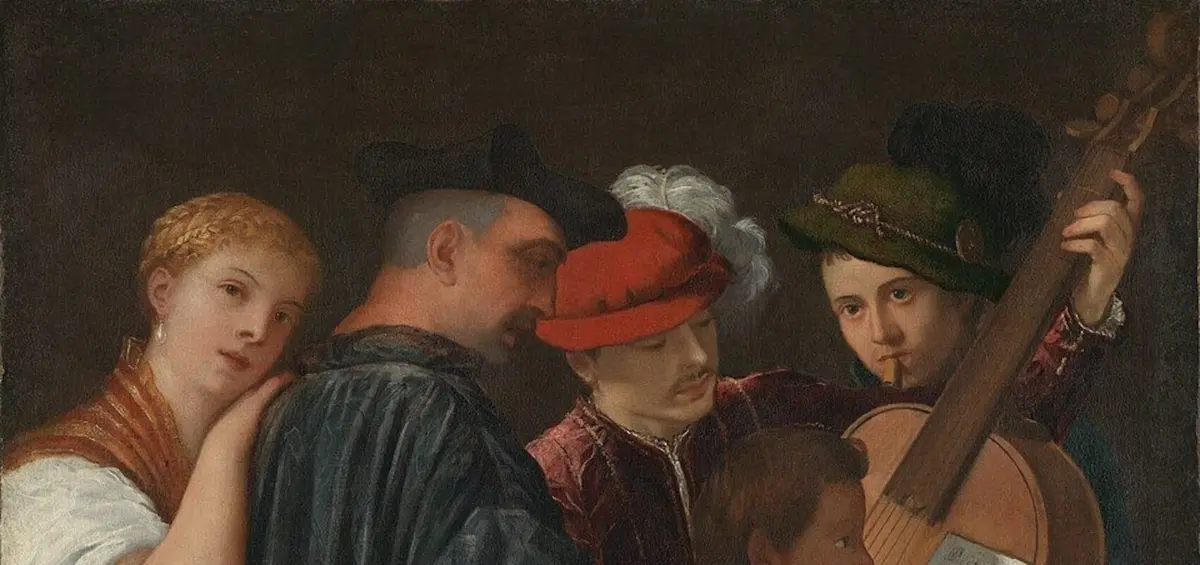
During the late-medieval and Renaissance periods, Franco-Flemish composers established a profound ritual of mourning and succession known as the déploration. Rooted in the Latin and French traditions of lament, these musical works were composed by masters to honor their deceased teachers, creating an unbroken chain of artistic genealogy.
- Gilles de Bins dit Binchois (c. 1400–1460): Celebrated as a foundational model of musical goodness and joy.
- Johannes Ockeghem (c. 1410/1425–1497): Composed a renowned déploration for his teacher, Binchois, incorporating self-conscious quotes from his mentor’s work to visibly mark historical and artistic succession.
- Josquin des Prez (c. 1450/1455–1521) and Nicolas Gombert (c. 1495–1560): Continued the tradition, each writing laments for their own mentors in a sweeping intergenerational display of grief, reverence, and creative continuity.
The Rise of Academic Lineages and the Festschrift
As formal education centralized into modern universities, the master-pupil lineage persisted through institutional traditions, most notably the festschrift. This scholarly volume gathered essays from colleagues and former doctoral students to honor the lifetime accomplishments of a senior scholar. However, driven by shifting economic models in academic publishing and an increasing cultural impatience with institutional hierarchy, the festschrift has steadily faded from prominence in contemporary academia.
The Modern Paradigm: The Anxiety of Influence
By the 20th century, the cultural framework surrounding mentorship shifted dramatically. Literary critic Harold Bloom published The Anxiety of Influence, framing the relationship between a writer and their literary forebears not as a harmonious chain of gratitude, but as an "Oedipus-like" struggle. In Bloom’s view, creative output is born from a psychological tension—a near-murderous drive to break free from the shadow of the master to achieve originality. This marked a profound cultural pivot from the communal humility of the déploration to the fiercely individuated isolation of modern authorship.
Supporting Context & Metrics: The Anatomy of Modern Upheaval
The contemporary cultural rejection of tradition does not exist in a vacuum; it is mirrored across various disciplines, revealing a society increasingly adversarial toward its own structural foundations.
The Shift from Hierarchical Grief to Psychological Interiority
Cultural anthropologists and musicologists note a stark structural contrast between premodern and modern tributes to the deceased:
| Dimension | Premodern (Déploration Era) | Modern Era |
|---|---|---|
| Primary Order | Moral, hierarchical, and communal. | Psychological and individuating. |
| Position of Deceased | Occupies a higher cosmic/social station. | Viewed as a peer or unique psychological catalyst. |
| Focus of Grief | Upholding an objective, shared order of virtue. | Validating personal feeling and inner self-definition. |
| Direction of Energy | Centripetal (drawing the mourner back into the community). | Centrifugal (pushing the mourner outward into isolation). |
The Scale of Separation and Human Interconnectedness
While contemporary culture emphasizes atomization, empirical and sociological models consistently demonstrate the depth of human interconnectedness.
- The "Six Degrees of Separation" Hypothesis: First posited by Hungarian writer Frigyes Karinthy in his 1929 short story "Chains," the sociological observation that all people are linked by short intermediary social connections highlights the impossibility of true human isolation.
- Musical and Intellectual Pedigree: In tracing lineages—such as the lineage connecting Franz Liszt to István Thomán, Ernst von Dohnányi, Joseph Weingarten, and modern students—analysts reveal that artistic mastery is rarely self-generated. Decades of pedagogical transmission undergird what the modern market often tries to market as instantaneous, autonomous genius.
Official Statements and Philosophical Perspectives
Throughout history, thinkers, theologians, and educators have grappled with the inherent tensions between honoring generational authority and the youthful drive toward innovation.
Classical Warnings Against Parricide
Ancient civilizations recognized that the unchecked destruction of parental and institutional authority carried existential risks for society:
- Hesiod’s Theogony: Details the primal cycles of violence—Uranus’s abuse provoking Cronus to castrate him, and Cronus’s tyranny provoking Zeus—highlighting a cycle of generational bloodshed.
- Plato’s Republic (Book II): Socrates famously counsels that these myths of divine parricide must be censored or "buried in silence" in the education of the young guardians, arguing that while poets may not have lied, the raw truth of generational violence is too socially destabilizing to impart to the impressionable.
The Biblical and Classical Ethics of Reception
In contrast to classical mythological models of overthrow, classical Roman and Judeo-Christian traditions focused on reforming passions and honoring structural continuity:
- Classical Ethicists (Cicero, Seneca) and Christian Theologians (Chrysostom): Approached the complexities of family dynamics not by encouraging the overthrow of parents, but by urging moral restraint and mutual respect.
- The Apostolic Counsel: St. Paul repeatedly emphasized the balance of authority and nurturing care: "Fathers, provoke not your children to wrath: but bring them up in the nurture and admonition of the Lord" (Eph. 6:4).
- The Foundational Commandment: The injunction to "Honor thy father and thy mother" (Exod. 20:12)—reaffirmed by Jesus (Matt. 15:4) as the first commandment with the promise of long life (Eph. 6:2–3)—extends beyond biological preservation into the safeguarding of intellectual, cultural, and spiritual continuity.
Future Outlook: Reclaiming Generational Gratitude
As society navigates an increasingly fragmented landscape marked by digital distraction, social polarization, and the rapid, depersonalizing ascent of artificial intelligence, the modern attention economy actively incentivizes individuals to live entirely within the tyranny of an isolated present.
Yet, the resurgence of interest in classical traditions, mentorship, and deep historical lineages suggests an impending cultural correction. The path forward does not lie in a regressive refusal of innovation, but in an integrated understanding of human creativity. As reflected in personal awakenings—such as tracing a forgotten lineage back through classical music pedagogues or academic mentors—the recognition of one’s place within a larger human tapestry transforms the creative act from an anxious, solitary burden into a shared, joyous inheritance.
Ultimately, human flourishing requires moving away from the parricidal impulse of self-invention ex nihilo. By embracing the posture of reception—grounded in gratitude, memory, and prayer—individuals can reconnect with the permanent things, restoring the rich, intergenerational fabric essential for true cultural and spiritual renewal.


Comments
Facebook App ID not configured. Please add it in the Customizer.