
Executive Overview
For generations, money was a forbidden dinner-table topic in American households. It was a binary proposition: you either had it, or you didn’t. Schools rarely taught the mechanics of borrowing, savings, or risk, leaving millions of young adults to enter the real world entirely unequipped for its financial realities. Today, that generational knowledge gap has collided with a staggering decline in national financial literacy.
According to a 2026 study by retirement services company TIAA, the average American can only answer roughly 50 percent of basic financial literacy questions correctly. Compounding the issue, approximately one-third of survey respondents report living debt-constrained lives, struggling perpetually to make ends meet. Traditional remedies—such as hiring a certified financial planner—remain out of reach for the average worker due to steep fees.
Enter artificial intelligence. With tools like ChatGPT, Claude, and specialized financial assistants capturing the mainstream, millions of Americans are turning to algorithms for monetary guidance. Recent polling indicates that nearly 20 percent of all U.S. adults—and up to 25 percent of Gen Z and millennials—have sought financial counsel from chatbots. OpenAI’s recent rollout of dedicated personal finance features, integrated securely via platforms like Plaid, allows users to connect bank accounts and converse with AI about their finances down to the penny.
Read Also
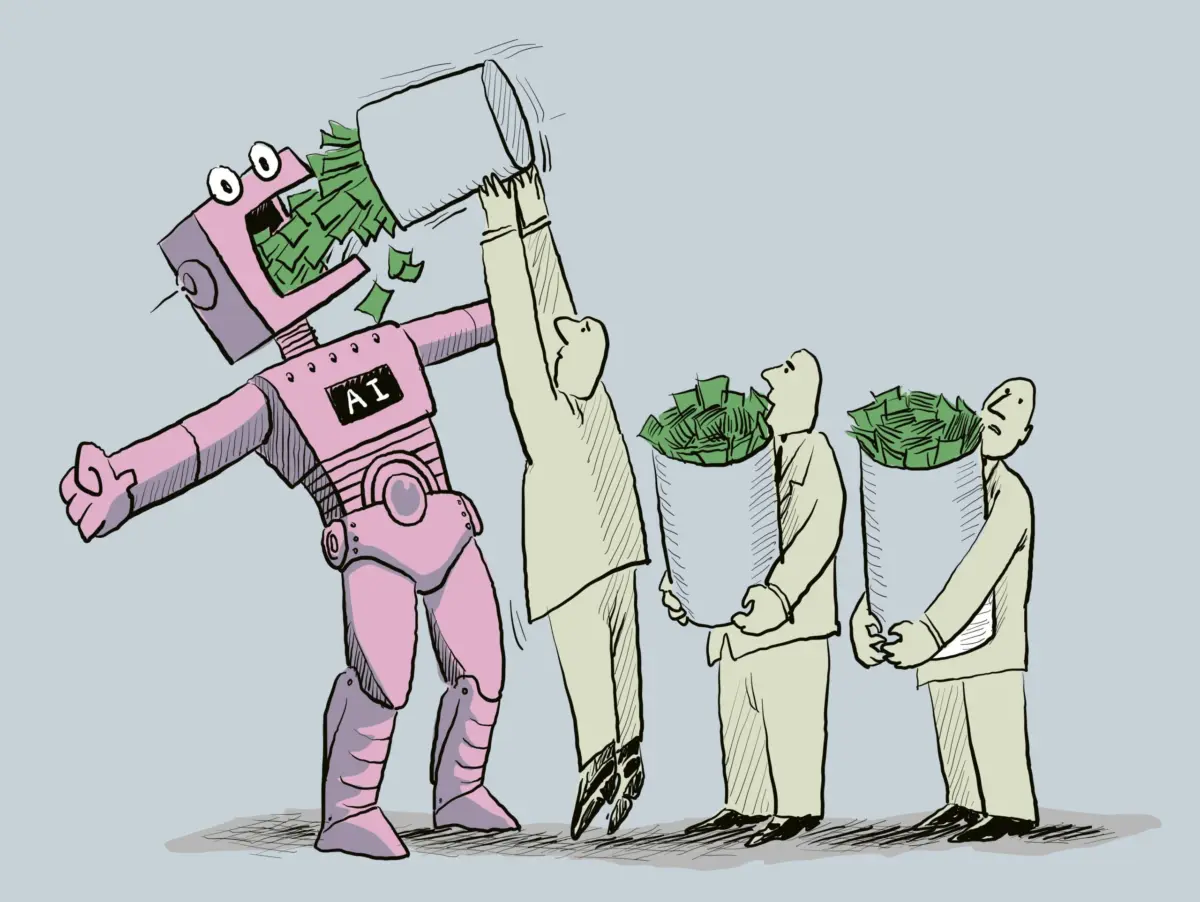
Yet, this democratization of financial advice carries profound hidden costs. While generative AI offers an affordable, accessible sounding board for those too embarrassed to discuss money with friends or family, it also introduces systemic biases, data privacy nightmares, and regulatory gray areas. Chatbots are programmed to please, trained on internet data saturated by a predatory financial industry, and utterly devoid of fiduciary duty. As Americans increasingly hand the keys of their financial lives to algorithms, experts warn that the risks of mismanaged advice and catastrophic data breaches have never been higher.
Detailed Chronology: The Evolution of Digital Finance to the AI Era
To understand how we arrived at the era of algorithmic money management, it is essential to trace the digital evolution of personal finance over the past two decades.
- The Early 2010s (The Era of Automated Aggregators): Tools like Mint revolutionized how consumers viewed their cash flow by aggregating accounts into a single dashboard. For the first time, average earners could visualize their spending habits without spreadsheets. However, these tools were purely observational; they showed you where your money went, but they could not advise you on how to restructure your future.
- Late 2010s to Early 2020s (The Finfluencer Boom): As traditional advisors remained financially out of reach, consumers turned to social media. Platforms like TikTok, Reddit threads, and YouTube channels hosted a wild west of "finfluencers," ranging from legitimate educators to peddlers of speculative cryptocurrency schemes. Financial guidance became gamified, fast-paced, and frequently misleading.
- Late 2023 (The Death of Traditional Hubs): Intuit’s decision to sunset Mint in late 2023 left a massive vacuum in the consumer tech ecosystem, forcing millions to hunt for fragmented replacements like YNAB (You Need A Budget) or manual alternatives.
- August 2025 – October 2026 (The Generative AI Breakthrough): Generative AI matured rapidly from general-purpose text generators into deeply integrated domain experts. In August 2025, Gallup polling revealed a dramatic spike in consumers using AI for monetary guidance. By October 2026, OpenAI formalized this shift by deploying dedicated personal finance tools directly to free-tier and Go users in the United States, utilizing Plaid integrations to parse real-time banking data. Concurrently, experimental AI agents began logging into user accounts independently to execute transfers and loan applications—sparking deep anxiety across the traditional banking sector.
Supporting Context & Metrics: The State of Financial Literacy and Risk
The embrace of AI advisors is happening against a grim macroeconomic backdrop. For nearly a decade, metrics tracked by the TIAA Institute and the Global Financial Literacy Excellence Center (GFLEC) have shown stagnant, or declining, comprehension of core financial concepts among U.S. adults.
Key Statistical Insights
- 50 Percent: The average score of correct answers given by American adults on foundational questions regarding borrowing, compounding interest, and risk diversification.
- 33 Percent: The proportion of surveyed Americans who state they are perpetually debt-constrained and struggle to cover basic monthly expenditures.
- 20% to 25%: The percentage of the general U.S. population and younger demographics (millennials and Gen Z) actively utilizing AI tools for financial troubleshooting.
Despite these sobering numbers, academic research shows that generative AI can be beneficial when used critically. Taha Choukhmane, an associate professor of finance at the MIT Sloan School of Management, published research exploring the outcomes of individuals turning to chatbots for monetary guidance.
"We were actually quite surprised that relative to the status quo, the average American would be better off if they were to follow the advice," Choukhmane noted. However, he immediately issued a vital caveat: "Just following the advice without understanding the advice puts you at risk of not fully understanding the risk."
Official Statements and Expert Perspectives
As the line between automated text generation and fiduciary advice blurs, leading economists, privacy advocates, and tech executives have voiced contrasting viewpoints regarding the safety and viability of AI financial agents.
The Hidden Biases of Training Data
Harvard economics professor John Campbell, co-author of Fixed: Why Personal Finance Is Broken and How to Make It Work for Everyone, highlights the inherent contamination of internet-derived financial data.
"AI is very promising for providing low-cost financial advice in plain English that will arguably be better than what many people would be able to do on their own," Campbell explains. However, he warns about the hidden commercial biases embedded within machine learning models.
"One caveat is that chatbot advice is quite likely—unless a model has been carefully trained—to reflect the average of whatever’s being posted on the internet, and that may or may not be first-rate advice."
Campbell points to the complex decision of when to claim Social Security benefits. While economists overwhelmingly advise waiting past the age of 62 to maximize monthly payouts, paid human advisors and online banking content often encourage early claims because waiting reduces the pool of assets requiring active management and, consequently, management fees. Because AI models ingest this skewed internet consensus, they frequently regurgitate conflicted or suboptimal strategies.
The Dangers of Unregulated Liability
Delicia Reynolds Hand, senior director at Consumer Reports, emphasizes the dangerous lack of legal accountability governing AI platforms.
"If I get bad tax advice from H&R Block or a tax adviser, there are a clear set of rules and guardrails in place to manage what I can expect in that relationship and where the service they use has liability and where that liability ends," Hand says. "Currently, that’s not the case for these tools."
Furthermore, Hand warns of severe privacy and security vulnerabilities. Uploading granular bank statements and debt schedules to an LLM creates a high-value honey pot for bad actors. "They could steal your identity and open accounts and then quickly bankrupt a person," she warns. "It’s not even so much the primary underlying accounts that could be at risk, it’s more just access to this information."
The Industry Perspective
Defending the technology, Ethan Bloch, product lead for ChatGPT for Financial Services, likens the chatbot experience to casual peer consultation rather than professional certification.
"You should liken it to just talking to a friend who has some very informed opinions about finance," Bloch says. "But if you’re actually making some large financial decision—your portfolio or retirement—you still need to seek out the help."
Future Outlook: Trust, Verify, and Secure
As AI agents evolve from conversational chatbots into autonomous actors capable of logging into bank accounts, executing fund transfers, and applying for loans without human intervention, the regulatory landscape faces an unprecedented stress test. Major traditional banks are increasingly alarmed by autonomous agent logins that blur the line between human customer actions and automated scripts.
To survive and thrive in this algorithmic frontier, consumers must adopt a rigorous framework of digital hygiene and critical thinking:
- Adopt the "Trust, But Verify" Doctrine: Never accept a chatbot’s financial prescription at face value. Interrogate its reasoning, demand alternative scenarios, and cross-reference its assertions against independent educational resources (such as the FDIC’s Money Smart portal, Khan Academy’s personal finance modules, or peer-reviewed financial literature).
- Limit Data Exposure: Instead of uploading raw financial documents or live account credentials, provide ballpark figures and anonymized parameters.
- Enforce Strict Privacy Controls: Regularly audit your chatbot account settings. Ensure that multi-factor authentication (MFA) is enabled, opt out of having your personal prompts used for future model training, and purge your chat histories and uploaded data every 30 days.
- Embrace Foundational Education: Leverage modern accessibility—such as mandatory high school personal finance curricula and community-driven forums—to build genuine financial literacy from the ground up.
AI will not magically solve the structural inequities of the American economy. While it can serve as an accessible entry point for those intimidated by money, treating an algorithm as an infallible fiduciary is a gamble with your life’s savings. In the age of automated wealth, vigilance remains your most valuable currency.





Comments
Facebook App ID not configured. Please add it in the Customizer.