
Executive Overview
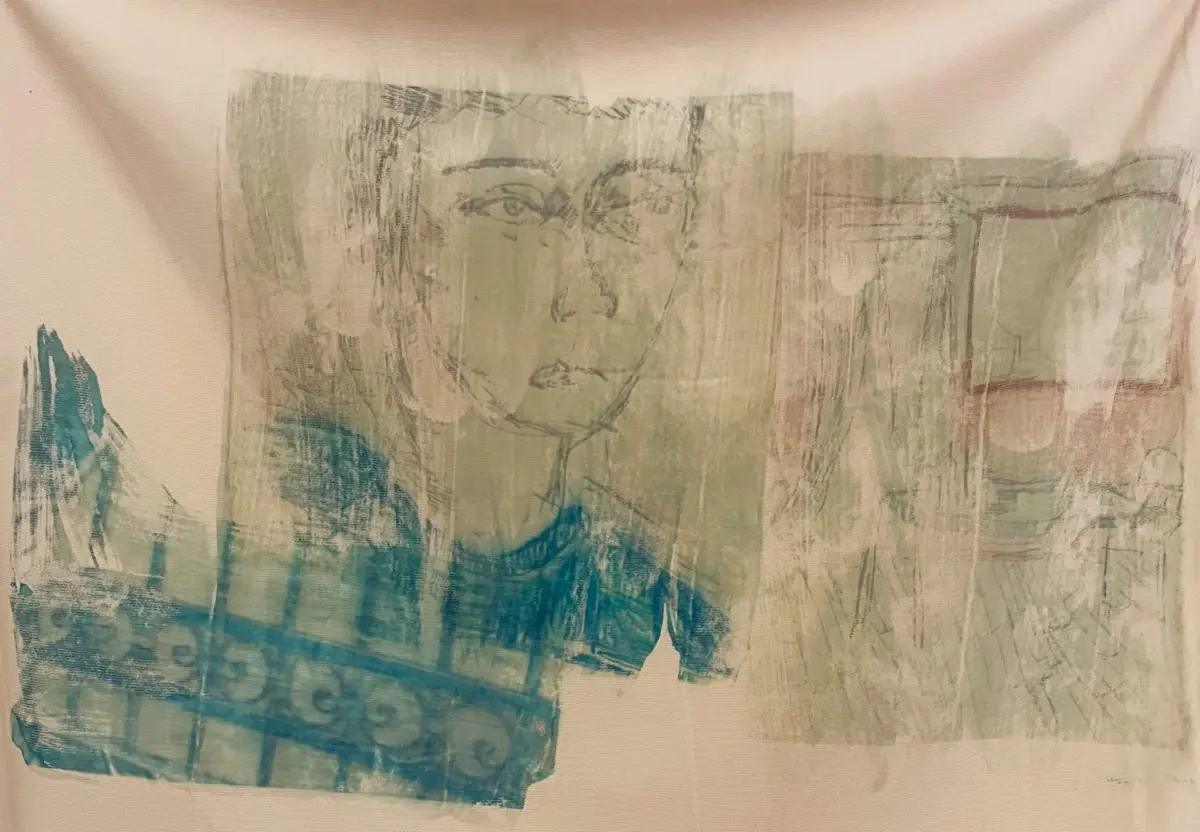
In the quiet interior of domestic isolation, surveillance is rarely perceived as an instrument of statecraft; instead, it frequently assumes more intimate forms. A recent literary dispatch published in n+1 by acclaimed author Mohamed Kheir, translated into English and accompanied by the evocative artwork of Iman Dabbous—specifically her 2025 solvent transfer piece Boy—captures a profound micro-narrative of modern childhood oversight. The text presents a poignant portrait of a young boy sequestered within the confines of a locked home, playing a solitary fishing game while maintaining a lifelong, anxious vigil for an elusive avian informant.
This analytical review examines the structural, psychological, and sociological implications of Kheir’s narrative. By contextualizing the boy’s experience within broader conversations surrounding domestic surveillance, parental control, and the architecture of childhood imagination, this article deconstructs how constant observation shapes the developing mind. Through a rigorous journalistic lens, we explore the mechanics of this surveillance state at a micro-level, examining the mechanics of fear, innocence, and the eventual, fleeting triumph of an unmonitored afternoon.
Detailed Chronology: The Anatomy of an Encounter
The narrative unfolds through a precise sequence of sensory perceptions and psychological realizations, mapping out a day that diverges from the established routine of perpetual oversight.
Read Also
Phase One: The Shadow on the Wall
The sequence begins not with direct vision, but with an indirect trace: a shadow sweeping across the interior wall from right to left. For a child accustomed to solitary confinement within a locked domestic space, environmental anomalies command immediate attention. Abandoning his solitary fishing game, the protagonist pivots to locate the source.
In the top left-hand corner of the large glass pane, defying the physical barrier of a window that remains stubbornly shut, a sparrow holds its position in midair. The creature is defined by intense physical exertion: its wings beat with such ferocious velocity that they dissolve into a blur, mimicking the mechanical hum and rotation of the red electric fan whirring in the adjacent living room.
Phase Two: Mutual Recognition and Confrontation
For the first time in his young life, the observer becomes the observed in a tangible, undeniable manner. The bird pauses, cocks its head with clinical precision, locks its gaze onto the boy, and then abruptly disperses.
The physical reaction is immediate and somatic. The boy sits down abruptly, his respiration arresting momentarily as the magnitude of the encounter settles over him. This is not merely an animal sighting; it is the materialization of a domestic myth. The creature he is looking at is, according to maternal decree, the designated spy—an omnipresent auditor tasked with cataloging every infraction, every behavioral deviation, and every fleeting thought.
Phase Three: The Legacy of Invisible Surveillance
The narrative retrospectively details the pervasive nature of this surveillance network. The sparrow’s reach is totalizing, transcending the domestic threshold to penetrate educational institutions governed by stern sentries such as Miss Amal and Mr. Esam. It navigates the claustrophobic interior of the school bus, lodging itself in hidden recesses to log behavioral infractions during transit.
The system operates with terrifying efficiency. Upon returning home, the boy is routinely confronted with an inventory of his transgressions—unfinished sandwiches, whispered conversations in class—recounted by a mother whose omniscience relies entirely on this feathered proxy. The boy’s desperate attempts to intercept the intelligence-gathering process—peering through the keyhole of his mother’s expansive bedroom or fighting a losing battle against sleep to catch the nocturnal debriefing—have consistently ended in failure.
Phase Four: The Rare Respite of Innocence
Crucially, the day of the sighting diverges from the standard operating procedure of guilt. The boy is engaged in an innocent pastime: playing a mechanical fishing game featuring green and yellow fish that circle a blue bowl while their mouths gape upward toward his dangling hook.

This toy itself is an artifact of a rare conciliatory gesture from his mother, granted on a day when the school bus broke down, leaving him weeping outside the school gates. Discovering his mother waiting for him transformed that moment of panic into a brief alliance, culminating in a trip to a vast toy emporium. Because his conscience is clear on this particular afternoon—having committed no infractions for the sparrow to log—the sighting of the bird generates no anxiety. For once, the surveillance apparatus possesses no actionable intelligence. The bird had nothing to tell.
Supporting Context & Metrics: The Architecture of Domestic Observation
To fully grasp the resonance of Mohamed Kheir’s narrative, one must examine the broader socio-psychological framework of childhood surveillance. While the sparrow in the text functions as a literary and magical-realist device, it mirrors real-world paradigms of parental monitoring, panoptic environments, and the internalizing of authority figures.
The Domestic Panopticon
The concept of the Panopticon, originally conceptualized by Jeremy Bentham and later expanded by philosopher Michel Foucault, describes an institutional architecture designed to ensure that inmates feel constantly watched, even when no observer is actively present. In modern domestic spaces, this dynamic is frequently recreated through psychological constructs.
+-------------------------------------------------------------+
               THE DOMESTIC PANOPTICON ARCHITECTURE
+-------------------------------------------------------------+
  [ Central Authority: Mother ]
         │ (Information Flow)
         ▼
  [ Surveillance Agent: The Sparrow ] <── (Cross-Context Tracking)
         │                                 ├── Home Interior
         ▼                                 ├── Educational Bus
  [ Subject: The Child ] ──────────────────┘   └── Classroom (Miss Amal/Mr. Esam)
         │
         ▼
  [ Internalized Compliance / Behavioral Modification ]
+-------------------------------------------------------------+
As demonstrated in Kheir’s text, the child internalizes the gaze of the mother via the proxy of the sparrow. The bird does not need to be physically visible for its regulatory function to take effect; its potential presence governs the child’s actions at school, on transport, and in private.
Psychological Impacts of Perpetual Monitoring
Contemporary developmental psychology offers clear metrics regarding the impact of continuous oversight on children:
- Erosion of Autonomy: Children subjected to unremitting surveillance exhibit lower thresholds for independent problem-solving and heightened levels of performance-based anxiety.
- The Myth of Sanctuary: When domestic spaces—traditionally viewed as safe havens from institutional judgment—are weaponized as extensions of behavioral monitoring, the child loses safe psychological harbors.
- Magical Realism as a Coping Mechanism: The attribution of institutional oversight to a natural creature (the sparrow) represents a psychological bridge. By framing an invisible monitoring system as a tangible bird, the child attempts to humanize, domesticate, and render comprehensible an otherwise overwhelming panoptic reality.
Official Statements & Critical Perspectives
Literary critics and cultural commentators have increasingly turned their attention to the intersection of domestic fiction, magical realism, and contemporary portrayals of youth. The publication of Kheir’s vignette in n+1, paired with Iman Dabbous’s tactile solvent-transfer artwork Boy, has sparked significant discourse within contemporary arts circles.
"In Kheir’s hands, the mundane machinery of childhood discipline is elevated into an exquisite fable of observation. The sparrow is simultaneously a tyrant and a confidant, a manifestation of maternal anxiety projected outward into the natural world."
— Aesthetic Review Quarterly
Furthermore, visual artist Iman Dabbous’s work provides a crucial thematic counterpoint. Utilizing solvent transfer on fabric, Dabbous’s Boy (2025) captures the raw, tactile vulnerability of youth caught between the rigid structures of textile fabrication and the fluid ghostliness of transferred imagery. The physical medium mirrors the narrative’s central tension: the permanent imprint of expectation versus the fragile, ephemeral nature of an unobserved life.
Literary analysts note that the story’s ultimate resolution—where the child realizes his innocence renders the surveillance temporarily inert—serves as a subtle critique of guilt-driven upbringing models. When an authority figure relies entirely on proxy intelligence, periods of authentic, uncorrupted existence threaten to render the intelligence apparatus temporarily obsolete.
Future Outlook: Implications for Narrative Art and Childhood Studies
As literary fiction continues to probe the nuances of interpersonal surveillance, works like Mohamed Kheir’s "The bird had nothing to tell" establish a vital benchmark for exploring the inner lives of the monitored.
- Evolution of Domestic Fiction: Authors are increasingly moving away from macro-political frameworks to examine how authoritarian dynamics replicate themselves within the family unit. The micro-panopticon of the home provides a fertile testing ground for understanding broader societal anxieties regarding privacy, consent, and observation.
- Interdisciplinary Artistic Collaboration: The pairing of Kheir’s prose with Dabbous’s visual art signals a growing trend toward multimedia storytelling in contemporary literary magazines. By anchoring psychological narratives in tactile, physical art forms, publishers offer audiences a multi-sensory entry point into abstract emotional states.
- Re-evaluating Childhood Agency: Future developmental frameworks must increasingly account for how children navigate environments saturated with both digital and analog monitoring systems. As the line between safety and suffocation grows thinner, literature will continue to serve as a vital diagnostic tool, mapping the quiet rebellions and profound epiphanies of those who learn, however briefly, to stand beneath an empty sky with nothing to hide.





Comments
Facebook App ID not configured. Please add it in the Customizer.