
Executive Overview
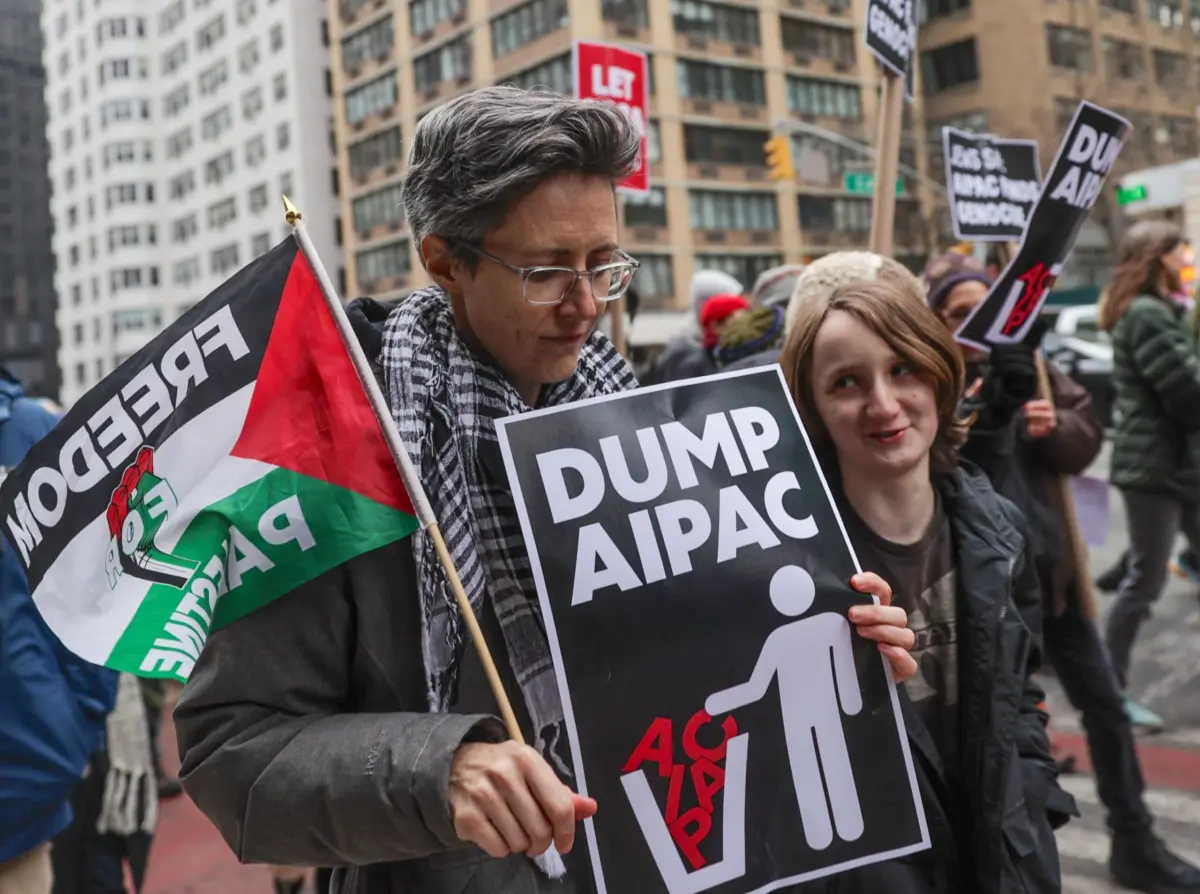
As the United States barrels toward a consequential midterm election cycle, the political landscape is defined by high-stakes battles over control of Congress, shifting party identities, and an unprecedented convergence of domestic economic anxieties and foreign policy debates. For months, the primary season was punctuated by fierce ideological clashes over America’s relationship with Israel. Within the Democratic Party particularly, progressives and centrists found themselves at loggerheads over military aid, the humanitarian crisis in Gaza, and the outsized electoral influence of political action committees like the American Israel Public Affairs Committee (AIPAC).
Yet, as the general election approaches, the visibility of the Israel-Palestine debate has undergone a curious transformation. While public sentiment toward Israel has demonstrably nosedived over the past eighteen months—shaping primary battles and fueling intense intra-party debates—the issue appears to occupy a secondary tier of priority for the broader electorate heading into November. Domestic concerns, notably the soaring cost of living, inflation, economic survival, and broader foreign entanglements like the ongoing conflict with Iran, continue to dominate voter concerns.
Compounding this dynamic is a profound shift in campaign finance. While AIPAC has historically anchored fierce fundraising battles, the general election has seen its influence dwarfed by a historic financial advantage enjoyed by the Republican Party, driven largely by big-business donors and Silicon Valley tech interests. Adding to the shifting architecture of political influence, AIPAC recently announced a historic pivot: halting direct candidate endorsements and campaign contributions.
Read Also
Nevertheless, the stakes of the upcoming midterms remain extraordinarily high. Voters are weighing whether to provide a crucial legislative check on a presidential administration that has repeatedly tested historical executive norms. While a shift in congressional control will not immediately rewrite Washington’s foreign policy framework—with President Donald Trump maintaining command of foreign affairs—a potential Democratic majority could introduce vital new legislative oversight tools. Through hearings, targeted funding restrictions, and rigorous reporting requirements, a newly empowered Congress could lay the groundwork for a generational transformation in American policy regarding Israel and Palestine.
Detailed Chronology: From Primary Flashpoints to General Election Realities
To understand how Israel policy has materialized in the current electoral cycle, it is necessary to retrace a trajectory that began long before the fall campaign season.
The Primary Season Clashes (Late 2025 – Summer 2026)
Throughout the Democratic primary elections, the topic of Israel felt nearly inescapable. Across key battleground states, including Michigan and New York, congressional candidates found themselves forced to take definitive stances on unconditional military aid, the humanitarian catastrophe in Gaza, and the acceptance of Super PAC funding from pro-Israel organizations.
Centrist incumbents and progressive challengers clashed memorably on debate stages and digital campaign trails. Progressive groups mobilized grassroots networks around the humanitarian toll of the conflict, while centrist and establishment candidates leaned heavily on traditional alliances and institutional fundraising networks. These primaries served as an intense pressure test for the Democratic Party’s foreign policy soul, exposing deep generational and ideological fractures that party leadership struggled to reconcile.
The Shift in Public Sentiment (18-Month Retrospective)
Polling data collected over the past year and a half reveals a stark, structural downward trend in American public approval of Israel’s military strategies and government actions. This erosion of support has not been confined to the political left; rather, it has bled into younger demographics across the political spectrum, reshaping how foreign policy is perceived by average citizens. While foreign policy is rarely the decisive metric at the ballot box, this attitudinal shift laid the intellectual groundwork for primary challengers to weaponize the issue against entrenched incumbents, permanently altering the vocabulary of progressive and moderate foreign policy debates.
The Autumn Pivot and AIPAC’s Announcement (October 2026)
As the calendar turned toward the general election, political strategists observed a distinct cooling of Israel as a daily media and campaign focal point. When voters look toward November, the immediate horizon is crowded with domestic survival issues.
In a dramatic late-breaking development in late October 2026, AIPAC—long a titan of electoral spending and a frequent lightning rod in Democratic primaries—announced a major strategic shift: the organization would cease making direct campaign contributions and endorsing political candidates. This move came at a time when the group’s financial footprint was already being overshadowed in the general election by an unprecedented wave of corporate and tech-sector donations flooding Republican coffers, securing the GOP a historic fundraising advantage heading into the final stretch.
Supporting Context & Metrics: What Voters Actually Care About
While political pundits and cable news programs frequently obsess over the nuances of Middle Eastern diplomacy, empirical data from nonpartisan polling organizations reveals a significant disconnect between elite political discourse and the everyday priorities of the American electorate.
The Cost of Living Crisis
According to comprehensive polling conducted jointly by the Associated Press and the NORC Center for Public Affairs Research, the domestic economy reigns supreme in the minds of registered voters. Approximately 80 percent of respondents indicated that addressing the cost of living and taming inflation should be the absolute highest priority for Congress in its upcoming legislative term. For households grappling with high grocery prices, housing affordability, and stagnant wage growth, foreign policy debates remain distant concerns.
Foreign Policy Hierarchies: Iran vs. Israel
When voters do turn their attention to international affairs, their focus is shaped by immediate security threats and broader geopolitical flashpoints. The same AP-NORC poll revealed that roughly 70 percent of voters prioritize ending the ongoing conflict with Iran as a top congressional concern.
By contrast, the issue of cutting off or conditioning military aid to Israel commands significantly lower urgency among the general public. Less than one-third of registered voters rank Israel policy among their top legislative priorities. This explains why, outside of hyper-engaged progressive enclaves and specialized donor circles, candidates running in general election swing districts have largely de-emphasized the issue in favor of economic populism and healthcare security.
The Campaign Finance Landscape
The financial architecture of the 2026 midterms has likewise evolved. While outside spending groups like AIPAC historically commanded headlines for injecting millions into competitive primaries, the general election theater is defined by macro-level capital flows. Republican candidates have unlocked a historic fundraising advantage, fueled aggressively by conservative donors, corporate political action committees, and emerging figures within the technology sector. This vast capital disparity has forced Democratic strategists to recalibrate their resource allocation, prioritizing defensive ground games in suburban districts over ideological messaging battles.
Official Statements & Expert Analysis
To grasp the true policy implications of the upcoming midterms, political scientists and former diplomats have looked beyond the immediate rhetoric of the campaign trail to examine structural legislative mechanisms.
The Limits of Congressional Foreign Policy
Foreign policy in the United States remains constitutionally centered within the executive branch. With President Donald Trump firmly in command of the executive branch and directing foreign affairs, the immediate aftermath of the midterm elections will not see a sudden, unilateral reorientation of Washington’s Middle East policy. Even if the Democratic Party manages to capture a majority in the House of Representatives, their ability to directly reverse or dismantle the president’s established foreign agenda will remain severely constrained by institutional barriers, including presidential vetoes and the requirement of supermajorities in the Senate.
The Power of Legislative Oversight
However, a shift in congressional control is far from toothless. In a recent, highly anticipated analysis published by Chatham House, Hady Amr, the former US Special Representative for Palestinian Affairs, argued that a newly minted Democratic congressional majority would instantly acquire vital new institutional instruments.
Amr noted that while these legislative tools may lack the cinematic flair of sweeping executive orders, they possess immense cumulative power:
"A Democratic majority would gain new congressional tools to act on Israel-Palestine issues—tools that are not flashy, including intensive committee hearings, targeted funding restrictions, and rigorous reporting requirements. These mechanisms could certainly set the stage for a broader, generational policy shift under a future Democratic president."
Through the power of the purse and subpoena authority, congressional committees could systematically scrutinize arms transfers, demand accountability regarding human rights compliance, and elevate Palestinian human rights within the national consciousness.
Future Outlook: What the Midterm Results Mean for Washington
As Americans prepare to cast their ballots, the 2026 midterm elections stand as a referendum on both domestic governance and the limits of legislative power in an era of executive dominance.
1. The Normalization of Intra-Party Foreign Policy Debates
Regardless of whether Israel policy commands 10 percent or 80 percent of a voter’s attention at the ballot box, the political Genie cannot be put back in the bottle. The fierce primary battles of 2026 have permanently normalized open debate within the Democratic Party regarding unconditional military assistance and Palestinian rights. Future primary cycles will undoubtedly feature these debates with even greater frequency and organizational backing.
2. The Evolution of Lobbying and Campaign Finance
AIPAC’s decision to step away from direct candidate endorsements and campaign contributions marks the end of an era in American campaign finance. As political campaigns increasingly rely on decentralized digital fundraising, mega-donors, and tech-driven super PACs, traditional single-issue lobbying groups are being forced to adapt their strategies, shifting away from direct electoral intervention toward long-term grassroots education and policy lobbying.
3. The Morning After: November and Beyond
When the ballots are counted and the new Congress is sworn in, the immediate reality of Washington politics will remain largely deadlocked. President Trump will continue to steer executive foreign policy, and bipartisan consensus on core national security doctrines will persist in many areas.
Yet, the subterranean tectonic plates of American politics have shifted. The disillusionment felt by millions of voters over the trajectory of US involvement in the Middle East has laid down markers that neither political party can afford to ignore indefinitely. Whether through committee gavels, budgetary restrictions, or the generational turnover of political leadership, the debates witnessed during the 2026 midterms are merely the opening chapter of a profound, long-term reckoning in American foreign policy.




Comments
Facebook App ID not configured. Please add it in the Customizer.