
Executive Overview
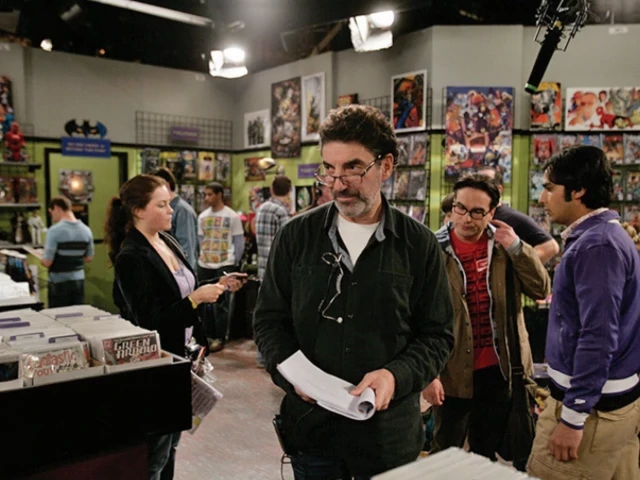
For over three decades, the name Chuck Lorre has been synonymous with the cultural pulse of American television. As the creative mastermind behind some of the most enduring, commercially dominant sitcoms in broadcast history—including The Big Bang Theory, Two and a Half Men, Mom, and Young Sheldon—Lorre has shaped how generations consume narrative comedy. Now, in a sweeping and deeply reflective new memoir aptly titled Sitcom, the veteran producer is stepping back from the writer’s room to interrogate his own legacy, chronicling the triumphs, the harrowing near-misses, the devastating disappointments, and the hard-won lessons of a career spent chasing the elusive alchemy of television laughter.
Initially reluctant to commit his life’s work to the page, Lorre was eventually persuaded by a close confidant that his turbulent, yet extraordinarily fruitful, journey warranted documentation. The resulting book is far more than a standard Hollywood retrospective. Instead, Sitcom serves as a forensic examination of the creative process, blending vulnerable personal reflection with rare, behind-the-scenes artifacts. By opening up his personal archives and annotating original sitcom scripts with handwritten marginalia, Lorre offers readers an unprecedented, insider’s view of the emotional and intellectual labor required to build a television comedy from the ground up.
Beyond the nostalgic recounting of ratings milestones and Hollywood politics, Lorre’s memoir arrives at a critical juncture for the entertainment industry. As traditional network television grapples with the seismic shifts brought on by streaming fragmentation, algorithm-driven content, and changing viewer habits, Lorre’s reflections read as both a masterclass in classic television writing and a stark warning about the future of the medium. Through a rigorous examination of character architecture, audience psychology, and the thin line between failure and historic success, Sitcom cements Lorre’s status not just as a hitmaker, but as a critical historian of the modern American comedy landscape.
Read Also
Detailed Chronology: From Reluctant Scribe to Television Titan
To understand the weight of Sitcom, one must trace the winding, often unpredictable path that brought Chuck Lorre to the apex of television production. The memoir carefully charts his evolution, offering a rare glimpse into the psyche of a creator who spent decades hiding behind the safety of network soundstages.
The Resistance to Self-Reflection
For most of his professional life, Lorre’s energy was strictly outward-facing. Pushing out syndication-ready episodes on tight weekly schedules left little room for self-indulgence or retrospective analysis. When the idea of writing a memoir was first floated by colleagues and publishing executives, Lorre resisted. He questioned whether his personal narrative—marked by the anxieties, neuroses, and relentless pressures inherent to the television industry—held any broader value.
It took the persistent encouragement of a close friend to alter his perspective. This confidant argued that Lorre’s unique vantage point, having witnessed the transition from the golden era of three-camera network sitcoms to the hyper-fragmented streaming age, constituted an invaluable historical record. Reluctantly, Lorre began the process of putting his experiences on paper.
The Therapeutic Power of Distance
Writing Sitcom, Lorre discovered, offered an unexpected psychological benefit: distance. For a creator whose professional life was perpetually judged by overnight Nielsen ratings and immediate public reception, the act of writing a memoir provided a safe harbor. Looking back across decades of production allowed him to view his younger, more frantic self with a mixture of empathy and humor.
Rather than wallowing in past frustrations or indulging in self-aggrandizement, Lorre utilized this temporal distance to laugh at his mistakes and deeply understand the mechanics of his own creative evolution. This self-awareness permeates the memoir, transforming what could have been a defensive Hollywood post-mortem into a disarmingly honest exploration of artistic vulnerability.
Unveiling the Blueprint: Scripts and Marginalia
One of the most innovative structural choices in Sitcom is the inclusion of actual, unedited television scripts punctuated by Lorre’s original, handwritten notes. For aspiring writers, television historians, and dedicated fans, these pages act as a Rosetta Stone for comedy production.
Lorre deliberately chose to include these artifacts to strip away the abstract nature with which television is often discussed. Instead of merely theorizing about joke structure, pacing, or character beats, the book plunges the reader directly into the trenches of the writer’s room. Through these annotated pages, one can witness the frantic restructuring of a scene at 2:00 AM, the last-minute deletion of a joke that stepped on a character’s emotional truth, and the meticulous calibration required to guide a studio audience’s reactions without manipulating them.
Supporting Context & Metrics: The Anatomy of a Sitcom Empire
To fully appreciate the insights contained within Sitcom, one must examine the staggering scale of Chuck Lorre’s commercial footprint. His shows have not only dominated prime-time television schedules for decades; they have also generated billions of dollars in syndication revenue, cemented themselves in global pop culture, and defined the economic model of modern television production.
The Ratings Juggernauts
Lorre’s portfolio boasts some of the most-watched scripted television programs of the 21st century. The Big Bang Theory, which ran for 12 seasons on CBS from 2007 to 2019, concluded its run as the longest-running multi-camera sitcom in television history, drawing nearly 18 million viewers for its series finale. Similarly, Two and a Half Men reigned supreme as television’s top comedy for much of its 12-season run, pulling in staggering audience shares and cementing CBS’s dominance in the comedy block.
| Show Title | Original Run | Key Milestones & Cultural Impact |
|---|---|---|
| The Big Bang Theory | 2007–2019 | 279 episodes; peak viewership over 18 million; spawned the prequel Young Sheldon. |
| Two and a Half Men | 2003–2015 | 262 episodes; multi-season ratings leader; redefined the modern network comedy demographic. |
| Mom | 2013–2021 | 170 episodes; critically acclaimed for blending sharp multi-cam humor with serious addiction recovery themes. |
| Young Sheldon | 2017–2024 | 141 episodes; successfully transitioned the multi-cam universe into a poignant single-cam family comedy. |
The Mechanics of Failure: The Big Bang Theory Pilot Story
Despite this extraordinary track record of success, Lorre is quick to demystify the myth of the effortless hitmaker. In Sitcom, he revisits one of the most famous near-failures in modern television history: the original pilot for The Big Bang Theory.
The first iteration of the show—which featured a markedly different supporting cast and a vastly different tone—was famously rejected by network executives. For many creators, such a rejection signals the end of the road. However, Lorre views failure not as an absolute endpoint, but as a diagnostic tool.
Recognizing the undeniable, electric chemistry between series leads Johnny Galecki and Jim Parsons, Lorre and co-creator Bill Prady tore the pilot down to its studs. They reworked the surrounding ensemble, refined the premise, and pitched a second iteration to CBS. That willingness to embrace failure, learn from its structural flaws, and execute a dramatic pivot birthed a global phenomenon. Lorre warns in his memoir that writers face a perpetual choice when confronted with failure: they can allow it to teach them invaluable lessons, or they can permit it to curdle them into cynicism and bitterness.
Official Statements & Industry Insights: Character Over Comedy
At the core of Sitcom is a passionate, uncompromising defense of the traditional sitcom format, coupled with a sharp critique of contemporary writing trends. As television has evolved into the "Peak TV" era of serialized dramas and prestige streaming platforms, Lorre argues that the foundational rules of great comedy remain stubbornly, beautifully unchanged.
The Supremacy of Character
Speaking with industry analysts and news agencies during the promotional rollout of his memoir, Lorre emphasized a foundational tenet of his creative philosophy: audiences must fundamentally care about the characters before any joke can register.
"You can write the sharpest, most brilliantly constructed punchline in the English language," Lorre noted in discussions surrounding the book, "but if the audience doesn’t care who is delivering it, it’s just noise in an empty room. Comedy doesn’t live in the joke; comedy lives in the desperation, the vulnerability, and the specific humanity of the person telling it."
Challenging modern sensitivities that demand immaculately moral protagonists, Lorre pointed to television history to prove that longevity and comedic brilliance often spring from deeply flawed, difficult personalities. He highlighted Danny DeVito’s brilliantly abrasive Louie De Palma in Taxi and Carroll O’Connor’s legendary, bigoted yet strangely compelling Archie Bunker in All in the Family. These characters were far from universally likeable, yet viewers tuned in week after week because their internal struggles felt urgent, authentic, and undeniably human.
The Surrogate Family Model
Lorre also reflected on the unique psychological function of successful sitcoms like Cheers and The Big Bang Theory. Over the course of hundreds of episodes, these programs evolve from mere entertainment into surrogate families for the audience.
By inviting viewers into a familiar living room, diner, or apartment on a weekly basis, long-running sitcoms provide a sense of comfort, routine, and communal belonging. In an era marked by rapid societal atomization, Lorre posits that the multi-camera sitcom acts as a vital social anchor, bringing diverse groups of people together around a shared comedic experience.
Future Outlook: Navigating the Fragmented Landscape
As Chuck Lorre looks back on a golden era of broadcast television, he is acutely aware that the landscape he conquered is vanishing. The challenges facing creators today are fundamentally different from those he faced when launching Two and a Half Men or The Big Bang Theory in the 2000s.
The Battle for the Half-Hour
The primary threat to the modern sitcom, according to Lorre, is market fragmentation. In a media ecosystem saturated with prestige streaming dramas, non-stop social media feeds, and thousands of competing viewing options, asking an audience to devote a sacred half-hour of their week to a comedy has become an escalating hurdle.
The traditional network model—where tens of millions of households gathered simultaneously around a single television set—has fractured. Streaming algorithms prioritize binge-watching, high-concept serialized drama, and instant hooks over the slow-burn character development and reliable weekly comfort that sustained the multi-cam format for decades.
The Enduring Survival Instinct of Laughter
Despite these formidable headwinds, Lorre remains cautiously optimistic about the future of comedy. In the closing chapters of Sitcom, he asserts that human beings’ biological and psychological need for collective laughter is an immutable constant. While the delivery systems, business models, and platform architectures will continue to morph at a dizzying pace, the fundamental requirements of storytelling—empathy, precise timing, flawed characters, and authentic human connection—will always find an audience.
Through Sitcom, Chuck Lorre has not merely chronicled his own illustrious career; he has provided a vital operational manual for the next generation of storytellers. In an industry increasingly obsessed with technological disruption and algorithmic optimization, Lorre’s memoir serves as a timely reminder that the greatest television is built not in boardrooms or data centers, but in the messy, human, and eternally collaborative space of the writer’s room.




Comments
Facebook App ID not configured. Please add it in the Customizer.