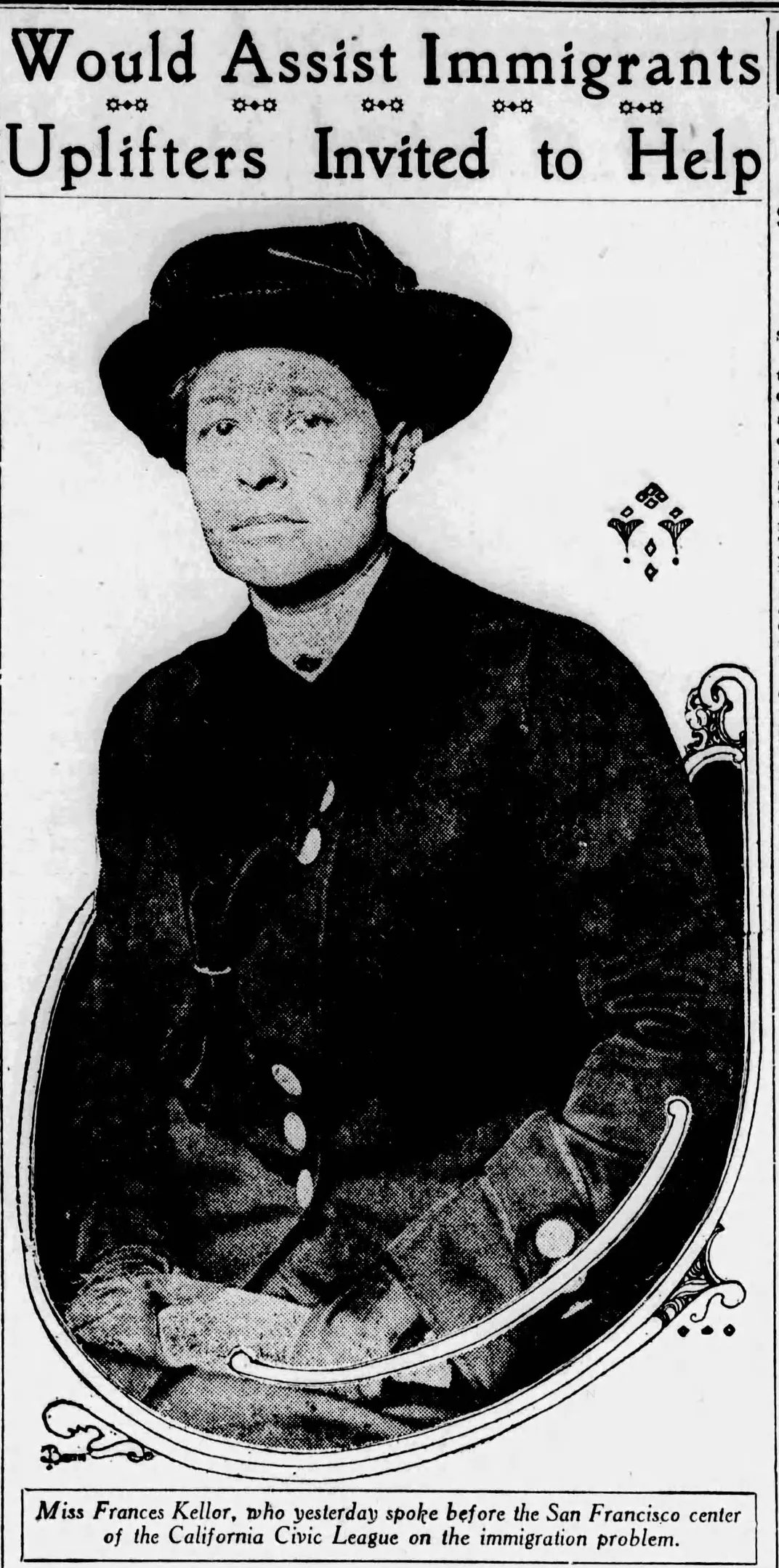
Between 1915 and 1918, the Fourth of July was more than just a commemoration of America’s political independence from Great Britain. In cities and towns across the country, communities combined traditional celebrations of the nation’s founding with Americanization Day—a coordinated, nationwide civic holiday designed to encourage millions of recent immigrants to fully embrace U.S. culture, language, and democratic ideals. At the center of this movement was Frances Alice Kellor, a tireless progressive reformer, legal scholar, and social activist whose contributions to American society have largely been lost to history.
Operating under the banner of the motto "Many peoples, but one nation," Kellor sought to dismantle the barriers that isolated newcomer populations from mainstream civic life. Yet, while the term "Americanization" often carries heavy historical baggage and associations with xenophobic erasure today, Kellor’s original vision was radically different. She envisioned a society where industrial justice, structural support, and social integration protected vulnerable immigrants from rampant capitalist exploitation in sweatshops and labor camps.
Kellor’s legacy is deeply intertwined with her unique perspective as an outsider. As a working-class woman who rose to graduate from Cornell Law School, a pioneering female state agency director in New York, and a lesbian living openly within a domestic partnership with activist Mary Dreier during an era of deep secrecy, Kellor dedicated her life to advocating for marginalized groups. Despite her monumental legislative achievements—including helping establish the New York Bureau of Industries and Immigration, advising Theodore Roosevelt’s "Female Brain Trust," and co-founding the American Arbitration Association—her name remains unfamiliar to many modern Americans. This article explores the extraordinary life of Frances Kellor, the rise and fall of Americanization Day, and her enduring, complex legacy in the shaping of modern America.
Detailed Chronology: The Life and Times of Frances Kellor
Early Life and Formative Years (1873–1897)
Born Frances Alice Kellar in Columbus, Ohio, in 1873, Kellor experienced an arduous childhood that forged her lifelong empathy for the disadvantaged. After her father abandoned the family, her mother supported them through domestic labor. Forced to leave high school after two years to work full-time, Kellor secured employment as a reporter for a local newspaper in Coldwater, Michigan.
Recognizing her intellectual potential, two wealthy patrons provided the financial support necessary for Kellor to pursue higher education. She enrolled at Cornell University, earning her law degree in 1897 as part of a small vanguard of women entering the legal profession. She subsequently moved to Chicago to study criminal sociology at the University of Chicago, where she crossed paths with Jane Addams, co-founder of Hull-House. This pivotal meeting laid the groundwork for Kellor’s lifelong immersion in the Progressive Era’s social reform movements.
The New York Years and Industrial Investigations (1903–1914)
In 1903, Kellor relocated to New York City. Around this time, she met and fell in love with Mary Elisabeth Dreier, a wealthy Brooklyn social activist. The pair established a long-term personal and professional partnership that would anchor Kellor’s reform work for decades.
In 1906, Kellor spearheaded a comprehensive study on the hardships confronting newly arrived immigrants. As historian Lillian Faderman notes in To Believe in Women: What Lesbians Have Done for America—a History, Kellor uncovered widespread systemic abuse. Immigrants were routinely "worked to death" in unregulated labor camps and sweatshops. State and local officials who were ostensibly tasked with assisting newcomers instead preyed upon them, issuing invalid housing leases and counterfeit currency.
Horrified by these conditions, Kellor petitioned powerful politicians, including President Theodore Roosevelt, demanding legislative protections. Her advocacy culminated in 1910 with the creation of the New York Bureau of Industries and Immigration. New York Governor Charles Evans Hughes—who would later serve as Chief Justice of the U.S. Supreme Court—appointed Kellor as the bureau’s head, making her the first woman to lead a major state agency in New York. Under her leadership, the bureau shifted focus toward practical support, providing English language instruction and legal aid to millions of workers.
The Americanization Day Movement (1915–1918)
With backing from wealthy private donors, Kellor launched the National Americanization Committee in 1915. Recognizing that the Fourth of July was a focal point for national pride, Kellor and her colleagues seized the date to launch Americanization Day. The holiday was engineered to foster unity during the massive immigration boom preceding World War I, which had seen an average of one million newcomers arrive in the U.S. annually.
During the war years, hundreds of thousands of participants turned out for Americanization Day parades and festivities. In Indianapolis in 1918, German immigrants proudly waved the American flag, while Slovenes marched in folk costumes behind banners declaring loyalty to the United States. In Cleveland, over 75,000 immigrants participated in civic marches.
Ideological Shift and the Post-War Backlash (1919–1921)
As World War I drew to a close in November 1918, the socio-political landscape shifted. Kellor grew increasingly disillusioned with how the Americanization movement was being hijacked by nativist forces who weaponized assimilation to demand the total erasure of immigrant cultures. By 1919, Kellor publicly criticized the movement’s failures, writing that many immigrants felt disillusioned because the promises of equality did not match their lived realities.
Kellor acknowledged that true unity required the embrace of cultural diversity. However, her progressive policy goals suffered a devastating blow in 1921 when Congress passed the Emergency Quota Act, followed by the restrictive immigration laws of 1924. These acts slammed the door on unfettered immigration, instituting strict national-origin quotas. Recognizing that the political tide had turned toward xenophobia, Kellor pivoted away from direct immigrant advocacy to focus on literary publishing and international arbitration.
Later Life and Legacy (1922–1962)
In her later years, Kellor co-founded the American Arbitration Association in 1926, establishing a pioneering framework for peaceful dispute resolution in commercial and international conflicts. She also remained an active advocate for women’s suffrage, contributing to the intellectual core of Theodore Roosevelt’s "Female Brain Trust" during his 1912 presidential campaign.
Kellor passed away in 1952 at the age of 78, and Mary Dreier died in 1963 at 87. They were buried together in Dreier’s family plot at Green-Wood Cemetery in Brooklyn, leaving behind an indelible mark on American social reform, labor rights, and civil liberties.
Supporting Context & Metrics: Understanding the Immigrant Wave
To fully contextualize Frances Kellor’s reforms, one must examine the staggering demographic shifts occurring in the United States at the turn of the 20th century. Between 1900 and 1914, the United States experienced an unprecedented immigration boom, welcoming an average of one million newcomers annually.
The Scale of the Boom: The vast majority of these immigrants arrived from Southern and Eastern Europe, escaping economic destitution, religious persecution, and political instability. They settled predominantly in industrial urban centers like New York, Chicago, and Cleveland.
Economic Vulnerability: Upon arrival, millions of immigrants faced severe exploitation. Unregulated labor markets meant that padrones (labor bosses), fraudulent employment agencies, and corrupt landlords systematically fleeced newcomers. According to Kellor’s 1906 state study, fraudulent transactions and unsafe working environments accounted for injuries and financial ruin among a vast percentage of non-English-speaking laborers.
The Settlement House Movement: Institutions like Hull-House in Chicago served as vital urban community centers. They bridged the gap between working-class immigrants and progressive reformers by offering educational resources, affordable childcare, and legal guidance.
Participation Metrics: The public appetite for civic integration during World War I was massive. In 1918 alone, cities like Cleveland mobilized upwards of 75,000 marchers for Americanization Day parades, reflecting a complex desire among immigrant communities to demonstrate civic loyalty amidst rising wartime xenophobia and anti-German sentiment.
Official Statements & Historical Perspectives
Biographer John Kenneth Press, author of Founding Mother: Frances Kellor and the Creation of Modern America, emphasizes the deeply personal motivation behind Kellor’s professional crusades.
"She was an outsider, and being an outsider all your life kind of readies you to fight for outsiders," Press tells Smithsonian magazine. "I don’t know why she is completely ignored… She really managed to accomplish a great deal."
Press notes that Kellor’s view of Americanization was fundamentally aimed at bridging societal divides:
"The activist viewed Americanization as a way of breaking down the walls that separated people, and asking individuals who had lived in the U.S. for decades to understand and accept immigrants."
Prominent historian Lillian Faderman, widely celebrated as the "mother of lesbian history," offers a nuanced view of Kellor’s assimilationist campaigns through a contemporary lens:
"What Kellor believed is that immigrants would do better if they learned the American way of life," Faderman explains. "Immigrants had to join the melting pot and had to give up some of their ways—not for the comfort of Americans, but for their own good."
Despite acknowledging that certain aspects of early 20th-century assimilation policies appear naive or culturally paternalistic today, Faderman maintains that Kellor’s underlying motivations were rooted in genuine compassion:
"There is no doubt that through her policies and the laws that her bureau helped get passed, she lightened the burdens of millions of immigrants."
Kellor herself famously summarized her philosophy regarding workplace integration and mutual responsibility in her writings:
"Industrial justice is the essence of Americanization." Furthermore, she warned native-born Americans against harboring arrogance: "If you have racial prejudice and inhospitality in your heart and a sense of Anglo-Saxon superiority in your mind, you will ultimately fail and will set America back rather than forward."
Future Outlook: Re-Evaluating Progressivism and Immigration Today
As contemporary societies grapple with ongoing debates surrounding immigration, national identity, cultural pluralism, and assimilation, the historical trajectory of Frances Kellor offers profound lessons. Modern historians, sociologists, and policymakers increasingly recognize that early 20th-century reform efforts cannot be viewed through a monolithic lens. While the term "Americanization" eventually degenerated into a tool for exclusionary, nativist policies—culminating in the draconian quota acts of the 1920s—its progressive origins under leaders like Kellor were centered on structural protection, labor justice, and civic inclusion.
The rehabilitation of Kellor’s historical reputation challenges modern thinkers to separate the coercive impulses of cultural hegemony from the essential need for institutional support systems. Kellor’s insistence that native-born citizens share the responsibility for welcoming and integrating newcomers—rather than merely criticizing immigrant neighborhoods—remains a remarkably modern proposition.
Ultimately, rediscovering figures like Frances Kellor enriches our understanding of the American experiment. Her life demonstrates that the struggle to define what it means to be an American is as old as the nation itself, requiring constant vigilance, empathy, and an unwavering commitment to justice for all outsiders.

/https://tf-cmsv2-smithsonianmag-media.s3.amazonaws.com/filer_public/fc/c0/fcc0e743-e913-49c0-836c-ac48d96ab4da/frances-kellor.png)
/https://tf-cmsv2-smithsonianmag-media.s3.amazonaws.com/filer_public/fc/c0/fcc0e743-e913-49c0-836c-ac48d96ab4da/frances-kellor.png)
/https://tf-cmsv2-smithsonianmag-media.s3.amazonaws.com/filer_public/26/40/2640dd4f-348e-445c-802d-390c20c30f07/americanization-day.jpg)
/https://tf-cmsv2-smithsonianmag-media.s3.amazonaws.com/filer_public/73/c4/73c4eb47-36be-48df-8414-74ea0dd1b426/frances_kellor_001.jpg)
/https://tf-cmsv2-smithsonianmag-media.s3.amazonaws.com/filer_public/8c/2a/8c2a178c-8ed2-48ed-b524-60fcf91e3fa5/jane_addams_-_bain_news_service.png)
/https://tf-cmsv2-smithsonianmag-media.s3.amazonaws.com/filer_public/01/dd/01dd7c2a-5a40-450c-8e41-6fccfc189717/drs_1376148.jpg)
/https://tf-cmsv2-smithsonianmag-media.s3.amazonaws.com/filer_public/03/02/0302f302-7010-40f2-9c87-10ef1dfbe9ba/san_francisco_chronicle_1913_11_09_43.jpg)
/https://tf-cmsv2-smithsonianmag-media.s3.amazonaws.com/filer_public/35/6f/356f9bb8-27d0-43af-9baa-5bd7bf8b557b/the_indianapolis_star_1918_07_04_10.jpg)
/https://tf-cmsv2-smithsonianmag-media.s3.amazonaws.com/filer_public/16/3e/163ee0f1-7ea8-4fc0-9a88-21f528909855/3840px-col_theodore_roosevelt_in_hackensack_nj_lccn2013650874.jpg)





Comments
Facebook App ID not configured. Please add it in the Customizer.