
Executive Overview
In the contemporary literary landscape, few narrative tools are as potent—or as perilous—as the deployment of "cringe." While second-hand embarrassment has traditionally been avoided by polite writers aiming for pristine character arcs and heroic grace, a rising wave of contemporary authors is discovering its utility. Masterfully executed cringe functions not merely as a deterrent to reader immersion, but as a scalpel, exposing the raw, unvarnished absurdities of the human condition.
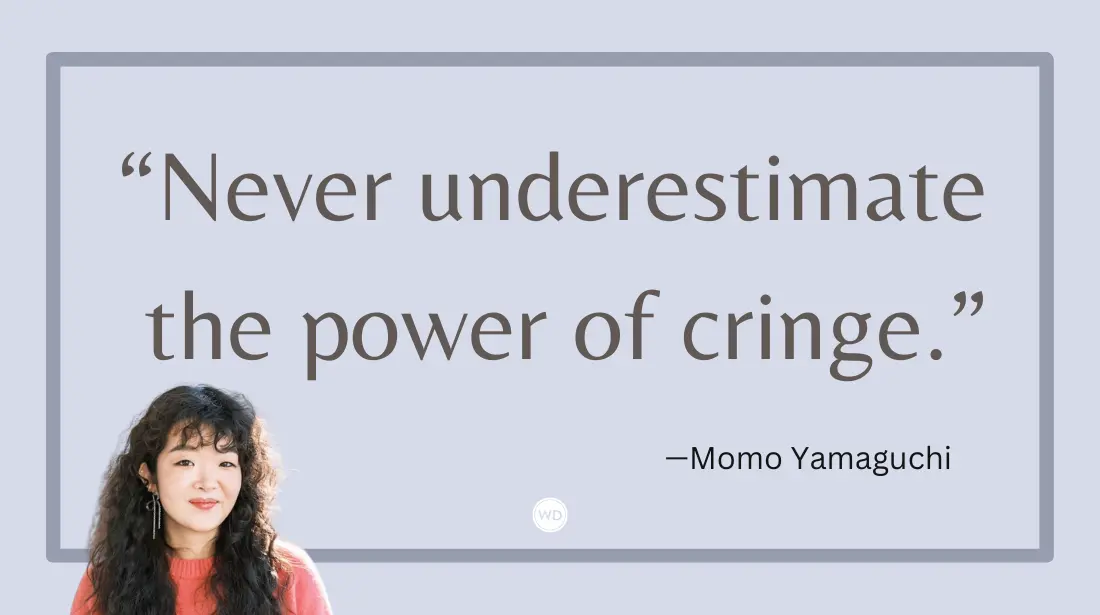
Momo Yamaguchi, author of the debut novel Hello, Limerence, recently addressed this phenomenon in a candid exploration of literary discomfort. Yamaguchi argues that crafting characters who careen through plots making disastrous, uncharming decisions is akin to culinary arts: a delicate exercise in proportion. Much like a tablespoon of lemon juice that elevates a dish from heavy to bright, a precise dose of awkwardness invites the reader into a shared conspiracy of laughter and recognition.
This journalistic deep-dive investigates the mechanics of cringe in fiction. By examining its psychological roots, contrasting it with traditional schadenfreude, and evaluating its application across character archetypes—from bumbling protagonists to self-conscious antagonists—we explore why the most memorable literature often lives in the most uncomfortable spaces. Furthermore, this report examines the broader cultural shift away from "likable" protagonists, mapping out actionable insights for writers brave enough to embrace their inner awkwardness.
Read Also
Detailed Chronology: The Evolution of Cringe in Modern Narrative
The journey of awkwardness from a taboo writing error to a sophisticated stylistic choice did not happen overnight. To understand how modern literature arrived at the toe-curling masterpieces of today, one must trace the evolution of reader discomfort across the literary timeline.
1. The Era of the Pristine Hero (Pre-Late 20th Century)
Historically, fictional protagonists were expected to possess structural integrity. Whether heroic, tragic, or villainous, characters operated within codes of dignity. Even comic figures like Shakespeare’s Falstaff or Cervantes’ Don Quixote were buffered by high wit, sweeping philosophy, or clear satirical frameworks. The concept of "second-hand embarrassment"—where a reader winces not because a character has failed grandly, but because they have publicly humiliated themselves through ordinary social ineptitude—was largely absent or kept to brief, localized farces.
2. The Rise of the Anti-Hero and the Confessional
As the 20th century progressed into the postmodern era, literature began to welcome messy, flawed individuals. Authors like Philip Roth and Charles Bukowski paved the way for protagonists driven by base impulses, neuroses, and social failures. However, these characters were often anchored by intellectual cynicism or gritty realism. The specific flavor of modern cringe—the hyper-relatable, socially excruciating micro-failures of digital-age existence—was still gestating.
3. The Digital Age and the Democratization of Awkwardness
With the advent of internet culture, social media footprints, and hyper-connected public lives, the threshold for human self-awareness shifted dramatically. Audiences became intimately familiar with the public archive of their own past embarrassments: the chalky blue eyeshadow of youth, unrequited digital messages, and poorly judged social overtures.
Authors began to capitalize on this collective psychological archive. In recent years, books like Tony Tulathimutte’s Rejection have pushed the boundaries of reader comfort to unprecedented lengths. In such works, the cringe is so intense that readers must process the narrative in intermittent bursts, stepping away for days or weeks to recover. Yet, this discomfort is married to profound comedic timing, proving that the modern audience hungers not for perfection, but for absolute, cringe-inducing authenticity.
Supporting Context & Metrics: The Anatomy of Second-Hand Embarrassment
To deploy cringe effectively, a writer must understand the psychological architecture of second-hand embarrassment. Unlike standard schadenfreude—which offers a safe distance from another person’s misfortune—cringe forces an involuntary, visceral collapse of boundaries.
Schadenfreude vs. Cringe: A Psychological Distinction
Schadenfreude is the quiet, detached amusement one feels watching an ex-boyfriend’s hairline recede or observing a skateboarder wipe out on a concrete ledge. It is safe; the observer is entirely removed from the action.
Cringe, conversely, is participatory. When a stand-up comedian bombs terribly in front of a live audience, or when a fictional protagonist makes a series of relentlessly uncharming, socially catastrophic choices, the reader is thrust into the front row. The discomfort triggers a cascade of mirror neurons, prompting a rapid, unbidden highlight reel of the reader’s own worst memories to race through their consciousness.
The Baking Metaphor: Calibration and Proportion
Writing with cringe requires the precision of a master baker. According to industry analyses of character-driven fiction:
- The Plus-Minus Zero Philosophy: Every heavy emotional deployment of cringe must be balanced by a narrative subtraction. If an author introduces an overwhelmingly awkward, humiliating scenario, they must counterbalance it with brisk pacing, sharp structural awareness, or moments of profound vulnerability.
- The Threshold of Ruin: A tablespoon too much cringe turns a manuscript into an unsalvageable wreck. Readers will abandon a text if the protagonist’s actions cross the boundary from endearingly pathetic to genuinely repulsive or psychologically ungrounded.
- The Citrus Principle: Used correctly, cringe acts like an expert squeeze of lemon over a rich dish—bringing a bright, tangy delight that lets the reader in on the joke.
The Myth of the Likable Protagonist
Review aggregator metrics and creative writing workshops have long obsessed over character "likability." However, veteran literary critics increasingly dismiss this metric as overly restrictive.
| Character Metric | Traditional Approach | The Cringe-Forward Approach |
|---|---|---|
| Primary Goal | Ensure the reader loves the protagonist instantly. | Foster deep recognition through shared flaws and social failures. |
| Flaws | Superficial quirks (e.g., clumsiness, slight stubbornness). | Deep-seated social blindness, inappropriate infatuations, vanity. |
| Reader Reaction | Passive admiration or sympathetic detachment. | Visceral recognition, involuntary laughter, empathetic pain. |
As Yamaguchi notes, unlikable characters—or characters rendered human through acute awkwardness—offer vastly superior narrative dimensions.
Official Insights: Embracing the Inner Awkwardness
Deploying cringe is not merely a technical exercise; it requires a psychological excavation on the part of the author. Writers who attempt to manufacture awkwardness from a position of perpetual coolness usually fail because their observations lack the sting of truth.
Tapping into the Personal Archive
To write convincing cringe, authors must look backward into their own formative years. Those who glided through adolescence untouched by social ostracization face a steeper hill, though keen observational skills can bridge the gap. Effective execution demands recalling:
- Food particles trapped stubbornly in braces.
- Ill-advised makeup choices that clashed disastrously with natural skin tones.
- Social overtures that missed the mark by astronomical margins.
Distilling these lived experiences into invented situations allows writers to dress old humiliations in fresh literary clothes. The resulting autofictional or character-driven beats ring with undeniable truth.
Humanizing the Villain and Mellowing the Unlikable
Cringe is not reserved exclusively for protagonists. It is an extraordinary tool for humanizing antagonists and secondary characters.
Consider the traditional villain: a flat, one-dimensional archetype whose sole hobby is orchestrating elaborate acts of violence. Such characters quickly become tedious. By contrast, introducing elements of deep, self-conscious cringe instantly transforms an antagonist into a living, breathing human being.
- Example A: A ruthless syndicate leader who maintains an obsessive, deeply uncool fandom for an aging, B-list celebrity from the 1990s.
- Example B: A menacing figure who wears all-black tactical ski masks not just for anonymity, but because he is self-conscious about how he looks on security camera footage and believes the look is slimming.
These touches strip away the impenetrable armor of traditional villainy, offering readers a sudden, disarming glimpse of pathos. Cringe makes characters fun, memorable, and rich.
Future Outlook: The Unfiltered Future of Fiction
As the publishing industry continues to evolve, the appetite for sanitized, hyper-curated narratives is giving way to a raw, unapologetic embrace of human absurdity. The future of character-driven fiction belongs to writers willing to abandon their vanity and write without a safety net.
The Prescription for Contemporary Writers
- Revel in Bad Taste: Authors must give themselves permission to enjoy what is uncool. Whether it is wearing leopard print, rhinestones, crew socks with sandals, or rewatching prematurely canceled television shows from decades past, surrounding oneself with personal tastes builds resilience against the fear of judgment.
- Write Without Self-Editing: The greatest enemy of effective cringe is preemptive self-censorship. Writers are urged to adopt the mindset of writing as though no one else will ever read the manuscript—allowing the most vulnerable, awkward impulses to reach the page before the internal critic has a chance to execute them.
- Never Underestimate the Power of Discomfort: As demonstrated by modern critical darlings, pushing readers to the edge of their comfort zones creates an indelible bond between author and audience. When a reader laughs through their fingers, wincing at a character’s public self-destruction while recognizing a piece of their own soul in the wreckage, the book transcends entertainment to become an unforgettable experience.
In conclusion, the weaponization of cringe is an essential frontier in modern storytelling. By balancing the recipe, embracing personal histories of awkwardness, and humanizing both heroes and villains through second-hand embarrassment, writers can unlock new levels of humor, depth, and lasting resonance.



Comments
Facebook App ID not configured. Please add it in the Customizer.