
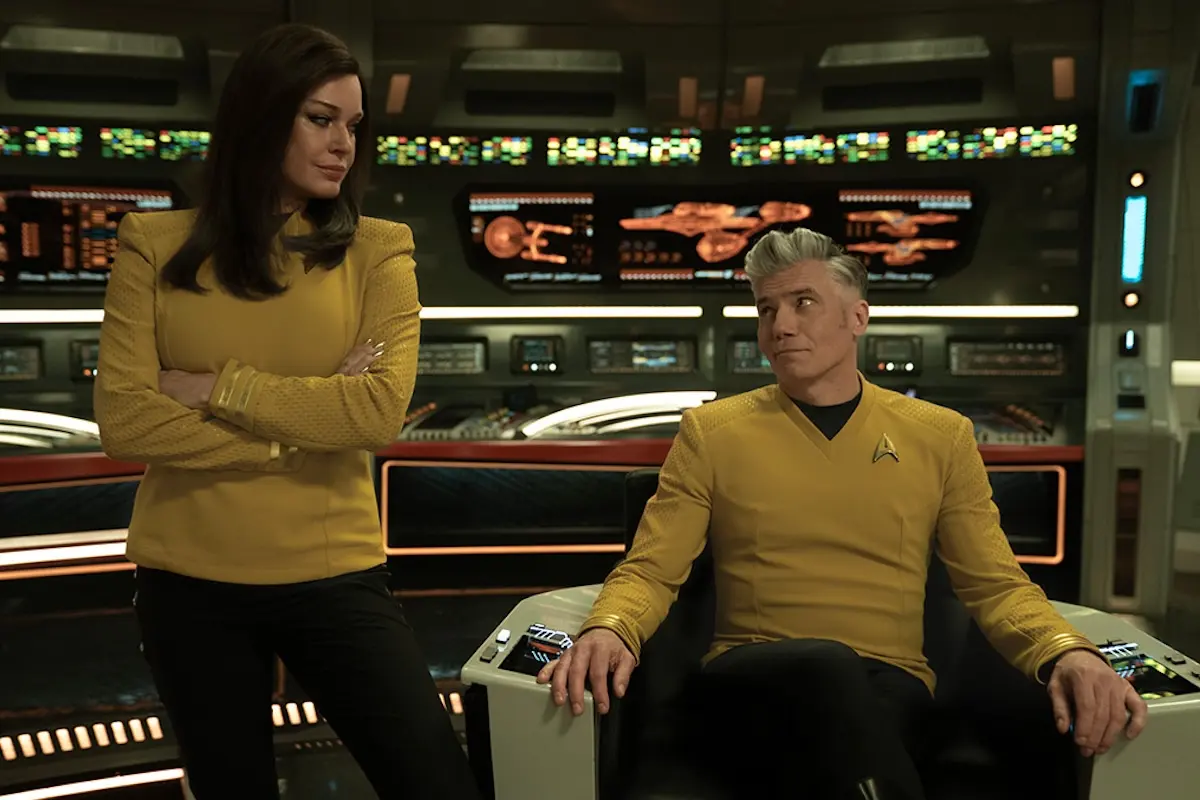
As the cultural touchstone that fundamentally redefined the grammar of television approaches its milestone 60th anniversary on September 8, the Star Trek franchise finds itself in an unprecedented state of transition. For the first time in over a decade, the horizon of the final frontier is entirely unwritten.
With Star Strange New Worlds Season 4 marching toward its September conclusion, and both it and Starfleet Academy widely expected to air their final seasons sometime next year, Paramount’s television pipeline is facing a stark reality. By 2027, the current generation of live-action Star Trek television will draw to a close. More startlingly, beyond this existing slate, there are currently zero live-action Star Trek series in active production or greenlit for development.
This vacuum has ignited intense speculation across fandoms and industry circles alike. How did one of the most reliable and culturally pervasive sci-fi properties in entertainment history arrive at a juncture where its small-screen future is entirely undefined? To understand this shift, one must examine a complex convergence of corporate mergers, leadership shake-ups, shifting streaming economics, and the twilight of an era defined by prolific showrunner Alex Kurtzman.
Read Also
Executive Overview: The End of an Era
The prevailing narrative surrounding Star Trek television is not one of cancellation or outright abandonment, but rather of deliberate, systemic conclusion. Every series launched during the massive 2018–2026 expansion has either reached an organic narrative conclusion, met an untimely end, or is actively filming its final episodes.
With Strange New Worlds Season 5 officially slated to wrap production in December 2025, the existing slate of live-action content has a finite expiration date. Paramount has yet to announce what successor properties will replace them on the Paramount+ schedule. This has left observers questioning whether the studio intends to rest the franchise or reinvent it from the ground up.
Interviews with high-ranking studio executives indicate the latter: Paramount is not discarding its crown jewel, but it is taking a deliberate pause to recalibrate. As the media landscape pivots away from the "content treadmill" model of the late 2010s, Paramount is re-evaluating how Star Trek is produced, financed, and consumed.
Detailed Chronology: The Trajectory of Modern Trek
To map out how the franchise reached this crossroads, it is necessary to trace the timeline of leadership and production decisions that shaped the past eight years of television.
1. The Kurtzman Renaissance (2018–2021)
Following the success of Star Trek: Discovery, Alex Kurtzman signed an initial five-year overall deal with CBS Television Studios in 2018 to spearhead an expansive franchise universe. This vision materialized into a steady stream of diverse programming, including Star Trek: Picard, Star Trek: Lower Decks, Star Trek: Prodigy, and eventually Strange New Worlds.
In 2021, buoyed by the streaming wars and the desperate need for proprietary content on the newly launched Paramount+, Kurtzman signed a massive five-year extension reported to be worth roughly $150 million, securing his stewardship through 2026. During this peak period, the strategy mirrored the Marvel Cinematic Universe or Game of Thrones: maintain a continuous, year-round presence of Star Trek content to drive subscriber acquisition and retention.
2. Corporate Turbulence and Leadership Shifts (2025)
The foundational architecture of this era began to shift dramatically in August 2025, when the multi-billion-dollar merger between Skydance Media and Paramount formally took shape. This corporate union triggered a sweeping leadership upheaval across Paramount+.
Industry veteran Cindy Holland was brought aboard to oversee the streaming platform, while creative executive Chris Parnell—formerly of Apple TV+, where he helped shape high-profile speculative fiction projects like Neuromancer, Dark Matter, and Pluribus—was hired as Executive Vice President of Originals. Concurrently, Paramount became entangled in broader corporate maneuvers, including a highly publicized and scrutinized pursuit of Warner Bros.
It was within this climate of executive restructuring and financial prudence that decisions regarding the future of Star Trek were quietly being made. Rather than hastily greenlighting another wave of spin-offs, the new leadership team opted to let the existing slate run its course, clearing the deck for a clean slate.
Supporting Context & Metrics: The Shift in Streaming Economics
The pause in Star Trek television production is not happening in a vacuum; it reflects a broader industry-wide correction.
- The Death of the "Content Mill": In the early days of the streaming boom (2018–2022), platforms prioritized volume above all else. Today, amid tightening profit margins and a demand for fiscal sustainability, media conglomerates are moving away from perpetual-run franchises that suffer from diminishing creative returns and inflated budgets.
- Budgetary Realities: High-end science fiction requires substantial visual effects and production design investments. Ensuring that future iterations of Star Trek justify their budgets requires a strategic development process rather than rapid-fire greenlights.
- The Theatrical Pivot: Reports indicate that Paramount is increasingly interested in re-establishing Star Trek as a cinematic force. With a new feature film in development from Dungeons & Dragons: Honor Among Thieves directors Jonathan Goldstein and John Francis Daley—and a deliberate effort to distance future films from the "Kelvin Timeline"—the studio is weighing how the big and small screens can better complement one another.
Official Statements: What Paramount Executives Are Saying
Addressing the shroud of mystery surrounding the franchise, Paramount+ Head of Originals Jane Wiseman offered key insights during an interview with Deadline:
"We’re the home of Star Trek, and we have series coming back. We’re going to have more… it’s one of the reasons why Chris is here as the resident number one fan of the Star Trek franchise. And there’s so many people in this building, by the way, that are. It is our goal and it is our job to figure out what the next bounce of Star Trek is. We’re talking to a lot of writers, we are leaning on CBS Studios, and it is imperative that we figure out what the next iteration is in this franchise because it’s just too important. We also are in touch with Paramount Pictures, they have a Star Trek movie that’s in development."
Wiseman’s comments emphasize a corporate mandate to reinvent the property. Her reference to the "next bounce" points directly to a strategic pivot. Furthermore, her effusive praise for Chris Parnell—highlighting his pedigree in premium, grounded genre storytelling—suggests that future television iterations may lean toward tighter, more focused storytelling rather than sprawling, interconnected universes.
When asked about his own future with the franchise, Alex Kurtzman has expressed public optimism, stating he remains hopeful about a "bright future" and that Starfleet Academy will not be his final contribution. However, industry analysts note a conspicuous absence of Kurtzman’s name in executive discussions concerning the franchise’s long-term "next bounce," suggesting his historic oversight role is naturally reaching its conclusion.
Future Outlook: What Comes Next for the Final Frontier?
While no official series have been greenlit to replace the outgoing slate, several prominent pitches and in-development concepts circulate within Hollywood:
- Tawny Newsome’s Live-Action Comedy: Perhaps the most viable television project currently percolating through the system involves Lower Decks star Tawny Newsome. Having submitted scripts for a live-action comedy series to Paramount late last year, the project aligns directly with executive stated interests in female-led, genre-bending, and comedic properties.
- Star Trek: Year One: Pitched by Strange New Worlds showrunners Akiva Goldsman and Henry Alonso Myers, this concept would explore James T. Kirk’s formative early years as captain of the USS Enterprise. While it has yet to secure a formal greenlight—and faces hurdles given that existing sets have been dismantled—it remains a fan-favorite theoretical prospect.
- Star Trek: United: A passion project from Scott Bakula and Michael Sussman, envisioned as a political drama chronicling Jonathan Archer’s tenure as President of the United Federation of Planets. Pitched in the style of The West Wing or Andor, it currently remains in the realm of creative ambition rather than active development.
Conclusion
As the clock ticks toward Star Trek’s 60th anniversary, the franchise stands at a fascinating crossroads. The era of relentless, multi-show expansion masterminded by Alex Kurtzman is winding down, leaving behind a rich legacy of diverse storytelling.
Under the stewardship of a new executive regime led by figures like Jane Wiseman and Chris Parnell, Paramount is exercising caution, deliberately allowing the current slate to conclude before architecting the franchise’s next iteration. Whether the "next bounce" takes the form of grounded prestige dramas, comedic explorations, or a renewed cinematic push, one thing remains certain: Star Trek is far too valuable to remain in dry dock for long. The future may be unwritten, but the enterprise endures.

Comments
Facebook App ID not configured. Please add it in the Customizer.