
Executive Overview
For 25 vibrant days, the bustling metropolis of Karachi will transform into a grand, pulsing epicenter of global creativity. The Arts Council of Pakistan (ACP) Karachi, in a landmark joint initiative with the Government of Sindh, has announced the return of the World Culture Festival for its highly anticipated third edition. Scheduled to run from October 29 to November 22, this monumental cultural convergence will bring together over 1,000 international artists from approximately 150 countries alongside more than 500 elite Pakistani performers spanning every corner of the country.
Designed as more than just a localized entertainment program, the festival serves as a profound exercise in international cultural diplomacy. By weaving together theatre, music, dance, film, and traditional folk arts from six continents, the festival organizers aim to dismantle long-standing geopolitical stereotypes, foster cross-border empathy, and project a progressive, welcoming image of Pakistan to the international community.
Crucially, accessibility remains a foundational pillar of this year’s vision. Organizers have confirmed that an unprecedented 80% of all festival programs will be entirely free to the public, requiring only advance registration. Meanwhile, a select six to eight mega-concerts will feature paid tickets, ensuring that large-scale entertainment and high-art accessibility walk hand in hand. As municipal authorities race to finalize infrastructural upgrades—including the development of a dedicated "Art Village" surrounding the Arts Council—Karachi is poised to demonstrate that the arts can serve as the ultimate bridge between fractured global communities.
Read Also
Detailed Chronology and Event Landscape
The sprawling 25-day itinerary of the World Culture Festival has been meticulously structured to provide an immersive, uninterrupted flow of artistic expression.
The Grand Opening and Inaugural Phase (October 29 – November 5)
The festival commences on October 29 with an elaborate opening ceremony designed to showcase a synthesis of traditional Pakistani hospitality and cutting-edge global stagecraft. The initial week will prioritize large-scale theatrical productions and symphonic collaborations. Notably, two resilience-focused Palestinian theatre groups are scheduled to perform during the early stages of the event. Despite enduring devastating personal and professional losses amid ongoing conflicts, these artists will utilize the Karachi stage to give voice to the human spirit through drama.
The Mid-Festival Peak: Fusion, Folk, and Heritage (November 6 – November 15)
As the festival enters its second week, the focus shifts toward cross-cultural fusion and indigenous heritage preservation. This period will highlight Pakistan’s rich musical tapestry, offering dedicated platforms for regional art forms from Sindh, Punjab, Khyber-Pakhtunkhwa, Balochistan, Azad Kashmir, and the Seraiki belt.
A centerpiece of this phase is the special "Mehran Night," an evening curated exclusively to celebrate the profound cultural legacy of Sindh. Audiences will be treated to rare performances featuring traditional instruments such as the algoza and borindo, which have captured the fascination of visiting international musicians. Concurrently, the inauguration of the Shah Latif Voices Festival will pay homage to the timeless Sufi poetry of Shah Abdul Latif Bhittai, fusing mystic lyrical traditions with contemporary global instrumentation.
The Grand Finale and Mega-Concerts (November 16 – November 22)
The final week of the festival will culminate in a series of high-energy mega-concerts and collaborative cross-border performances. These ticketed anchor events will bring together massive crowds to witness collaborative performances between world-renowned international artists and Pakistan’s top-tier musical acts. The festival will officially draw to a close on November 22 with a grand closing ceremony, marking the end of a transformative chapter in Pakistan’s cultural calendar.
Supporting Context & Metrics
To truly comprehend the magnitude of the third edition of the World Culture Festival, one must examine the rapid, exponential growth trajectory of the initiative since its inception.
The Exponential Rise of Global Participation
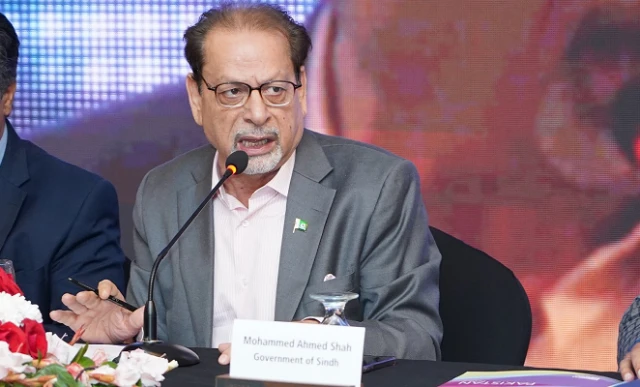
According to data released by Arts Council President Ahmad Shah, the festival has scaled international interest at an unprecedented rate:
- The Inaugural Edition: Brought together delegations from 43 countries.
- The Second Edition: Expanded dramatically, hosting artists from 144 countries.
- The Third Edition (Current): Reaches a historic high, drawing participants from approximately 150 countries across all six inhabited continents, including the United States, Iran, Iraq, Palestine, and numerous nations across Latin America.
Democratizing Access: The 80% Free Initiative
In a landscape where high-culture events are often financially prohibitive for average citizens, the Arts Council and the Sindh government have made a deliberate commitment to inclusivity. Approximately 80% of all festival programming—ranging from intimate poetry recitals and independent film screenings to folk dance workshops and community theatre—will be entirely free of charge. Attendees will only need to secure advance registration to manage venue capacities. Only six to eight high-production mega-concerts will feature paid ticketing, ensuring that the financial burden of the festival does not fall on the public, thereby democratizing access to world-class art.
Boosting Tourism and the "Soft Image" Economy
The timing of the festival aligns with a broader macroeconomic and tourism recovery within Pakistan. Provincial tourism metrics indicate that the number of international tourists visiting Pakistan’s key destinations has surged by approximately 50% over the past three years. Government stakeholders attribute a significant portion of this momentum to proactive cultural programming, which serves to counteract negative media portrayals and replace them with authentic, experiential narratives.
Official Statements and Visionary Leadership
The realization of an international festival of this scale requires profound coordination across municipal, provincial, and federal lines. Key stakeholders have articulated clear visions for the event’s social, diplomatic, and infrastructural impacts.
Ahmad Shah on Cultural Diplomacy
Arts Council President Ahmad Shah emphasized that the festival is fundamentally an exercise in statecraft through art, rather than mere entertainment.
"The World Culture Festival has become an important reference point for Pakistan’s cultural identity," Shah stated during a press briefing. "We decided to use cultural diplomacy to remove misconceptions about Pakistan, Sindh, and Karachi. Our foreign artists and delegates are not just here to perform; they are here to experience the country firsthand, to witness its warmth, and to take a positive, authentic message back to their respective homelands."
Shah also highlighted the emotional weight of hosting artists from conflict zones, noting the inclusion of Palestinian theatre practitioners who have suffered personal tragedies. By offering them a safe and appreciative platform, Karachi cements its role as a sanctuary for global artistic solidarity.
Syed Asif Haider Shah on the "Art Village" Initiative
Sindh Chief Secretary Syed Asif Haider Shah detailed the sweeping infrastructural overhauls currently underway to transform Karachi’s civic landscape in anticipation of the global influx. The government is spearheading an initiative to expand the cultural footprint far beyond the walls of the Arts Council, turning the surrounding urban sector into a permanent "Art Village."
Collaborating agencies—including the Karachi Metropolitan Corporation (KMC), local town administrations, the Water Board, and the Deputy Commissioner’s office—are fast-tracking civic improvements.
"We are upgrading road networks, installing enhanced street lighting, setting up public benches, developing pedestrian pathways, and expanding food and hospitality facilities ahead of the winter season," the Chief Secretary explained. "The Arts Council, local museums, and surrounding cultural venues will eventually form an integrated, pedestrian-friendly cultural ecosystem."
To ensure the safety and seamless movement of international guests, specialized inter-agency task forces are coordinating security protocols, traffic management, and airport receptions in direct partnership with federal ministries, the Civil Aviation Authority (CAA), the Airport Security Force (ASF), and provincial law enforcement.
Syed Zulfiqar Ali Shah on Transforming Pakistan’s Narrative
Sindh Culture and Tourism Minister Syed Zulfiqar Ali Shah underscored the provincial government’s unwavering commitment to mobilizing every relevant department to ensure the festival’s success.
"Pakistan was historically burdened by an international narrative dominated by terrorism and instability," the Minister remarked. "Cultural festivals of this scale are fundamentally shifting that paradigm, presenting our true, vibrant, and tolerant identity to the world. Our core objective is simple yet revolutionary: to bring people closer through culture and convey a resounding, universal message of peace."
Future Outlook: A Legacy of Cultural Permanence
As Karachi prepares to open its doors to the world on October 29, the legacy of the World Culture Festival extends far beyond the final curtain on November 22.
The structural transformation of the Arts Council precinct into an interconnected "Art Village" signals a permanent upgrade to Karachi’s urban and cultural infrastructure. By institutionalizing spaces for cross-border collaboration, indigenous instrument preservation—such as the revival of the algoza and borindo—and regular international exchanges, the festival lays the groundwork for Karachi to reclaim its historic status as a cosmopolitan hub of South Asian art and intellect.
Ultimately, the 25-day convergence of 1,500 local and international artists is not merely an ephemeral celebration. It is a calculated, long-term investment in global harmony, proving that when the footlights go up in Karachi, they illuminate a shared human desire for connection, resilience, and enduring peace.

Comments
Facebook App ID not configured. Please add it in the Customizer.