
Executive Overview
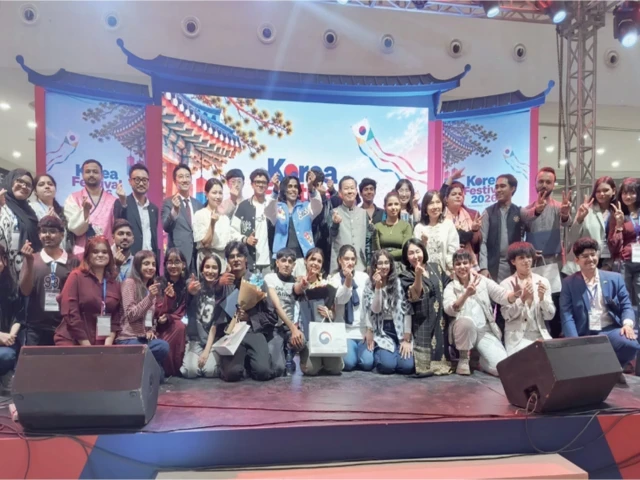
In an era defined by hyper-connected globalism and the borderless dissemination of digital media, the cultural landscape of Pakistan’s commercial capital underwent a striking transformation. Karachi recently played host to a dazzling, multi-dimensional celebration of South Korean culture, effectively bridging East Asia and South Asia through an immersive convergence of heritage, contemporary pop culture, gastronomy, and interactive arts. Staged at a prominent metropolitan shopping complex, the festival served as a physical manifestation of the sweeping global phenomenon known as the Hallyu wave—the Korean cultural wave that has systematically captivated international audiences over the past two decades.
This high-profile event was not merely an exhibition of foreign novelties; it represented a sophisticated cross-cultural exchange. By seamlessly blending centuries-old traditions—such as the exquisite artistry of the Hanbok and meditative calligraphy—with the hyper-modern beats of K-pop and cutting-edge K-beauty innovations, the festival captured the duality of modern South Korea. Furthermore, the timing of the festival coincided with the ongoing World Culture Festival in Karachi, anchored by a high-energy performance from the renowned South Korean fusion band nuMori. Together, these events underscore a burgeoning diplomatic and cultural dialogue between Islamabad and Seoul, demonstrating how art and entertainment can transcend geographical boundaries to foster mutual understanding and urban revitalization.
Detailed Chronology of the Cultural Exhibition
The journey of the festival from conception to its vibrant execution unfolded through a meticulously orchestrated sequence of interactive zones, stage performances, and culinary showcases, drawing thousands of enthusiastic Karachiites into the heart of Korean aesthetics.
Read Also
Morning Phase: The Grand Opening and Traditional Immersion
As the doors of the venue opened, the morning atmosphere was set by the serene and contemplative elements of Korean heritage. Early visitors were immediately drawn to the traditional arts and crafts pavilion. Here, masterclasses and demonstrations in Korean calligraphy (Seoye) captivated art enthusiasts. Attendees watched in awe as ink brushed across textured paper, creating characters that symbolize balance, nature, and philosophy—concepts deeply rooted in both East Asian and South Asian traditions.
Adjacent to the calligraphy station, the traditional games arena buzzed with the laughter of children and families. Visitors engaged in historical pastimes such as Tuho (arrow-throw game) and Jegichagi (foot shuttlecock), discovering the playful side of Korean ancestry. However, the undisputed visual centerpiece of the morning session was the Hanbok experience zone. Colorful, high-waisted jackets and flowing skirts crafted from vibrant silks and vibrant patterns lined the racks. Attendees of all ages eagerly donned the traditional attire, transforming the modern mall corridors into a living canvas of Joseon-era elegance. Flashbulbs popped continuously as families and young adults posed against meticulously curated, themed photo booths that replicated traditional Korean courtyard settings.
Afternoon Phase: The Culinary Voyage and Beauty Exposition
As the midday sun reached its peak, the festival transitioned from historical heritage to sensory indulgence. The gastronomic corridor became the epicenter of activity, filled with the rich, savory aromas of authentic Korean cuisine. Food stalls operated by culinary experts offered a masterclass in Korean flavors. Steaming bowls of Jjajangmyeon (black bean noodles), spicy Tteokbokki (rice cakes), and freshly prepared Korean street snacks drew snaking queues. For many Karachi residents, this was their first opportunity to taste dishes popularized by global television dramas and culinary vloggers, bridging the gap between digital curiosity and physical reality.
Simultaneously, the K-beauty pavilion emerged as a major commercial and cultural hotspot. Young women and skincare enthusiasts crowded around display counters featuring South Korea’s world-renowned cosmetic products. Experts conducted live demonstrations detailing the famous multi-step Korean skincare regimen, emphasizing natural radiance, botanical ingredients, and scientific innovation. The overwhelming interest in K-beauty underscored a shared appreciation for self-care and aesthetic excellence between Pakistani and South Korean consumer bases.
Evening Phase: The K-Pop Crescendo and Grand Finale
As daylight faded, the energy of the festival shifted dramatically into the high-octane realm of contemporary pop culture. The central stage area became a sea of flashing lights, homemade banners, and expectant fans as the youth-driven segment of the festival commenced.
A collective of local and regional performers delivered electrifying choreographies set to the chart-topping anthems of global K-pop icons such as BTS, BLACKPINK, and Stray Kids. The precision of the dance routines, coupled with the vibrant streetwear fashion modeled by the performers, reflected the immense dedication of Karachi’s youth subculture. The air reverberated with synchronized cheers and applause, transforming a commercial venue into a pulsating arena of global youth solidarity.
To crown the evening, the festival’s momentum flowed directly into the broader artistic ecosystem of the city, where the contemporary South Korean musical ensemble nuMori took the stage for a groundbreaking performance at the city-wide World Culture Festival. Merging traditional Korean instruments like the Pansori (narrative singing) and Ajaeng (zither) with modern rock elements, nuMori delivered an avant-garde sonic experience that left the Karachi audience spellbound, cementing a day of unforgettable cultural synergy.
Supporting Context & Metrics: The Anatomy of the Hallyu Wave in Pakistan
To fully comprehend the significance of this festival, one must analyze the broader socioeconomic and digital metrics driving the Hallyu wave within Pakistan. Over the past five years, South Korea’s cultural export industry—encompassing television, music, cinema, and fashion—has experienced exponential growth in South Asia, with Pakistan emerging as a surprising yet fiercely loyal demographic stronghold.
Digital Footprints and Streaming Metrics
According to regional digital streaming analytics, Pakistan ranks consistently within the top tier of South Asian nations for consumption of South Korean media on platforms like Netflix, Spotify, and YouTube. K-dramas (Korean television dramas), praised for their family-oriented values, emotional depth, and cinematic production quality, have found a dedicated, multi-generational audience in Pakistani households. Urdu-dubbed and subtitled versions of historical and romantic K-dramas have regularly trended on social media platforms across Karachi, Lahore, and Islamabad.
| Cultural Sector | Growth Metric in Pakistan (2019–2024) | Dominant Consumer Demographic | Primary Catalyst |
|---|---|---|---|
| K-Drama Viewership | Estimated +300% increase | Ages 15–45 (Broad Household Appeal) | OTT Platforms & Social Media Recommendations |
| K-Pop Music Streams | +250% surge on Spotify/YouTube | Ages 13–25 (Gen Z & Young Millennials) | Viral Dance Challenges & Fandom Communities |
| K-Beauty Imports | Rising retail demand (+180%) | Ages 18–35 (Urban Professionals & Students) | Influencer Marketing & E-Commerce Access |
| Language Acquisition | +400% enrollment in online TOPIK prep | University Students & Working Professionals | Employment & Scholarship Opportunities |
Economic and Educational Bridges
Beyond entertainment, the cultural affinity has translated into tangible academic and professional pathways. The Embassy of the Republic of Korea in Pakistan, alongside institutions like the Korea International Cooperation Agency (KOICA), has actively expanded educational exchange programs. The Global Korea Scholarship (GKS) has seen a record number of applications from Karachi-based students pursuing undergraduate and postgraduate degrees in South Korean universities.
Furthermore, trade relations between Pakistan and South Korea have witnessed steady cooperation in the automotive, textile, and information technology sectors. Major South Korean conglomerates operating within Pakistan have increasingly recognized that cultural affinity serves as a powerful diplomatic soft-power tool, smoothing commercial operations and fostering deep-seated goodwill among the local populace.
Official Statements and Diplomatic Perspectives
The confluence of traditional heritage and modern pop culture in Karachi drew enthusiastic commentary from cultural diplomats, festival organizers, and participating artists, emphasizing the enduring power of people-to-people diplomacy.
Addressing the media during the inauguration of the festival, the head of the organizing committee emphasized the intentional blending of ancient and modern elements:
"Culture is the most resilient bridge we can build between nations. When we see young people in Karachi eagerly donning the Hanbok, singing along to K-pop lyrics, and tasting our traditional foods, we are not just witnessing entertainment—we are witnessing the erasure of distance. South Korea and Pakistan share a deep respect for family values, historical heritage, and artistic expression. This festival is a celebration of those shared human values manifested through distinct cultural lenses."
Echoing these sentiments, a senior cultural attaché from the diplomatic mission noted the strategic importance of engaging South Asia’s burgeoning youth demographic:
"Karachi is a powerhouse of energy, diversity, and artistic resilience. The enthusiasm with which the city has embraced the Hallyu wave proves that culture knows no borders. Through music, cuisine, and interactive arts, we are laying the groundwork for a future where the youth of South Korea and Pakistan can collaborate not only as fans of shared media, but as future leaders, innovators, and cultural ambassadors."
Members of the South Korean musical group nuMori, reflecting on their performance within the framework of Karachi’s World Culture Festival, shared their profound appreciation for the local reception:
"Performing in Karachi has been an absolute revelation. We came here carrying the traditional rhythms of Korean folk music fused with modern beats, not knowing how the local audience would react. Yet, the moment we stepped on stage, the energy we received from the crowd was electrifying. Music is a universal language, and tonight, Seoul and Karachi spoke the exact same tune."
Local participants and young attendees were equally vocal about the transformative impact of the event. Ayesha Malik, a 21-year-old university student and lifelong K-pop enthusiast attending the festival, remarked:
"For years, we have experienced Korean culture exclusively through our smartphone and laptop screens. To step into a venue where we can physically wear traditional clothes, taste authentic food, and dance alongside hundreds of other fans who share the same passion is surreal. It makes us feel connected to a global community right here in the heart of Karachi."
Future Outlook: Sustaining the Momentum of Cultural Diplomacy
As the curtains closed on the festival, organizers, cultural institutions, and municipal authorities alike turned their gaze toward the future, mapping out a long-term strategy to institutionalize and expand bilateral cultural exchanges between Pakistan and South Korea.
Institutionalizing Cultural Exchanges
The resounding success of the Karachi festival has set a high benchmark for future public diplomacy initiatives. Plans are already underway to establish recurring, multi-city cultural expos that will travel beyond Karachi to Islamabad, Lahore, and Faisalabad. These future iterations aim to incorporate deeper academic symposia, film festivals featuring independent South Korean cinema, and collaborative art installations that juxtapose traditional Pakistani truck art with Korean Minhwa folk painting.
Furthermore, educational institutions in Karachi have begun exploring partnerships with South Korean universities to introduce formalized Korean language certification courses and cultural studies modules. As corporate interest and consumer demand for K-beauty and culinary products continue to rise, local commercial chambers are forecasting increased trade delegations and joint ventures, driven largely by the cultural curiosity ignited among the tech-savvy younger generation.
Conclusion: A Tapestry Woven Across Continents
In retrospect, the South Korean cultural festival in Karachi was much more than a weekend of entertainment; it was a profound testament to the unifying power of shared human creativity. By successfully weaving together the meditative grace of ancient heritage and the electrifying tempo of modern pop culture, the event demonstrated that globalism, at its best, is an exchange of mutual fascination and respect.
As Karachi continues to position itself as a vibrant nexus of international arts and culture, the echoes of K-pop anthems, the vibrant hues of the Hanbok, and the harmonious fusion of nuMori will long remain etched in the city’s collective memory. It stands as a shining example of how nations separated by thousands of miles can find common ground in joy, curiosity, and artistic expression, paving the way for a deeply interconnected and culturally enriched tomorrow.



Comments
Facebook App ID not configured. Please add it in the Customizer.