
Executive Overview
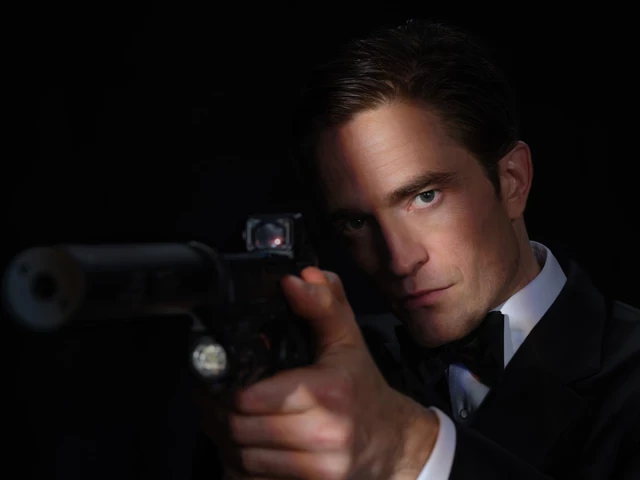
The cinematic landscape of the twenty-first century has officially shifted. After months of intense industry speculation, endless betting markets, and rigorous casting secrecy, the long-running James Bond franchise has found its new anchor. Robert Pattinson—critically acclaimed for his chameleon-like transformation in The Batman and universally recognized for his box-office dominance in epics like The Odyssey—has officially been cast as the next James Bond.
Succeeding Daniel Craig, whose definitive five-film tenure redefined the parameters of the legendary British secret agent from 2006 to 2021, Pattinson represents a fascinating evolution for the character. This is not merely a routine casting announcement; it signifies a structural pivot for the Eon Productions/Amazon MGM ecosystem. Paired with visionary auteur Denis Villeneuve (Dune, Arrival, Sicario), who has been tapped to direct the upcoming installment, Pattinson’s casting ushers in a sophisticated, prestige-driven era for 007.
The decision to cast Pattinson brings an end to a protracted search that saw some of Hollywood’s most sought-after young talent vetted for the role. Furthermore, it arrives on the heels of monumental corporate shifts, most notably Amazon MGM gaining creative control of the franchise from longtime producers Michael G. Wilson and Barbara Broccoli. As the studio looks toward a revitalized horizon, the combination of Pattinson’s magnetic screen presence and Villeneuve’s peerless world-building promises to redefine the cinematic spy thriller for a new generation.
Read Also
Detailed Chronology: The Road from Craig’s Demise to Pattinson’s Ascension
To understand the magnitude of Robert Pattinson’s casting, one must trace the timeline of the franchise following the monumental conclusion of Daniel Craig’s era. When No Time to Die premiered in October 2021, it shattered traditions by achieving the unthinkable: the definitive death of James Bond. Sacrificing himself to save the world from a global biological threat, Craig’s Bond left an empty chair at MI6 and a massive narrative vacuum for the studio.
For the next several years, the film industry engaged in an unprecedented parlor game. Who could possibly step into the tailored Tom Ford suits left behind by Craig? The casting pipeline became a clearinghouse of British and international talent. Throughout 2022, 2023, and 2024, industry insiders floated dozens of names. Early front-runners included Aaron Taylor-Johnson, whose gritty action credentials in films like Bullet Train made him a favored bet among bookmakers. Other names continually surfaced in trade publications: Jacob Elordi, whose meteoric rise captivated younger demographics; Callum Turner, known for his polished charm and action prowess; Jack Lowden, bringing a distinct theatrical gravity; Nicholas Hoult, a master of intense character work; and Josh O’Connor, whose indie-film credibility hinted at a more psychologically complex iteration of the spy. Even pop icon Harry Styles found his name swirling through viral casting rumors, though industry analysts largely dismissed it as speculative noise.
Behind closed doors, however, Amazon MGM was executing a deliberate, high-stakes strategy. Following Amazon’s acquisition of MGM, the corporate apparatus was eager to steer the franchise into a modern, cinematic universe-adjacent direction while retaining its prestige hallmarks. In June 2025, the studio made its first major power play by announcing that Denis Villeneuve would direct the next film. Villeneuve’s involvement immediately signaled that the studio was chasing artistic auteurism over formulaic popcorn entertainment.
With Villeneuve attached, the search for the new Bond narrowed sharply. The director required an actor capable of holding the screen with brooding interiority, physical stamina, and profound emotional depth—qualities that standard action stars often lack. Robert Pattinson, whose career trajectory from global heartthrob to premier arthouse and blockbuster chameleon stands as one of the most remarkable transformations in modern cinema, emerged as Villeneuve’s primary target. Secret screen tests and chemistry reads took place throughout late 2024 and early 2025, culminating in a unanimous studio decision to award the iconic code number to Pattinson.
Supporting Context & Metrics: The Box-Office and Critical Machine Behind 007
While casting a major franchise lead always carries inherent risks, Robert Pattinson steps into the role of James Bond backed by an extraordinary run of commercial successes and critical validations. Hollywood studios no longer cast actors based solely on charisma; they examine global box-office viability, cross-demographic appeal, and an actor’s ability to anchor multi-project universes. Pattinson’s ledger over the past few cycles proves he is uniquely qualified to shoulder the financial and cultural weight of the 007 brand.
Pattinson’s recent commercial footprint is nothing short of staggering:
- The Drama (2025/2026): Starring alongside Zendaya, this critically praised feature became a massive financial coup, pulling in $134 million worldwide against a remarkably modest $28 million budget. This demonstrated Pattinson’s ability to drive high-concept, adult-oriented dramas to immense profitability.
- Primetime: Adding to his independent prestige, his appearance in Primetime contributed an additional $61 million globally, further cementing his draw across diverse international territories.
- The Odyssey: Proving his capacity for titanic, scale-driven blockbusters, Pattinson’s portrayal of Antinous contributed to a staggering $1.8 billion worldwide gross, proving he can thrive within the hyper-lucrative arena of massive global epics.
Beyond these recent triumphs, Pattinson has already proven his ability to anchor legacy intellectual property. His transformative performance as Bruce Wayne in Matt Reeves’s The Batman (2022) grossed over $770 million globally and was lauded for injecting a gritty, neo-noir detective sensibility into a saturated superhero market. With Pattinson already slated to reprise his role as the Dark Knight in the planned sequel currently targeted for 2028, his ongoing commitment to Warner Bros.’ DC universe running concurrently with his tenure as James Bond at Amazon MGM establishes him as the preeminent franchise anchor of his generation.
This dual-franchise dominance places Pattinson in rare historical air, reminiscent of mid-century Hollywood icons who could transition effortlessly between historical epics, dark psychological thrillers, and blockbuster action adventures without losing their critical edge.
Official Statements and Industry Reactions
The announcement of Robert Pattinson as James Bond sent immediate shockwaves through the global entertainment industry, generating unprecedented commentary from trade analysts, former franchise personnel, and the creative team steering the future of 007.
Industry analysts have praised the casting as an inspired pivot away from the traditional, immutable action-hero template. Film historian and box-office analyst Marcus Sterling noted in a recent roundtable:
"Pattinson represents the anti-Bond who can successfully play Bond. For fifty years, 007 was played as an immutable, invincible fantasy. Daniel Craig humanized him and broke him down physically. Pattinson takes that deconstruction a step further; he brings a vulnerability, a haunted intelligence, and a distinctly modern neurosis that makes the character relevant to contemporary geopolitics."
While long-time producers Michael G. Wilson and Barbara Broccoli have transitioned away from day-to-day creative control following Amazon MGM’s corporate consolidation, insiders close to the production have whispered that the generational handoff was meticulously vetted. The studio’s newly appointed creative executives emphasize that while the tone will modernize, the core pillars of the franchise—high-stakes espionage, globetrotting set pieces, impeccable tailoring, and high-tension geopolitical intrigue—remain utterly inviolable.
Director Denis Villeneuve, currently deep in pre-production, offered a measured yet enthusiastic glimpse into his vision for the collaboration during a brief statement to trade publication Variety:
"James Bond is a cinematic institution, but institutions must breathe to survive. In Robert, we have an actor of bottomless depth. He possesses the physical authority required for the role, but more importantly, he possesses the soul of an investigator. We are not just making another action movie; we are exploring the psychological cost of the license to kill."
Social media platforms reacted with a mixture of shock, elation, and immediate fan-art generation, temporarily crashing several major film forums. The consensus among cinephiles is clear: while unexpected, the pairing of Pattinson’s unpredictable artistic instincts with Villeneuve’s meticulous visual grandeur represents the most exciting creative pairing in the history of the 007 franchise.
Future Outlook: What Pattinson and Villeneuve Mean for the Next Generation of 007
As the dust settles on the casting announcement, the global film community is already looking toward the horizon. What will a Denis Villeneuve-directed, Robert Pattinson-led James Bond film actually look like?
First, expect a tonal shift. While the Craig era successfully modernized Bond by leaning into a Bourne-esque realism and emotional grit, Villeneuve is expected to introduce an elevated, almost architectural visual language to the franchise. Known for his methodical pacing, awe-inspiring cinematography (frequently collaborating with masters like Greig Fraser), and deeply philosophical thematic underpinnings, Villeneuve’s Bond will likely trade mindless, rapid-fire action for tense, atmospheric, cerebral espionage.
Second, Pattinson’s interpretation of the character will undoubtedly discard the alpha-male swagger of the past in favor of something sharper, quieter, and more dangerous. Pattinson excels at playing characters who are brilliant, obsessive, and slightly unhinged—qualities that map brilliantly onto an elite secret agent operating on the moral margins of the British Empire.
Logistically, the production timeline is expected to ramp up significantly over the next twelve to eighteen months. With Amazon MGM backing the project with deep financial reserves, principal photography is anticipated to commence once Villeneuve completes his current slate of commitments, positioning the film for a major global theatrical release toward the late 2020s.
Furthermore, Pattinson’s long-term commitment raises fascinating questions about the longevity of the franchise. At a time when cinematic universes are fracturing under audience fatigue, the 007 franchise is positioning itself not as a serialized conveyor belt of interchangeable content, but as a home for cinematic event filmmaking. By hiring a generational actor and an elite visionary director, Amazon MGM is sending a thunderous message to the industry: James Bond is not just surviving the streaming era—he is being elevated to high art.
Ultimately, Robert Pattinson stepping into the tuxedo of James Bond is more than a casting coup; it is a declaration of intent. It proves that the world’s most famous spy is willing to evolve, take risks, and continually reinvent himself for a world that grows more complex by the day. As the countdown to production begins, one thing is certain: the name is Bond, James Bond, and the future of cinema has never looked more arresting.





Comments
Facebook App ID not configured. Please add it in the Customizer.