
Executive Overview
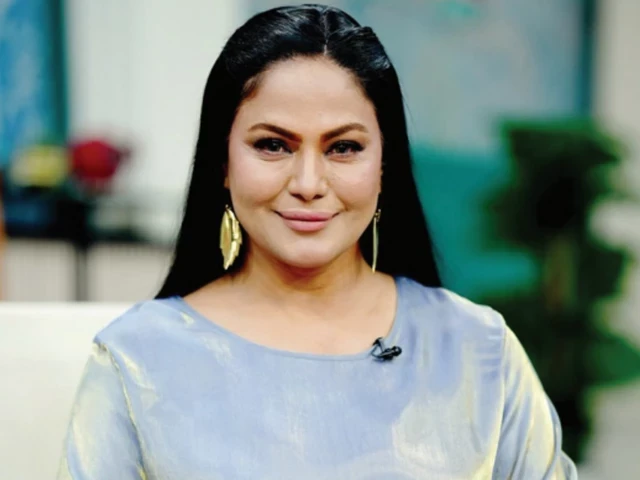
In the relentless ecosystem of modern celebrity culture, public figures often find themselves trapped within hyper-scrutinized glass houses. Every physical fluctuation, stylistic shift, and personal evolution is meticulously dissected by an audience emboldened by the anonymity and reach of social media. Pakistani television host, model, and former actress Veena Malik recently found herself at the epicenter of this pervasive cultural phenomenon. Following a wave of relentless online abuse and unsolicited commentary regarding her recent weight gain, Malik released a candid, emotionally charged video that quickly went viral across multiple digital platforms.
The video, which cuts through the superficial veneer of celebrity gossip, serves as a searing indictment of pervasive body shaming within South Asian media circles and society at large. Rather than retreating from the public eye or issuing a carefully curated PR statement, Malik addressed her critics directly, exposing the psychological toll of relentless public scrutiny. Her remarks—highlighting the casual cruelty of derogatory nicknames, unwarranted workplace pressure, and the compounding stress of societal expectations—ignited a fierce, much-needed national dialogue concerning mental health, body autonomy, and the ethics of public commentary.
This report offers a comprehensive examination of the incident, tracing the chronology of the viral video, analyzing the broader socio-cultural context of body shaming in the entertainment industry, and evaluating the systemic pressures placed on women in the public eye. Through an investigative lens, we explore how Malik’s courageous stand challenges outdated beauty standards and prompts a vital reassessment of digital civility in contemporary Pakistan.
Read Also
Detailed Chronology: Anatomy of a Viral Backlash and Defiance
The Build-Up of Unsolicited Commentary
The events leading to Veena Malik’s viral address did not occur in a vacuum; rather, they represented the culmination of months of compounding pressure. As Malik transitioned across various television hosting and public appearances, astute observers and casual viewers alike began commenting on subtle shifts in her physical appearance. In an industry where visual perfection is treated as a professional prerequisite, these observations quickly escalated from casual remarks into a coordinated barrage of online criticism.
Drawn from years of commanding the spotlight—ranging from her early days in Lollywood to her high-profile stint on Indian reality television—Malik was no stranger to public controversy. However, the nature of this particular wave of commentary targeted a deeply personal vulnerability: physiological changes brought about by natural life fluctuations, dietary habits, and stress.
The Breaking Point: The Viral Video Release
Weary of enduring daily barrages of derogatory remarks across Instagram, X (formerly Twitter), and YouTube, Malik decided to bypass traditional PR channels and address her detractors directly. In a self-recorded video that was rapidly disseminated across digital ecosystems, she abandoned the polished composure typically expected of media personalities, opting instead for raw, unvarnished authenticity.
Speaking directly to the camera, Malik articulated the exhaustion of navigating a world where her physical form was treated as public property. She detailed the pervasive nature of the criticism, noting that it followed her from digital spaces into her professional environments and personal life. The video struck a chord with internet users, accumulating hundreds of thousands of views, shares, and comments within hours of its release.
Public and Digital Reception
The release of the video triggered a polarized response across the digital landscape. While a significant faction of netizens doubled down on their hyper-critical stance—illustrating the very toxicity Malik was condemning—an overwhelming wave of support emerged from fans, mental health advocates, and fellow industry insiders. Social media platforms transformed into battlegrounds debating the boundaries of celebrity critique versus outright harassment.
Hashtags supporting Malik began trending, with users sharing their own experiences of body shaming, familial pressure, and the psychological impact of unrealistic societal standards. The video transcended standard celebrity gossip, evolving into a cultural touchstone that forced digital commentators to confront the real human cost behind casual online cruelty.
Supporting Context & Metrics: The Crisis of Body Shaming in South Asian Media
To fully comprehend the significance of Veena Malik’s stand, one must examine the socio-cultural architecture of South Asia, where physical appearance is frequently weaponized as a metric of personal worth.
The Cultural Obsession with Physical Perfection
In South Asian societies, weight fluctuations are rarely viewed through a neutral, health-oriented lens. Instead, they are deeply moralized. A loss of weight is often praised as discipline, while any physiological increase—frequently termed as becoming “moti” (fat) or subjected to degrading comparisons with livestock and wildlife—is treated as a personal failing, a lack of self-control, or a dereliction of professional duty.
For women in the entertainment industry, these pressures are magnified exponentially. Actresses and television hosts are expected to maintain a static, immutable standard of youth and slenderness, regardless of age, hormonal changes, metabolic shifts, maternal experiences, or psychological stress.
The Industrial Complex of Appearance
Malik’s testimony shed light on a particularly insidious aspect of body shaming: its institutional normalization within the workplace. As she noted in her viral address, the pressure to conform does not merely originate from faceless internet trolls; it is actively reinforced by production teams, colleagues, and immediate social circles.
- The Workplace Burden: Television hosts and actresses operate in environments where their physical appearance is constantly monitored by directors, stylists, and network executives. Comments regarding a "chubby face" or bloated appearance are frequently delivered under the guise of professional feedback, blurring the line between constructive critique and psychological harassment.
- The Domestic Double Standard: Malik highlighted a profound paradox within societal perceptions of health: within domestic spaces, individuals are often pressured or expected to consume rich foods, yet the moment physical changes manifest, they are subjected to immediate public shaming for lacking restraint.
Quantifying the Digital Landscape
While exact financial and quantitative metrics regarding online harassment in Pakistan remain under-researched due to institutional gaps, digital rights organizations point to a staggering rise in cyberbullying incidents over the past decade. According to reports from agencies monitoring digital spaces, female public figures, journalists, and content creators disproportionately bear the brunt of targeted online abuse.
- Demographics of Abuse: Studies on digital harassment indicate that women in the public eye experience online vitriol at rates significantly higher than their male counterparts, with a primary focus on character assassination, moral policing, and physical appearance.
- The Virality Economy: Social media algorithms are structurally designed to reward engagement, regardless of its sentiment. Outrage, controversy, and cruel commentary routinely generate higher algorithmic reach than supportive or neutral discourse, incentivizing trolls to intensify their attacks for digital visibility.
Official Statements and Personal Reflections
Veena Malik’s address was notable not only for its emotional resonance but also for its sharp articulation of the psychological toll inflicted by public surveillance. Below are key excerpts and thematic breakdowns of her public statements:
On the Realization of Empathy
One of the most profound realizations Malik shared in her video was her shift in perspective regarding individuals struggling with weight. By experiencing physiological changes firsthand, she developed a deeper, more compassionate understanding of an issue she had previously viewed from the outside:
"I am tired of hearing, ‘You have become fat,’ ‘You have gained weight,’ and ‘You look like a buffalo.’ I was unaware of the pain of overweight people until I gained weight myself."
On the Inevitability of Biological Fluctuations
Malik forcefully pushed back against the expectation that human bodies should remain static artifacts, emphasizing that physical changes are a natural, immutable part of the human experience:
"Listen to me, in life, you gain weight and you shed weight. You guys have made my life difficult. At home, people think that healthy people eat everything, while outside, people say you are fat. The whole team keeps saying, ‘Oh, you’ve gained weight, your face looks chubby.’"
On Autonomy and Awareness
Perhaps her most biting critique was directed at the redundant, unsolicited reminders regarding her physical state. Malik underscored the absurdity of critics assuming she was oblivious to her own bodily changes:
"For God’s sake, I have gained weight, I haven’t lost my vision or something like that! I can see my weight, I know it is high time I should reduce it. It just happened that I have eaten a lot. Now, please stop calling me Moti."
Historical Context: A Life in the Public Eye
To understand the weight of Malik’s current struggles, it is essential to contextualize her enduring career within Pakistan’s entertainment landscape. Rising to prominence through critically acclaimed television projects such as the satirical political show Hum Sab Umeed Se Hain and the drama Misfit, Malik established herself as a versatile and sharp performer. Her cinematic credits—including roles in Muhabbatan Sachiyan, Tere Pyar Mein, and Salakhain—cemented her status as a prominent figure in Lollywood.
However, Malik’s career has rarely been conventional. She transcended national boundaries to achieve international recognition through her high-profile, highly controversial participation in the Indian reality television phenomenon Bigg Boss. That stint exposed her to a transnational theater of media scrutiny, where every action, emotional expression, and physical attribute was broadcast to tens of millions of viewers across South Asia.
Having navigated decades of intense media cycles, public controversies, personal evolution, and professional reinvention, Malik’s recent outburst is not the reaction of a novice unaccustomed to the spotlight. Rather, it represents a seasoned veteran drawing a definitive line in the sand, signaling that even public figures possess a threshold beyond which civility must prevail.
Future Outlook: Implications for Media Ethics and Digital Civility
Veena Malik’s viral stand against body shaming arrives at a critical juncture for Pakistani media and digital culture. As internet penetration deepens and social media platforms become increasingly integrated into daily life, the fallout from this incident raises crucial questions about the future of digital etiquette and media accountability.
1. Reforming Industry Standards
The entertainment and television industry in Pakistan must grapple with the toxic internal culture that enables appearance-based harassment. Production houses, television networks, and talent management agencies face growing moral pressure to institute strict anti-harassment policies that extend beyond physical safety to encompass mental well-being and psychological protection against body shaming in the workplace.
2. The Legal and Regulatory Frontier
While regulatory bodies such as the Pakistan Electronic Media Regulatory Authority (PEMRA) and the Pakistan Telecommunication Authority (PTA) heavily police content for moral and political compliance, cyberbullying and targeted harassment—particularly against women—frequently bypass rigorous enforcement. Malik’s case underscores the urgent need for robust legal frameworks and responsive reporting mechanisms that hold online trolls accountable for coordinated harassment campaigns.
3. Cultural Shift Toward Body Positivity and Neutrality
On a societal level, the extensive coverage and supportive discourse generated by Malik’s video signal a slow but perceptible cultural shift. Younger generations of digital users are increasingly pushing back against toxic beauty standards, advocating instead for "body neutrality"—the philosophy that one’s worth is entirely independent of their physical appearance. Public figures using their platforms to speak candidly about these struggles play an invaluable role in dismantling the stigma associated with weight fluctuations and mental health.
Conclusion
Veena Malik’s viral video is far more than a fleeting celebrity controversy; it is a mirror reflecting the broader pathologies of digital culture and societal expectations. By stripping away the gloss of stardom and exposing the raw, psychological toll of casual cruelty, Malik has challenged her critics, empowered fellow survivors of body shaming, and forced a national conversation on the urgent need for empathy in public discourse. As the media landscape continues to evolve, her defiant stand serves as an enduring reminder that behind every screen, every statistic, and every public persona lies a human being deserving of basic dignity and respect.





Comments
Facebook App ID not configured. Please add it in the Customizer.