

Executive Overview
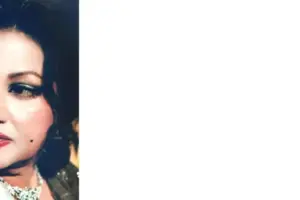
In a development that has sent ripples of nostalgia and jubilation across the South Asian entertainment landscape, Pakistani cinematic icon Reema Khan is officially set to grace the silver screen once more. After an absence spanning nearly sixteen years—her last major theatrical outing being the 2011 romantic drama Love Mein Ghum—the legendary actress has signed on to star in acclaimed filmmaker Wajahat Rauf’s upcoming feature film, Panchi Pyare.
This eagerly anticipated casting coup was officially confirmed following widespread speculation, instantly transforming Panchi Pyare from a standard upcoming project into one of the most culturally significant releases in modern Pakistani cinema. Industry insiders, critics, and dedicated fans alike have hailed the announcement as a watershed moment. For an entire generation of filmgoers who grew up watching Pakistani cinema through its transitional and golden phases, Reema Khan is not merely an actress; she is an institution, a living archive of cinematic history, and a cultural touchstone.
Wajahat Rauf, steering this ambitious cinematic venture, has envisioned Panchi Pyare as a quintessential Eid entertainer—a vibrant tapestry woven with the threads of family comedy and high-stakes emotional resonance. According to production sources, the film aims to capture the classic, crowd-pleasing sensibilities of traditional festival releases while maintaining the high production values demanded by contemporary audiences. For Khan, the decision to step back in front of the cameras was not made lightly. Sources close to the production report that she was drawn specifically to the narrative depth and emotional core of the script.
Read Also
As pre-production ramps up and anticipation reaches a fever pitch, this comeback represents far more than a simple casting announcement. It is a bridge between two distinct eras of Lollywood: the vibrant, celluloid-driven heyday of the 1990s and 2000s, and the sleek, digital renaissance of the modern Pakistani film industry. This article provides an exhaustive examination of Reema Khan’s monumental return, tracing her storied career chronology, contextualizing her enduring legacy through key metrics, analyzing official statements from the creative forces behind the project, and exploring the broader future outlook for the Pakistani box office.
Detailed Chronology: From Child Stardom to Silver Screen Royalty
To truly grasp the magnitude of Reema Khan’s return in Panchi Pyare, one must trace the extraordinary trajectory of a career that helped define Pakistani popular culture for over two decades.
Early Beginnings and the 1985 Introduction
Long before she became the undisputed queen of the Pakistani box office, Reema Khan’s fascination with the performing arts was evident from early childhood. Born into a milieu where artistic expression required immense dedication, she immersed herself in classical and contemporary dance forms, cultivating the physical grace and expressive range that would later become her signature trademarks. Her early exposure to the stage saw her performing as part of a dedicated theater troupe, honing her craft in front of live audiences—an experience that instilled in her an innate sense of timing and stage presence.
This foundational training bore early fruit in 1985 when, as a child actress, she made a brief yet notable appearance in the film Qismat. While this initial foray was minor, it planted the seed for a much larger destiny within the labyrinthine studios of Lollywood.
The 1990 Breakthrough: Bulandi and the Ascent of a Star
The pivotal turning point in Khan’s life arrived in 1990. While navigating the bustling cultural landscape of Lahore—then the undisputed epicenter of Pakistani filmmaking—she was spotted by veteran film director Javed Fazil. Recognizing her raw photogenic qualities, striking screen presence, and natural poise, Fazil cast her in his upcoming project, Bulandi.
Released in 1990, Bulandi proved to be an explosive commercial and critical success. Overnight, Reema Khan transitioned from a promising newcomer to a household name. Her chemistry, screen magnetism, and ability to command the camera immediately set her apart in an era characterized by intense competition and rapid technological shifts in filmmaking.
The Reign of the 1990s and 2000s: A Prolific Golden Age
Throughout the 1990s and well into the 2000s, Khan was the undisputed cornerstone of the Pakistani film industry. Operating during a period when Lahore-based cinema (famously dubbed Lollywood) produced hundreds of films annually, Khan maintained an unrelenting work ethic. She effortlessly bridged the linguistic divide, starring in both Urdu and high-octane Punjabi language films—a dual mastery that few contemporaries could claim.
Her filmography during this era reads as a definitive masterclass in commercial stardom. In 1998, she delivered a critically acclaimed performance in Nikah, a film that showcased her dramatic range and cemented her status as a serious actress capable of carrying emotionally demanding narratives. This was followed by the turn-of-the-century romantic musical Mujhe Chand Chahiye (2000), which captivated audiences with its sweeping romanticism and memorable musical numbers.
As the industry navigated changing audience preferences in the mid-2000s, Khan continued to deliver hits. Her performances in Shararat (2003) and the gripping thriller Koi Tujh Sa Kahan (2005) demonstrated her remarkable adaptability. Furthermore, Koi Tujh Sa Kahan marked a monumental evolution in her career: not only did she star in the lead role, but she also stepped behind the camera, making her directorial and production debut. This bold move proved that her understanding of cinema extended far beyond acting; she possessed a holistic vision of filmmaking, encompassing narrative pacing, aesthetic framing, and commercial viability.
The 2011 Hiatus and Transition to Television
By the late 2000s, Pakistani cinema was facing an existential crisis, with theater closures and dwindling production numbers forcing many industry veterans to pivot. In 2011, Khan released Love Mein Ghum, a lavish romantic drama that she directed, produced, and starred in. Serving as her last major cinematic outing for nearly sixteen years, Love Mein Ghum functioned as a grand capstone to the first major chapter of her cinematic career.
Following its release, Khan transitioned gracefully into television, hosting high-profile cultural shows, serving as a celebrity judge on reality television programs, and engaging with philanthropy. While she remained a beloved fixture in the public eye, her absence from the big screen left a noticeable vacuum—a reminder of an era of grand, larger-than-life cinematic royalty that modern digital productions were only just beginning to replicate.
Supporting Context & Metrics: Quantifying a Legendary Legacy
To understand why Reema Khan’s return in Panchi Pyare is dominating entertainment headlines, one must look closely at the quantitative metrics and cultural milestones that define her career. Her journey is not merely defined by nostalgia; it is anchored in unprecedented productivity, critical acclaim, and enduring influence.
Career Statistics and Production Metrics
- Total Film Appearances: Over 200 feature films spanning Urdu and Punjabi cinema.
- Active Era: A dominant career spanning over two decades of consistent box-office presence from 1990 to 2011.
- Directorial and Production Ventures: Successfully transitioned behind the camera, helming major productions such as Koi Tujh Sa Kahan and Love Mein Ghum.
- Hiatus Duration: Exactly 16 years separating her last cinematic release (Love Mein Ghum, 2011) and her upcoming return in Panchi Pyare.
Accolades and National Recognition
Khan’s contributions to Pakistani culture have not gone unnoticed by the state or film critics. Throughout her career, she has received numerous domestic and international awards for her acting prowess, glamour, and dedication to the arts.
The crowning achievement of her institutional recognition came in 2019, when the Government of Pakistan honored her with the prestigious Pride of Performance Award. This civil decoration is bestowed upon Pakistani citizens who have made significant breakthroughs and achievements in the fields of arts, science, literature, sports, and medicine. For Khan, the Pride of Performance was a definitive validation of her enduring impact on Pakistani cinema, cementing her status not just as a commercial star, but as a cultural custodian of the national film heritage.
The Cultural Impact of the 16-Year Gap
The sheer length of Khan’s absence from the silver screen—nearly sixteen years—adds an extraordinary layer of anticipation to Panchi Pyare. In the span of these sixteen years, the Pakistani film industry underwent a complete metamorphosis. The revival of cinema, often marked by the release of films like Khuda Kay Liye (2007) and Bol (2011) and solidified by the box-office sweeps of Jawani Phir Nahi Ani (2015) and The Legend of Maula Jatt (2022), created a brand-new ecosystem.
Today’s Pakistani cinema boasts state-of-the-art digital projection, multiplex infrastructures, and a refined, globally conscious audience. By returning in this modern era, Khan bridges the chasm between the classic celluloid era of Lahore and the high-definition digital present of contemporary filmmaking. Her presence in Panchi Pyare offers a rare cinematic phenomenon: a legendary icon interacting with the modern apparatus of film production, promising a masterclass in screen presence that younger generations of actors can study and emulate.
Official Statements: The Vision Behind Panchi Pyare
The announcement of Reema Khan’s casting in Panchi Pyare has triggered an outpouring of commentary from the film’s creative leadership. Speaking exclusively to The Express Tribune, filmmaker Wajahat Rauf provided deep insights into how the project came together and the overwhelming reception the casting news has received across the industry.
Wajahat Rauf on the Industry and Public Reaction
Rauf noted that the moment the news broke, the creative team was inundated with expressions of affection and excitement from peers, critics, and ordinary film enthusiasts alike. The communal joy reflected the deep emotional bond audiences share with the veteran actress.
"Since we announced it, all we are getting is love from people in and outside of the industry," Rauf shared with The Express Tribune. "I think watching her again on the big screen will be a gift for our audiences. She is, after all, our national treasure and a legend."
This sentiment underscores the unique status Khan holds. In an industry that is constantly searching for fresh faces and commercial formulas, recognizing Khan as a "national treasure" highlights a collective cultural desire to honor and celebrate living legends while they are actively working.
Dissecting the Narrative: A Complete Eid Entertainer
Rauf also shed light on the thematic and tonal identity of Panchi Pyare, explaining why the project proved irresistible to an actress of Khan’s stature. Rather than a gritty art-house drama or a high-concept action flick, the filmmakers have crafted a deeply resonant, accessible narrative tailored for festival releases.
"It’s a family comedy with high emotions. A complete Eid entertainer," Rauf explained. "Reema ji loved the script, and that is why she decided to be a part of this project."
The choice of an Eid release window is strategically brilliant. Eid ul-Fitr and Eid ul-Adha represent the absolute pinnacle of box-office potential in Pakistan, traditionally drawing families, extended groups of friends, and casual moviegoers to theaters en masse. By positioning Panchi Pyare as a family comedy infused with emotional gravity, Rauf is deliberately evoking the classic populist appeal that characterized Khan’s most successful 1990s and 2000s blockbusters, while modernizing the comedic timing and narrative structure for contemporary tastes.
Future Outlook: What Reema Khan’s Comeback Means for Pakistani Cinema
As pre-production on Panchi Pyare continues to gather momentum, the broader implications of Reema Khan’s return extend far beyond a single film’s box-office receipts. Her comeback serves as a case study for the maturation, healing, and self-reflection of the Pakistani film industry.
1. The Revival of Inter-Generational Appeal
One of the persistent challenges facing modern Pakistani cinema has been bridging the gap between older audiences—who remember the grandeur of 90s Lollywood—and younger, urban multiplex-goers whose cinematic diet consists largely of Hollywood blockbusters and contemporary streaming series.
By casting Reema Khan in a major, marquee role, Panchi Pyare instantly dissolves this generational barrier. Older audiences who abandoned physical cinema halls decades ago now have a compelling, deeply personal reason to return. Simultaneously, younger cinephiles are introduced to a foundational pillar of Pakistani cinematic history on the big screen. This cross-generational draw is expected to significantly widen the film’s demographic reach during its theatrical run.
2. Setting a Precedent for Legacy Casting
Khan’s return may well act as a catalyst for other legendary figures of Pakistani film and television to re-enter the cinematic sphere. The success of legacy casting—bringing back beloved actors who carry immense sentimental equity—has proven highly effective in global film markets (such as Hollywood’s legacy-sequel boom). If Panchi Pyare achieves the commercial and critical success anticipated by industry analysts, it could encourage producers to develop bespoke scripts tailored specifically for veteran icons, enriching the diversity of characters on Pakistani screens.
3. Raising Production Standards and Anticipation
While specific character details, secondary casting choices, and plot specifics are currently being kept under wraps by Wajahat Rauf and his production team, the mere fact that Reema Khan selected this script after vetting offers for over a decade speaks volumes about the quality of the narrative. In an era where script development is frequently rushed to meet aggressive commercial deadlines, Khan’s deliberate selectivity sets a high standard for narrative integrity.
When Panchi Pyare finally opens its doors to audiences during the upcoming Eid holiday season, it will carry the immense weight of expectations. Yet, for an artist who spent over twenty years conquering the box office through raw talent, discipline, and undeniable charisma, the silver screen is not an intimidating arena—it is simply her rightful domain, welcoming back its queen after a long and celebrated absence.




Comments
Facebook App ID not configured. Please add it in the Customizer.