
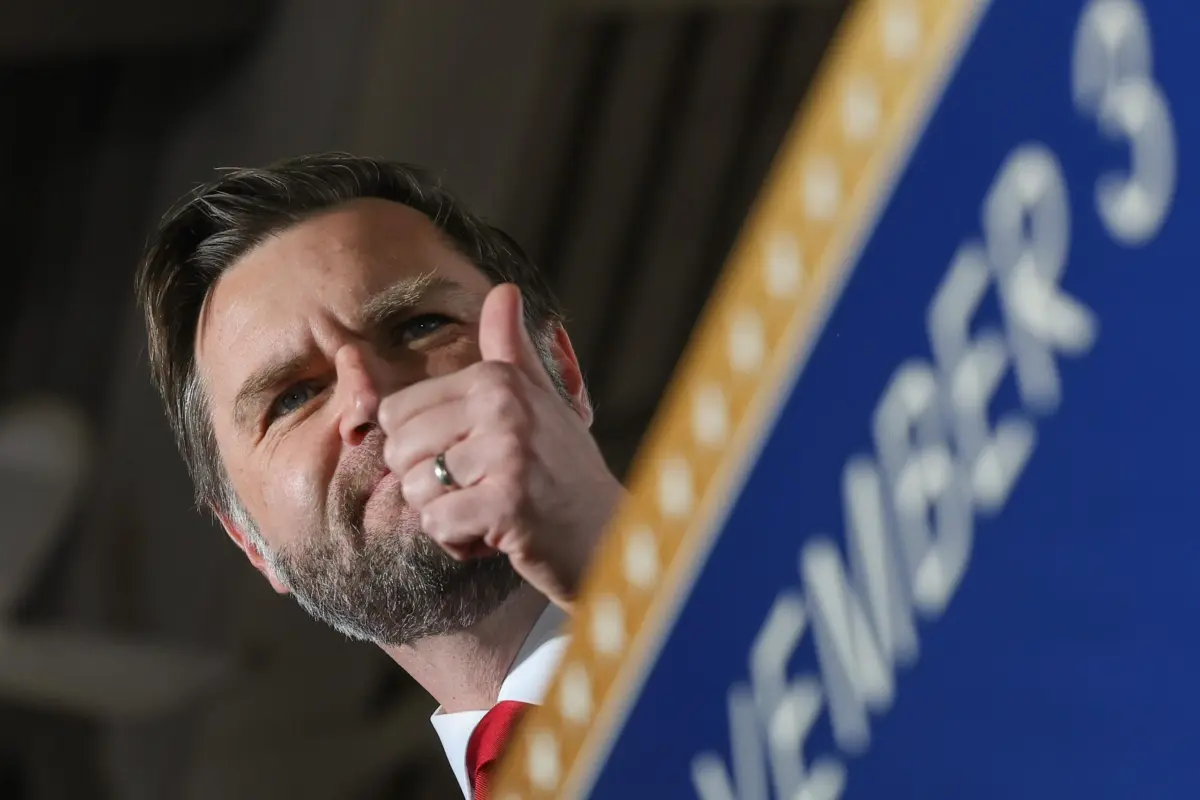
The 2026 midterm elections delivered a catastrophic political earthquake to the Republican Party, effectively drawing a definitive, hard line under the era of MAGA populism. Following a decade in which Donald Trump commanded the apparatus of American conservatism—beginning with his iconic descent down a golden escalator in 2015—the movement he forged met a sobering reality check at the ballot box. Amid record-low approval ratings hovering near 31 percent and the geopolitical fallout of a contentious US-led war with Iran, Trump explicitly asked voters to treat the 2026 midterms as a personal referendum.
The electorate responded decisively. In a sweeping blue wave, Democrats recaptured both chambers of Congress, breaching historic Republican strongholds in states like South Carolina and Kansas. The defeat has plunged the conservative movement into a frantic, highly polarized ideological civil war. As factions across the right point fingers at everything from foreign intervention and sweeping tariffs to aggressive immigration enforcement and surging living costs, the central question for the GOP is no longer about preserving its current trajectory, but rather how to survive the wreckage and chart a viable course toward the 2028 presidential cycle.
Detailed Chronology
The Genesis of a Movement (2015–2024)
- June 2015: Donald Trump launches his inaugural presidential campaign, descending the golden escalator at Trump Tower and shifting the paradigm of American politics by challenging the traditional Republican establishment.
- January 2017 – January 2021: The first Trump administration leaves an indelible imprint on the federal judiciary, trade policy, and immigration discourse, laying the foundation for a populist nationalist base.
- November 2024: Trump secures a return to the White House, sweeping the popular vote and securing unified government control with Republican majorities in both the House of Representatives and the Senate.
The Escalation of Policy Crises (2025–2026)
- April 2, 2025 ("Liberation Day"): The Trump administration enacts sweeping, unilateral tariffs born from gut-level executive decision-making rather than deliberate expert consensus, setting off early market volatility and internal right-wing friction.
- Late 2025 – Early 2026: Escalating tensions in the Middle East culminate in a direct military conflict with Iran, fracturing conservative consensus and alienating moderate suburban voters.
- October 2026: Amid cratering public sentiment, Trump explicitly challenges voters at a North Carolina rally: "Please pretend I’m on the ballot. Because in a way, I am on the ballot."
The Electoral Reckoning (November 2026)
- Midterm Election Day: Voters take up Trump’s challenge, handing Democrats a landslide victory that flips historic GOP bastions and wrests legislative control of Congress away from the Republicans.
- Post-Election Week: Internal recriminations erupt publicly across conservative media and social channels, with prominent figures parsing the wreckage and positioning themselves for the post-Trump political landscape.
Supporting Context & Metrics
The depth of the Republican defeat cannot be measured by congressional seat loss alone; it is underscored by a profound shift in macroeconomic sentiment, voter demographics, and polling metrics.
Read Also
By late 2026, Reuters/Ipsos polling placed Trump’s public approval rating at a dismal historic low of 31 percent. The administration’s economic platform, initially pitched as a populist boon for working-class families, faced mounting blowback over persistent inflation and affordability crises. Pundits and strategists alike noted that younger demographics, in particular, felt priced out of the American dream, turning decisively against incumbent candidates.
Furthermore, the decision to engage in military hostilities with Iran proved to be a fatal strategic miscalculation. While MAGA loyalists had long championed an "America First" foreign policy centered on non-interventionism, the sudden military entanglements shattered the movement’s ideological coherence. When combined with what critics termed executive overreach—such as aggressive mass deportations, unpredictable trade embargoes, and perceived institutional incompetence—the electoral coalition that delivered unified government in 2024 disintegrated entirely.
Official Statements and Internal Perspectives
The ideological fallout has triggered a fierce battle to define the post-mortem of the 2026 election. Prominent voices within and adjacent to the conservative movement have offered sharply divergent explanations for the party’s collapse:
- Vice President JD Vance: Pointing directly to foreign policy missteps, Vance stated on social media, "The reason we lost is the war."
- Conservative Commentator Erick Erickson: Offering a sweeping indictment of executive governance, Erickson wrote, "It was also the corruption. The incompetence. The tariffs. The playing nice with Russia. The impression of cruelty. The overly aggressive deportations."
- Right-Wing Commentator Benny Johnson: Highlighting the crushing weight of domestic economic pressures, Johnson emphasized, "Life is too expensive. Especially for young people."
- Author and Cultural Critic Rod Dreher: In an interview with Today, Explained co-host Noel King, Dreher argued that the structural failures of the administration run deeper than temporary policy missteps: "That MAGA is over. It’s done. It’s been a failure… MAGA couldn’t deliver on good government. And if you can’t deliver on good government, it doesn’t matter how charismatic the leader is."
Dreher further pointed out the operational flaw of the administration’s decision-making apparatus: "It all comes down to the fact that Trump made decisions based not on rational calculation, by listening to expert advice, but on gut instinct… He promoted people not based on competence, but based on loyalty to him, personal loyalty."
Future Outlook: Rebuilding the Right for 2028
As the dust settles on the 2026 midterms, the Republican Party faces an unprecedented political dilemma: how to reconstitute a functional conservative movement while a lame-duck president remains in the Oval Office for two more years.
The Lame-Duck Battleground
With Democrats primed to launch aggressive congressional investigations into administration corruption, the GOP is forced into a two-front war. Not only must the party fend off a revitalized and unified political opposition, but it must also navigate ongoing friction with Donald Trump himself. Unwilling to quietly step aside or prioritize the long-term health of the party, Trump is expected to actively defend his legacy, complicating efforts by congressional Republicans to forge an independent path forward.
Potential Standard-Bearers
The race for the 2028 Republican presidential nomination has been thrown wide open, with several prominent figures emerging as potential leaders of a post-MAGA or reformist conservative movement:
- JD Vance: Once viewed as the undisputed heir apparent to the populist movement, Vance now carries the political baggage of the Trump administration’s failures, including the Iran war. However, allies argue he remains uniquely positioned to champion a pro-family economic nationalism if he can successfully distance the movement from fringe elements and antisemitic extremists on the dissident right.
- Ron DeSantis: The outgoing governor of Florida, who previously mounted a challenge to Trump in the 2024 primaries, has re-entered the national conversation. Devoid of direct taint from the second Trump administration and lauded for administrative competence, DeSantis offers a rational, technocratic critique of MAGA populism that appeals to traditional conservatives seeking stability.
- Marco Rubio: Representing a bridge between the pre-Trump neoconservative establishment and the current foreign policy apparatus, Rubio’s future viability remains uncertain. Despite his deep involvement in executing administration foreign policy, analysts note that he has selectively managed to evade some of the harsher public fallout currently targeting executive branch principals.
The Imperative of Congressional Independence
Ultimately, political analysts suggest that the long-term survival of the Republican Party depends on whether its lawmakers can reclaim legislative independence. For a decade, congressional Republicans largely capitulated to executive demands, routinely suffering political consequences for unwavering loyalty—a reality highlighted when Trump publicly labeled outgoing three-term Texas Governor Greg Abbott a "RINO" moments after his defeat.
As Rod Dreher observed regarding the legislative branch: "They have to find a spine and stand up and establish some independence. If they had done that earlier, we might not be in the situation today." Whether the GOP can successfully excise the dysfunctions of the Trump era and unite around a disciplined, competent vision of governance will determine its relevance in the American political landscape for decades to come.



Comments
Facebook App ID not configured. Please add it in the Customizer.