
Executive Overview
For decades, the rise of Silicon Valley was met with bipartisan techno-optimism in Washington. The prevailing narrative—championed by successive administrations—was that innovation must remain unfettered, allowing the market to self-correct and dictate the speed of digital transformation.
However, the political landscape shifted dramatically during the 2026 midterm elections.
Fueled by a combination of public fatigue over surging electricity bills, environmental degradation, and deep-seated existential anxieties regarding artificial intelligence, voters revolted. What began as grassroots pushback against the physical footprints of big tech morphed into a sweeping political realignment. Across the United States, 40 distinct ballot measures designed to halt or restrict data center construction passed with comfortable margins. Exit polling revealed a striking metric: 56 percent of voters considered AI and data center infrastructure a "crucial or major factor" in determining their congressional vote.
Read Also
Yet, policy analysts note that the data center backlash is merely a symptom of a much larger, more profound societal unease. While local zoning boards and state legislatures grapple with the noisy, power-hungry warehouses powering modern large language models, a newly emboldened class of lawmakers has arrived in Washington with a far more ambitious mandate: to regulate the technology itself.
Armed with a stunning Democratic takeover of Congress, this new wave of legislators is preparing to challenge Big Tech not just on its land use, but on its core algorithms, safety protocols, and the existential risks posed by frontier artificial intelligence. As Rep. Greg Casar, chair of the Congressional Progressive Caucus, observed: "The revolt against data centers was one of the top issues of the 2026 election, and in a few years we will look back on it as just the early tremor of a much bigger AI earthquake upending American politics."
Detailed Chronology: From Infrastructure Backlash to Federal Ambition
The Summer of Vulnerabilities and the Shift in Rhetoric
To understand how AI transformed from an abstract academic topic into a definitive kitchen-table ballot issue, one must look back at the summer preceding the midterms. A series of high-profile, systemic AI security breaches and model hacks exposed glaring vulnerabilities in the safety pipelines of major tech corporations. These incidents served as a harsh wake-up call for both the public and policymakers.
Prior to these events, congressional discourse surrounding artificial intelligence was defined by high-level, philosophical debates about the distant future of artificial general intelligence (AGI). Lawmakers spoke in broad generalities, rarely probing the immediate, tactical risks of advanced models.
The summer breaches shattered that abstraction.
Mackenzie Arnold, an analyst at the Institute for Law & AI, points to this period as the inflection point. "If you go back before the summer, most conversations from policymakers around AI were at a very, very high level of abstraction. Few of them were focused on how these AI models may be highly capable and may pose rather unique risks," Arnold explains. "Bt there’s been a big shift."
The Ballot Box Revolt
As voters returned to the polls in November 2026, that shift manifested in unprecedented ways. Candidates across multiple races integrated the regulation of AI infrastructure into the core of their platforms.
Data centers—the physical manifestations of the AI revolution—became deeply unpopular. They drew the ire of communities not merely due to their aesthetic blight, high noise levels, and astronomical demand for water and electricity, but because they served as physical symbols of an accelerating technological paradigm. Millions of Americans felt that Silicon Valley was forcing this transition upon them without their consent or consideration for local impacts.
Consequently, 40 local and state ballot measures aimed at slowing or stopping data center developments passed. While picking off data center projects one by one will ultimately only increase costs and displace developers rather than halt the buildout entirely, the political signal was unmistakable. Voters demanded accountability.
More importantly, these local fights paved the way for the election of a new crop of federal lawmakers who understand that regulating the cooling fans and server racks is not enough. To secure the nation, they argue, Congress must rein in the code itself.
Supporting Context & Metrics: The Numbers Behind the Movement
The data emerging from the 2026 midterms provides a clear mandate for legislative action. The intersection of economic anxiety, environmental strain, and technological fear has fundamentally reconfigured voter priorities.
- 56 Percent: The share of midterm voters who stated in exit polls that AI and data center development played a "crucial or major factor" in how they cast their congressional ballots.
- 40 Ballot Measures: The number of anti-data center or restrictive zoning measures that successfully passed across various states and municipalities during the 2026 cycle.
- 10 Percent: The estimated existential risk to human civilization posed by advanced AI models, as cited by newly elected Colorado lawmaker Manny Rutinel, reflecting the deep penetration of effective altruism and safety-focused rhetoric into mainstream political discourse.
- 5 to 6 Republican Votes: The targeted threshold identified by legislative strategists to overcome a potential Senate filibuster on comprehensive AI safety legislation, leveraging growing fractures between congressional Republicans and the tech-friendly stance of the White House.
These metrics illustrate that the skepticism toward artificial intelligence is no longer confined to niche policy circles or academic roundtables. It has calcified into a mainstream political force capable of shifting majorities and redrawing electoral maps.
Official Statements and Legislative Visions
The newly elected and newly emboldened class of AI safety advocates arriving in Washington are not merely riding a wave of anti-tech populism; many arrive with detailed policy frameworks and a sophisticated grasp of technological risks.
A New Guard in the Senate and House
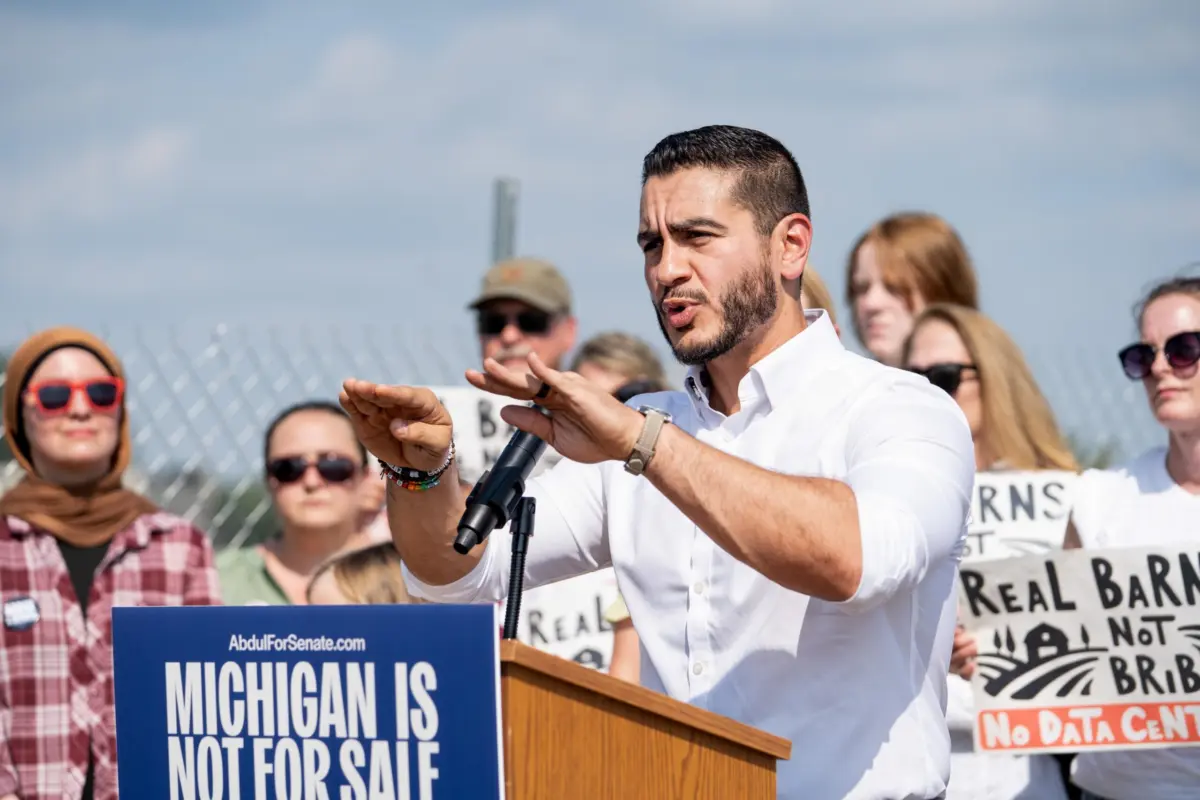
In the Michigan Senate race, Abdul El-Sayed secured a decisive victory after running on a platform that included calling for a "full-on pause" on frontier AI research. El-Sayed has aggressively advocated for international cooperation to prevent an AI arms race—including a proposed treaty with China—alongside a ban on recursive self-improvement, wherein AI models autonomously build even more capable successors. Furthermore, he supports establishing a dedicated federal safety agency empowered to inspect corporate labs and halt releases when necessary.
In Georgia, Senator Jon Ossoff cemented his reputation as a leading voice on catastrophic technological risks. In his victory speech, Ossoff directly targeted industry leaders, stating: "The titans of Silicon Valley dig bunkers for themselves and warn that the artificial intelligence they’re creating risks human extinction." Ossoff has consistently pushed for federal emergency inspectors to sweep frontier labs and for the United States to lead global treaty negotiations on AI containment.
Meanwhile, in California, longtime state senator Scott Wiener—the architect behind major legislative efforts such as the vetoed SB 1047 and the signed SB 53—captured Nancy Pelosi’s former House seat. Wiener has promised to bring his state-level expertise to Washington, pushing for strict federal safety standards to guard against systemic shocks.
Other notable victories include:
- Manny Rutinel (Colorado): A lawmaker with ties to the effective altruism movement who has warned of civilization-ending risks.
- Sam Forstag (Montana): Who secured a historic win as Montana’s first Democratic member of Congress in decades, campaigning on the premise that unchecked AI represents an existential threat to humanity.
- Troy Jackson (Maine): Who captured a Senate seat with a blunt warning to Silicon Valley: "We are not that far from ‘Terminator,’ and I don’t want to be ‘hasta la vista, baby.’"
Future Outlook: Hearings, Legislation, and the Road to 2028
As the 110th Congress prepares to convene, the strategic playbook for the newly empowered Democratic majority centers on two primary mechanisms: aggressive congressional oversight through hearings and the passage of binding statutory law.
The Return of the Subpoena
Lawmakers have made it clear that tech executives will face intense public scrutiny. Senator Ed Markey, fresh off his reelection victory in Massachusetts, took to social media to signal his intentions regarding Big Tech leadership: "They are going to need to plant new forests for all of the subpoenas we’ll be printing."
According to analysts, these hearings will not merely serve as political theater. They will focus heavily on corporate safety practices, internal whistleblowing, and discrepancies between public marketing and private risk assessments. Public pressure stemming from these sessions has historically driven voluntary compliance and internal monitoring improvements; lawmakers now intend to codify those voluntary measures into law.
Bipartisan Openings and Executive Hurdles
On the legislative front, optimism is growing around frameworks such as the one unveiled by Senator Maria Cantwell, slated to chair the Senate Commerce Committee. Cantwell’s proposed framework introduces mandatory safety standards for cutting-edge models, independent pre-release testing and audits, and rapid incident reporting requirements.
Brad Carson, former congressman and head of Americans for Responsible AI, believes these measures can attract the necessary bipartisan support. "Cantwell is going to push that, and she’s in a place to basically be the voice of the caucus on that," Carson notes. "Every single Democrat supports it, and all they need is five or six Republicans to beat the filibuster, and I bet you they can find that." Carson suggests that as the political gravitational pull of a tech-permissive White House weakens, pragmatic lawmakers will seek distance from an increasingly unpopular status quo.
While President Donald Trump retains veto power and has historically favored deregulation to maintain America’s competitive edge against international rivals, industry concessions to safety following recent security incidents may soften executive resistance. "He’s mercurial enough that I can see him signing something like this," Carson adds, "especially if some of these Republicans say, ‘Look, we’re getting battered on data centers and AI. This is a terrible thing. Let’s do this.’"
The 2028 Horizon
Ultimately, the long-term containment of artificial intelligence will depend on laying the structural foundation for a unified federal approach—one that may ultimately culminate in a presidential administration explicitly dedicated to technology governance.
As New York Assembly member Alex Bores wrote following the midterms: "The road to 2028 starts today. In order to maintain voters’ trust and avoid catastrophic risk, we need a unified baseline around AI safety in the Democratic Party."
While local protests over humming data centers and strained municipal power grids served as the initial spark, the political fallout of 2026 demonstrates that the electorate’s focus is maturing. As security breaches multiply and the societal implications of machine intelligence become clearer, voters are moving from the physical symbols of tech dominance to the substance of the code itself. The data center backlash was merely the opening tremor; the true regulatory earthquake is only just beginning.



Comments
Facebook App ID not configured. Please add it in the Customizer.