
Executive Overview
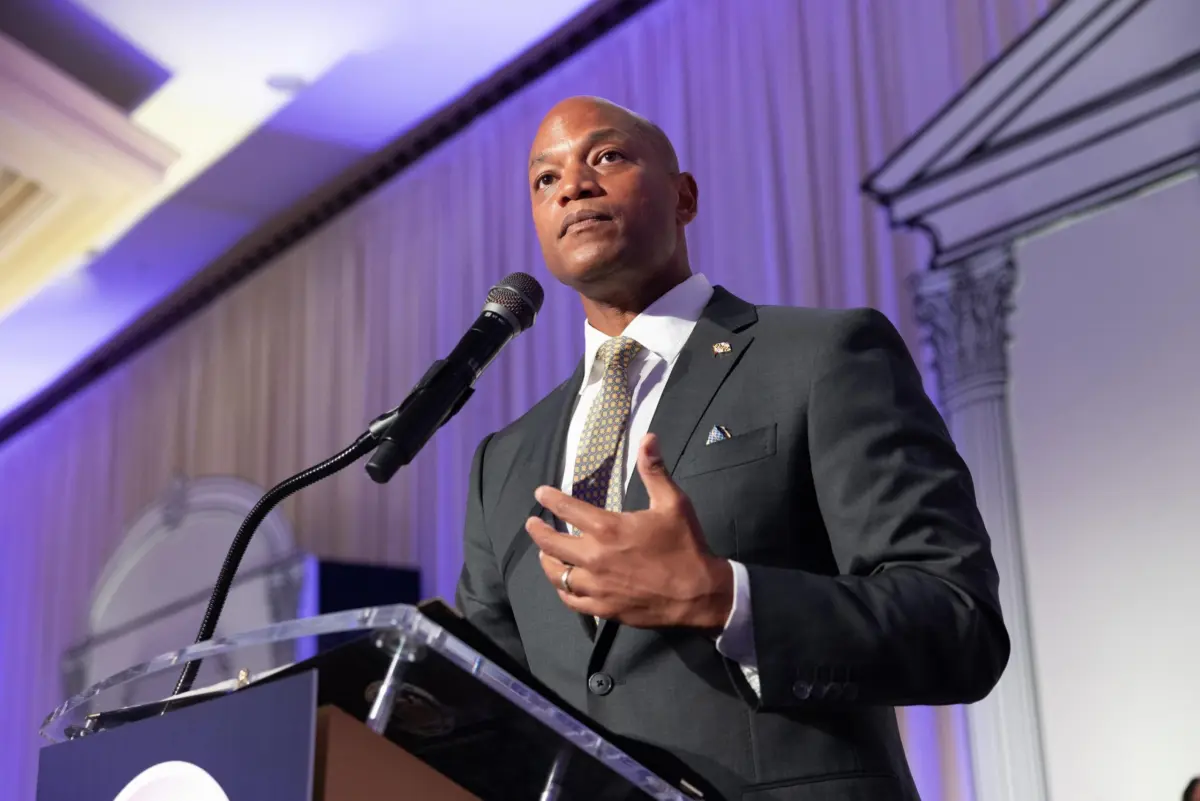
The aftermath of the recent midterm elections has left the political landscape radically transformed, marked by sweeping Democratic gains across the United States. While the party celebrated victories from coast to coast, few triumphs were as emphatic or commanding as that of Maryland Governor Wes Moore. Cruising to a decisive reelection victory with approximately 63 percent of the vote, Moore solidified his status not only as a dominant political force in the Mid-Atlantic, but also as a leading national voice within the Democratic Party. As speculation steadily mounts regarding a potential White House run in 2028, Moore’s governance style is increasingly viewed as a blueprint for how Democrats can translate electoral success into tangible, lasting policy outcomes.
Voters across the nation forcefully rejected Republican leadership, shifting power back to Democrats largely in response to severe economic anxiety, rising living costs, foreign entanglements—specifically the ongoing conflict involving Iran—and mounting apprehensions over the unchecked proliferation of artificial intelligence and power-hungry data centers. The central challenge now facing the Democratic Party is capitalizing on this newfound political leverage. For Governor Moore, the stakes could not be higher. In an extensive interview with America, Actually host Astead Herndon, Moore articulated a vision characterized by urgency, administrative pragmatism, and a stark departure from political incrementalism. According to Moore, the time for prolonged debate has passed; Democrats must act decisively on the fundamental socioeconomic anxieties that drove voters to the polls.
Detailed Chronology & Political Landscape
The trajectory leading up to the midterms was defined by compounding voter frustrations with national economic policies and foreign interventions. For months, polling indicated deep-seated anxiety regarding inflation, housing attainability, and energy costs. The electorate’s mood was volatile, characterized by a fatigue with prolonged federal stagnation and a growing distrust of corporate-driven technological expansion.
Read Also
On election night, these currents coalesced into a wave that swept Republicans out of critical legislative and executive seats while cementing Democratic majorities. Maryland served as a clear bellwether of this dynamic. Governor Moore, who spent his first term spearheading aggressive administrative reforms, reaped the rewards of an electorate eager for functional governance.
Following his decisive 63 percent victory, the political conversation immediately pivoted from local administration to national trajectory. Long-rumored whispers of a 2028 presidential bid intensified, though Moore has consistently sidestepped definitive declarations, choosing instead to focus on the mechanics of governance. In his conversation with Herndon, Moore emphasized that the mandate delivered by voters on election night was not merely a vote against the opposition, but a demand for immediate, results-driven solutions from the leaders they chose to keep in power.
Supporting Context & Metrics: Cost of Living, Healthcare, and Economic Equity
Speed Over Studies: Tackling the Cost of Living
At the heart of the electorate’s frustration was the rising cost of living—a vulnerability that heavily penalized conservative incumbents. When asked about the most effective mechanism for Democrats to alleviate these pressures, Moore dismissed conventional bureaucratic delays, advocating instead for rapid, pragmatic execution.
"Actually move fast to fix the things," Moore told Herndon. "No more studies. No more 10-year research reports. Move fast."
Citing his administration’s actions in Maryland, Moore pointed to aggressive permitting reform designed to accelerate the construction of affordable housing. Rather than commissioning exhaustive academic analyses, the administration recognized the acute housing shortage and utilized state-owned land for transit-oriented development. Similarly, Maryland enacted the largest investments in childcare in state history, a move justified by the unsustainable reality of working families spending thirty to forty percent of their income on childcare expenses.
However, Moore acknowledged the limitations of state-level intervention regarding macroeconomic pressures such as gas prices and national grocery inflation. He argued that federal action is urgently required to halt regressive tariff policies and de-escalate unnecessary foreign conflicts that bleed national resources.
Healthcare Innovation: The Maryland Total Cost of Care Model
Addressing the complex debate surrounding universal healthcare, Moore pointed to Maryland’s innovative structural framework as a national model. Rather than relying solely on federal mandates, the state implemented the Total Cost of Care Model, partnering directly with hospital systems to establish universal budgets.
This cooperative approach has successfully bent the cost curve. Maryland stands as one of the few states nationwide where healthcare costs are actively decreasing while overall population coverage continues to expand, proving that systemic reform is possible through direct stakeholder alignment rather than sweeping ideological overhauls.
Wealth Disparity and Taxation
The conversation also touched upon broader economic philosophies, drawing on themes from progressive victories like those of Zohran Mamdani. When confronted with the polarizing question of whether billionaires should exist, Moore offered a grounded, policy-oriented perspective.
"I lose no sleep over the amount of billionaires in our society. I do lose sleep over the amount of children that are growing up in poverty," Moore stated. "And I think those who [do] have, have a responsibility to support and uplift and create pathways for those who do not."
In practice, this philosophy has translated into targeted tax relief for middle-class families and military veterans in Maryland, balanced by requests for higher contributions from the state’s wealthiest residents. These revenues have directly funded investments yielding historic milestones, including the fastest public safety turnaround in the country and public school reading and math scores reaching five-year highs.
Official Statements: Foreign Policy and the Iran Conflict
Drawing on his personal background as a combat veteran who led soldiers with the 82nd Airborne Division in Afghanistan, Moore delivered a scathing critique of executive overreach and congressional acquiescence in foreign wars.
Discussing the incoming Democratic Congress and the ongoing military engagement concerning Iran, Moore was unequivocal when asked if lawmakers should continue funding a conflict disconnected from national interests: "No, and they shouldn’t have funded it in the first place."
Moore pushed back against arguments that abandoning these conflicts compromises military personnel, placing the blame squarely on executive unilateralism and a compliant legislature.
"We’re talking about a president who unilaterally went to war without even asking Congress for authority. The president does not have the authority to just wage war by himself… And truthfully, this Congress has been so caught up in the aura of the president of the United States that they have not been leaders; they have been cheerleaders."
Reflecting on his experiences in Afghanistan—where trillions were spent, thousands of service members perished, and the Taliban ultimately regained control—Moore warned that the nation risks tumbling into yet another "forever war." He argued that Congress must immediately assert its constitutional authority. Rather than waiting for a standard hundred-day legislative agenda, Moore asserted that lawmakers must act within the first hundred hours to check executive power and mandate an end to unauthorized military engagements.
Future Outlook: Artificial Intelligence, Data Centers, and Local Empowerment
The midterm elections also proved catastrophic for unbridled technological expansion, with voter backlash against massive data centers reflecting deep public unease over the rapid, unregulated growth of artificial intelligence. While some within the Democratic Party remain bullish on AI as an economic engine, Moore advocates for a balanced approach rooted in strict regulatory guardrails.
"I am very concerned about what we’ve seen from AI, and I know a lot of Americans are," Moore said. "I’m hopeful for what I think the promise of what AI can bring to things like healthcare and education. But I also know that there need to be guardrails."
Criticizing the hands-off, deregulatory posture of past administrations, Moore emphasized that telling tech conglomerates to "police yourself" is remarkably dangerous. In response, Maryland has enacted some of the most stringent AI and data center guidelines in the nation.
These state-level mandates dictate that technology companies must fully fund their own energy consumption and infrastructure upgrades without shifting a single penny of the cost onto taxpayers. Furthermore, data centers are strictly barred from polluting local air and water supplies, must comply with rigorous environmental standards, and are required to hire local union workers.
Crucially, Moore emphasized the principle of local autonomy. With roughly half of Maryland’s local jurisdictions implementing bans or pauses on data center construction, Moore has instituted a firm state policy: local communities retain absolute control. The state government will never override a local moratorium, ensuring that the power to shape technological integration remains firmly in the hands of local residents rather than corporate entities or federal mandates.
As Democrats navigate their newly expanded political power, leaders like Wes Moore offer a roadmap defined by administrative speed, fiscal pragmatism, and an unwavering commitment to local empowerment—qualities that will undoubtedly shape the national political conversation for years to come.





Comments
Facebook App ID not configured. Please add it in the Customizer.