
Executive Overview
In the upper echelons of contemporary cinema, few box-office phenomena have defied expectations quite like Toho’s modern iterations of its legendary kaiju franchise. Following the historic, Oscar-winning triumph of 2023’s Godzilla Minus One, industry insiders and fans alike wondered how writer-director Takashi Yamazaki could ever recapture lightning in a bottle. Yet, during its high-profile United States premiere at the prestigious New York Film Festival, Godzilla Minus Zero answered that question with deafening, earth-shaking authority.
More than a mere continuation, Godzilla Minus Zero is an ambitious, emotionally harrowing cinematic monument. It boldly refines the stark anti-war ethos and profound historical trauma of its predecessor while taking several wildly unhinged creative risks. It stands not only as the first Japanese-produced feature film explicitly mastered for IMAX, but also as a blistering, deeply moving artistic response to Hollywood’s recent atomic-age epics. Balancing operatic scale with the intimate, fragile bonds of a makeshift family, this latest installment cements Yamazaki as a visionary auteur capable of transforming a decades-old monster movie franchise into an urgent meditation on survival, moral guilt, and resilience.
Detailed Chronology: From the Ashes of Post-War Japan to a New Nightmare
To understand the emotional gravity of Godzilla Minus Zero, one must first examine how seamlessly the narrative re-enters the scarred landscape of post-World War II Japan.
Read Also
Healing Wounds and Quiet Lives
The film opens by checking in on the beloved survivors of Minus One. Former kamikaze pilot Kōichi Shikishima (Ryunosuke Kamiki) and Noriko (Minami Hamabe) are still nursing the profound physical and psychological injuries sustained during the previous film’s catastrophic encounters. Together, they have tentatively stitched together a fragile, domestic existence alongside the orphaned infant Akiko (Sae Nagatani).
Shikishima has returned to the skies as a working pilot, while Noriko dedicates her time to assisting at a makeshift foster home and school run by Sumiko Ōta (Sakura Ando). Sumiko, who spent the first film projecting her overwhelming grief onto her neighbors, now functions as a matriarchal pillar for a community of children orphaned by both the war and the terror of Godzilla. Their quiet, routine days are occasionally punctuated by warm visits from the crew of the Shinsei Maru, the mine-sweeping vessel that originally forged Shikishima’s bonds with his post-war allies.
The Bureau and the Prodigy
Among those allies is Kenji Noda (Hidetaka Yoshioka), the brilliant scientist whose ingenuity helped orchestrate Godzilla’s temporary defeat in the prior film. In Minus Zero, Noda has stepped into a new bureaucratic role heading the wryly designated "Large-Scale Disaster Response Bureau."
Noda is no longer fighting alone. He has recruited a fascinating roster of specialists who inject fresh intellectual and narrative weight into the proceedings:

- Kanji Murakami (Min Tanaka): A seasoned biologist whose expertise offers biological insights into the shifting kaiju ecosystem.
- Makoto Aoyama (Masami Nagasawa): Hailed as a "weather forecasting prodigy," Aoyama shares Noda’s relentless, single-minded dedication to her craft. It is her uncanny ability to read erratic, apocalyptic weather patterns that first warns the Bureau of an unprecedented, looming atmospheric threat.
- A Crucial Cameo: The Wailing star Jun Kunimura makes a brief yet vital appearance as Noriko’s attending physician, grounding the characters’ ongoing medical trauma in stark, realistic terms.
The Descent into Catastrophe
While the film takes its time re-establishing these character arcs, the peace is shattered by a terrifying opening sequence that introduces the new threat. Without spoiling the specifics of this new entity, Yamazaki’s screenplay builds directly upon the lingering devastation of the 1945 attacks.
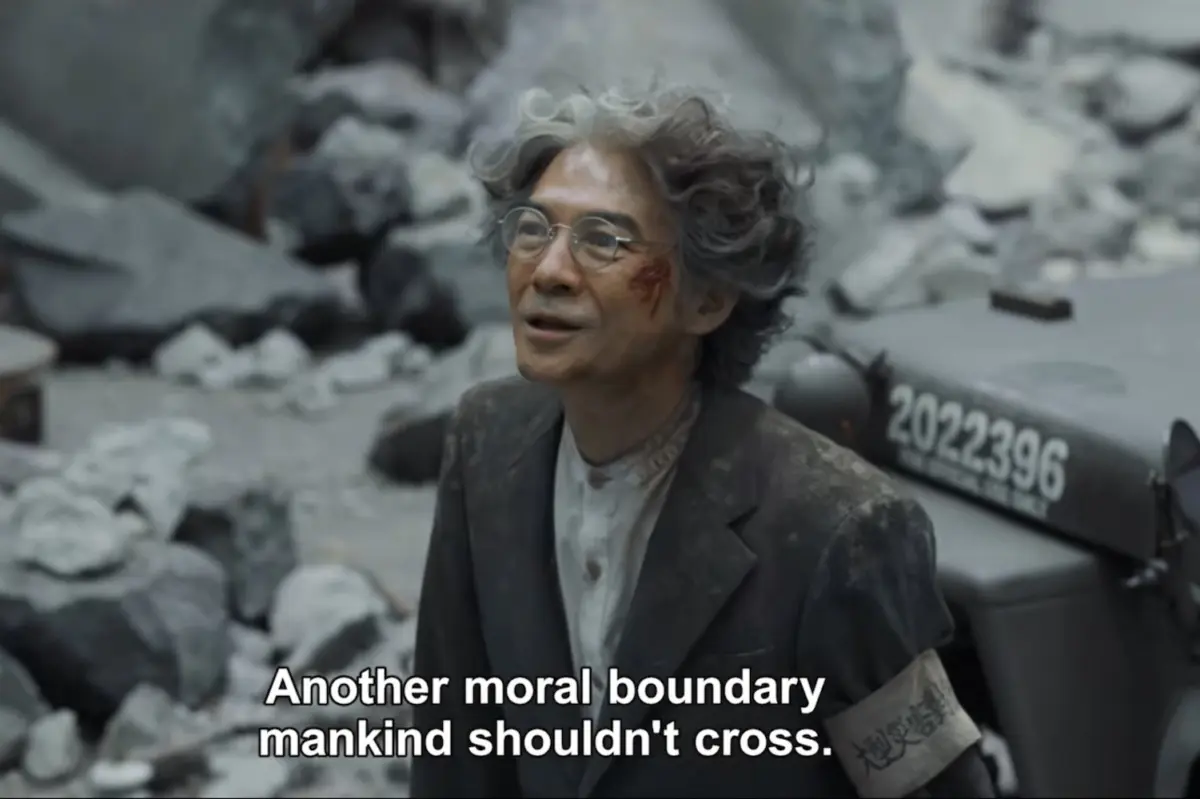
As the new nightmare unfolds, it tears the characters’ hard-won healing to absolute shreds. The narrative introduces a new supporting figure—a deeply traumatized survivor of the atomic bombing of Hiroshima who remains consumed by grief and a desperate thirst for vengeance. Rather than utilizing this trauma for cheap shock value, Yamazaki crafts sequences that are as harrowing, disruptive, and emotionally devastating as historical reality demands.
Supporting Context & Metrics: Challenging the Atomic Age on Screen
The cultural footprint of Godzilla Minus Zero extends far beyond its monster-movie thrills; it serves as a direct artistic challenge to Western cinematic treatments of the atomic age, most notably Christopher Nolan’s Oppenheimer.
A Direct Counter-Narrative to Oppenheimer
In interviews surrounding the film’s release, Takashi Yamazaki has spoken candidly about crafting Godzilla Minus Zero as a deliberate response to the historical blind spots of recent Hollywood blockbusters. While Nolan’s biopic famously chose to keep the immediate human horrors and atomic devastation of Hiroshima and Nagasaki largely offscreen, Yamazaki refuses to look away.
Godzilla Minus Zero incorporates visceral, deeply upsetting flashbacks to Hiroshima that place the audience directly into the Japanese experience of the bombing and its immediate aftermath. The film portrays a reality knocked entirely off its axis:
- Decimated Regions: Characters travel through landscapes leveled not merely by structural damage, but by unimaginable biological and thermal destruction.
- Human Toll: The camera forces viewers to sit alongside parents mourning children who die in their arms, and ordinary citizens grappling with permanent, agonizing physical disfigurement.
- The Franchise Legacy: By embedding these stark historical horrors directly into the context of the Godzilla mythos—which has always served as a metaphor for nuclear anxiety—the film honors the original 1954 Toho classic while updating its socio-political commentary for modern audiences.
Technical and Box Office Milestones
From a production standpoint, Godzilla Minus Zero breaks significant new ground for the franchise and the Japanese film industry at large:
| Metric / Milestone | Detail |
|---|---|
| Format Achievement | The first Japanese feature film produced and optimized specifically for IMAX presentation. |
| Visual Effects Team | Spearheaded by writer-director Takashi Yamazaki, alongside VFX Director Kiyoko Shibuya, Takayuki Ueki, and Eishin Okubo. |
| Audience Reception | Documented widespread audience applause during key narrative sequences, transitioning into open sobs and emotional resonance during the film’s climactic third act. |
| Thematic Scope | Combines large-scale kaiju destruction with intimate moral dilemmas, maintaining the human-centric narrative drive of Minus One. |
Official Statements and Creative Vision
The transition from Minus One to Minus Zero required Toho and its creative team to resist the temptation of simply repeating past formulas. In statements from the New York Film Festival press events and international interviews, the filmmakers emphasized a dedication to thematic depth over commercial predictability.

Defying Franchise Fatigue
When asked how the creative team planned to surprise audiences who were already familiar with the anti-war messaging of the 2023 film, Yamazaki noted that the goal was never to manufacture a cheap twist. Instead, the strategy was to dig deeper into the open emotional wounds of the post-war era.
"We didn’t want to just recreate the surprise of a monster movie hiding a serious message," production notes indicate. "We wanted to push our characters past their breaking points, forcing them into moral corners where survival comes with a profound spiritual cost."
The Geopolitical Tightrope
The film also maintains an uncompromising, unflinching perspective on international politics—specifically regarding post-war Japan’s relationship with the United States. The Large-Scale Disaster Response Bureau finds itself trapped in a complex geopolitical compromise:
- Distrust vs. Necessity: The Bureau knows they cannot fully trust American military or financial assistance, yet they recognize that U.S. weaponry and resources may be the only tools standing between Japan and total annihilation.
- Moral Compromise: The script repeatedly interrogates what sacrifices a sovereign nation, and individual citizens, must make when faced with extinction. Is it true heroism to protect your immediate family when your entire society is burning? These questions form the beating heart of the screenplay.
Future Outlook: The Resurgence of Prestige Kaiju Cinema
As Godzilla Minus Zero prepares for its broader commercial rollout following its festival acclaim, its long-term implications for the sci-fi and monster movie genres are profound.
Raising the Bar for Blockbusters
For years, major studio franchises have struggled to balance spectacle with genuine emotional stakes, frequently relying on digital noise rather than character-driven resonance. Godzilla Minus Zero proves that audiences will eagerly embrace high-budget, high-concept blockbusters that treat heavy historical themes with intellectual rigor and emotional empathy. By grounding a city-stomping kaiju in the raw, aching reality of post-war grief, Yamazaki has established a new gold standard for the genre.
What Lies Ahead for Toho’s Icon
The overwhelming positive response to the film’s IMAX engagement signals a robust global appetite for Japanese-language prestige cinema. As Tokyo-based studios continue to push the boundaries of digital effects—often achieving staggering visual fidelity on budgets a fraction of their Hollywood counterparts—the future of the franchise looks remarkably bright.
Whether Godzilla Minus Zero ultimately surpasses Minus One in the hearts of die-hard fans will be debated for years to come. What remains indisputable, however, is that Toho has successfully revitalized its crown jewel, turning a rubber-suit monster into an enduring symbol of human resilience, moral accountability, and the unyielding choice to find hope in the face of certain doom.




Comments
Facebook App ID not configured. Please add it in the Customizer.