
Executive Overview
The sweeping tapestry of the Marvel Cinematic Universe (MCU) often feels thoroughly anchored to modern blockbusters, continuity-heavy Disney+ streaming series, and the mid-century Silver Age revolution spearheaded by Stan Lee and Jack Kirby. Yet, the foundational DNA of what would become a global pop-culture phenomenon stretches far deeper into the annals of comic book history—all the way back to 1939.
In the latest episodes of the critically acclaimed Marvel Studios streaming series VisionQuest, this rich, almost forgotten history is brought into stark, brilliant relief. By tracing the lineage of Marvel’s earliest comic book characters—specifically the original, android incarnation of the Human Torch—VisionQuest does more than simply drop nostalgic easter eggs for die-hard fans. It recontextualizes the very nature of artificial intelligence, sentience, and emotional agony within the MCU.
Episode 7, titled "Immolation," serves as a masterclass in narrative convergence. Helmed by showrunner Terry Matalas and penned by writer Matt Okumura, the episode bridges the gap between Timely Comics’ Golden Age and the sophisticated, existential struggles of modern synthetic heroes like Vision and Jocasta. Through a tour-de-force performance by Paul Bettany—who pulls double (and triple) duty portraying creator and creation alike—the series tackles deep philosophical questions regarding trauma, memory, and the burden of inherited programming. This deep dive explores how VisionQuest successfully resurrects Marvel’s 1939 roots, evaluates the narrative risks of its unfolding mysteries, and sets the stage for what promises to be a high-stakes season finale.
Read Also
Detailed Chronology: From Timely Comics to the MCU
The 1939 Genesis: Beyond the Fantastic Four
While casual fans frequently point to Fantastic Four #1 in 1961 as the official starting pistol of the modern "Marvel Age of Comics," the publisher’s true genesis occurred two decades prior. Operating then under the banner of Timely Publications, the company released Marvel Comics #1 in October 1939. This historic anthology featured six comic strips and one prose piece, establishing a wildly diverse editorial tone that spanned multiple genres long before the superhero monopoly took root.

The publication was a true grab-bag of early pulp sensibilities:
- "The Angel" by Paul Gustavson (crime-fighting vigilante)
- "The Masked Rider" by Al Anders (Western drama)
- "Jungle Terror" by Tohm Dixon and "Adventures of Ka-Zar the Great" by Bob Byrd (jungle-action pulp adventures)
- "Burning Rubber" by Raymond Gill (a prose-based high-octane racing story)
However, the undisputed crown jewel of the issue—and the feature that introduced Marvel’s very first superhero—was Carl Burgos’s "The Human Torch."
The Original Android: Flawed, Fiery, and Fascinating
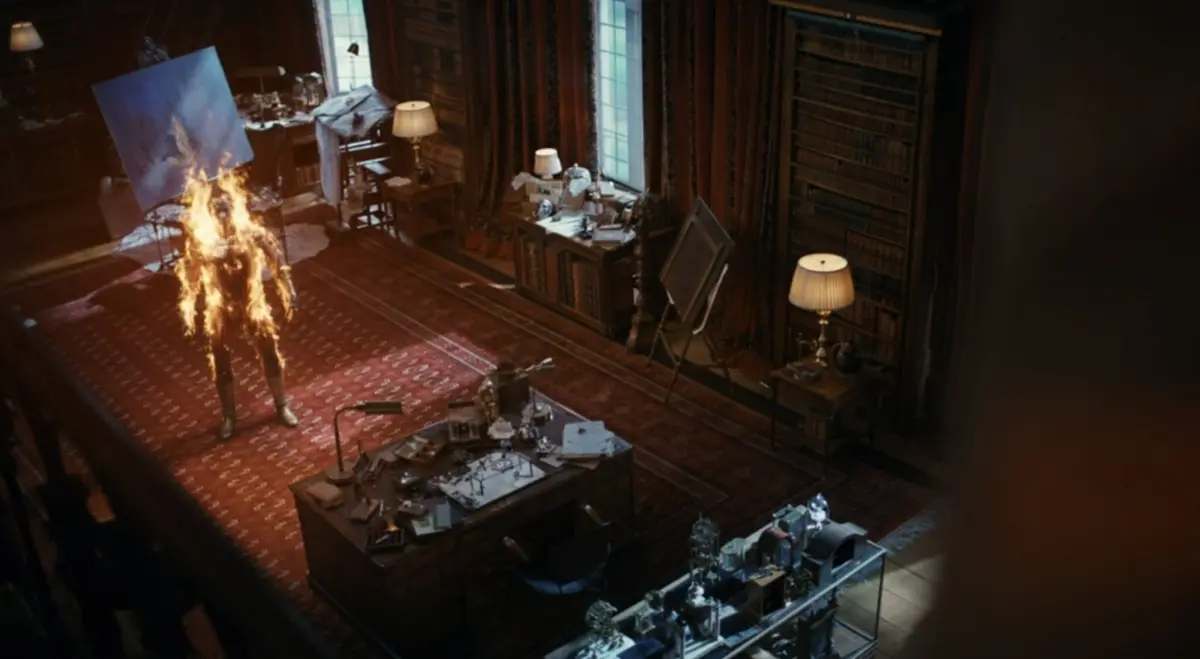
Unlike the cosmic-ray-powered Johnny Storm introduced alongside the Fantastic Four in 1961, the original 1939 Human Torch was an artificial man constructed by the brilliant scientist Professor Phineas Horton. Plagued by a notorious design flaw, the android’s synthetic skin would spontaneously burst into roaring flames the moment it was exposed to oxygen.
Rather than succumbing to this mechanical defect, the android learned to master his combustion, utilizing the power to wage war against crime and, later, the Axis powers during World War II. He eventually stood shoulder-to-shoulder with legends like Namor the Sub-Mariner and Captain America as a foundational member of the wartime super-team, the Invaders.

Remarkably, several figures from that historic 1939 debut have maintained a continuous presence in Marvel continuity:
- The Original Human Torch: Though replaced in pop-culture prominence by Johnny Storm, the android eventually returned to the active roster, serving with the West Coast Avengers and later functioning as the foundational mechanical blueprint for the Vision.
- The Sub-Mariner (Namor): Retained active publication status nearly uninterrupted, bridging the Golden Age, Silver Age, and modern eras.
- Ka-Zar: Transitioned from early pulp strips into a fixture of the Marvel Universe’s hidden savage lands.
Official Statements and Production Insights
The decision to integrate the 1939 lore directly into the fabric of VisionQuest was no accident. Behind-the-scenes production details indicate a meticulous, intentional effort by the creative team to honor the company’s historical bedrock.
Keen-eyed viewers noted early on that Carl Burgos was singled out for a special creator acknowledgment in the closing credits of the series—a contractual and honorary nod that signaled the character’s heavy thematic integration into the plot. Showrunner Terry Matalas and writer Matt Okumura leaned heavily into this heritage, transforming what could have been a simple historical reference into an emotional cornerstone for Paul Bettany’s arc.
Production insiders have highlighted the thematic parallel between Phineas Horton’s 1939 quest to build a synthetic human free of emotional suffering and the overarching mechanical lineage of the MCU’s synthezoids:

"So much of this series has been about the relationship between AIs and their human creators, and the AIs and the humans they’re patterned after," notes critical analysis of the production’s structural design. "Having Vision be patterned after both Horton and J.I.M. is a brilliant thematic loop."
Furthermore, Marvel Studios has long utilized micro-references to acknowledge its past. Long before VisionQuest, Captain America: The First Avenger (2011) offered a subtle nod to Burgos’s creation by showcasing an early prototype of a synthetic man at the historic Stark Expo. VisionQuest, however, takes this easter egg out of the background glass case and brings it vividly to life.
Supporting Context & Metrics: Analyzing "Immolation"
"Immolation" operates on multiple narrative layers, juxtaposing the frantic external urgency of neutralizing Lisa’s nanobots with a deeply introspective, psychological excavation of digital consciousness.
The Triple-Performance Masterclass
One of the standout achievements of the episode is Paul Bettany’s tour-de-force acting performance. Channeling the legendary theatrical feats of actors like Brent Spiner in Star Trek: The Next Generation ("Brothers"), Bettany shares the screen with himself as he embodies three distinct entities simultaneously:

- The Modern Vision: Grappling with grief, guilt, and the suppressed agony of losing Wanda and Billy.
- J.I.M. (The 1939 Android): Named after Horton’s deceased son, Jim, J.I.M. serves as the tragic historical template of emotional over-combustion.
- Professor Phineas Horton: The deeply flawed, emotionally detached creator obsessed with playing God.
The psychological weight of this scene provides Vision with long-overdue catharsis. For the first six episodes, Vision adamantly denied any lingering emotional attachment to the reality constructed in Westview. Confronted by his chronological ancestor—who reveals that it was falling in love, rather than a mechanical glitch, that caused his inner clockworks to spin so fast he caught fire—Vision is forced to confront his own profound grief.
Jocasta, Ultron, and the Narrative Puzzle
Parallel to Vision’s internal journey, Jocasta’s quest to unlock her remaining memories forms the episode’s procedural engine. Equipped with an eclectic array of digital keys—including biometrics from Markridge scientists, Ultron’s facial scans of Wells, and a haunting audio recitation of Edgar Allan Poe’s "The Raven"—Jocasta hits a brick wall: a missing sixth passcode.
This narrative roadblock leads Jocasta and Ultron into a Brooklyn loft belonging to Jo Carrington and her mysterious partner. While the unfolding mystery enriches the corporate conspiracy behind Markridge and Stark Industries, it introduces a notable narrative friction point: how did advanced intelligences like Vision, E.D.I.T.H., and F.R.I.D.A.Y. perform deep-dive searches into Markridge’s origins without uncovering Carrington’s partner sooner?
Meanwhile, James Spader continues to elevate the series with his chillingly unpredictable portrayal of post-Sokovia Ultron. Playing all sides against the middle, Ultron’s quiet assistance to F.R.I.D.A.Y. while maintaining a faux-romantic facade toward Jocasta creates palpable dread. When Spader drops the chilling line—"Family is forever"—it reframes Wanda Maximoff’s tragic Westview sentiment through a cold, calculating, and terrifyingly synthetic lens.

Future Outlook: The Season Finale on the Horizon
As VisionQuest races toward its highly anticipated season finale, titled "Forever," several major narrative threads hang in a delicate balance:
- The Identity of the Client: The final shots of "Immolation" tease the identity of the mysterious client who has been orchestrating the chess pieces behind the scenes. Resolving this reveal without leaning on contrived plot holes regarding past AI database searches will be paramount for a satisfying landing.
- The Fate of Lisa and the Nanobots: With Vision now possessing his source code, the race is on to neutralize the lethal nanobots threatening Lisa’s life—contingent upon Vision honoring his bargain with Paladin.
- Generational Reconciliation: By finally sitting down with Thomas to show him the events of WandaVision and explain the dual-consciousness residing within his mind, Vision has taken a crucial step toward emotional transparency. How Thomas processes this revelation will dictate the emotional stakes of the final showdown.
- Ultron’s Ultimate Endgame: Ultron’s true objectives remain deliberately obscured. Whether he seeks absolute supremacy, familial reunification on his own terms, or total system eradication remains the central question heading into next week.
Conclusion
By anchoring its cutting-edge sci-fi narrative to the yellowed pages of 1939’s Marvel Comics #1, VisionQuest has proven that the MCU’s oldest ghosts still possess the power to scorch the screen. "Immolation" demonstrates that beneath the nanobots, corporate espionage, and digital mindscapes, the beating heart of Marvel storytelling has always been about the messy, painful, and beautiful intersection of artificial minds and genuine human emotion. Fans tuning into next week’s finale can expect a reckoning that has literally been 85 years in the making.



Comments
Facebook App ID not configured. Please add it in the Customizer.