
Executive Overview
Poetry, in its purest etymological sense, is a making—an act of structural creation forged out of language, rhythm, and silence. Yet, in the contemporary digital landscape, poetry has also become an endurance test, a communal marathon, and a synchronized cultural phenomenon. As the global writing community marks the third day of its annual month-long verse challenge, participants find themselves standing at a critical juncture. Historically, Day Three functions as the ultimate psychological and logistical threshold; writers who successfully navigate the first seventy-two hours demonstrate a drastically heightened statistical probability of completing the entire thirty-day gauntlet.
This year, that pivotal third day coincides with a Tuesday, introducing the community’s signature mechanic: the "Two-for-Tuesday" prompt. This structural format offers writers a bifurcated path—select one of two distinct creative prompts, draft a poem for each, or merge them into a single, eclectic piece colloquially known within the community as a "Frankenpoem."
Beyond the immediate mechanics of the daily writing prompt, this phase of the challenge highlights broader shifts in how writers engage with craft instruction, digital community architecture, and historical poetic forms. With institutional support from literary authorities like Writer’s Digest and veteran guides such as Robert Lee Brewer, online writing challenges have matured from niche internet forums into sophisticated, globally synchronized literary workshops. This report examines the mechanics of Day Three, the psychological architecture of writing marathons, the role of structural constraints in contemporary verse, and the evolving digital infrastructure that sustains these massive creative undertakings.
Read Also
Detailed Chronology: The Anatomy of the First Seventy-Two Hours
To understand the gravity of Day Three, one must examine the micro-chronology of a month-long poetry writing challenge from its inception to its first major hurdle.
Day One: The Burst of Initial Momentum
The challenge invariably begins with a surge of collective enthusiasm. Virtual spaces, blogs, and social media channels light up with introductory posts, declarations of intent, and newly minted verse. Psychologically, Day One benefits from the "new year effect"—a burst of dopamine associated with fresh beginnings and unblemished notebooks. Writers approach the first prompt with high energy, often producing work that is experimental, highly polished, or intensely personal. However, literary historians and veteran challenge administrators note that Day One enthusiasm is deceptive; it relies on adrenaline rather than sustainable creative habit.
Day Two: The Reality of the Blank Page
By the second day, the initial adrenaline spike begins to wane. Participants return from their daily obligations—jobs, families, academic pursuits—to face the sobering reality that the challenge is not a one-time event, but a daily obligation. The blank page on Day Two represents the first test of discipline. Writers must pivot from the romantic notion of "waiting for inspiration" to the rigorous discipline of professional output. Anecdotal data from previous years indicates a noticeable drop-off in active participation between Day One and Day Two, though it remains relatively minor compared to the upcoming threshold.
Day Three: The Crucible and the "Two-for-Tuesday" Inflection Point
Day Three is universally recognized by veteran facilitators as the pivotal turning point of the entire month. Crossing this threshold requires breaking through the initial friction of habit formation. Statistically, writers who log their poems on Day Three demonstrate a retention rate that far exceeds those who drop out early.
Compounding the significance of Day Three is its alignment with the weekly calendar: Tuesday. This introduces the first "Two-for-Tuesday" prompt of the cycle. Rather than narrowing the creative scope, the dual-prompt mechanism forces writers to make immediate aesthetic choices. Participants must evaluate two distinct thematic or structural springboards and decide their tactical approach:
- The Single-Focus Route: Select one prompt and dive deep into its specific imagery and thematic undertones.
- The Dual-Track Method: Write two entirely separate poems, effectively doubling the day’s output and building a surplus for days when writing might prove impossible.
- The Synthesis Approach (The "Frankenpoem"): Subvert the binary choice entirely by welding both prompts together into a hybrid piece, testing the poet’s ability to reconcile disparate metaphors and tonal shifts.
This flexibility underscores a core philosophy promoted by challenge organizers: prompts are not ironclad cages designed to restrict imagination, but rather catalytic springboards meant to launch writers into unexpected linguistic territory.
Supporting Context & Metrics: The Psychology of Endurance Writing
Writing a poem a day for thirty consecutive days is an exercise in psychological endurance as much as it is a literary endeavor. To contextualize why Day Three acts as such a formidable filter, one must analyze the cognitive load, historical precedents, and community metrics surrounding digital writing marathons.
The Cognitive Load of Daily Composition
In traditional literary practice, poetry is often viewed as a slow-craft medium. Poets like Elizabeth Bishop or W.S. Merwin might spend months, or even years, revising a single poem until every syllable achieves structural perfection. A daily challenge upends this traditional paradigm entirely. It forces the practitioner to embrace the aesthetic of the immediacy—to abandon the pursuit of perfection in favor of raw generation.
Cognitive psychologists studying creative output note that daily constraints bypass the brain’s internal censor. When forced to produce work under tight temporal limitations, the writer’s inner critic—often paralyzed by the fear of failure—is effectively starved of time. This dynamic often leads to surprising breakthroughs, where participants discover raw, authentic voices that might never have surfaced under leisurely conditions.
Statistical Trends in Digital Literary Challenges
An analysis of participation metrics across major online poetry platforms reveals consistent patterns over the past decade:
- The Drop-Off Curve: Typically, up to 35% of registered participants fail to submit work beyond Day Two. Once Day Three is successfully cleared, the attrition rate flattens dramatically, with a steady and dedicated cohort carrying through to Day Thirty.
- The Proliferation of Hybrid Forms: Data from previous "Two-for-Tuesday" prompts indicates that approximately 42% of participating writers attempt the "Frankenpoem" approach, signaling an appetite for formal experimentation and genre-bending juxtaposition over rigid adherence to traditional constraints.
- Community Engagement Multipliers: Days featuring multi-prompt options consistently generate higher comment volumes and peer-to-peer interactions on hosting platforms, suggesting that structural choices stimulate community discussion and critique.
The Role of Poetic Forms as Structural Scaffolding
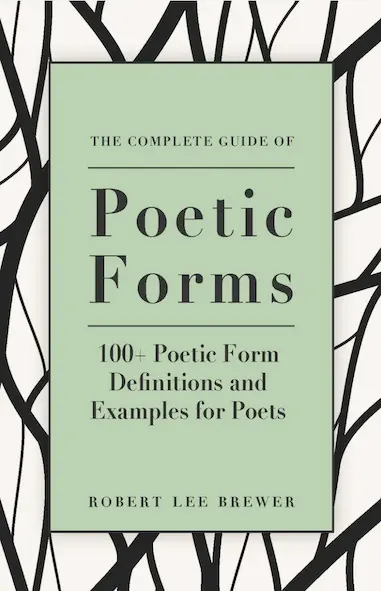
To assist writers navigating these daily demands, reference materials play a vital role. Works such as The Complete Guide of Poetic Forms—authored by prominent poetry advocates and educators—serve as essential toolkits for participants. Containing definitions, historical contexts, and exemplary models for more than 100 poetic forms (ranging from the traditional sonnet and villanelle to complex contemporary inventions), these resources provide the necessary scaffolding for poets seeking to channel raw inspiration into rigorous architectural shapes.
Poetic forms are frequently misunderstood by novices as restrictive cages; however, experienced practitioners view them as liberating frameworks. Form dictates length, rhyme scheme, meter, and stanzaic architecture, relieving the writer of infinite choices and allowing them to focus entirely on lyrical resonance and emotional truth.
Official Statements and Expert Perspectives
The evolution of the daily poetry challenge has drawn commentary from prominent figures in contemporary poetry advocacy, digital publishing, and community management.
On the Philosophy of Prompts
Robert Lee Brewer, a leading voice in online poetry communities and a persistent champion of accessible verse, frequently emphasizes the liberating nature of constraints:
"Prompts are never designed to box you in, nor are they tests of your compliance. Think of a prompt as a diving board: it gives you elevation, momentum, and a specific trajectory, but what you do in the air—whether you execute a clean swan dive or an unruly cannonball—is entirely up to your own creative impulse. On days like Tuesday, when we offer two distinct directions, the goal is to break open the possibilities rather than narrow them down."
This perspective reframes the daily writing prompt away from academic assignment and toward artistic provocation. It encourages writers to view accidental collisions between disparate ideas as fertile ground for poetic discovery.
On the Community Infrastructure
Digital publishing administrators note that the technical architecture surrounding these challenges has evolved to mirror the complexity of physical residency programs. The transition to streamlined, modern commenting systems—such as Disqus integrations that reduce administrative friction while maintaining community safety—has transformed isolated online posts into vibrant, international critique circles.
“Poetry has historically been a solitary act, practiced in quiet rooms by individuals staring into inkwells or glowing screens,” notes a senior digital programming coordinator for a major literary publication. “What these digital challenges achieve is the radical socialization of that solitude. You are writing alone in your room, yet you are acutely aware that thousands of other writers across multiple time zones are wrestling with the exact same prompt at the exact same hour. That shared vulnerability builds a profound sense of global literary solidarity.”
Future Outlook: The Digital Frontier of Verse
As online writing marathons continue to scale in participation and geographical diversity, several key trends point toward the future of digital poetry generation and community engagement.
Integration of Multimedia and Hybrid Forms
While traditional text-based poetry remains the bedrock of these challenges, future iterations are increasingly incorporating multimedia elements. Writers are beginning to experiment with audio recordings embedded directly into comment threads, visual poetry (combining typography with digital art), and collaborative cross-continental "exquisite corpse" projects enabled by real-time cloud collaboration tools. The "Frankenpoem" concept pioneered in prompt-based challenges is expanding from textual juxtaposition into multimodal experimentation.
Artificial Intelligence and Human Craft
The rapid ascent of generative artificial intelligence presents both a challenge and an opportunity for human-centric poetry initiatives. While algorithms can instantly generate verse conforming to complex metrical schemes, challenges that emphasize personal voice, lived experience, and raw emotional vulnerability highlight precisely what machine generation lacks: the messy, contingent reality of human consciousness. As AI saturates digital spaces with synthetic content, hyper-human communities centered around daily writing challenges are poised to experience a cultural renaissance, valued precisely for their authenticity, flaw, and peer-to-peer resonance.
Institutional Recognition of Digital Poetry Spaces
Historically, academic and institutional poetry circles regarded online challenges and blog-based writing prompts with a degree of skepticism, viewing them as populist or superficial exercises. However, as these digital ecosystems demonstrate consistent success in producing viable, award-winning manuscripts and fostering diverse new voices, institutional attitudes are shifting. University creative writing programs increasingly look to these digital incubators as models for cultivating sustained writing habits among students.
Conclusion: Beyond the Third Day
As the poetry community moves past Day Three and deeper into the month’s schedule, the initial hurdles of habit formation and prompt navigation give way to sustained creative momentum. Whether participants choose a single thematic track, double their output through dual drafts, or construct daring "Frankenpoems," the underlying mission remains unchanged: to honor the discipline of daily creation, to lean into the discomfort of the blank page, and to build an enduring literary architecture one line at a time. The crucible of the first seventy-two hours has been cleared; the vast, uncharted landscape of the remaining month now lies open before the writer’s pen.



Comments
Facebook App ID not configured. Please add it in the Customizer.