
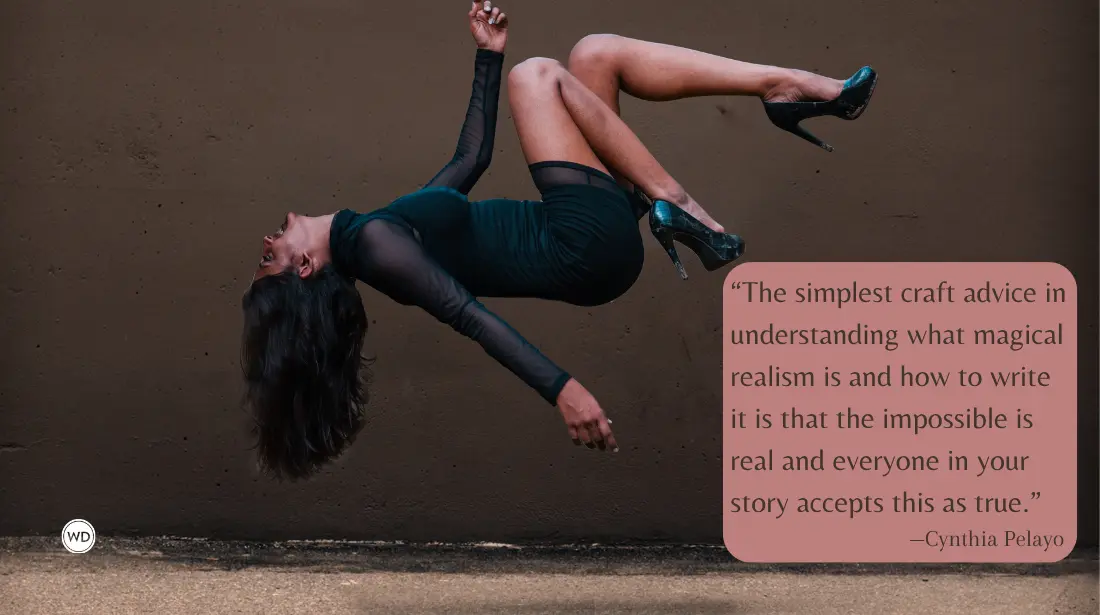
Executive Overview
For generations, authors dipping their quills into speculative fiction have made a fundamental miscalculation when approaching magical realism. Reaching instinctively for the world-building toolkits of high fantasy, they draft intricate magic systems, log exhaustive rules of metaphysics, and obsess over mechanisms of cause and effect. Yet, this approach fundamentally misunderstands the genre. In true magical realism, there are no rules to explain, no spellbooks to reference, and no arcane logic to decipher.
Instead, the impossible stands shoulder-to-shoulder with the utterly mundane, coexisting in a seamless, unbroken reality. When the dead return home, they are met not with the shrieks of horror common to supernatural thrillers, but with the quiet rattling of an extra dinner plate. When a neighbor ascends to the heavens mid-laundry folding, the response from the ground is remarkably pragmatic: a passing annoyance that she took the good bedsheets with her.
This comprehensive analysis explores the literary mechanics of magical realism, examining its historical roots under Cuban writer Alejo Carpentier, contrasting its ethos against traditional fantasy and horror, and offering writers a definitive framework for mastering the delicate balance between the phenomenal world and the impossible. By trading exposition for unyielding narrative faith, authors can capture the true texture of a universe where wonder is as ordinary as the morning sunrise.
Read Also
Detailed Chronology: The Evolution and Conceptualization of Lo Real Mar Avilloso
To master magical realism, one must trace its philosophical and literary origins away from the drawing rooms of European surrealism and into the rich, complex geography of the Americas.
The Birth of a Movement
In the mid-20th century, Cuban writer and musicologist Alejo Carpentier sought a critical vocabulary to describe the unique cultural, historical, and geographical landscape of Latin America. European surrealism, in Carpentier’s view, was a manufactured, highly intellectualized attempt to manufacture the marvelous through artifice and dream logic. By contrast, the marvelous in the Americas was not artifice; it was lived history.
Carpentier coined the term lo real maravilloso (the marvelous real) to encapsulate a worldview where the extraordinary is inextricably bound to daily existence. As Carpentier famously posited, the marvelous can be found at every turn in human history, geography, and unwavering faith. It lives densely in the texture of everyday life. This foundational philosophy shifts the writer’s perspective from invention to reporting. You are not manufacturing wonder; you are documenting a reality where wonder has always held a permanent lease.
Transitioning into Modern Literature
As the decades progressed, literary scholars began formalizing these mechanics. Critics like Wendy Faris identified the distinct features that separate magical realism from its literary cousins. The genre evolved past regional geographic boundaries to become a global mode of storytelling. Authors from Toni Morrison in the United States to Gabriel García Márquez in Colombia utilized the technique not merely for aesthetic flair, but as a vehicle for historical memory. When Morrison resurrects a murdered child in Beloved, she is demonstrating how national and personal trauma refuses to stay buried. The magic is memory rendered physically inescapable, forcing its presence onto the living page.
Supporting Context & Metrics: Fantasy, Horror, and the Anatomy of Belief
Understanding what magical realism is requires a rigorous examination of what it is not. Writers frequently trip over the boundaries separating magical realism from high fantasy, bizarro fiction, and horror.
[Traditional Fantasy]  --> Relies on Hesitation & Rules (e.g., Tolkien, Sanderson)
[Horror & Surrealism]  --> Relies on Disconcertion & Fear (e.g., Jackson)
[Magical Realism]      --> Relies on Total Acceptance & Mundanity (e.g., Morrison, García Márquez)
The Spectrum of Reader Response
Literary critic Amaryll Chanady highlights a vital distinction between the fantastic and magical realism: the supernatural in fantastic literature intentionally disconcerts. In a gothic horror novel like Shirley Jackson’s The Haunting of Hill House, the entire narrative engine runs on reader hesitation. Is the house actually haunted, or is the narrator descending into madness? The characters themselves doubt their senses, and the reader questions the fabric of reality.
In stark contrast, the supernatural in magical realism causes zero disorientation. It simply is. There is no hesitation, no psychological fracturing, and no debate.
- High Fantasy: Centers on world-building, explicit magic systems, and characters learning or battling rules.
- Horror/Surrealism: Centers on shock, fear, the uncanny, and the violation of natural laws.
- Magical Realism: Centers on absolute normalcy. The impossible occurs with the same nonchalance as a dog scratching its ear or coffee brewing on the stove.
The Strong Presence of the Phenomenal World
Scholar Wendy Faris coined the phrase "strong presence of the phenomenal world" to describe the anchor of magical realism. This is the "realism" half of the equation.
For the impossible to land with emotional resonance, the surrounding ordinary world must be rendered in hyper-specific sensory detail. The writer must lean heavily into the physical environment:
- The specific, buttery golds of a late-summer afternoon sun.
- The rich, bitter aroma of freshly ground coffee beans drifting down a hallway.
- The rhythmic, comforting patter of a golden retriever’s paws against hardwood floorboards.
When an oak tree suddenly sprouts in the middle of this meticulously rendered kitchen floor, the protagonist does not stop to wonder why or how. They simply step around it to reach the pantry, because in their world, spontaneous arboriculture indoors is just another Tuesday occurrence.
Official Perspectives: Rules for the Modern Practitioner
Translating these theories into actionable writing advice requires unlearning decades of conventional writing workshop dogma. Every instinct a modern author possesses is wired toward explanation, justification, and narrative hand-holding.
1. Drop the Magic System
Put down the exposition notes. Stop mapping out the thermodynamic rules of your incantations or the cost structures of your spells. When you explain the mechanics of the impossible, you instantly demote your story from magical realism to contemporary fantasy. The magic requires no preamble, no sparkling lights to announce its arrival, and no academic debate among characters.
2. Cultivate Unshakable Narrator Tone
The narrator must fully believe that the events they are reporting are entirely plausible and ordinary. Tone is everything. If the narrator sounds skeptical, shocked, or amused, the reader will immediately adopt that skepticism.
- Incorrect: "John gasped in absolute terror as his deceased grandfather materialized by the refrigerator, wondering if he was hallucinating."
- Correct: "Grandfather stood by the refrigerator, quietly peeling an orange, looking just as he had before the funeral three years ago. John handed him a paper towel for the peels."
3. Honor Inherited Realities and Memory
Magical realism frequently serves as a vessel for cultural heritage, trauma, and historical weight. As seen in the works of foundational practitioners, the impossible is often the manifestation of what society tries to suppress. To write magical realism effectively, you must write the impossible the way it feels to someone who genuinely believes in it. If your characters believe that spirits linger in the grease of cast-iron skillets, you must report that reality faithfully, without irony or condescension.
Future Outlook: The Resurgence of the Marvelous Real
As contemporary literature continues to push past rigid genre silos, magical realism remains one of the most powerful tools available to storytellers seeking to capture truths that raw realism cannot quite reach. Emotional truths, generational trauma, and cultural memory often slip through the cracks of standard journalistic or hyper-realistic fiction. By integrating the marvelous into the mundane, writers open up new dimensions of empathy.
Writers looking to hone this craft must abandon their safety nets of exposition. The future of the genre belongs to those brave enough to trust their readers, to ground their prose in the rich textures of the five senses, and to treat the impossible with the ultimate respect: total, unblinking acceptance.
When a dead family member knocks on your protagonist’s door tomorrow morning, remember the cardinal rule of the craft: do not check for pulse points or question the laws of physics. Simply open the door, pull out a chair, and invite them to dinner.
For readers looking to dive deeper into contemporary explorations of the strange, the familiar, and the uncanny, check out Cynthia Pelayo’s latest release, Something Followed Us Home.


Comments
Facebook App ID not configured. Please add it in the Customizer.