
Executive Overview
In an era dominated by hyper-niche subgenres, trending social media aesthetics, and the relentless commercial surge of romantasy, horror, and true-crime thrillers, choosing to write a traditional coming-of-age novel can feel like a radical act. When novelist Jane Hamilton published her critically acclaimed book The Phoebe Variations, a well-meaning friend exalted her work as "so brave." The compliment was rooted in the perception that opting for an old-fashioned narrative arc—one that tracks a young protagonist moving from childhood through the turbulent landscape of teenagehood into early adulthood—is swimming against the current of contemporary publishing trends.
Yet, this backhanded praise invites a deeper, more profound literary inquiry: Is the traditional coming-of-age novel truly anachronistic, or is it the very bedrock upon which all character-driven fiction is built?
This report explores the enduring psychological and structural power of the coming-of-age narrative. Drawing on literary theory, historical precedents, and contemporary insights from working authors, we examine why adolescence remains a writer’s ultimate testing ground. Furthermore, we investigate a transformative paradigm shift in how we view the genre’s conclusion: the realization that coming-of-age is never truly complete, and that the literary adolescent is, by design, forever unwhole.
Read Also
Detailed Chronology: The Evolution and Reception of The Phoebe Variations
The Genesis of a Modern Classic
Jane Hamilton spent decades tracing the liminal spaces of youth, charting the emotional topography of individuals transitioning from the absolute safety of childhood into the complex, often treacherous waters of maturity. When The Phoebe Variations hit bookshelves last year, it was received as a masterclass in domestic realism and character psychology.
However, the contemporary literary marketplace presented a stark contrast to the quiet introspection of Hamilton’s work. As the publishing industry experienced massive shifts driven by BookTok algorithms, cross-genre hybrids, and an insatiable appetite for high-concept speculative romance and dark suspense, writing a quiet, linear narrative about growing up was viewed through a distinct cultural lens.
The "Brave" Misconception
Upon hearing her friend praise the "bravery" of writing an old-fashioned novel in the current climate, Hamilton experienced a momentary crisis of purpose. Was she failing to adapt to the zeitgeist? Should she abandon her decades-long preoccupation with the teenage psyche to chase market-driven trends?
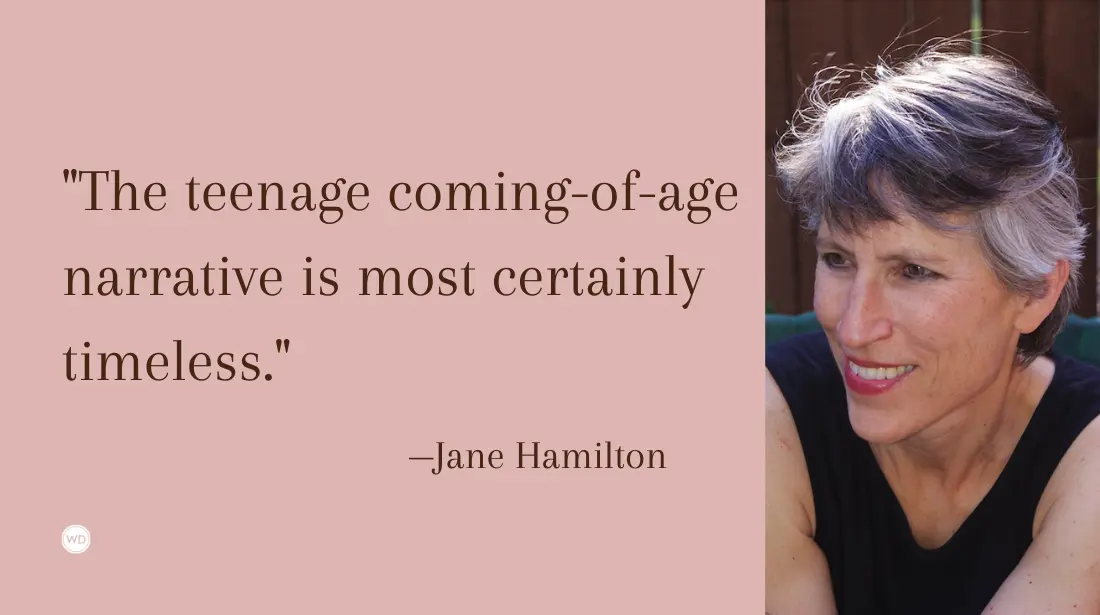
After a year of reflection, Hamilton reached a definitive conclusion: the teenage coming-of-age narrative is not merely relevant; it is timeless. The raw materials of adolescence—joys, profound confusions, paralyzing griefs, nascent power trips, and devastating vulnerabilities—provide an infinite, renewable resource for the novelist.
The Epiphany of Incompleteness
A pivotal moment in Hamilton’s re-evaluation of the genre occurred during a conversation with a fellow writer. Challenging the traditional tidy wrap-up of juvenile fiction, her colleague offered a radical thesis:
"Of course, the coming of age is never complete. Even though the character has come through to another phase of life at the end of the story or novel, that progression can never be complete. The character, always, is never whole."
This perspective shattered the conventional wisdom Hamilton had long held—that the ultimate goal of the genre was for a protagonist to emerge older, sadder, and wiser. Icons of the genre, from J.D. Salinger’s Holden Caulfield to Charles Dickens’ Pip in Great Expectations and Harper Lee’s Scout in To Kill a Mockingbird, suddenly revealed a deeper structural truth. They are characters defined precisely by their permanent state of fracture, carrying the weight of lost innocence into an uncertain future.
Supporting Context & Metrics: The Literary Landscape of Coming-of-Age Fiction
To understand why the coming-of-age genre—often categorized under the German term Bildungsroman—retains its grip on readers and writers alike, we must examine its structural mechanics and its position within the broader publishing ecosystem.
The Anatomy of Teenage Vulnerability
Adolescence is universally recognized by psychologists as a period of radical neurological and social restructuring. For a novelist, this biological and emotional instability is a goldmine. Unlike fully formed adult protagonists who may have rigid defense mechanisms, teenagers operate in a state of porous permeability. Every event carries existential weight; every betrayal feels catastrophic; every victory feels monumental.
| Narrative Element | Adult Fiction Dynamic | Coming-of-Age Fiction Dynamic |
|---|---|---|
| Worldview | Often established, cynical, or hardened | Formative, evolving, and highly impressionable |
| Conflict | External pressures, career, established relationships | Identity formation, familial separation, first betrayals |
| Resolution | Compromise, stabilization, or decline | Incomplete awakening, shedding of protective layers |
| Stakes | Situational or institutional | Foundational and ontological |
The Myth of the Complete Transformation
For generations, literary criticism taught that a successful Bildungsroman delivers a protagonist who successfully integrates into society by the final page. However, modern literary analysis aligns with Hamilton’s writer friend: true growth is recursive.
When a young character experiences a defining trauma or epiphany—when a layer of childhood innocence is irrevocably peeled away—they do not reach a destination. Instead, they acquire the agonizing awareness that there are infinite layers left to shed. Readers understand this intuitively. We do not look at Holden Caulfield or Scout Finch as "fixed" human beings; we see them as individuals standing precariously on the precipice of a lifelong journey of self-discovery.
Official Statements and Perspectives from Authors and Critics
Prominent voices in contemporary literature continue to weigh in on the enduring vitality of youth-focused narratives against the backdrop of shifting commercial trends.
- Jane Hamilton on the Imperative of Art: Reflecting on the philosophy of legendary author Willa Cather, Hamilton emphasizes that one of the highest callings of art is to recall and honor youth. Writing about teenagers navigating a hostile or wondrous world with their raw powers and vulnerabilities is, according to Hamilton, a profound privilege for any creator.
- Literary Critics on Market Shifts: Industry analysts note that while genres like romantasy and true crime dominate bestseller lists in terms of sheer velocity, literary fiction centered on emotional maturation commands long-term cultural longevity. These narratives address core human anxieties that transcend generational fads.
- The Universal Scope of "Coming-into-Age": Contemporary theorists argue that the coming-of-age framework is not strictly confined to teenagers. Every major life transition—entering a new career, establishing a household, contemplating retirement, or facing mortality—is essentially a variation of coming into a new age. Adolescence simply serves as the archetypal, high-stakes laboratory where these life patterns are first rehearsed.
Future Outlook: The Resiliency of the Bildungsroman in the 21st Century
As the publishing industry careens into an increasingly digital, fast-paced future, what lies ahead for the traditional coming-of-age novel?
1. A Counter-Trend to Algorithmic Writing
As AI-generated content and algorithmic trends threaten to homogenize fast-paced genres like thriller and romance, readers are expected to increasingly seek out the authentic, voice-driven introspection characteristic of literary coming-of-age tales. The messy, unresolved psychological depths of a young protagonist offer an antidote to predictable, formulaic plotting.
2. The Expansion of Diverse Perspectives
The future of the genre lies in its democratization. By expanding the lens of adolescence beyond the traditional Western archetype to encompass intersectional, global, and marginalized experiences, writers are breathing vibrant new life into the form. The core struggles of identity, belonging, and systemic friction remain universal, yet the specific cultural frameworks through which they are explored are richer than ever before.
3. Embracing the Unfinished Self
Ultimately, the longevity of the coming-of-age novel rests on its embrace of human incompleteness. By abandoning the illusion that a novel must tie up human development with a neat ribbon, authors like Jane Hamilton remind us that literature’s highest purpose is to mirror our ongoing, restless evolution. As long as human beings continue to grow, stumble, and look toward the horizon with a mixture of terror and hope, the coming-of-age story will remain literature’s most vital frontier.



Comments
Facebook App ID not configured. Please add it in the Customizer.