

In an era where the average youth spends between four and six hours daily consuming digital content, the ability to parse reality from fiction has become a cornerstone of civic engagement. As a landmark report from the School Library Journal bluntly notes, "Teens struggle to distinguish news from opinion and advertising, making intentional news and media literacy instruction a key part of preparing students for civic engagement."
This modern infodemic—fueled by algorithmic amplification, hyper-partisan echo chambers, and generative artificial intelligence—threatens to destabilize public discourse. Critical thinking, once viewed as an implicit byproduct of a traditional education, is now an urgent, intentional discipline. It requires radical skepticism, deep inquiry, and an active refusal to accept surface-level digital narratives as immutable truth.
To safeguard democratic institutions and prepare the next generation for meaningful civic participation, educators, parents, and communities must demystify the taxonomy of media manipulation. From misinformation to malicious deepfakes, understanding how information is distorted is the first line of defense. This report examines the evolution of news literacy, dissects the anatomy of deception, and highlights foundational educational resources—ranging from digital toolkits to impactful literature—designed to foster critical inquiry in young minds.
Read Also
Detailed Chronology: The Evolution of Media Manipulation and Information Control
While contemporary discussions often frame "fake news" as a product of the 2016 social media landscape, the manipulation of public perception through manufactured narratives is centuries old. Understanding the trajectory of misinformation reveals that human vulnerability to deception has remained constant, even as the delivery mechanisms have accelerated.
1. Historical Precedents: Hoaxes, Propaganda, and Revolution
- The American and French Revolutions (Late 18th Century): Strategic half-truths and sensationalized pamphlets were routinely weaponized to sway public opinion, undermine monarchies, and rally revolutionary troops.
- The 1934 Loch Ness Monster Phenomenon: In the wake of the Great Depression, a photograph published in London’s Daily Mail ignited a global sensation. Though eventually exposed as an elaborate hoax designed to boost tourism and newspaper circulation, it proved the enduring power of visual media to capture public imagination—a legacy that still sees one in four Scottish residents harboring belief in the monster today.
- The Cultural Revolution in China (1966–1976): State-sanctioned censorship restricted access to independent media, systematically eliminating dissenting viewpoints and utilizing propaganda to target intellectuals, suppress historical truths, and enforce ideological conformity.
2. The Digital Shift and the Acceleration of Falsehoods
- The Pre-Internet Era: Traditional conspiracy theories—such as the staged moon landing or vaccine hesitancy—spread primarily via print, word-of-mouth, or specialized broadcasting. Their velocity was inherently limited by physical distribution channels.
- The Social Media Boom (2000s–Present): The rise of platforms like X (formerly Twitter) shattered traditional gatekeeping. As research highlights, false and sensationalized stories travel up to six times faster than verified news reports on social networks. Algorithms optimized for user engagement prioritize outrage, emotional friction, and confirmation bias over factual accuracy.
- The Generative AI Era (Present): Today, synthetic media, deepfake photography, and AI-generated text blur the lines between reality and fabrication to an unprecedented degree, making intuitive lie-detection obsolete without the aid of specialized digital literacy tools.
Supporting Context & Metrics: The Anatomy of Modern Deception
To combat the information onslaught, educators must first establish a shared vocabulary. Media literacy frameworks categorize digital pollution into distinct, overlapping subsets:

- Misinformation: False or inaccurate information shared without malicious intent to deceive (e.g., an individual mistakenly repeating an outdated statistic).
- Disinformation: Deliberately fabricated or inaccurate information weaponized with the explicit intent to deceive. This frequently manifests as state-sponsored propaganda or coordinated influence operations.
- Mal-information: Information rooted in a kernel of truth but stripped of context, exaggerated, or manipulated to damage the reputation of an individual, organization, or nation.
- Fake News: Broadly defined as information designed to mislead, manipulate, or sow public doubt, often overlapping with clickbait, misinformation, and propaganda.
- Clickbait: Sensationalized, hyperbolic headlines engineered solely to drive web traffic and advertising revenue.
- Propaganda: Information purposefully engineered to manipulate public opinion, suppress dissenting viewpoints, and advance a specific political or ideological agenda.
Key Metrics on Youth Consumption
- Screen Time: Youth spend an average of 4 to 6 hours a day online, exposing them to an unvetted stream of sponsored content, opinion pieces masquerading as objective reporting, and algorithmic feeds.
- The Speed Factor: False narratives achieve digital velocity at exponential rates; studies demonstrate that unverified claims circulate on social channels six times faster than rigorously checked journalism.
- The Credibility Gap: A staggering majority of adolescents cannot effectively differentiate between a sponsored native advertisement, an opinion editorial, and a hard-news investigative piece.
Official Guidelines and Fact-Checking Frameworks
Empowering youth requires shifting from passive consumption to active interrogation. Leading media watchdogs and educational organizations recommend a systematic approach to evaluating sources.
Common Sense Media’s Core Inquiry Questions
When encountering a new article, video, or social media post, young readers should pause and ask:
- Who created this content, and what is their motivation?
- What evidence supports these claims, and where does it come from?
- What perspectives, voices, or communities are noticeably missing from the narrative?
- How does this piece make me feel? (Emotional manipulation is a primary indicator of bias or misinformation.)
Essential Free Fact-Checking Tools for Students and Educators
To independently verify claims, educators recommend integrating these platforms into classroom curricula:

- FactCheck.org: A nonpartisan project monitoring the factual accuracy of claims made by major U.S. political players.
- Google Fact Check Explorer: A powerful aggregator allowing users to search specific claims and see evaluations by certified fact-checkers worldwide.
- Rumor Guard: An intuitive tool designed to help everyday media consumers evaluate viral claims, photos, and videos.
- Snopes: The oldest and largest online fact-checking resource, specializing in urban legends, viral internet rumors, and political misstatements.
Interactive Media Literacy Games
Gamification has proven to be one of the most effective strategies for inoculating students against manipulation by teaching them how bad actors operate from the inside out:

- iCivics Education: NewsFeed Defenders (places students in the role of a news site moderator balancing traffic, truth, and credibility).
- Rand.org: Factitious (challenges players to determine whether real-world articles are legitimate journalism or fabricated content).
- MediaSmarts: Reality Check (an interactive experience testing digital tracking and source evaluation).
- Get Bad News: Bad News Game (allows players to step into the shoes of a fake news purveyor to understand how disinformation spreads).
- Harmony Square: (focuses on how local misinformation campaigns are engineered to cause social friction).
- Spot the Troll: (an interactive quiz by Clemson University teaching users to identify fake social media profiles).
Future Outlook: Literature, Empathy, and the Path Forward
As synthetic media and algorithmic sorting continue to evolve, the defense against misinformation cannot rely on technology alone; it requires nurturing empathy, historical awareness, and rigorous intellectual curiosity. Children’s and young adult literature play a vital role in this educational mission, addressing themes of censorship, representation, and the historical cost of unchecked power.

Recommended Reading for Media Literacy and Critical Thinking
-
For Early Readers (Ages 4+):

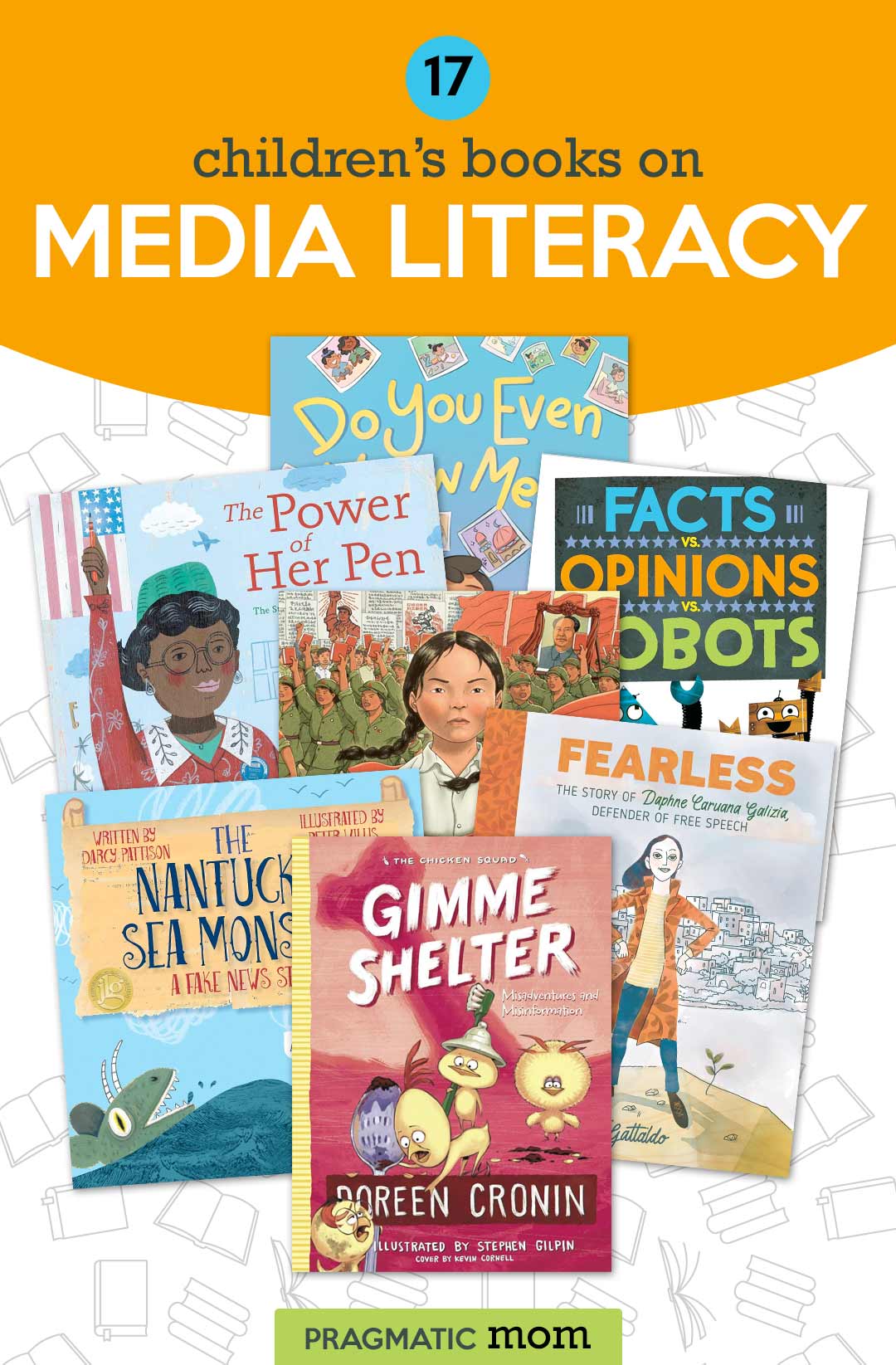
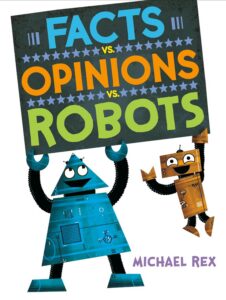
- Do You Even Know Me? by Reem Faruqi: Explores how televised media stereotypes can bleed into peer-to-peer bullying, and the importance of personal storytelling in dismantling prejudice.
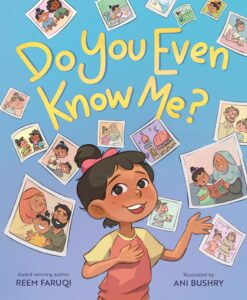
- The Power of Her Pen: The Story of Groundbreaking Journalist Ethel L. Payne by Lesa Cline-Ransome: Highlights the crucial role of the Black Press in uncovering stories ignored by mainstream media.
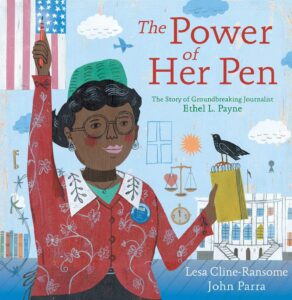
- Facts vs. Opinions vs. Robots by Michael Rex: A lighthearted, foundational guide helping young children separate objective truth from subjective belief.
-
For Middle-Grade Readers (Ages 7–10):
- Growing Up Under a Red Flag by Ying Chang Compestine: A memoir examining how information restriction and state-controlled media shape childhood under authoritarian regimes.
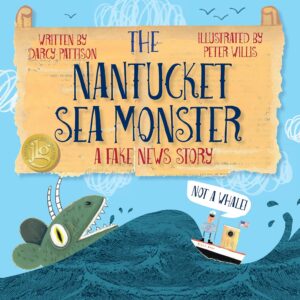
- The Nantucket Sea Monster: A Fake News Story by Darcy Pattison: A historical look at a 1937 publicity stunt that exposes how sensationalized hoaxes generate commercial gain.
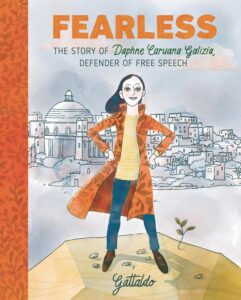
- Fearless: The Story of Daphne Caruana Galizia by Gattaldo: A biography of a slain investigative journalist in Malta who utilized independent blogging to fight government corruption and misinformation.
- Killer Underwear Invasion! by Elise Gravel: A graphic novel breaking down cognitive biases, confirmation bias, and conspiracy theories with humor.
- Paul Bunyan: The Invention of the American Legend by Noah Van Sciver: Investigates how early 20th-century corporate advertising manufactured folklore to mask ecological destruction and displacement of Indigenous peoples.
- The Newspaper Club by Beth Vrabel: Encourages local journalism by following kids who launch their own town paper to uncover community corruption.
-
For Advanced Readers (Ages 9–11+):
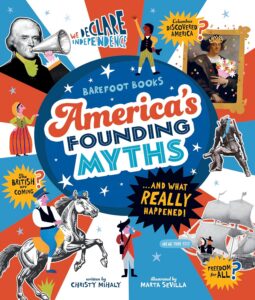
- America’s Founding Myths… And What Really Happened by Christy Mihaly: Examines foundational national narratives and the historical omissions that sustain them.
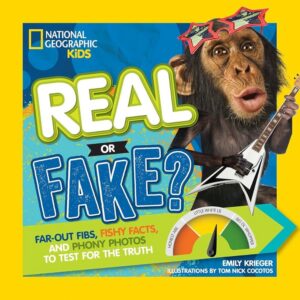
- Real or Fake? series by Emily Krieger: Tests readers’ lie-detection skills against sophisticated photo manipulations and urban legends.
- What Are Conspiracy Theories? by Margaret J. Goldstein: A resource teaching young researchers how to investigate and debunk viral conspiracy theories.
- Can You Believe It?: How to Spot Fake News and Find the Facts by Joyce Grant: Explores systemic media gaps and why certain marginalized communities are chronically underrepresented in reporting.
- World Made of Glass by Ami Polonsky: Set during the 1980s AIDS epidemic, this middle-grade novel tackles how media neglect and marginalization fuel public panic and medical misinformation.
- Loch Ness Uncovered by Rebecca Siegel: A deep dive into the history of fake news, tracing sensationalized hoaxes from the American and French Revolutions to modern viral media.
- Breaking the News by Robin Terry Brown: A comprehensive manual examining the mechanics of photo fakery, half-truths, and the rapid velocity of misinformation on social platforms.
- Attack of the Black Triangles by Amy Sarig King: A timely middle-grade novel addressing censorship, book banning, and the courage required to stand up for intellectual freedom.
Conclusion
Media literacy is no longer an optional elective or an isolated library skill; it is an essential survival mechanism for the 21st-century citizen. By combining rigorous digital toolkits, interactive educational gaming, and critically engaged literature, parents and educators can empower students to pierce through the noise of the digital age. In doing so, we cultivate a society defined not by gullibility and division, but by rigorous inquiry, empathy, and an unwavering commitment to truth.

Comments
Facebook App ID not configured. Please add it in the Customizer.