
Executive Overview
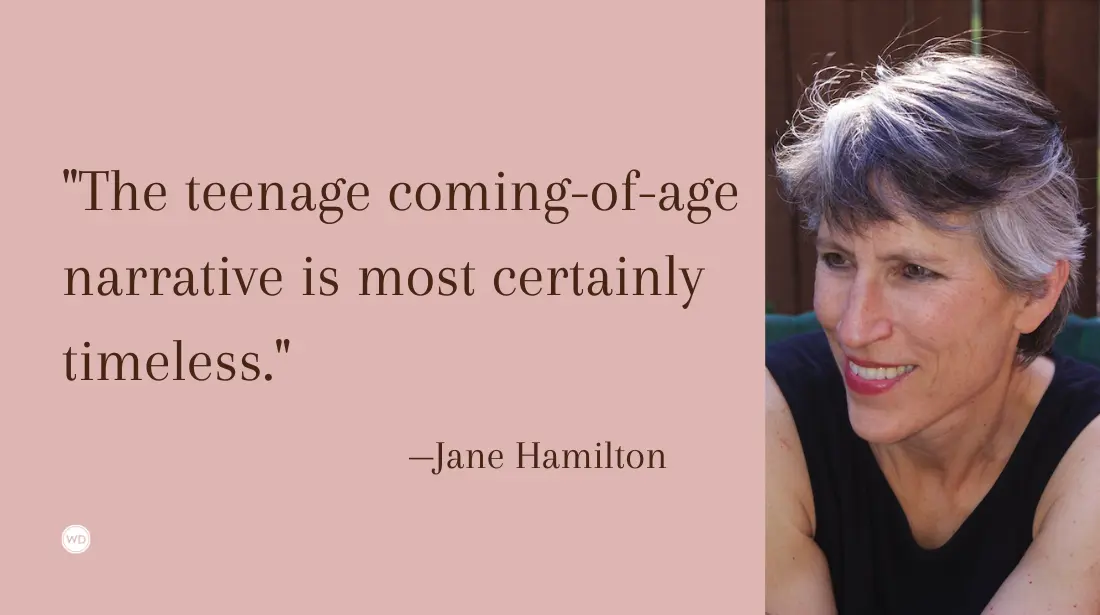
In an era dominated by hyper-niche subgenres, algorithmic publishing trends, and an insatiable public appetite for true crime, horror, and romantasy, writing a traditional coming-of-age novel might seem, to some, like an act of quiet defiance. When author Jane Hamilton published her novel The Phoebe Variations, a well-meaning friend exalted, “Jane! Your novel is so brave.” When Hamilton bewilderedly noted that it was merely an old-fashioned coming-of-age story, the friend doubled down: “That’s what I mean! It’s so brave to write an old-fashioned novel in these times when everyone is writing horror and romantasy and true crime and—whatever else is out there right now.”
This backhanded compliment sparked a year-long introspection for Hamilton, forcing her to confront the shifting tides of the contemporary literary marketplace and the persistent cultural anxiety that traditional narrative forms are somehow out of step with modern readers. Yet, as literary history proves—and as contemporary authors continue to discover—the transition from childhood through the turbulent waters of adolescence to the threshold of adulthood is not a dated trope. It is the very engine of human empathy and narrative friction.
This comprehensive report explores the enduring resonance of the teenage coming-of-age narrative. By examining the anatomy of adolescent fiction, the illusion of literary completion, the psychological underpinnings of the genre, and its vital place in the modern publishing ecosystem, we unpack why the chronicle of youth remains the most vital, evergreen territory in literature.
Read Also
Detailed Chronology: From the Backhanded Compliment to the Philosophy of Wholeness
The Inciting Incident: The Modern Definition of "Brave"
The conversation between Hamilton and her peer highlights a profound cultural shift in how creative work is perceived. In a marketplace driven by high-concept hooks, cross-genre hybrids, and intense emotional escapism (such as romantasy), traditional literary fiction focusing on domestic realism and psychological growth is frequently mischaracterized as quaint or nostalgic.
For decades, Hamilton has returned to a singular preoccupation: that vital, unstable stage in which a person moves from the cocoon of childhood, through the minefield of teenage-hood, into the compromises of adulthood. Her friend’s comment—framed as praise for swimming against the cultural current—planted a seed of doubt: Should she pivot? Should she abandon the emotional architecture she knows best to chase contemporary genre trends?
The Revelation of Incompleteness
After months of ruminating on her friend’s remark, Hamilton arrived at a liberating conclusion: the teenage coming-of-age narrative is timeless precisely because the human condition itself is never resolved.
This epiphany was deepened during a recent discussion with a fellow writer, who offered a paradigm-shifting perspective on character arcs: "Of course, the coming of age is never complete. Even though the character has come through to another phase of life at the end of the story or novel, that progression can never be complete. The character, always, is never whole."
For generations, writers and critics have subscribed to a tidy, formulaic view of the coming-of-age novel: the protagonist journeys through hardship, emerges on the other side older, sadder, and wiser, and steps into a cohesive adult identity. We see this classic model embodied in literary icons:
- Holden Caulfield in J.D. Salinger’s The Catcher in the Rye—a boy perpetually trapped between the desire to protect innocence and the terrifying reality of the adult world, forever incomplete and acutely vulnerable.
- Pip in Charles Dickens’s Great Expectations—whose journey from a blacksmith’s apprentice to a disillusioned gentleman reveals that true maturity comes not from social elevation, but from the painful acceptance of moral complexity.
- Scout Finch in Harper Lee’s To Kill a Mockingbird—whose loss of childhood naivety exposes her to the systemic injustices of her community, leaving her fundamentally altered yet still searching for understanding.
The realization that these iconic characters—and by extension, all human beings—are never truly "whole" transforms how we read and write the genre. The coming-of-age novel does not chart the journey from brokenness to absolute wholeness; rather, it chronicles the peeling away of initial layers of innocence, leaving the protagonist to carry the weight of the knowledge that countless more layers await the razor.
Supporting Context & Metrics: The Literary Landscape of Youth
To understand why the coming-of-age novel retains its chokehold on the collective literary imagination, we must examine the intersection of reader psychology, publishing data, and historical literary theory.
The Psychology of Adolescent Vulnerability
Why do writers find the teenage psyche to be fertile ground? The answer lies in the intense emotional bandwidth of adolescence. During these formative years, the stakes of every interaction are existential. Confusions, griefs, power trips, vulnerabilities, and rapturous joys occur with a cinematic intensity that adult lives rarely replicate.
From a cognitive perspective, teenagers exist in a liminal space where the protective mechanisms of adulthood have not yet fully formed. This raw exposure makes them ideal narrative vehicles. When a teenage character confronts betrayal, first love, systemic inequality, or mortality, their reactions are unfiltered. For readers—regardless of their chronological age—witnessing this raw confrontation acts as a mirror to their own unresolved histories.
The Genre Shift in Contemporary Publishing
While publishing metrics show massive commercial surges in genres like romantasy and psychological thrillers, literary fiction centered on internal growth continues to anchor the bedrock of critical acclaim.
| Literary Era / Focus | Primary Emotional Driver | Iconic Protagonists | Reader Reception |
|---|---|---|---|
| Mid-20th Century Realism | Social alienation, moral awakening | Holden Caulfield, Scout Finch | Critical cornerstones; evergreen educational staples |
| Late 20th Century Memoir & Fiction | Identity formation, familial friction | Pip (Great Expectations), various domestic protagonists | Sustained literary longevity across demographics |
| Contemporary Literary Landscape | Intersectionality, emotional resilience, shifting innocence | Phoebe (The Phoebe Variations) | Cherished for psychological depth amidst genre noise |
As industry data demonstrates, while readers may turn to high-concept genres for immediate escapism, they return to coming-of-age narratives for emotional truth. The desire to understand how we became who we are is a universal, non-perishable human drive.
Official Perspectives & Literary Philosophy
The Universal Nature of Coming-of-Age
It is a common misnomer to confine the coming-of-age genre exclusively to teenagers. As literary theorists often note, every subsequent stage of life is, in its own way, a coming-into-age. Whether an individual is establishing a household, embarking on a mid-life career pivot, planning for retirement, or standing face-to-face with mortality, the human journey is characterized by repeated cycles of shedding old identities and stepping into the unknown.
The teenage novel is simply the archetype—the concentrated, high-voltage prototype of this lifelong metamorphosis. By mastering the dynamics of the adolescent transition, a writer builds the structural toolkit necessary to examine human transformation at any stage of life.
Willha Cather’s Eternal Rule
The legendary American author Willha Cather famously believed that one of the absolute highest purposes of art was to recall youth. Cather understood that the memories, passions, and sensory snapshots of our early years hold a vibrational frequency that defines our artistic output for the rest of our lives.
When a writer has the privilege of crafting characters who are teenagers—standing on the precipice of the world armed with their raw powers, their fragile beauty, and their nascent understanding of the systemic forces opposing them—they are engaging in an act of profound preservation. Writing youth is not a retreat into sentimentality; it is an active investigation into the genesis of the human soul.
Future Outlook: The Everlasting Relevance of the Coming-of-Age Novel
As we look toward the future of the literary arts, anxieties regarding the death of traditional forms in the face of fast-paced digital media and algorithmically generated content frequently surface. Yet, the coming-of-age novel remains remarkably resilient.
Why the Genre Will Outlive Trends
- Algorithmic Limitations: While algorithms can easily predict reader preferences for specific tropes in romance or suspense, they cannot replicate the nuanced, unpredictable architecture of genuine human maturation. The messy, non-linear progression of a young mind discovering its place in the world resists formulaic optimization.
- Generational Renewal: Every single year, a new cohort of readers arrives at the exact emotional threshold where they must grapple with identity, independence, and loss. For these readers, coming-of-age novels are not just entertainment; they are survival manuals.
- The Infinite Depth of "Incompleteness": Because, as writers like Jane Hamilton and her peers have realized, characters (and people) are never truly whole, the well of narrative tension will never run dry. There is always another layer of innocence to shed, another paradox of adulthood to navigate, and another version of the self to leave behind.
Conclusion: Embracing the "Brave" Choice
To write a traditional, old-fashioned coming-of-age novel in a hyper-trend-driven world is not an act of timid retreat—it is a reclamation of literature’s core mission. It is an acknowledgment that beneath the pyrotechnics of genre fiction, what readers ultimately crave is the quiet, devastating, and beautiful truth of what it means to grow up, to fall short, and to keep walking into an uncertain world with eyes wide open.
Jane Hamilton’s The Phoebe Variations stands as a testament to this enduring truth. By resisting the urge to chase fleeting market fads and instead leaning into the timeless exploration of youthful awakening, Hamilton reminds us that the most radical thing an author can do is to tell the oldest, truest story in the world.




Comments
Facebook App ID not configured. Please add it in the Customizer.