
Executive Overview
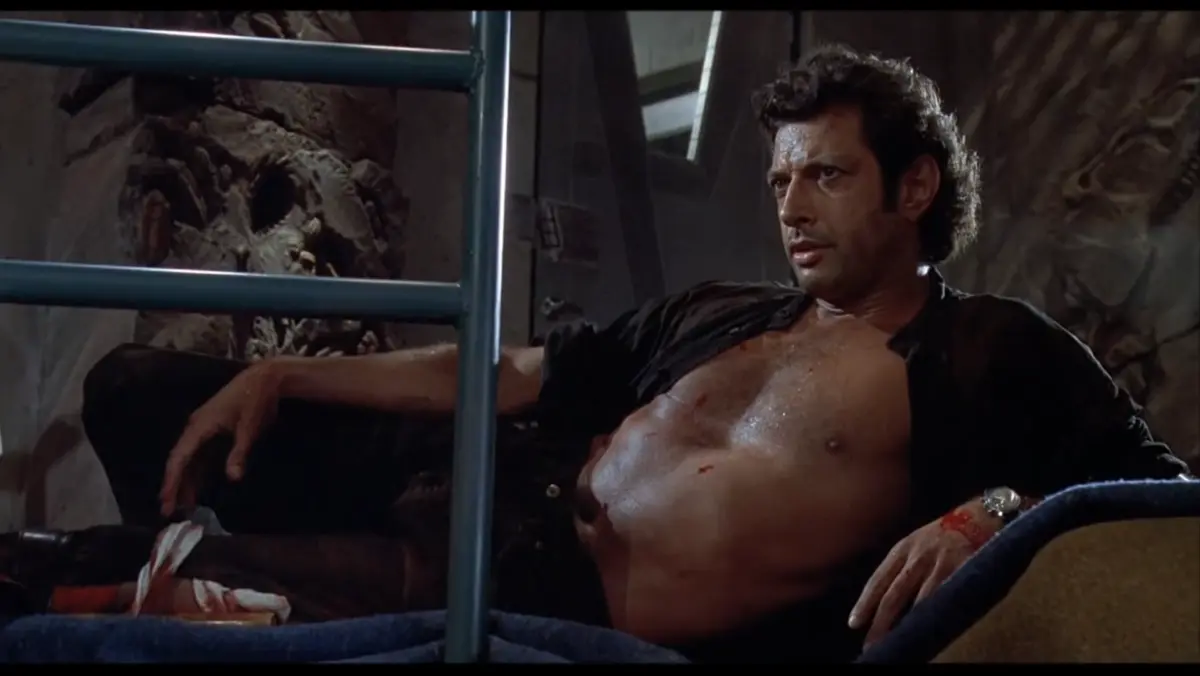
For over three decades, the annals of lost pop-culture media have held a legendary, phantom entry that has taunted animation aficionados and dinosaur enthusiasts alike: Escape from Jurassic Park. Long whispered about on collector forums, referenced in convention panels, and hinted at through sporadic leaks of concept art, the existence of a planned 1990s animated series based on Steven Spielberg’s cinematic masterpiece was treated almost as urban legend.
That veil of mystery was recently pierced when a long-sought promotional trailer for the unproduced series surfaced online via the archival YouTube channel Jurassic Outpost. Assembled in 1993 by renowned paleontological artist William Stout and the production team at Universal Cartoon Studios, the newly accessible footage offers a tantalizing glimpse into a parallel universe where the prehistoric park invaded Saturday morning—and primetime—television.
Far from being a simplistic, cash-grab cartoon designed merely to sell plastic action figures to children, Escape from Jurassic Park was conceived as an ambitious, serialized narrative adventure. Drawing inspiration not only from the massive cultural footprint of the 1993 blockbuster film but also from the complex, darker narrative threads found in Michael Crichton’s source material and its eventual sequel, The Lost World, the series aimed to bridge family-friendly entertainment with mature, sophisticated storytelling.
Read Also
Yet, despite an impressive early development phase, striking technical experimentation, and a fully realized series outline for its inaugural season, the project was quietly shelved before it ever entered full production. This retrospective investigates the origins, narrative scope, creative ambitions, and ultimate demise of Escape from Jurassic Park, illuminating one of the most fascinating "what-ifs" in animation and cinematic history.
Detailed Chronology
1993: The Prehistoric Phenomenon and the Birth of an Adaptation
By the summer of 1993, Jurassic Park was not merely a blockbuster; it was a cultural monolith. Redefining the boundaries of computer-generated imagery (CGI) and practical animatronics, Steven Spielberg’s adaptation of Michael Crichton’s novel captivated global audiences and shattered box office records. In an era when major feature films routinely spun off into syndicated or network animated series—ranging from Batman: The Animated Series to The Real Ghostbusters—Universal Pictures recognized the immense potential of translating its newly minted crown jewel into an ongoing television format.
Universal Cartoon Studios was tasked with bringing the franchise to the small screen. To ensure scientific and artistic credibility, the studio enlisted William Stout, an acclaimed illustrator widely celebrated for his groundbreaking paleontological art. Stout was brought on board to conceptualize the visual landscape, designing the characters, environments, and, most importantly, the dinosaurs that would populate the animated series.
Development and the Spielberg Roadblock
Throughout 1993 and into 1994, Stout and the Universal Cartoon Studios team worked tirelessly. They established a sophisticated aesthetic, mapped out complex character arcs, and constructed a multi-episode story arc for the show’s first season. To secure greenlight approval, the creative team produced a promotional and pitch trailer—a technical and artistic showcase intended to be presented directly to Steven Spielberg.
However, the critical juncture of the pitch never arrived. According to accounts shared by Stout during convention appearances, including a notable panel at the 2021 San Diego Comic-Special Edition, Spielberg never actually viewed the trailer. By the time the pitch was ready for his desk, the director had reportedly grown fatigued by the overwhelming commercialization, merchandising blitz, and relentless marketing campaigns tied to the original film. Having lived and breathed dinosaurs for years during production and post-production, Spielberg allegedly declined to pursue or authorize further expansion of the Jurassic Park intellectual property into television at that time.
Other industry accounts suggest that parallel behind-the-scenes discussions regarding a theatrical sequel (The Lost World: Jurassic Park, released in 1997) may have also contributed to the studio’s hesitation, as Universal sought to protect the cinematic integrity and exclusivity of the brand. Regardless of the exact internal calculus, the project was abruptly grounded, the promotional materials were packed away, and Escape from Jurassic Park joined the pantheon of unproduced media.
The Decades-Long Hibernation and Recent Resurgence
Following its cancellation, the animated series faded into obscurity. For years, the only evidence of its existence consisted of scattered fragments: a piece of character art here, a leaked script outline there. The promotional trailer itself became a holy grail for collectors, residing within private archives and protected by strict copyright and legal anxieties.
This status quo shifted when Jurassic Outpost secured access to the vintage reel and published it online. The resulting digital footprint immediately reignited discourse across the internet, transforming a decades-old piece of corporate history into viral entertainment and providing modern fans with their first moving-image proof of the ambitious project.
Supporting Context & Metrics: Animation, Ambition, and Scale
To understand why Escape from Jurassic Park continues to captivate modern audiences, one must examine the production landscape of early-1990s television animation. The era was defined by a tectonic shift: traditional, flat hand-drawn cells were increasingly rubbing shoulders with nascent digital tools.
Technical Innovation: Marrying Hand-Drawn and CG Animation
The newly surfaced trailer reveals a striking technical approach that mirrors the philosophy of the film that inspired it. While the original 1993 feature film famously utilized a groundbreaking hybrid of Stan Winston’s practical animatronics and Industrial Light & Magic’s revolutionary CGI (totaling roughly 14 minutes of dinosaur screen time), the animated series attempted a similar conceptual marriage.
The promotional reel demonstrates a sophisticated blend of traditional hand-drawn 2D animation and early computer-generated imagery. In 1993, integrating CG elements into a standard television animation pipeline was both computationally expensive and technically demanding. Yet, Stout and the Universal team experimented with these techniques to give the prehistoric creatures a sense of weight, volume, and kinetic energy that standard 2D cels often struggled to convey. This stylistic choice honored the cinematic DNA of Spielberg’s work, bridging the gap between classic Saturday morning cartoons and the burgeoning digital age.
Narrative Ambition: A Primetime sensibility
While many 90s cartoon adaptations watered down their source material for younger demographics, Escape from Jurassic Park aimed higher. Proposed season-one story outlines reveal a narrative complexity that targeted an older, more mature family demographic—potentially occupying a primetime or evening syndication slot.
The narrative framework bypassed simple monster-of-the-week tropes in favor of serialized, high-stakes storytelling. Key plot elements prefigured concepts later explored in Crichton’s literary sequel and Universal’s subsequent film franchise. Notably, the series plot involved BioSyn—InGen’s corporate rival—stealing dinosaur eggs to establish a competing prehistoric resort. This corporate espionage and bioethical intrigue signaled that the show’s writers trusted their audience to engage with gray-area morality, corporate greed, and ecological themes.
Official Statements and Archival Insights
The resurrection of Escape from Jurassic Park has been accompanied by valuable retrospective commentary from key figures involved in its creation, most notably artist William Stout.
William Stout on the Vision and Demise
During his panel appearances and interviews facilitated by outlets like Jurassic Outpost, Stout has provided candid insights into the collaborative atmosphere at Universal Cartoon Studios during the early 1990s. Reflecting on the design process, Stout emphasized the freedom the team initially felt to expand the paleontological accuracy and emotional depth of the characters.
On the subject of the show’s cancellation, Stout’s recollections highlight the unpredictable nature of executive decision-making in Hollywood. His observation that Spielberg "never watched the trailer" due to franchise fatigue underscores how timing and psychological burnout at the top of a studio can alter the trajectory of multi-million-dollar intellectual properties.
The Collectors’ Dilemma
The journey of the trailer from a private collector’s vault to public visibility also highlights the fragile nature of animation preservation. For years, holders of the archival VHS and beta tapes containing the pitch reel guarded them closely. Legal concerns surrounding intellectual property rights enforced by NBCUniversal created a chilling effect, keeping the media locked away. The eventual digital release by dedicated archivist networks marks a watershed moment for historical media preservation, ensuring that a lost chapter of Universal’s animation history is documented rather than left to disintegrate in private baselines.
Future Outlook: Legacy and Cultural Impact
What does the digital unearthing of Escape from Jurassic Park mean for the franchise moving forward? While an official revival of this specific 1993 production remains an impossibility—given the evolution of animation standards and corporate continuity—the rediscovery holds profound implications for how studios view archival curation and fan engagement.
The Appetite for Alternate Histories
In an era dominated by multiverse storytelling, reboots, and archival deep-dives, fans increasingly crave transparency regarding what could have been. The enthusiastic public reception of the Escape from Jurassic Park trailer demonstrates a robust, monetizable appetite for historical media retrospectives. Fans today are just as interested in the corporate archaeology of their favorite franchises as they are in new content.
Modern Successors and the Animation Renaissance
It is worth noting that while Escape from Jurassic Park never materialized, the franchise eventually found a home in serialized television animation decades later with properties like Jurassic World Camp Cretaceous and its successor Jurassic World: Chaos Theory. However, these modern Netflix series utilize fully rendered 3D CGI pipelines tailored to contemporary streaming audiences.
The 1993 William Stout trailer stands as a monument to a lost artistic era—a time when hand-drawn storyboards and experimental digital hybrids represented the bleeding edge of television production. As digital archivists continue to unearth and restore lost media, Escape from Jurassic Park will be remembered not merely as a canceled cartoon, but as a fascinating artistic bridge between the analog past and the digital future of dinosaur entertainment.


Comments
Facebook App ID not configured. Please add it in the Customizer.