
Executive Overview
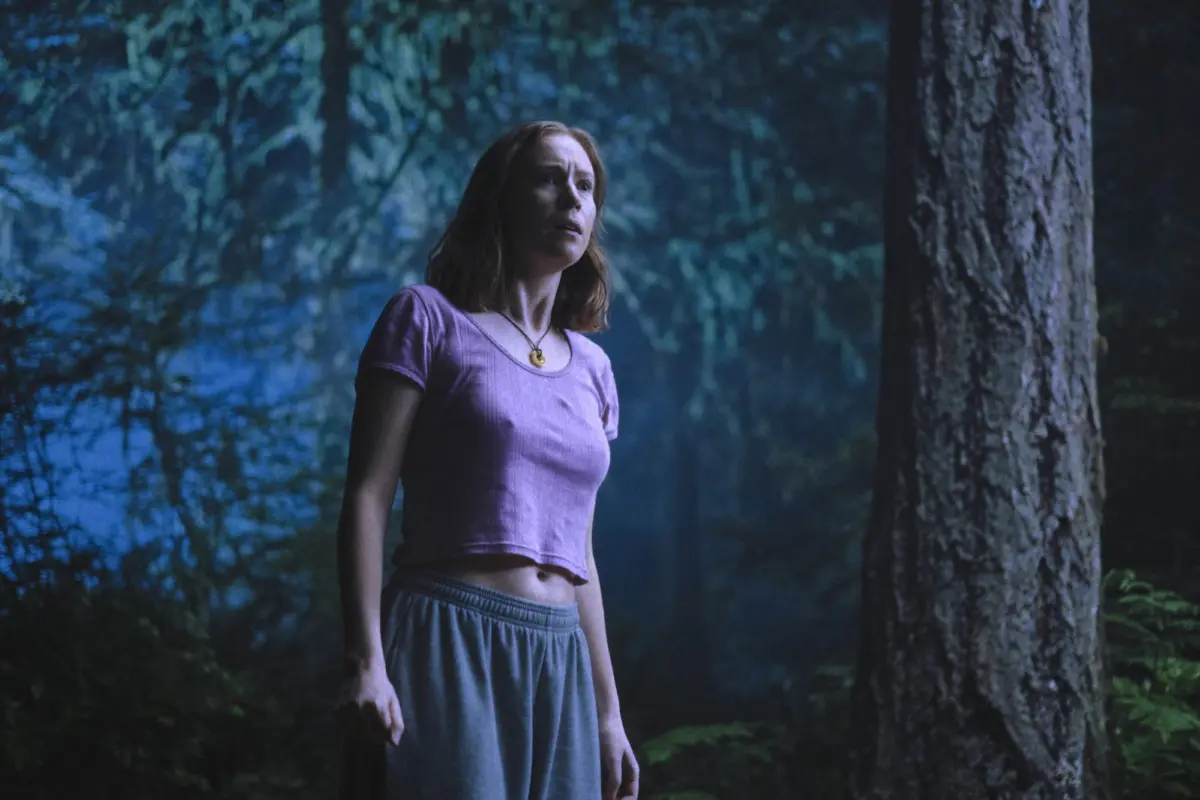
In the contemporary landscape of intellectual property (IP) exploitation, Hollywood’s fixation on legacy horror franchises has achieved a level of self-awareness that frequently mimics satire. This meta-textual feedback loop is captured with laser-focused precision in Jane Schoenbrun’s Teenage Sex and Death at Camp Miasma, a film that serves as the concluding chapter of their cinematic trilogy exploring pop culture and fandom.
The fictional Camp Miasma franchise draws heavily from the DNA of slasher mainstays like Friday the 13th and Sleepaway Camp. Through an extensive credits montage, Schoenbrun tracks the property’s trajectory from a gritty, low-budget summer camp exploitation flick into a bloated, multimedia empire in terminal decline.
Enter Kris, a queer independent filmmaker hired to helm a modern reboot. Kris is intimately familiar with the franchise’s problematic foundations—a legacy she is uniquely qualified to dissect, having previously earned critical acclaim for a pretentious yet radical debut feature described as Psycho shot entirely from the perspective of the shower curtain. The studio’s directive is clear: scrub away the dated, offensive tropes, polish the rough edges, and package the IP into a palatable, prestige-adjacent commodity for contemporary audiences. Kris acknowledges the inherent cynicism of the assignment, yet she harbors a naive hope that her singular artistic vision will pierce the corporate armor.
Read Also
Coincidentally, the real-world television landscape delivered an uncanny parallel to Kris’s fictional plight with the rollout of Peacock’s Friday the 13th prequel series, Crystal Lake. The rollout of this long-awaited franchise expansion proved that Schoenbrun’s commentary on how the "Hollywood franchise sausage gets made" is startlingly accurate. By examining the structural realities of Crystal Lake alongside the narrative thematic beats of Schoenbrun’s fictional trilogy, we uncover a broader industry truth: when major studios enlist auteur indie directors to revitalize dormant slasher icons, the resulting product is almost invariably neutralized, engineered to satisfy nostalgic consumer expectations while defanging the chaotic, transgressive id that made the originals enduring in the first place.
Detailed Chronology: From Grindhouse Roots to the Boardroom
To understand the friction between modern IP management and authentic horror filmmaking, one must trace the evolutionary timeline of the slasher subgenre. The late 1970s and early 1980s established a rigid taxonomy of tropes. These foundational texts relied on a combustible mixture of adolescent anxiety, puritanical morality, and hyper-stylized violence. Modern revivals are invariably trapped in a double bind: they are expected to pay reverent homage to these classic blueprints while simultaneously laundering their more culturally offensive or politically incorrect elements.
The Problematic Blueprint of the Slasher Antagonist
In the world of Teenage Sex and Death at Camp Miasma, this creative tension centers on the origin story of the series’ iconic villain, "Little Death." Played by nonbinary actor Jack Haven, Little Death was originally raised as both a boy and a girl before being brutally murdered by campers at the titular retreat. The character subsequently rises from the lake to enact multogenerational vengeance. The narrative mirrors the infamous twist of Sleepaway Camp, wherein the killer’s identity and motivations are inextricably linked to queer and trans trauma, weaponized for shock value by 20th-century screenwriters.

Kris’s task as a queer filmmaker is to reimagine this transphobic origin story without alienating the legacy fanbase or triggering institutional blowback. The studio demands a middle ground: dial down the overt bigotry, inject a trendy dose of "elevated horror" angst, and wrap the package in a veneer of trauma-informed storytelling.
This dynamic is mirrored directly in Peacock’s Crystal Lake. As a prequel to the Friday the 13th continuity, showrunner Brad Caleb Kane faced the monumental challenge of humanizing Pamela Voorhees while metabolizing the ableist subtext attached to Jason Voorhees. In the official lore, Jason’s villainy is explicitly anchored to his congenital condition: Hydrocephalus, a rare medical anomaly causing cranial deformation, seizures, and chronic pain.
While Crystal Lake succeeds in painting a sympathetic portrait of a young Jason before his apparent drowning, the series ultimately hits a narrative wall. The fundamental architecture of the Friday the 13th franchise demands that Jason transform into an uncommunicative, masked juggernaut whose sole driving force is an indiscriminate murder spree. As critics and creators alike have noted, unlike Hannibal Lecter or Norman Bates—characters whose internal psychological complexities can be endlessly unpacked—Jason Voorhees is a mute, mythic force of nature. Trying to render him psychologically sensitive or socially conscious strains credulity, exposing the limits of the modern "trauma-reboot" formula.
Supporting Context & Metrics: The "Elevated Horror" Industrial Complex
The trend of drafting indie darlings to rehabilitate tarnished studio properties is not new, but its frequency has accelerated dramatically over the past decade. Following the breakout success of their micro-budget feature We’re All Going to the World’s Fair, Jane Schoenbrun was approached by studio executives to helm a franchise revival of the horror-comedy Leprechaun. The experience of navigating corporate notes and creative constraints offered Schoenbrun a firsthand look at the mechanized nature of IP management, heavily influencing their conceptualization of Kris’s struggles in Camp Miasma. Recognizing that official studio projects would never afford them the uncompromising autonomy they required, Schoenbrun walked away, channeling those frustrations into the creation of a fictional cinematic universe instead.
The Formula of Prestige Nostalgia
Over the last five years, major studios have systematically courted critically acclaimed indie and festival-circuit directors to inject prestige into legacy catalogs. Notable examples include:
- David Gordon Green’s Halloween trilogy, which reframed Michael Myers through the lens of generational PTSD.
- Lee Cronin’s Evil Dead Rise, which successfully translated Sam Raimi’s manic slapstick-gore into a contemporary urban apartment setting.
- The First Omen, directed by Arkasha Stevenson, which brought a heightened stylistic and religious fervor to a classic 1970s property.
Yet, as Schoenbrun’s work argues, there is an inherent artistic ceiling to these endeavors. When filtered through executive notes, focus groups, and brand-protection guidelines, the resulting films frequently trade raw, transgressive energy for safe, predictable crowd-pleasing beats.

This tension is personified in Crystal Lake through its handling of Pamela Voorhees. Played by Linda Cardellini, the new iteration of Pam is styled as an attractive, glamorous single mother with a backstory as a nightclub singer. This contrasts sharply with the original film’s portrayal of Pam as a haggard, grief-crazed outcast—a character rooted in the cinematic tradition of "hagsploitation."
A parallel moment occurs in Camp Miasma when Kris excitedly pitches her dream lead: Billy (Gillian Anderson), the reclusive, aging star of the original film. Her studio agent laughs off the idea, noting that an unknown, older woman has no commercial viability unless relegated to a brief, tokenistic nostalgia cameo. The corporate machinery demands youth, sex appeal, and market-tested gloss.
Official Statements and Industry Insights
Behind-the-scenes accounts from showrunners and creatives working within the modern IP landscape often highlight the delicate tightrope walk between honoring legacy text and bowing to contemporary sensibilities.
Showrunner Brad Caleb Kane, whose prior credits include HBO’s IT prequel series IT: Welcome to Derry, approached Crystal Lake with an explicit mandate to expand the narrative scope of the small-town New Jersey setting. By stretching the premise across an eight-episode miniseries, Kane infused the slasher framework with elements of a 1970s crime drama and sociopolitical commentary.
In promotional materials and production briefs released by Peacock and A24, the creative team emphasized the desire to explore the systemic failures of the era. The penultimate episodes of Crystal Lake introduce a sweeping science-fiction backstory:
- Pamela’s pregnancy complications lead her to a pastel-hued, corporate-owned suburb reminiscent of The Stepford Wives.
- Her husband Elias (Hamish Linklater) works for a chemical conglomerate running clandestine clinical trials designed to engineer infants capable of surviving nuclear radiation during the Cold War.
- Jason’s congenital deformities and pseudo-immortality are reframed not merely as natural tragedies, but as the direct result of corporate experimentation in utero.
While this narrative pivot provides a neat, logical explanation for decades of convoluted Friday the 13th continuity—linking Jason’s resilience to chemical trauma and explaining why physical injury only makes him stronger—it ultimately underscores the sanitization process. The messy, visceral folklore of the original films is neatly ironed out, replaced by a tidy sci-fi conspiracy that transforms a primal ghost story into a corporate thriller.

Future Outlook: The Escape into the Irreverent Id
How do independent filmmakers respond to the all-consuming maw of corporate intellectual property? Jane Schoenbrun offers a definitive, anarchic answer in the climax of Teenage Sex and Death at Camp Miasma.
Refusing to deliver the sanitized, classy-yet-accessible reboot demanded by her overseers, Kris experiences a total breakdown of barriers between fiction and reality. In a finale that echoes the transgressive reality-melding of Schoenbrun’s I Saw the TV Glow, the franchise’s masked killer, Little Death, physically manifests in the real world. Rather than fighting back, Kris embraces the bloodbath with open arms. She comes to a profound, liberating realization: Camp Miasma cannot—and should not—be rescued from its messy, problematic roots. Its power lies entirely in its raw, unpolished discharge of "flesh and fluids."
Instead of correcting the sexism and transphobia of the original text to maximize corporate profitability, a true creator must surrender to the id, immersing themselves in a violent, unhinged fantasy that honors the chaotic spirit of the genre.
As Hollywood continues its relentless march toward rebooting every recognizable property in the cinematic vault, the divide between corporate product and authentic artistic expression grows wider. Projects like Peacock’s Crystal Lake will continue to thrive by offering well-crafted, nostalgia-fueled comfort food that satisfies audience expectations without rocking the boat. Yet, as Schoenbrun’s brilliant triptych reminds us, the true vitality of horror will always reside outside the boardroom—waiting in the dark woods, wearing a makeshift mask, ready to tear down the studio gates.


Comments
Facebook App ID not configured. Please add it in the Customizer.