
Executive Overview
In South Asian households, the trajectory of a child’s life is frequently mapped out long before the individual has developed the vocabulary to articulate their own desires. From a tender age, a rigid societal binary establishes itself: professional legitimacy is equated exclusively with high-status, stable, and conventional career paths—predominantly medicine, engineering, and chartered accountancy—while creative arts, humanities, and unconventional trades are often dismissed as fleeting hobbies or economically perilous pursuits. This pervasive cultural dynamic forms the thematic bedrock of Hum Bhi Jee Lian, an emotionally resonant drama series airing on Express Entertainment.
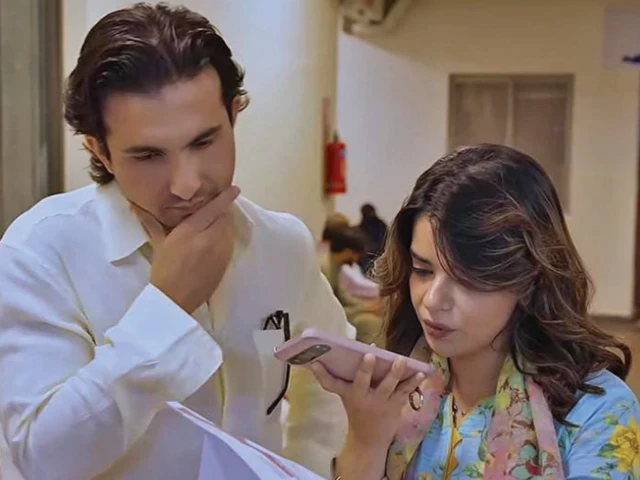
At its core, the production investigates the psychological and emotional fallout when familial expectations violently collide with an individual’s innate inclinations. The narrative follows Arsal, a young protagonist brought to life by actor Sharoze Sabzwari, who is caught in a profound generational and existential tug-of-war. Gifted with the imaginative, untamed mind of a writer, Arsal is systematically funneled toward the clinical, mathematically rigid world of accountancy. Orphaned at a young age, his upbringing and academic trajectory have been steered by his elder sister, portrayed by Faiza Hassan, whose protective instincts manifest as uncompromising control over his professional destiny.
Beyond serving as standard domestic melodrama, Hum Bhi Jee Lian acts as a cultural mirror, reflecting a widespread socio-psychological phenomenon: the systematic suppression of youth autonomy in favor of parental validation and societal prestige. In this expansive feature, we examine the systemic roots of this career-choice dilemma within Pakistan, dissect the narrative themes of Hum Bhi Jee Lian through exclusive insights from its leading man, and explore the broader realities of navigating artistic ambitions within Pakistan’s evolving entertainment and commercial landscape.
Read Also
Detailed Chronology of the Narrative and Production Landscape
The journey of Hum Bhi Jee Lian from concept to screen mirrors the very conflicts it portrays on television: the balancing act between artistic expression and the pragmatic demands of a commercial industry. While the drama officially entered the public consciousness through its promotional rollout and subsequent broadcast on Express Entertainment, its genesis lies in the universal anxieties felt by generations of Pakistani youth.
The Genesis of the Conflict
The narrative framework was meticulously constructed to highlight a classic tragicomic irony: a sensitive, story-driven mind forced to digest columns of financial data. Orphaned early in life, Arsal lacks the parental buffering that might have allowed for a more flexible negotiation of his future. Instead, his elder sister—shouldering the immense cultural and moral burden of surrogate parenthood—adopts a defensive, hyper-pragmatic approach to his security. In a society where economic instability casts a long shadow, her insistence on a chartered accountancy qualification is born out of love and fear, not malice. Yet, this protective impulse transforms into a form of psychological confinement.
Production Realities and Character Development
For Sharoze Sabzwari, stepping into the shoes of Arsal required tapping into a universally understood frustration. The actor has noted that the project immediately captured his interest precisely because of the stark internal contradictions of his character. As production commenced, the challenge for the creative team was to prevent the sister-brother dynamic from devolving into a simplistic villain-victim dichotomy. Instead, the series takes pains to illustrate that both characters are acting out of deeply entrenched survival instincts: one driven by the fear of destitution and the weight of societal expectations, the other by an unquenchable thirst for creative liberation.
As the episodes unfold on screen, the chronology of Arsal’s disillusionment serves as a narrative device that resonates powerfully with viewers across demographic lines. The drama traces his quiet acts of resistance, the emotional weight of living a borrowed life, and the high-stakes confrontation that occurs when an individual realizes that complying with a predetermined script ultimately leads to spiritual and creative bankruptcy.
Supporting Context & Metrics: The Crisis of Youth Autonomy in South Asia
The artistic themes explored in Hum Bhi Jee Lian are not isolated narrative devices; they are symptoms of a deeply ingrained socioeconomic reality across Pakistan and the broader South Asian diaspora. Understanding the gravity of the drama requires examining the statistical and cultural metrics governing youth career choices in the region.
The Prestige Trap: Medicine, Engineering, and Finance
Sociological studies on occupational choices in South Asia consistently highlight an overwhelming parental preference for STEM (Science, Technology, Engineering, and Mathematics) fields and corporate finance. According to educational data from various regional boards and higher education commissions, a staggering majority of high-achieving secondary school students are channeled into pre-medical or pre-engineering tracks, irrespective of their aptitude or personal inclinations.
This phenomenon is driven by several compounding factors:
- Social Capital and Status: In traditional societal structures, parental prestige is frequently indexed by the professional titles of their offspring ("My son the doctor," "My daughter the engineer").
- Economic Volatility: In economies plagued by inflationary pressures and currency fluctuations, creative and liberal arts industries are perceived as high-risk, low-return ventures. Parents view traditional degrees as financial safety nets.
- Information Asymmetry: Older generations often lack exposure to modern career paradigms, such as digital media, content creation, UX/UI design, creative writing, and specialized arts management, leading them to default to legacy professions.
The Psychological Toll
The psychological ramifications of this forced alignment are well-documented by regional mental health professionals. Chronic academic and professional misalignment is a leading contributor to anxiety, depression, and burnout among university students and young professionals in Pakistan. When young adults spend their formative years mastering disciplines they despise to appease familial expectations, the resulting alienation often manifests as diminished productivity, delayed career progression, and profound existential dissatisfaction—themes that Hum Bhi Jee Lian brings to the forefront of prime-time television.
Official Statements and Actor Insights: Perspectives from Sharoze Sabzwari
In an extensive interview with The Express Tribune, lead actor Sharoze Sabzwari offered candid reflections on the thematic weight of Hum Bhi Jee Lian, the psychological dynamics of Pakistani parenting, and the complex realities of his own career trajectory within the nation’s entertainment sector.
On the Writer Within and Societal Pressure
Sabzwari articulated that what drew him to the role was the poignant juxtaposition of Arsal’s internal landscape with his external obligations.
"The writer inside him is what attracted me to the character," Sabzwari stated. "There is a writer hidden inside him, but above that is accountancy. For someone who wants to write, it is a very dry subject, yet he is being made to study it."
The actor emphasized that this narrative is a direct reflection of a wider societal malaise. He pointed out that countless young people across the country find themselves trapped in lecture halls studying medicine, law, or finance not out of personal calling, but out of a desperate desire to fulfill parental blueprints.
Bridging the Generational Divide
Addressing the root cause of this conflict, Sabzwari issued a thoughtful appeal to parents and elders, urging them to recognize the vast cultural and psychological gulf separating their generation from the current youth. He noted that family pressure frequently persists well into adulthood, with elders routinely dismissing the distinct personalities and ambitions of their children.
"People are studying medicine or law because their parents want them to, even though they want to become something else," he remarked.
Sabzwari argued that modern parents must actively work to understand their children’s unique ways of thinking, interests, and inherent abilities. Rather than imposing legacy expectations, he believes guidance should be collaborative:
"If you push them towards what they are inclined to do, they will shine even more."
Navigating Commercial Realities in Entertainment
Shifting focus from the themes of the drama to his own professional journey, Sabzwari reflected on the evolution of his career in the Pakistani television industry. While expressing profound gratitude for the opportunities he has had and the diverse projects that defined his early career, the actor signaled a clear desire to transition into more substantive, mature roles.
Having spent years portraying college students, romantic leads, and figures caught in the throes of unrequited love, Sabzwari is setting his sights on narrative-driving characters that carry heavier emotional and dramatic responsibilities.
"I have a lot more to do. I want to play mature characters, roles with more responsibilities and characters that take the story forward," he affirmed.
However, Sabzwari demonstrated a pragmatic understanding of the commercial machinery underpinning television production. He acknowledged that an actor’s artistic ambitions do not always align with the fiscal realities managed by networks, writers, and production houses.
"Art is also a business. Production houses are there to make money, at the end of the day," he noted, highlighting the delicate balance performers must strike between creative fulfillment and audience appeal.
The Digital Age and Public Scrutiny
In a concluding reflection on contemporary celebrity culture, Sabzwari addressed why many public figures have become increasingly cautious about expressing opinions on socioeconomic and political issues. He pointed directly to the double-edged sword of social media expansion.
In previous decades, public criticism was largely confined to print media reviews or magazine columns. Today, the digital ecosystem allows targeted online vitriol to permeate an actor’s immediate family and personal circle instantaneously. With smartphones and widespread internet penetration reaching even remote areas, extended family members are frequently exposed to digital hostility directed at performers.
"It is no longer just criticism directed at me. It can reach my family members as well," he explained, shedding light on why modern stars often adopt a protective silence regarding controversial topics.
Additionally, Sabzwari addressed past public remarks regarding economic gratitude, clarifying that expressing personal faith and thankfulness should never be conflated with a dismissal of systemic hardships or the crushing realities of inflation faced by everyday citizens.
Future Outlook: Evolution of Narrative Television and Youth Empowerment
As Hum Bhi Jee Lian continues to captivate audiences on Express Entertainment, its broader cultural impact will likely be measured by its ability to spark uncomfortable, necessary conversations within Pakistani households. The drama arrives at a pivotal juncture where the traditional monopoly of legacy professions is slowly being challenged by the digital economy, freelance markets, and a burgeoning creative sector.
A Shift Toward Psychological Realism
The success of character-driven narratives like Hum Bhi Jee Lian signals a maturation in Pakistani television programming. Audiences are increasingly fatigued by repetitive tropes and are demonstrating an appetite for projects that tackle real psychological and sociological friction. By spotlighting the emotional toll of vocational mismatch, the drama paves the way for future productions to explore youth autonomy, mental health, and individual identity with greater nuance.
Reimagining Parenting Paradigms
Ultimately, the message championed by both the narrative and its lead actor is one of evolutionary adaptation. As the global landscape shifts toward interdisciplinary skills and creative entrepreneurship, the rigid formulas of the past are proving increasingly obsolete. If Hum Bhi Jee Lian achieves its cultural objective, it will encourage a new generation of parents to listen more closely to the quiet voices of their children—recognizing that true success is not found in a prepackaged title, but in the alignment of passion, capability, and authentic self-expression.




Comments
Facebook App ID not configured. Please add it in the Customizer.