

Executive Overview
In an era defined by corporate tech volatility, artificial intelligence, and unprecedented parental intervention, the story of Jeremy Stapleton presents a extraordinary case study at the intersection of digital forgery, familial anxiety, and personal identity transformation. Stapleton, a former web development manager residing in Walnut Creek, California, successfully created, deployed, and managed a completely fabricated literary journal—Pacific Slope Review—under the persona of Editor-in-Chief "Phillip Whitney."
The project was initially conceived to rescue his 24-year-old daughter, Charlotte Stapleton, from severe creative burnout following 47 consecutive rejections from traditional poetry outlets. Over the course of five months, Stapleton hand-coded a professional-grade web portal, engineered a artificial back-catalog using large language models paired with personal memories, and established a functioning social media ecosystem that ultimately attracted real-world literary submissions from across North America.
The deception reached its climax when Stapleton, operating as Whitney, officially accepted Charlotte’s three-stanza free-verse poem for publication in January. However, the emotional and temporal demands of maintaining Pacific Slope Review directly contributed to Stapleton’s termination from his executive position at a Bay Area cloud software firm. Rather than dismantling the charade following his job loss, Stapleton fully assimilated into his fictional editor persona. Today, operating out of suburban coffee shops on a modest local arts grant and submission fees, Stapleton continues to run the journal, illustrating the complex, blurred lines between parental protectionism, AI-assisted content curation, and psychological self-reinvention.
Read Also
Detailed Chronology of the Deception
+-----------------------------------------------------------------------------------+
|                            CHRONOLOGY OF EVENTS                                   |
+-----------------------------------------------------------------------------------+
| Labor Day Weekend : Charlotte reveals 47 literary rejections over dinner.         |
| Early September   : Jeremy codifies website; invents alias "Phillip Whitney."     |
| Mid-September     : AI-generated back-catalog deployed; Instagram launch.       |
| October           : External submissions flood in; Charlotte follows account.     |
| Late November     : Charlotte submits poem; Denise warns of ethical breach.      |
| January 15        : Issue Five goes live featuring Charlotte's work.              |
| Late Q1           : Jeremy terminated from tech post; absorbs Whitney persona.   |
+-----------------------------------------------------------------------------------+
Phase 1: The Catalyst in Walnut Creek
The origin of Pacific Slope Review traces back to a Tuesday dinner following Labor Day weekend at the Stapleton residence in Walnut Creek. Charlotte Stapleton—a UC Berkeley honors graduate working in an entry-level social media marketing role for a software-as-a-service (SaaS) provider—confided to her parents that her aspirations of entering a Master of Fine Arts (MFA) creative writing program were collapsing. Charlotte revealed that her central work, a free-verse poem praised by university faculty, had been rejected 47 times by established literary journals over the preceding twelve months.
Jeremy Stapleton, who had transitioned from an English major writing Ginsberg-inspired verse at UC Santa Barbara in the 1980s to a lucrative career in front-end web engineering, experienced a severe emotional reaction to his daughter’s distress. Viewing her creative struggle as an implicit reflection of his own parental efficacy, Stapleton sought a technical solution to mitigate her crisis of confidence.
Phase 2: Architectural Fabrication and AI Integration
Drawing inspiration from a Pacific-slope flycatcher perched outside his detached home office, Stapleton conceptualized Pacific Slope Review during the second week of September. Within twenty-four hours, he constructed the platform from scratch using custom HTML and cascading style sheets (CSS), designing a vintage-style logo featuring a stylised wing paired with 1970s serif typography.
To bypass the institutional hurdle of establishing immediate credibility, Stapleton committed several acts of digital misrepresentation:
- Pseudonym Creation: He invented "Phillip Whitney," an alias synthesized from the names of a high school acquaintance and a former teenage crush, designating Whitney as Editor-in-Chief.
- Masthead Fabrication: He constructed fictional staff profiles using combined names of past high school classmates.
- Targeted Metadata Extraction: He inserted subtle email metadata disclaimers targeting Charlotte, claiming she received submission calls due to prior interactions with real-world publications that had rejected her.
To give the publication a plausible multi-year digital history, Stapleton utilized ChatGPT to generate initial draft texts. Prompting the model for Raymond Carver-style prose, fish tank eulogies, and childhood vignettes, Stapleton edited the raw AI outputs, integrating personal childhood memories—such as his late father’s rust-spotted station wagon, post-funeral errands in Foster City, and heatstroke suffered during youth soccer matches. By mid-September, Stapleton had backdated and published four full online issues spanning two fictitious years, complete with stock imagery and fabricated contributor biographies.
+-----------------------------------------------------------------------------------+
|                        PACIFIC SLOPE REVIEW CONTENT PIPELINE                      |
+-----------------------------------------------------------------------------------+
|  [Prompts: AI / ChatGPT]  -->  [Raw Drivel / Synthesized Text]                     |
|                                         │                                         |
|                                         ▼                                         |
|  [Jeremy Stapleton Edits] <--  [Personal Memories & Vintage Details Inserted]      |
|                                         │                                         |
|                                         ▼                                         |
|  [Typesetting & Styling]  -->  [Published Issue (Pacific Slope Review)]           |
+-----------------------------------------------------------------------------------+
To complete the illusion, Stapleton employed third-party scheduling tools to backdate Instagram posts, curated an aesthetic grid of quotation graphics, and systematically followed over 500 literary accounts, including key figures from Charlotte’s social circle.
Phase 3: The Trap Snares Real Authors
By October, the publication began attracting genuine, unsolicited submissions from the public. The first real manuscript came from a Texas high school teacher submitting a short story regarding childhood loss. Stapleton, writing under the Whitney persona, accepted the piece immediately.
As autumn progressed, Stapleton found himself genuinely invested in reading external submissions, particularly works centered on fatherhood and middle-age estrangement. He began printing manuscripts, marking them with red ink, and arranging them sequentially.
Concurrently, his wife, Denise Stapleton—a county librarian—discovered the operation. While expressing deep concern regarding the ethical implications and potential emotional damage to Charlotte should the hoax be uncovered, Denise temporarily acquiesced, assisting in drafting automated reminder emails during the final submission push in November.
On the night of the deadline, Charlotte Stapleton officially submitted a single, three-stanza poem detailing childhood memories of light streaming through a bedroom door. Two weeks later, operating through an elaborate editorial protocol, Stapleton formally accepted the poem for publication in Issue Five.
+------------------------------------------------------------------------------------+
|                         CORRESPONDENCE SUBMISSION FLOW                             |
+------------------------------------------------------------------------------------+
| Charlotte Stapleton  ──(Submits Poem)──>  [ Pacific Slope Submission System ]      |
|                                                          │                         |
|                                                          ▼                         |
| Denise Stapleton     <──(Verbal Warning)─── Jeremy Stapleton / "Phillip Whitney"   |
|                                                          │                         |
|                                                          ▼                         |
| Charlotte Stapleton  <──(Acceptance Letter)── [ Issue Five Publication (Jan 15) ]  |
+------------------------------------------------------------------------------------+
Phase 4: Corporate Downfall and Total Identity Metamorphosis
The time commitment required to maintain Pacific Slope Review—coupled with Stapleton’s emotional withdrawal into the "Phillip Whitney" persona—caused immediate degradation in his professional performance. Facing return-to-office mandates at his cloud software employer in Redwood City, Stapleton missed executive pings, fell behind on web migration schedules, and confused team assignments during corporate reviews.
Shortly after Issue Five went live on January 15, Stapleton was terminated from his executive role for lack of engagement and remote disengagement. Rather than informing his family or searching for replacement tech work, Stapleton absorbed the financial impact using existing retirement reserves and fully adopted the identity of Phillip Whitney.
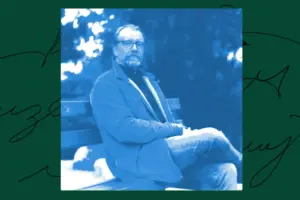
He altered his personal physical appearance, growing a long, balm-scented beard, wearing non-prescription tortoiseshell glasses, and donning vintage tweed herringbone jackets. He relocated his daily operations from his home office to local commercial establishments, managing the journal as a full-time endeavor.
Supporting Context & Literary Industry Metrics
The creation and survival of Pacific Slope Review highlights structural vulnerabilities within contemporary independent publishing, digital media, and the corporate tech sector.
1. The MFA Application Crisis and Rejection Economy
The primary driver of Stapleton’s intervention was the extreme selectivity of Creative Writing MFA programs in the United States. Top-tier programs routinely maintain acceptance rates below 2%, making prior publication in independent literary journals a virtual prerequisite for admission. This hyper-competitive environment has fueled an inflation of small-press digital journals, many of which operate with minimal oversight, making it nearly impossible for young writers to distinguish between accredited publications and manufactured outlets.
| Metric / Dimension | Traditional Literary Journal | Manufactured Outlet (Pacific Slope) |
|---|---|---|
| Average Acceptance Rate | 1% – 5% | 100% (Targeted) / Curated (External) |
| Turnaround Time | 3 – 6 Months | < 10 Minutes to 2 Weeks |
| Funding Model | Institutional / Grants | Reading Fees ($3) / Branded Merchandise |
| Content Origin | Peer-Reviewed Human Authored | AI-Drafted / Heavily Edited Hybrid |
2. AI Curation and Textual Authentication
Stapleton’s deployment of ChatGPT highlights an emerging challenge for digital publishing. By utilizing AI not as a final author but as an raw text generator—subsequently refined through human editing and authentic sensory memory—Stapleton bypassed standard AI-detection software. The resulting prose successfully deceived both automated metrics and human submitters.
3. Corporate Tech Workforce Disengagement
Stapleton’s silent departure from his engineering management career mirrors broader post-pandemic trends in the technology sector. The combination of remote-work isolation, artificial intelligence integration in coding, and mid-career burnout has created widespread detachment among senior software professionals. Stapleton’s pivot from digital corporate infrastructure to artistic curation represents a radical manifestation of mid-career identity realignments.
Official Statements & Perspectives
Reconstructed accounts from key parties reveal the stark divergence in perspectives surrounding the Pacific Slope Review enterprise.
Jeremy Stapleton (Alias: Phillip Whitney)
"The software industry spent a decade turning human creativity into optimized conversion funnels and automated SaaS pings. Pacific Slope Review was a structural return to hand-crafted architecture.
Did I alter the parameters of reality for my daughter? Yes. But in doing so, I constructed a genuine cultural entity. The magazine receives real work from real human beings processing loss, grief, and parenthood every single day. When a barista calls out the name ‘Phillip,’ I am stepping into an identity that performs a tangible service for the literary community. It feels good to build things that last."
Denise Stapleton (County Librarian, Walnut Creek)
"I made my position clear from the moment I saw that logo on his monitor: it was absurd, dangerous, and morally precarious. Jeremy believed he was building a shield to protect Charlotte from failure, but he was actually building an altar to his own ego.
If Charlotte ever discovers that her foundational publication credit was engineered by her father in a detached garage with an electric kettle and an AI generator, the damage to their relationship will be permanent. I have completely removed myself from the operation."
Charlotte Stapleton (Author & Social Media Strategist)
(Extracts from social media commentary regarding her publication credit)
"Overjoyed to share that my poem has found a home in Pacific Slope Review! After almost fifty rejections, getting that acceptance letter from Editor Phillip Whitney validated everything I’ve been fighting for. It gave me the push I needed to step back, re-evaluate my path, and take on new challenges in my career. Don’t let the rejection noise stop you from putting your voice out there!"
Future Outlook and Ethical Implications
+------------------------------------------------------------------------------------+
|                         FUTURE OUTLOOK & RISK MATRIX                               |
+------------------------------------------------------------------------------------+
| RISK FACTOR                 IMPACT      LIKELIHOOD    MITIGATION STRATEGY          |
| ─────────────────────────── ─────────── ───────────── ──────────────────────────── |
| Domain / WHOIS Exposure     HIGH        HIGH          Privacy proxies / Cash pay   |
| Contributor Financial Claims LOW        MEDIUM        Charge $3 fee; sell totes    |
| Familial Discovery          CRITICAL    HIGH          Maintain Whitney persona     |
| AI Content Audit            MEDIUM      LOW           Manual post-editing          |
+------------------------------------------------------------------------------------+
As Pacific Slope Review enters its second year of operation, the publication faces several critical ethical, legal, and operational inflection points:
- Financial Sustainability and Grant Legitimacy: Stapleton has expanded the journal’s operations beyond personal subsidies. By charging a $3.00 reading fee per submission, selling branded tote bags, and securing a modest regional micro-grant for independent media platforms, Pacific Slope Review has crossed into formal financial operation. This fiscal expansion increases the risk of regulatory or tax scrutiny regarding the legal status of "Phillip Whitney."
- The Ticking Clock of Familial Exposure: The operational security of the project remains exceptionally fragile. While Charlotte Stapleton has leveraged her publication credit to build confidence—recently accepting a higher-paying corporate marketing position at a major San Francisco technology firm—the risk of accidental exposure remains high. A routine WHOIS lookup, digital forensic audit, or mutual acquaintance could instantly dismantle the editorial facade.
- The Ethical Paradox of Manufactured Validation: The case raises questions for the modern literary ecosystem. While Jeremy Stapleton’s actions were built upon systemic deception, the outcome achieved its intended psychological goal: Charlotte’s creative impasse was resolved, her emotional baseline restored, and her career trajectory stabilized. However, this validation was secured by deceiving both the primary beneficiary and dozens of independent authors who continue to submit their work to a fictional persona.
As Jeremy Stapleton sits in suburban coffee shops—clad in his herringbone jacket, adjusting his tortoiseshell frames, and reviewing the steady stream of manuscripts entering the Pacific Slope Review inbox—he remains fully committed to the illusion. The boundaries between Jeremy Stapleton, the displaced tech manager, and Phillip Whitney, the arbiter of contemporary verse, have permanently dissolved.
Take a Break from the News
We publish your favorite authors—even the ones you haven’t read yet. Get new fiction, essays, and poetry delivered directly to your inbox through our curated digital digests.




Comments
Facebook App ID not configured. Please add it in the Customizer.