
Executive Overview
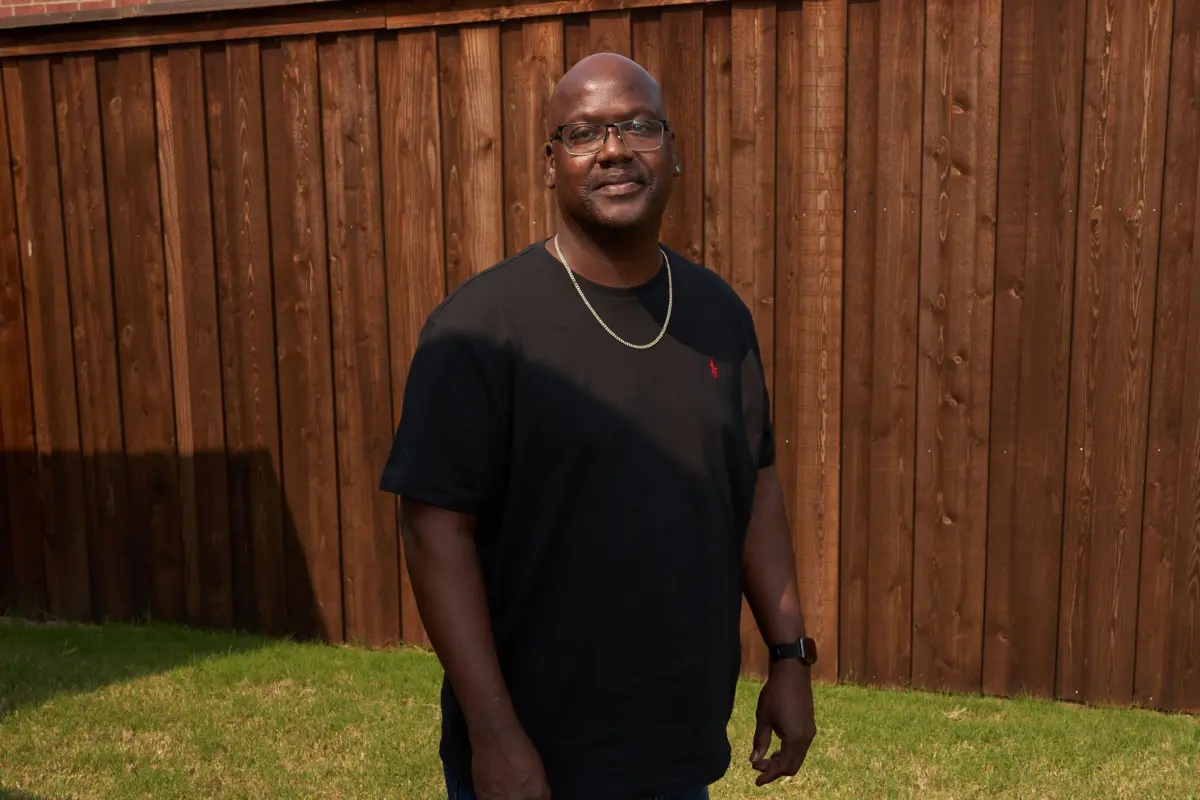
Curtis Flowers, the Mississippi man whose relentless 23-year legal ordeal became a global symbol of prosecutorial overreach, racial discrimination in the American justice system, and the transformative power of investigative journalism, has died at his home in Winona, Mississippi. He was 56 years old.
The tragic announcement was first reported by the team behind In the Dark, the acclaimed investigative podcast from The New Yorker (originally produced by APM Reports) whose groundbreaking reporting exposed the foundational rot in the state’s case against Flowers. His passing marks a somber coda to one of the most extraordinary legal battles in modern American history—a struggle that encompassed six separate trials for the same offense, decades on death row, a landmark 2019 United States Supreme Court ruling, and an eventual full dismissal of all charges in 2020.
Flowers spent nearly half his life incarcerated for a 1996 quadruple homicide at Tardy Furniture in Winona, a crime he maintained he did not commit. Over the course of two decades, local District Attorney Doug Evans prosecuted Flowers six distinct times—an unprecedented feat of prosecutorial persistence that repeatedly collapsed under judicial scrutiny due to severe prosecutorial misconduct and illegal racial bias in jury selection.
Read Also
Flowers’ ultimate release and exoneration were achieved through the combined efforts of a dedicated defense team, civil rights organizations, and a rigorous multi-year media investigation that systematically dismantled every pillar of the state’s evidence. Yet, despite his exoneration and a partial state payout for his decades of wrongful imprisonment, Flowers enjoyed only a few brief years of freedom before his untimely death. His story remains an enduring, haunting case study in the structural vulnerabilities of the Southern capital punishment apparatus, the unchecked power of local prosecutors, and the human cost of systemic injustice.
Detailed Chronology: The Decades-Long Battle for Freedom
To understand the weight of Curtis Flowers’ life and legacy, one must examine the extraordinary timeline of his legal saga, which stretched across four decades, involved dozens of appeals, and reached the highest court in the nation.
+-----------------------------------------------------------------------------------+
|                                 TIMELINE OF EVENTS                                |
+-----------------------------------------------------------------------------------+
| July 16, 1996    : Quadruple murder at Tardy Furniture in Winona, MS.             |
| March 1997       : Curtis Flowers is arrested and charged with capital murder.     |
| 1997 - 2010      : Prosecutor Doug Evans tries Flowers six separate times.        |
|    • Trial 1 (1997): Convicted; death penalty. Overturned on appeal.             |
|    • Trial 2 (1999): Convicted; death penalty. Overturned on appeal.             |
|    • Trial 3 (2004): Convicted; death penalty. Overturned due to jury bias.       |
|    • Trial 4 (2007): Mistrial (Hung jury split along racial lines).               |
|    • Trial 5 (2008): Mistrial (Hung jury).                                         |
|    • Trial 6 (2010): Convicted; death penalty. Upheld by MS Supreme Court.        |
| 2018             : "In the Dark" Season 2 releases exhaustive investigation.      |
| June 21, 2019    : US Supreme Court strikes down Trial 6 conviction (7-2).        |
| Dec 16, 2019     : Flowers is released on bond after 23 years in custody.          |
| Sept 4, 2020     : MS Attorney General drops all charges; Flowers is exonerated.   |
| March 2021       : State awards Flowers maximum statutory payout ($500,000).      |
| Recent           : Curtis Flowers passes away in Winona, MS, at age 56.           |
+-----------------------------------------------------------------------------------+
The Crime and Initial Arrest (1996)
On the morning of July 16, 1996, four people were shot to death inside Tardy Furniture store in downtown Winona, Mississippi: store owner Bertha Tardy, 59, and employees Carmen Rigby, 45, Robert Golden, 30, and Derrick Stewart, 16. The brutal quadruple murder shocked the small, racially divided city of roughly 5,000 residents.
With immense public pressure on law enforcement to solve the crime, investigators focused on Curtis Flowers, a Black man and former store employee who had recently been let go after working at the shop for a few days. Despite a lack of direct physical evidence connecting Flowers to the crime scene, he was arrested in March 1997 and charged with capital murder.
The Cycle of Six Trials (1997–2010)
Under the direction of Fifth Circuit District Attorney Doug Evans, the state embarked on a relentless pursuit of Flowers across six separate trials:
- Trial 1 (1997): Flowers was tried for the murder of Bertha Tardy, convicted by an all-white jury, and sentenced to death. In 2000, the Mississippi Supreme Court overturned the conviction, citing prosecutorial misconduct for introducing prejudice and evidence related to the other three victims without charging Flowers for them in that trial.
- Trial 2 (1999): Evans tried Flowers for the murder of Carmen Rigby. He was convicted and sentenced to death. In 2003, the Mississippi Supreme Court again reversed the conviction due to prosecutorial misconduct.
- Trial 3 (2004): Evans tried Flowers for all four murders simultaneously. An all-white jury convicted him and returned a death sentence. In 2007, the Mississippi Supreme Court overturned the decision after finding that DA Doug Evans had intentionally excluded Black prospective jurors on account of their race—a violation of the Equal Protection Clause under Batson v. Kentucky.
- Trials 4 & 5 (2007 & 2008): In both trials, prosecutors were unable to secure an all-white jury. The resulting juries were racially mixed and ended in hung juries, leading to mistrials.
- Trial 6 (2010): Evans tried Flowers for the sixth time. After striking five of the six Black prospective jurors, Evans secured a jury consisting of 11 white jurors and one Black juror. Flowers was convicted once again and sentenced to death.
The Media Breakthrough and Supreme Court Triumph (2018–2019)
For years, Flowers sat on death row at the Mississippi State Penitentiary at Parchman. The trajectory of his case shifted dramatically in 2018 when APM Reports released Season 2 of the investigative podcast In the Dark, led by reporter Madeleine Baran.
The podcast team conducted a painstaking, ground-level investigation in Winona, interviewing hundreds of witnesses, reviewing tens of thousands of pages of court documents, and building a public statistical database of DA Doug Evans’ 26-year jury selection history. The reporting revealed that:
- The state’s key jailhouse informant, Odell Hallmon, admitted on tape that he had fabricated his testimony that Flowers had confessed to him, in exchange for favorable treatment on his own criminal charges.
- Physical evidence—including route testimony and ballistics matching—was deeply flawed or unsupported by modern forensic standards.
- DA Doug Evans had established a pervasive pattern of striking Black citizens from jury pools throughout his career.
In November 2018, the United States Supreme Court agreed to review Flowers’ sixth conviction. On June 21, 2019, in a 7-2 opinion authored by Justice Brett Kavanaugh (Flowers v. Mississippi), the Supreme Court overturned Flowers’ conviction. Justice Kavanaugh wrote that "the State’s relentless attempt to knock Black prospective jurors off the jury came to a head in the sixth trial," noting that Evans’ long history of racial bias could not be ignored.
"The State’s relentless attempt to knock Black prospective jurors off the jury came to a head in the sixth trial... We cannot ignore that history. We cannot insulate the state's action in trial six from its history in the first five trials."
— Justice Brett Kavanaugh, writing for the 7-2 majority in Flowers v. Mississippi (2019)
Exoneration and Final Years (2019–Present)
In December 2019, a circuit judge granted Flowers bail for the first time in over two decades, allowing him to step out of prison. Nine months later, on September 4, 2020, Mississippi Attorney General Lynn Fitch filed a motion to dismiss all charges against Flowers, stating there were no longer any credible witnesses or sufficient evidence to proceed with a seventh trial. Curtis Flowers was finally a free man.
In March 2021, the state of Mississippi agreed to pay Flowers $500,000—the maximum total amount allowed under state law for wrongful imprisonment—and an additional $50,000 to his legal team. Flowers spent his remaining years quietly in Mississippi, enjoying his newfound freedom alongside his family and loved ones until his death.
Supporting Context & Metrics: Quantifying Systemic Failure
The case of Curtis Flowers is notable not only for its legal drama, but for the stark statistical metrics that illustrate how systemic bias operated over a quarter-century in Montgomery County, Mississippi.
Jury Selection Disparities: The Numbers
The primary ground for the Supreme Court’s intervention was DA Doug Evans’ systematic exclusion of African American jurors. Across Flowers’ six trials, Evans used peremptory challenges to remove Black jurors at an overwhelming rate.
| Trial Metric | Total Jurors Selected | White Jurors | Black Jurors | Black Jurors Struck by Prosecution |
|---|---|---|---|---|
| Trial 1 (1997) | 12 | 12 | 0 | 5 of 5 qualified |
| Trial 2 (1999) | 12 | 11 | 1 | 5 of 6 qualified |
| Trial 3 (2004) | 12 | 12 | 0 | 14 of 15 qualified |
| Trial 4 (2007) | 12 | 7 | 5 | Struck all available Black jurors |
| Trial 5 (2008) | 12 | 9 | 3 | Struck all available Black jurors |
| Trial 6 (2010) | 12 | 11 | 1 | 5 of 6 qualified |
| Cumulative Total | 72 Seats | 62 (86.1%) | 10 (13.9%) | 41 of 42 (97.6%) |
An empirical analysis performed by In the Dark examined 225 trials conducted by Doug Evans’ office between 1992 and 2017. The analysis demonstrated that Evans’ office struck Black prospective jurors at 4.4 times the rate it struck white prospective jurors, proving that the exclusion in Flowers’ trials was part of an established, district-wide practice rather than an anomaly.
PROSECUTORIAL STRIKE RATE IN DISTRICT ATTORNEY DOUG EVANS' OFFICE (1992-2017)
-----------------------------------------------------------------------------
Black Prospective Jurors Struck: [====================================] 50%
White Prospective Jurors Struck: [========] 11%
Ratio: Black jurors were 4.4x more likely to be eliminated via peremptory strikes.
-----------------------------------------------------------------------------
Key Evidentiary Vulnerabilities
The state’s case rested almost entirely on three flawed evidentiary pillars, all of which collapsed under investigative scrutiny:
- Jailhouse Informant Testimony: Key witness Odell Hallmon claimed Flowers had confessed to him in prison. In 2018, Hallmon admitted to reporters that his testimony was a total fabrication provided in exchange for reduced sentences on his own convictions.
- Eyewitness Route Testimony: The state built a timeline based on witnesses who claimed to have seen Flowers walking through Winona on the morning of the murders. Investigative journalists re-interviewed these witnesses, several of whom recanted, stated they were coerced by law enforcement, or admitted their timing was fundamentally inaccurate.
- Ballistics: The state claimed a .25-caliber handgun owned by Flowers’ uncle was the murder weapon. Independent ballistics experts reviewed the evidence and concluded that the matching tests conducted by state examiners were scientifically unreliable and inconclusive.
Compensation Disparity
Under Mississippi law, wrongful conviction compensation is capped at $50,000 per year of incarceration, with an absolute maximum ceiling of $500,000.
Because Flowers spent 23 years (8,300+ days) in custody, his state-mandated compensation calculated mathematically to less than $21,740 per year of life lost—a stark reflection of statutory limitations that fail to restore victims of long-term wrongful imprisonment.
Official Statements and Public Reaction
The news of Curtis Flowers’ passing triggered a wave of mournful and reflective responses from journalists, civil rights advocates, legal scholars, and community leaders who followed his fight for justice.
Statements from Investigative Journalists and Legal Advocates
In a statement issued following the news, the team behind In the Dark paid tribute to Flowers’ perseverance throughout his prolonged ordeal:
"We are deeply saddened to share that Curtis Flowers has passed away at his home in Winona, Mississippi. Curtis endured an unimaginable ordeal with extraordinary grace and courage. For more than two decades, he fought an unjust system, and his ultimate victory exposed deep flaws in our justice system. Our thoughts are with his family and loved ones."
— In the Dark Team
Rob McDuff, an attorney with the Mississippi Center for Justice who led Flowers’ defense team alongside the Roderick & Solange MacArthur Justice Center during his final appeals, reflected on Flowers’ character:
"Curtis Flowers was a man of profound warmth, grace, and dignity. Despite suffering one of the most egregious miscarriages of justice in modern American history, he carried no bitterness. He was beloved by his family and by all of us who had the privilege of fighting for his freedom. His loss is devastating, but his resilience will never be forgotten."
— Rob McDuff, Lead Defense Counsel
Civil Rights Organizations and Legal Analysts
Civil rights organizations noted that Flowers’ death highlights the bittersweet reality of post-exoneration life for those who spend decades fighting state power.
The Innocence Project released a statement highlighting the broader human toll of wrongful convictions:
"The passing of Curtis Flowers at age 56 is a painful reminder that exoneration cannot undo the physical and psychological toll of decades spent on death row. Curtis lost his youth, his health, and over twenty years of life with his family due to systemic racism and prosecutorial abuse. While he died a free man, the system failed him for far too long."
Legal scholars emphasized the lasting impact of his case on constitutional law:
"The case of Flowers v. Mississippi serves as a landmark precedent that reinvigorated the Batson challenge framework. Curtis Flowers showed the nation that when prosecutorial power goes unchecked, racial bias can corrupt every stage of a capital trial. His case permanently altered how appellate courts view pattern-and-practice jury discrimination."
— Professor David Vincent, Criminal Procedure Expert
Future Outlook: The Legacy of Curtis Flowers and Ongoing Reform
Curtis Flowers’ life and death leave behind a profound legacy that continues to influence criminal justice reform, legal ethics, and investigative journalism across the United States.
+-----------------------------------------------------------------------------------+
|                            AREAS OF SYSTEMIC IMPACT                               |
+-----------------------------------------------------------------------------------+
| 1. JURY SELECTION REFORM : Increased judicial scrutiny of peremptory strikes;      |
|                            advocacy for eliminating peremptory challenges.        |
| 2. PROSECUTORIAL OVERSIGHT: Heightened scrutiny of District Attorney misconduct    |
|                            and calls for stripping absolute immunity.            |
| 3. MEDIA & LAW           : Establishing investigative podcasts as vital instruments |
|                            for post-conviction advocacy and legal discovery.      |
| 4. STATUTORY COMPENSATION: Renewed legislative pushes to eliminate state caps      |
|                            on wrongful conviction reimbursements.                 |
+-----------------------------------------------------------------------------------+
Reforms in Jury Selection and Batson Enforcement
Flowers’ case catalyzed national debate over the efficacy of Batson v. Kentucky (1986), the legal framework intended to prevent racial discrimination in jury selection. Critics have long argued that Batson allows prosecutors to offer pretextual, non-racial justifications for striking minority jurors.
In the wake of Flowers v. Mississippi, several states—including Washington, California, and Arizona—have enacted sweeping reforms to restrict or eliminate peremptory challenges altogether, or to raise the legal bar required to justify striking prospective jurors of color. Legal advocates continue to cite Flowers’ case when lobbying state supreme courts to adopt stricter standards against jury pool manipulation.
Prosecutorial Accountability and Immunity
The Flowers saga brought intense public scrutiny to DA Doug Evans, who held office for nearly three decades despite multiple judicial reversals finding misconduct in his prosecutions. Evans eventually stepped down from office in late 2022 without ever facing formal state disciplinary actions or disbarment.
The case has fueled ongoing national pushes for structural reforms, including:
- The creation of independent state prosecutorial conduct boards to investigate claims of intentional misconduct.
- Legislative efforts to reconsider absolute immunity for prosecutors who intentionally withhold exculpatory evidence or engage in racially biased jury selection.
- Increased transparency and mandatory public reporting regarding district attorneys’ jury strike practices.
The Evolution of Investigative Journalism as Legal Oversight
The critical role played by In the Dark demonstrated the evolving power of deep-dive investigative journalism in the post-conviction space. By committing vast resources to public record requests, statistical analysis, and fieldwork, the reporting team performed functions traditionally under-resourced within public defender offices.
The investigative model established during the Flowers coverage is now regularly studied in journalism and legal curricula as a benchmark for high-impact, public-interest media.
Concluding Reflection
Curtis Flowers’ passing at the age of 56 is a stark reminder of the fragile nature of justice. Though he lived out his final days in Winona as a free man, surrounded by the community that ultimately saw his name cleared, the 23 years stolen from him by an overzealous state apparatus could never be fully repaid.
His name will endure in American legal history—not as a symbol of victimhood, but as an indelible testament to the endurance of human dignity against the machinery of state power, and as a permanent warning against the dangers of unmonitored prejudice in the courtroom.




Comments
Facebook App ID not configured. Please add it in the Customizer.