
Executive Overview
In an era defined by institutional skepticism, digital misinformation, and post-truth media consumption, reality television has given rise to a defining psychological contest: The Traitors. Originating in the Netherlands as De Verraders, the series has rapidly evolved from a localized Dutch television format into a global franchise spanning roughly forty international adaptations. rivaling historic unscripted giants such as Survivor and Big Brother, the show’s ascension highlights a pronounced shift in consumer entertainment—away from meritocratic physical endurance toward structured psychological warfare, paranoia, and performance-based deceit.
                  +-----------------------------------+
                  |   1629: Shipwreck of Batavia      |
                  |  Mutiny & killings off Australia  |
                  +-----------------+-----------------+
                                    |
                                    v
                  +-----------------------------------+
                  |  2021: "De Verraders" (Netherlands)|
                  |   Marc Pos adapts game to castle  |
                  +-----------------+-----------------+
                                    |
                                    v
                  +-----------------------------------+
                  | 2022–2023: Global Expansion       |
                  |  UK (BBC) & US (Peacock/NBC) launch|
                  +-----------------+-----------------+
                                    |
        +---------------------------+---------------------------+
        |                                                       |
        v                                                       v
+-------------------------------+               +-------------------------------+
| UK Model: Civilian Focus      |               | US Model: Reality Star Meta   |
| Social dynamics & bias study  |               | "Gamers" vs. "Housewives"     |
+---------------+---------------+               +---------------+---------------+
                |                                                       |
                +---------------------------+---------------------------+
                                            |
                                            v
                  +-----------------------------------+
                  |  Present: Franchise Evolution     |
                  | "New Blood" civilians & global    |
                  | post-colonial boom (Indonesia)    |
                  +-----------------------------------+
At its core, The Traitors reimagines the classic parlor game Mafia within the aesthetic framing of a gothic murder mystery. Contestants are divided into a minority of secret saboteurs (“Traitors”) and an unwitting majority (“Faithful”). By night, the Traitors conspire in a secluded turret to systematically “murder” their fellow contestants; by day, the entire group competes in missions to build a communal cash prize before convening at a fiery round table to banish suspected traitors.
The format’s runaway success—marked by multiple Primetime Emmy Awards and critical acclaim—stems from its candid alignment with contemporary sociopolitical dynamics. Unlike traditional games that punish duplicity, The Traitors explicitly incentivizes fraud. The show turns psychological manipulation into an art form, converting human vulnerabilities, systemic cognitive biases, and groupthink into high-stakes narrative drama.
Read Also
Detailed Chronology
==================================================================================================
1629            2021            2022            2023            2024–Present
--------------------------------------------------------------------------------------------------
Batavia         De Verraders    UK Adapation    US Adaptation   Global Reach
Shipwreck       Debuts          Launches        Debuts          "New Blood" &
(Historical     (Dutch TV       (Civilian       (Hybrid to      Indonesia Format
Inspiration)    Castle Set)     Format)         Celebrity)      Expansion
==================================================================================================
The Historical Genesis: The Batavia Disaster (1629)
The conceptual origins of The Traitors are rooted in historical tragedy. In 1629, the Batavia, a flagship of the Dutch East India Company carrying roughly 300 passengers and crew from Amsterdam to Java, struck a coral reef off the coast of Western Australia.
Following the shipwreck, the ship’s under-merchant, Jeronimus Cornelisz, orchestrated a bloody mutiny. Stranded on isolated limestone islands, Cornelisz and a dedicated cadre of conspirators executed systematic killings of over 100 survivors while maintaining an atmosphere of total terror and suspicion.
The Conceptualization of De Verraders (2021)
Nearly four centuries later, Dutch television producer Marc Pos drew inspiration from the Batavia massacre to design a television format centered on suspicion and survival. Pos initially envisioned setting the program entirely aboard a sea vessel, stranding contestants off the coast in a direct homage to Dutch maritime lore. The losing contestants were to be tossed overboard into the sea.
When oceanic production costs proved prohibitively expensive, the production shifted setting to an inland castle defined by shadowy corridors, grand chandeliers, and velvet-lined turrets. Pos introduced heavy, hooded cloaks for the conspirators, establishing the dark, pseudo-gothic visual identity that now defines the global brand. De Verraders premiered on Dutch television in 2021, instantly capturing market share and drawing international television buyers.
+------------------------------------------------------------------------+
|                    HISTORICAL & FORMAT EVOLUTION                       |
+------------------------------------------------------------------------+
| Event                       | Year | Key Elements / Significance       |
+-----------------------------+------+-----------------------------------|
| Batavia Shipwreck           | 1629 | Mutiny, psychological terror off  |
|                             |      | Australian coast; narrative root. |
| Dutch Premiere              | 2021 | Marc Pos launches "De Verraders"  |
|                             |      | in a castle set.                  |
| UK Launch (BBC)             | 2022 | All-civilian casting, focus on    |
|                             |      | organic social dynamics.          |
| US Launch (Peacock)         | 2023 | Host Alan Cumming; hybrid cast    |
|                             |      | shifts to reality veterans.       |
| "New Blood" & Global Expansion| 2024+ | Indonesia launch; US civilian reset|
|                             |      | in Season 5 ("New Blood").        |
+------------------------------------------------------------------------+
Anglo-American Adaptations and Format Divergence (2022–2023)
Following the success of the Dutch original, the format spread quickly across Western Europe and English-speaking territories:
- United Kingdom (2022): The BBC greenlit an adaptation hosted by Claudia Winkleman. The British iteration opted for an all-civilian cast featuring everyday citizens—ranging from teachers to magicians—enabling the production to function as a pure social experiment.
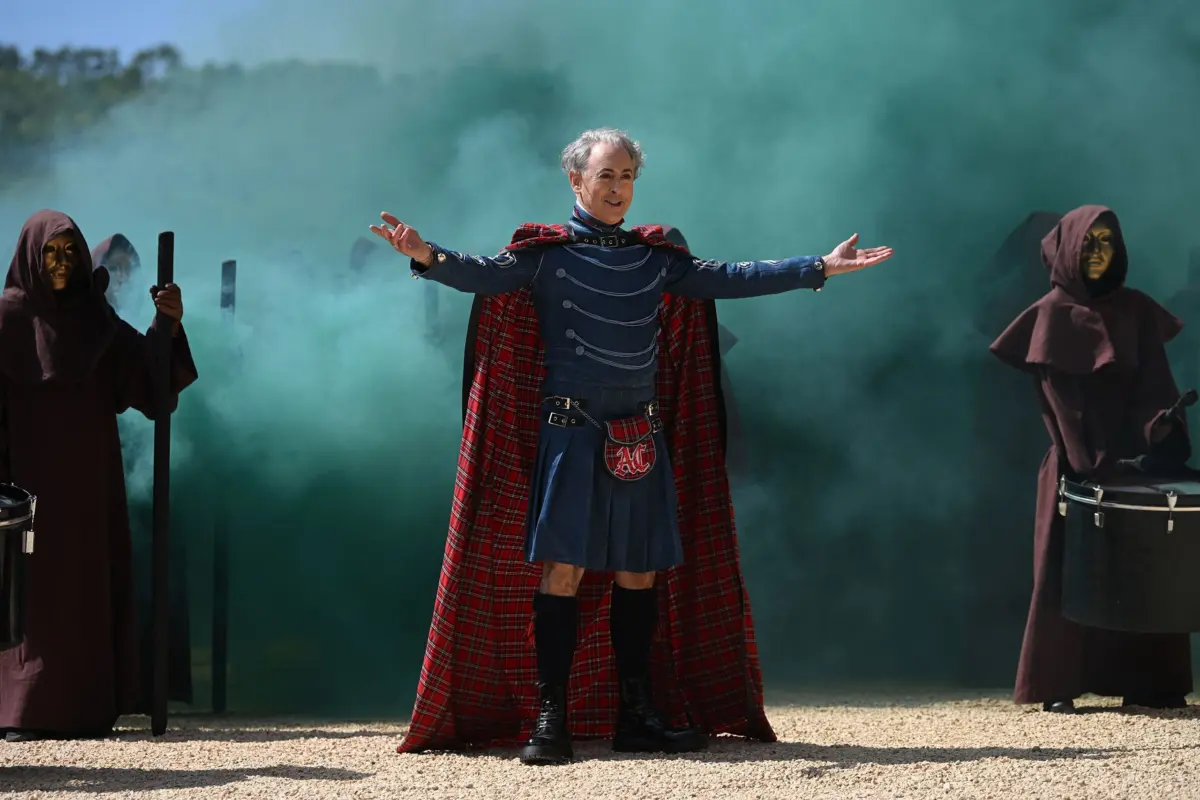
- United States (2023): Peacock commissioned an American version filmed alongside the UK production at Ardross Castle in the Scottish Highlands, hosted by Scottish actor Alan Cumming.
Initial American production strategy attempted a hybrid casting model—combining ordinary civilians with seasoned reality television figures. However, screen time and narrative momentum were quickly dominated by reality veterans. Producers subsequently pivoted to an all-celebrity model, drawing contestants primarily from legacy reality franchises including Survivor, Big Brother, The Real Housewives, and Love Island.
Modern Expansion and Post-Colonial Horizons (2024–Present)
The franchise now spans over forty international territories, including recent developments that highlight its expanding cultural footprint:
- Indonesia: Indonesia announced its own localized adaptation—a development highlighting a full cultural loop, bringing the format back to the historic destination of the doomed Batavia.
- United States ("New Blood"): Reaching its fifth season, the US iteration introduced The Traitors: New Blood, jettisoning the celebrity format to return entirely to civilian participants, testing whether organic social dynamics can survive in a mature game where players already know the rulebook.
Supporting Context & Metrics
Game Mechanics and Structural Architecture
The operational mechanics of The Traitors are designed to maximize cognitive overload and psychological stress:
[ Day Start: Breakfast Assembly ] ---> [ Identity Check: Has someone been "Murdered"? ]
                 |
                 v
[ Mid-Day: Group Mission ] ---------> [ Adds Cash to Shared Prize Pool ]
                 |
                 v
[ Evening: Round Table ] ------------> [ Open Debate, Accusations, & Public Vote ]
                 |
                 v
[ Banishment Ceremony ] -------------> [ Eliminated Player Reveals True Identity ]
                 |
                 v
[ Night: Turret Conclave ] ----------> [ Traitors Secretly Select Next "Murder" Target ]- Selection Ceremony: Contestants assemble blindfolded in a grand hall. The host discreetly taps chosen individuals on the shoulder to designate them as "Traitors." The remaining participants are designated as "Faithful."
- The Nightly Turret Conclave: Traitors meet in secret each night to select one Faithful player for elimination ("murder").
- Daytime Missions: Traitors and Faithful work together in physical and psychological challenges to build a shared prize pot, which can reach up to hundreds of thousands of dollars.
- The Round Table: The full group meets nightly for open confrontation and a vote. The contestant receiving the most votes is banished and must state their true identity ("Faithful" or "Traitor") upon exit.
- Endgame Stakes: If any Traitor remains at the end of the season, they steal the entire accumulated prize pot. If all Traitors are eliminated, the surviving Faithful divide the cash evenly.
Sociopolitical Dynamics and Systemic Biases
Psychological observation of both civilian and celebrity variants reveals consistent patterns of human behavior under pressure. Without objective evidence, contestants rely on implicit bias, cognitive shortcuts, and projective guilt to make decisions:
+-------------------------------------------------------------------------+
|                  BIAS MANIFESTATION IN "THE TRAITORS"                  |
+-------------------------------------------------------------------------+
| Target Demographic / Trait   | Observed In-Game Perception             |
+------------------------------+------------------------------------------+
| High Intelligence / Legal    | Clocked as immediate strategic threats;  |
| Background (e.g., Trial Law) | targeted early by Traitors.              |
+------------------------------+------------------------------------------+
| Racial & Ethnic Minorities   | Systemically misread; heightened risk    |
|                              | of early banishment or pre-emptive murder.|
+------------------------------+------------------------------------------+
| Unconventional Professions   | Viewed with suspicion; presumed to have |
| (e.g., Magicians, Actors)    | advanced deceptive capabilities.         |
+------------------------------+------------------------------------------+
| Reality Dating Show Alumni   | Underestimated as non-strategic;         |
| (e.g., "Love Island")        | leveraged as camouflage by Traitors.     |
+-------------------------------------------------------------------------+- Occupational Stereotyping: Contestants with background professions associated with analytical rigor (such as attorneys or trial lawyers) are routinely identified as threat vectors. In Season 5 (New Blood), trial attorney Kim Daily attempted to obscure her profession by claiming to be a basketball coach. The group quickly picked up on her analytical style anyway, leading the Traitors to murder her early to protect their position.
- Racial and Gender Dynamics: Across multiple international editions, non-white players and vocal women are frequently subjected to early round-table scrutiny or swift midnight eliminations. The banishment of actress Myha’la on U.K. Celebrity Traitors triggered widespread discourse regarding the structural vulnerability of minority players in unscripted suspense formats.
- The Gamers vs. Housewives Paradigm: In the US celebrity editions, contestants split into distinct voting blocs. Strategic veterans ("Gamers" from Survivor or Big Brother) often lock horns with high-drama personalities ("Housewives"). Traitors frequently exploit these subcultural rifts to hide in plain sight.
For example, Rob Rausch—a snake wrangler and former contestant on Love Island—won his celebrity season as a Traitor by exploiting lower expectations around his reality-dating background. While viewed on Love Island as a untrustworthy romantic partner, his deceptive play on The Traitors earned admiration from both viewers and fellow players.
Official Statements & Critical Discourse
Host Governance and Staging
A major contributor to the American adaptation’s identity is host Alan Cumming. Serving as both a theatrical ringmaster and executive producer figure, Cumming brings a distinct aesthetic tone to the show.
"Against the singularity of Cumming, who brings the American players
 to his 'home' country for a game set in a handsome castle in the
 Scottish Highlands, the group always seems dinky..."
                                 — Critical Retrospective Analysis
Cumming’s performance contrasts campy theatricality with real emotional stakes, framing adult contestants in scuba gear shooting out of helicopters for gold as both absurd and high-stakes drama.
+-------------------------------------------------------------------------+
|                    KEY PERSPECTIVES & STATEMENTS                        |
+-------------------------------------------------------------------------+
| Source / Entity              | Perspective / Core Quote                 |
+------------------------------+------------------------------------------+
| Tom (UK Season 1 Magician)   | "I'm one of the top magic creators in    |
|                              | the world and I can read people... it's  |
|                              | my job." (Proved consistently incorrect) |
+------------------------------+------------------------------------------+
| Kim Daily                    | Strategy: Obscured legal profession to   |
| (US "New Blood" Player)      | lower threat profile; target of early    |
|                              | preventive Traitor murder anyway.        |
+------------------------------+------------------------------------------+
| Cultural & Media Critics     | Compare the show's mechanics to post-    |
|                              | truth media consumption and structural   |
|                              | documentary critiques (e.g., Fielder/    |
|                              | Oppenheim's Elizabeth Holmes portrait).  |
+-------------------------------------------------------------------------+
Critical Parallels: The Traitors and Post-Truth Media
Media critics increasingly view The Traitors as a reflection of broader societal dynamics around truth, media manipulation, and incentives for fraud. The audience occupies an omniscient position—knowing exactly who the Traitors are—which turns viewing into an exercise in watching human error and self-destructive groupthink play out in real time.
This dynamic echoes broader debates in non-fiction filmmaking, such as Nathan Fielder and Lance Oppenheim’s film You Can See Everything, a re-examination of former Theranos CEO Elizabeth Holmes. Fielder’s work uses restaged scenes, proxies, and constructed environments to examine a figure defined by corporate fraud, challenging traditional documentary norms.
Critiques of both You Can See Everything and The Traitors reflect a shared cultural anxiety: in a world where manipulation is incentivized and truth is staged, can any environment offer genuine accountability?
+------------------------------------------------------------------------+
|             THEMATIC PARALLEL: CONSUMING DECEIT                        |
+------------------------------------------------------------------------+
| Narrative Construct       | Mechanics & Viewer Experience              |
+---------------------------+--------------------------------------------+
| "The Traitors" Castle     | Audience sees the deception; contestants   |
|                           | struggle inside a hall of mirrors.         |
+---------------------------+--------------------------------------------+
| Post-Truth Documentary    | Viewers navigate restaged realities,       |
| (e.g., Fielder/Holmes)    | questioning authorial intent and veracity. |
+------------------------------------------------------------------------+
Future Outlook
As The Traitors enters its next phase of global expansion, its evolution highlights larger trends in unscripted television and digital entertainment culture:
+-----------------------------------------------------------------------+
|                       FUTURE DEVELOPMENT TRAJECTORY                   |
+-----------------------------------------------------------------------+
| Strategic Vector          | Industry Trajectory & Anticipated Impact  |
+---------------------------+-------------------------------------------+
| Market Saturation         | 40+ international territories expanding;   |
|                           | risk of format fatigue mitigated by multi-|
|                           | tier casting models (Celebrity vs Civilian)|
+---------------------------+-------------------------------------------+
| Player Metagaming         | Advanced gameplay tactics emerging;       |
|                           | players pre-emptively counter established |
|                           | editing tropes and behavioral stereotypes |
+---------------------------+-------------------------------------------+
| Post-Colonial Formats     | Regional adaptations (e.g., Indonesia)    |
|                           | offer fresh cultural and historical       |
|                           | contexts for game mechanics               |
+-----------------------------------------------------------------------+- Format Diversification: Broadcasters are moving toward dual-track models. The BBC, for instance, maintains parallel civilian and celebrity iterations, preserving the social experiment format on one hand while tapping into celebrity fanbases on the other.
- Strategic Metagaming: Future seasons face the challenge of a hyper-aware player base. As contestants study past seasons, they develop pre-emptively counter-strategic playstyles—forcing producers to adjust mechanics, roll out new twist structures, and adapt psychological levers.
- Global Resonances: The rollout of localized editions across diverse cultural landscapes, particularly in non-Western markets, will test how different social contracts, collective norms, and systemic interpersonal dynamics interact with a game that explicitly rewards betrayal.
Ultimately, The Traitors has secured its place in television history by turning interpersonal suspicion into structured entertainment. By elevating the art of the lie, the franchise reflects an uncomfortable truth about the modern attention economy: when duplicity is rewarded and performance is weaponized, the most dangerous place to be is sitting safely at the round table.



Comments
Facebook App ID not configured. Please add it in the Customizer.