
Executive Overview
The high-profile legal proceedings involving British comedian, actor, and media personality Russell Brand have entered their final, critical stages at a London crown court. Brand, 51, stands accused of multiple historical sexual offences, facing a total of seven charges comprising rape, sexual assault, and attempted indecent assault. The allegations, brought forward by six distinct complainants, span a decade between 1999 and 2009—a period coinciding with Brand’s rapid ascent to mainstream prominence as an edgy stand-up comedian and ubiquitous television and radio presenter.
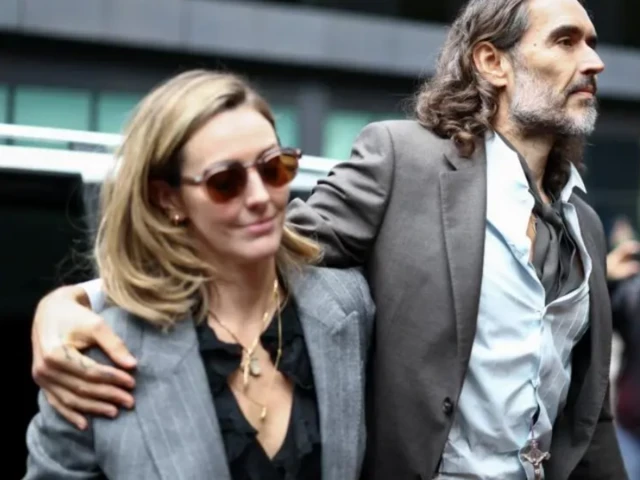
As the trial hurtles toward its conclusion, the courtroom atmosphere reached an emotional zenith with the testimony of Brand’s wife, Laura Gallacher. Appearing as a defense character witness, Gallacher offered a nuanced, highly personal portrayal of her husband. While openly acknowledging his historical struggles with hyper-promiscuity and the initial difficulties he faced regarding fidelity, she forcefully defended his character as a doting father and an "amazing, attentive husband." Her testimony forms a central pillar of the defense’s closing arguments, aiming to contrast Brand’s public reputation as a libertine media figure with his private life as a family man.
With the prosecution and defense having laid out their respective cases, the trial now rests in the hands of the presiding judge for final instructions. The jury is widely anticipated to retire to consider its verdict. If convicted on the gravity of the charges brought against him, Brand faces the sobering prospect of a lengthy custodial sentence, up to and including life imprisonment. Throughout the protracted legal battle, Brand has maintained his innocence, entering a plea of not guilty to all counts while admitting to a historically promiscuous lifestyle that he insists was invariably predicated on consensual encounters.
Read Also
Detailed Chronology of the Legal Proceedings
The legal journey culminating in this high-stakes London trial has unfolded against a backdrop of intense public scrutiny, media fascination, and systemic shifts in how historical allegations against public figures are investigated and prosecuted in the United Kingdom.
The Investigation and Charges
The scrutiny surrounding Brand intensified significantly following a joint media investigation by British media outlets and Channel 4’s Dispatches program, which unearthed a pattern of alleged predatory behavior spanning his career peak. Subsequent police investigations encouraged multiple women to come forward to the Metropolitan Police, detailing encounters that allegedly took place between the late 1990s and the late 2000s.
Following extensive inquiries by specialist detectives, the Crown Prosecution Service (CPS) authorized charges against Brand. The indictment centers on seven specific counts involving six complainants. The alleged offences include anal, vaginal, and oral rape, alongside charges of sexual assault and attempted indecent assault. The geographical span of the allegations largely covers locations in London and Los Angeles, reflecting Brand’s bi-continental touring and media career during the noughties.
The Trial Unfolds in London
The trial commenced several weeks ago in a packed London courtroom, drawing relentless media packs from across the globe. Over the course of the proceedings, the prosecution presented a narrative of a powerful, rising celebrity who allegedly leveraged his fame, cultural currency, and professional dominance to coerce, manipulate, or assault women who felt unable to speak out against him at the time.
The six complainants took the stand to deliver often harrowing accounts of their interactions with Brand. Their testimonies detailed incidents occurring in private residences, dressing rooms, and hotel suites during a era characterized by laddish media culture and widespread impunity for high-profile entertainers. Cross-examination by Brand’s defense team focused heavily on inconsistencies in timelines, the continued contact some complainants maintained with Brand after the alleged incidents, and the nature of consent within the context of his famously libertine lifestyle.
Brand’s Testimony and Defense Strategy
Taking the witness stand in his own defense, Brand confronted the allegations head-on. Dressed in a dark suit, the comedian acknowledged that he had been "obsessed" with sex during the peak of his fame, candidly admitting to the court that he deliberately used his celebrity status and platform to "facilitate sexual access" to women. However, Brand vehemently drew a line between enthusiastic promiscuity and non-consensual acts. He testified that every sexual encounter he engaged in throughout his career was entirely consensual, framing his past actions as hedonistic and spiritually misguided, but fundamentally devoid of criminality.
The defense also introduced written and spoken statements from former partners and associates to corroborate Brand’s assertions regarding his personal evolution. Among these was Elia Alvarez Diaz, an ex-girlfriend who met Brand at drama school during the late 1990s. In a statement read aloud to the court, Alvarez Diaz described Brand as having been "promiscuous and unfaithful" during their time together, noting that their relationship was punctuated by frequent arguments over his inability to remain faithful. This testimony was strategically deployed by the defense to establish a consistent, long-standing pattern of consensual promiscuity rather than predatory criminality.
Supporting Context, Metrics, and Societal Impact
The trial of Russell Brand occupies a unique intersection of celebrity culture, digital-era media transformation, and the broader cultural reckoning brought about by the MeToo movement. To fully understand the gravity and resonance of the proceedings, one must examine the metrics and cultural shifts surrounding the case.
Brand’s Digital Renaissance and Audience Metrics
Long before the criminal charges brought his mainstream media career to a sudden halt, Brand successfully transitioned from television and film to digital alternative media. Leveraging platforms like YouTube, where his channel boasts over 6 million subscribers, Brand cultivated a sprawling, highly engaged counter-cultural audience. His content increasingly pivoted away from comedy toward wellness, conspiracy theories, geopolitical commentary, and alternative spirituality.
The juxtaposition between Brand’s digital empire and his unfolding criminal trial has created a polarized public reaction. While mainstream media outlets have meticulously tracked every development in the courtroom, Brand’s online supporters have frequently rallied around him, viewing the trial through a lens of institutional skepticism and cancel culture. Despite the severe legal pressures, Brand’s digital presence has remained a vital communication channel for his core supporters, though his commercial partnerships and mainstream television prospects have been completely dismantled.
Laura Gallacher’s Testimony and Character Witness Dynamics
The appearance of Laura Gallacher on the witness stand marked one of the trial’s most compelling emotional moments. Married to Brand since 2017 and sharing three children with him, Gallacher’s testimony provided jurors with an intimate glimpse into the comedian’s domestic life.
Gallacher, 39, recounted that they first crossed paths and began dating in 2006, when she was just 19 years old. She noted that during their initial romantic interactions, Brand treated her "very caringly" and moved "totally at my pace." However, she candidly addressed the reality of his simultaneous relationships with other women during that era, admitting that she broke off the relationship because she "was not interested in having a relationship with him if he slept with other people."
"It was clear it was difficult for him to be monogamous," Gallacher told the jury, speaking with a calm and composed demeanor under the dual questioning of defense counsel and the prosecution. She acknowledged that she was "very aware" of his notorious promiscuity because "you could read about it regularly in the papers."
Despite this turbulent history, Gallacher emphasized Brand’s profound personal transformation over the years. She described him as a "caring" and "kind" man who has evolved into a "wonderful father" and an "amazing, attentive husband." The judge supervising the trial maintained strict boundaries regarding Gallacher’s testimony, successfully dismissing questions directed at her personal view of the specific criminal allegations, thereby keeping her evidence strictly confined to matters of character and domestic observation.
Official Statements and Legal Arguments
The closing phases of the trial have seen legal teams from both sides deliver potent, highly structured arguments designed to sway the jury before they are sequestered for deliberations.
The Prosecution’s Case
The Crown Prosecution Service has built its case around the premise that Brand utilized his towering celebrity status, charisma, and industry influence to exploit vulnerable women. The prosecution argued that the striking similarities across the testimonies of the six complainants reveal a deliberate pattern of behavior, wherein Brand allegedly disregarded personal boundaries and presumed consent based on his fame.
In their closing remarks, prosecutors urged the jury to look past Brand’s current persona as a reformed family man and spiritual guide, focusing instead on the concrete, corroborating details provided by the women regarding the specific dates and locations of the alleged assaults between 1999 and 2009. The state emphasized that fame and public charisma do not exempt individuals from the fundamental legal definitions of consent and bodily autonomy.
The Defense’s Counter-Narrative
Conversely, Brand’s defense counsel has systematically attacked the credibility and motivations of the complainants, pointing to what they describe as delayed reporting, inconsistent timelines, and a desire to capitalize on Brand’s subsequent infamy and financial status. The defense argued that the state has failed to meet the high burden of proof required in criminal trials, relying instead on historical allegations that are exceedingly difficult to verify forensically decades after the fact.
Furthermore, the defense positioned Brand’s public admissions of past hyper-promiscuity as a testament to his honesty on the witness stand. By presenting character witnesses like Laura Gallacher and former partners who confirmed his complex relationship with monogamy, the defense sought to demonstrate that while Brand’s lifestyle during the 2000s was undeniably hedonistic and unorthodox, it remained entirely within the realm of consensual adult behavior.
Future Outlook and Verdict Anticipation
As the trial reaches its definitive conclusion, all eyes are fixed on the London courtroom. The procedural timeline dictates that the presiding judge will deliver comprehensive legal instructions to the jury, outlining the precise legal parameters they must consider when evaluating the seven charges of rape, sexual assault, and attempted indecent assault.
Legal analysts anticipate that the jury will formally retire to deliberate their verdict as early as Tuesday. The stakes could not be higher for all parties involved. For the complainants, the jury’s verdict represents the culmination of a grueling, deeply courageous legal battle to hold a powerful media figure accountable for historical actions. For Russell Brand, the outcome threatens to irrevocably seal his legacy, transitioning his narrative from a controversial cultural provocateur to a convicted felon facing a potentially life-altering prison sentence.
Regardless of the eventual verdict, the trial has already left an indelible mark on the British cultural landscape, serving as a watershed moment for accountability, the examination of historical power dynamics within the entertainment industry, and the complex interplay between public persona and private reality.




Comments
Facebook App ID not configured. Please add it in the Customizer.