
In an era increasingly defined by rapid technological disruption, cultural atomization, and the relentless tyranny of the digital present, modern intellectual and artistic life has largely severed its ties to the past. Contemporary society encourages an ethos of radical self-invention—a continuous, often parricidal drive to overthrow established traditions, reject mentors, and treat individual identity as a vacuum. Yet, a deeper examination of history, classical philosophy, and sacred tradition reveals a profound cost to this cultural amnesia.
This article explores the lost art of déploration—the Renaissance tradition of musical and intellectual lament where master composers openly wept for, celebrated, and quoted their teachers to mark generational succession. By tracing lineages across music, academia, and family history, this investigation contrasts the premodern, hierarchical architecture of gratitude with the modern, psychologized grammar of individualism. Ultimately, it posits that generational reverence and the recognition of our intellectual patrimonies are not constraints on creativity, but the very lifeblood of human flourishing, artistic vitality, and spiritual health.
Detailed Chronology: The Chain of Lament and Lineage
To understand how modern culture broke away from its historical roots, one must trace the evolution of how generations have honored—or disowned—their forebears.
Read Also
The Renaissance of the Mentor: The Franco-Flemish Déploration
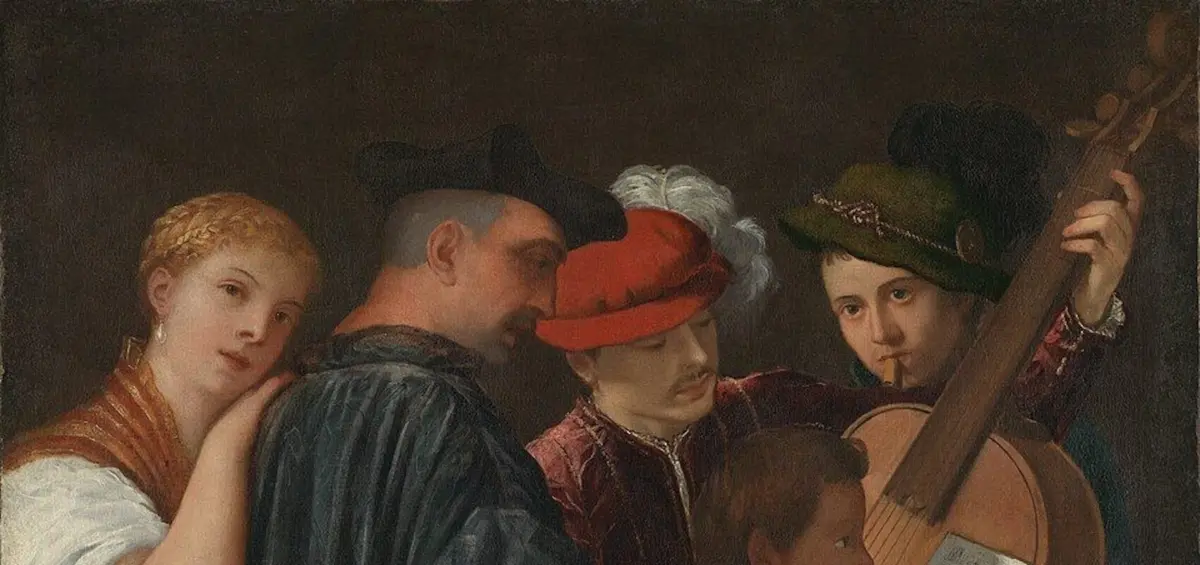
During the late medieval and Renaissance periods, a specific musical genre flourished among Franco-Flemish composers: the déploration (derived from the Latin and French terms for "lament"). Rather than hiding their influences, these master composers openly celebrated them in a sweeping, transgenerational chain of master and pupil.
- Gilles de Bins dit Binchois (c. 1400–1460): A towering figure whose death prompted his pupil, Johannes Ockeghem, to compose a landmark déploration. Ockeghem’s composition famously incorporated borrowed material from Binchois, marking a deliberate act of succession.
- Johannes Ockeghem (c. 1410/1425–1497): Teacher to subsequent masters, setting a standard where grief was communal, hierarchical, and deeply embedded in a moral order.
- Josquin des Prez (c. 1450/1455–1521) and Nicolas Gombert (c. 1495–1560): Continuing the tradition, subsequent generations wrote laments for their own mentors, creating an unbroken polyphonic chain of creative gratitude where each generation wept over and honored its immediate predecessor.
The Classical Lineage: From Liszt to the Modern Conservatory
The unbroken transmission of craft is not merely historical; it operates through tangible, living lineages. A striking personal revelation illustrates this continuity: a modern student studying under Joseph Weingarten, a Hungarian refugee from the 1930s. Weingarten had studied at the Franz Liszt Music Academy in Budapest under Ernst von Dohnányi. Dohnányi, in turn, studied with István Thomán—Liszt’s favorite pupil. Thus, a mid-20th-century piano student was directly connected, through a mere three degrees of pedagogical separation, to Franz Liszt himself. This realization mirrors Frigyes Karinthy’s theory of "Six Degrees of Separation," demonstrating that human connectivity across time is far tighter and more influential than we commonly assume.
The Shift Toward Intellectual Parricide
As modernity progressed, the classical and premodern structures of mentorship steadily eroded:
- The Academic Festschrift: Historically, academic communities honored senior scholars by compiling volumes of essays by colleagues and former doctoral students. Today, commercial publishers resist these collections, and contemporary scholars show dwindling interest, causing the tradition to fade.
- The Rise of the "Anxiety of Influence": Literary theorist Harold Bloom characterized the relationship between a writer and their model not as a harmonious déploration, but as an "Oedipus-like" creative tension driven by the urge to overthrow the father figure.
- The Parricidal Epoch: Modern academia and culture reward repudiation and disruptive innovation over the stewardship of inherited wisdom, replacing the communal architecture of gratitude with isolated psychological self-definition.
Supporting Context & Metrics: The Architecture of Memory
The tension between honoring lineage and embracing parricide spans centuries of philosophy, theology, and sociology.
Classical Antecedents and the Fear of Parricide
The temptation to overthrow the older generation is as old as civilization itself:
- Hesiod’s Theogony: Details the primal cycle of generational violence, where Uranus’s tyranny provokes Cronus to castrate him, and Cronus’s abuse prompts Zeus to overthrow him.
- Plato’s Republic: In Book II, Socrates warns that these foundational myths of divine parricide must be censored or "buried in silence" because, regardless of their historical truth, exposing the young to such concepts is dangerously corrosive to social order.
- The Classical Rebuttal: Roman writers like Cicero and Seneca, alongside early Christian theologians such as St. John Chrysostom, approached generational conflict not by encouraging the overthrow of parents, but by seeking to reform parental passions.
The Biblical Mandate of Continuity
Ancient and scriptural traditions consistently place generational reverence at the center of human stability:
- The Fifth Commandment: "Honor thy father and thy mother" (Exod. 20:12) is designated by St. Paul as "the first commandment with promise" (Eph. 6:2–3)—the promise of long life and creative continuity.
- Paternal Responsibility: Scripture simultaneously warns authority figures against tyranny, as seen in St. Paul’s injunctions: "Fathers, provoke not your children to wrath: but bring them up in the nurture and admonition of the Lord" (Eph. 6:4).
- The Integration of Thought and Spirit: This framework extends beyond biological reproduction into the life of the mind, philosophy, and craft, viewing the son or student not as an independent creator ex nihilo, but as a continuation of the father’s and mentor’s energies.
Premodern vs. Modern Conceptions of Grief and Tribute
| Metric / Dimension | Premodern Déploration (The Chain of Lament) | Modern Tribute (The Psychology of Self-Definition) |
|---|---|---|
| Primary Framework | Moral, hierarchical, and cosmic order | Psychological, individualistic, and interior |
| View of the Deceased | A source of virtue, wisdom, and structural stability | A unique catalyst for the mourner’s personal identity |
| Nature of the Bond | Transgenerational duty, loyalty, and public acknowledgment | Personal emotional resonance and unique self-discovery |
| Direction of Grief | Centripetal: Pulls the mourner back into communal tradition | Centrifugal: Pushes the mourner outward into autonomous self-definition |
| Core Expression | "This person upheld the order that shapes us all." | "This person helped me become who I am." |
Official Statements & Intellectual Perspectives
Reflecting on the reintegration of personal lineage with intellectual history reveals profound insights into human creativity:
"The son cannot create without the father. The creation of the son is but the continuance of the father’s energies. This creative current reaches back into the grandfather’s and great-grandfather’s… You and I are extensions, not new lineages creating out of nothing."
— Reflections on Generational Continuity
Scholars note that rejecting this continuity often stems from a misunderstanding of one’s own intellectual patrimony. For instance, the rejection of rigid disciplines—such as a young person turning away from mathematics—can often mask a displacement of complex feelings toward a parent. Yet, time often brings reconciliation:
- The Economic Lineage: A scholar reflecting on their relationship with an economist father—who could trace his academic lineage through Jacob Marschak and Emil Lederer directly to Carl Menger, founder of the "Austrian School" of economics—realized that even disparate intellectual pursuits are deeply nourished by the received life of the parent.
- The Antidote to Isolation: True generational gratitude acts as an anchor against the modern media-driven attention economy, which demands perpetual presentism. As Ockeghem prayed for Binchois, prayer and remembrance serve as the ultimate antidotes to generational anger and the paragon of thanks.
Future Outlook: Reclaiming the Gift of Inheritance
As modern culture continues to accelerate into digital atomization, artificial intelligence disruption, and social fragmentation, the invitation to participate in a shared human inheritance becomes more urgent than ever.
The future of authentic intellectual, artistic, and spiritual vitality depends on moving beyond the "parricidal era" of radical disruption and intellectual isolation. By abandoning the exhausting pressure to invent oneself out of a vacuum, individuals and institutions can recover the lost grammar of déploration.
Reclaiming this lineage does not mean surrendering originality; rather, it means recognizing that true creativity is an integrated gift. When we embrace our parents, our mentors, our artistic predecessors, and our intellectual ancestors with gratitude rather than resentment, the world opens up. We find ourselves richer in love, deeper in beauty, and firmer in truth—anchored once again in the permanent things that outlast the tyranny of the present.




Comments
Facebook App ID not configured. Please add it in the Customizer.