
Executive Overview
Humanity has long suffered from a persistent, self-imposed limitation: perspective. Conditioned by creature comforts, societal structures, and an innate anthropocentrism, we routinely place ourselves at the center of every narrative, viewing the universe through a remarkably narrow lens. However, stepping outside this human-centric paradigm opens up an entirely new dimension of storytelling.

What happens when literature abandons human protagonists altogether to explore the wild, instinctual, and uncanny perspectives of the animal kingdom? How would a wolf evaluate human domestication? What mythologies and complex societal structures would emerge if the architects of civilization were rabbits? How does a wizard navigate a wand-based magic system entirely devoid of opposable thumbs?

These questions rest at the heart of speculative fiction that subverts traditional tropes by adopting an animal-based viewpoint. By decentering humanity, these narratives offer readers an eye-opening, disquieting, and deeply philosophical look at very human things—ranging from grief, love, and community to societal collapse, magic, and mortality. Below is an investigative examination of seven definitive animal-based fantasies that challenge the boundaries of empathy and redefine the boundaries of speculative fiction.

Detailed Chronology of Animal-Centric Speculative Fiction
The evolution of animal-based fantasy has traversed a fascinating historical trajectory, shifting from allegorical fables to deeply realized, psychologically complex speculative epics.

- The Mythological Foundation (1970s): The modern era of complex animal fantasy arguably solidified with the publication of Richard Adams’s Watership Down in 1972. Moving far beyond traditional anthropomorphic fables, Adams constructed an entire rabbit mythology, language, and geopolitical struggle, establishing that non-human protagonists could carry weighty, epic narratives.
- The Expansion of Subterranean and Ecological Worlds (1979–1980s): Following Adams’s blueprint, authors began exploring the vast, hidden ecosystems operating right beneath human feet. William Horwood’s Duncton Wood (1980) applied Tolkienesque medieval romance and mysticism to a deeply structured society of moles, proving that elaborate world-building could thrive entirely within the animal realm.
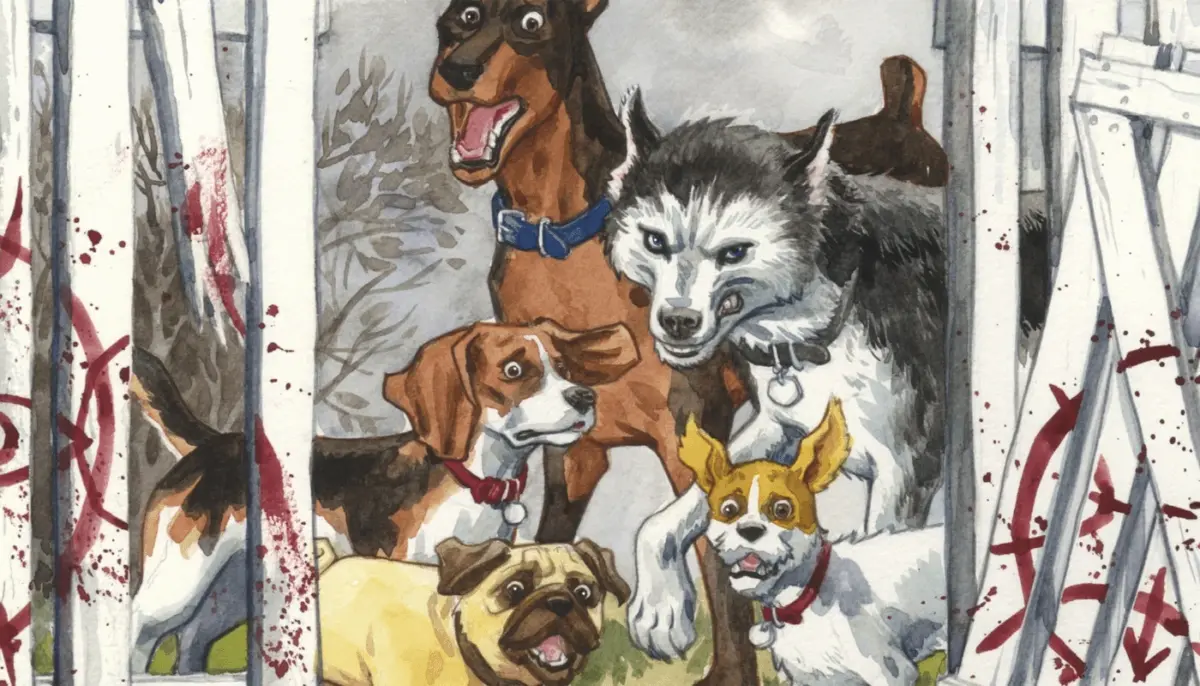
- The Genre-Blending Shift: Urban Fantasy, Horror, and Comic Mediums (1990s): As speculative fiction diversified in the 1990s, animal perspectives infiltrated urban fantasy and horror. Diane Duane expanded her Young Wizards universe with The Book of Night with Moon (1997), introducing feline spellcasters guarding Manhattan. Concurrently, Evan Dorkin and Jill Thompson launched Beasts of Burden (2003 origin in comics, later collected in omnibuses), blending occult horror with the domestic heroism of neighborhood dogs and cats.
- The Modern Literary Renaissance and Apocalyptic Satires (2010s–Present): In recent years, authors have pushed the stylistic boundaries of animal fiction further into literary myth-making and dark satire. John Crowley’s Ka: Dar Oakley in the Ruin of Ymir (2017) elevated the crow perspective to sweeping, centuries-spanning modern mythology. Meanwhile, Kira Jane Buxton’s Hollow Kingdom (2019) infused the zombie apocalypse with a foulmouthed, pet-centric perspective, paving the way for dark, visceral explorations like Scott Hawkins’s highly anticipated sophomore novel, Blacktail.
Supporting Context & Metrics: Analyzing the Inhuman Perspective
To understand the enduring appeal and literary mechanics of animal-based fantasy, one must examine the narrative devices deployed by authors to bridge the gap between human thematic depth and animal behavioral reality.

The Cognitive Balance Sheet
Writing from an animal perspective requires balancing verisimilitude (how animals actually perceive and interact with the world) with narrative comprehension (making the story accessible to human readers). Authors typically manipulate three primary variables:

- Sensory Architecture: Replacing human sight-and-sound dominance with hyper-developed olfactory, auditory, and electromagnetic senses (e.g., the feline "worldgates" in Diane Duane’s work or the "Aura" network in Kira Jane Buxton’s writing).
- Socio-Political Organization: Projecting complex societal frameworks—ranging from mole feudalism (Duncton Wood) to rabbit parliamentary epics (Watership Down)—onto natural behavioral patterns.
- The Human Factor: Framing human civilization not as the default state of reality, but as an unpredictable, dangerous, and often incomprehensible force of nature (frequently interpreted as gods, monsters, or catalysts for ecological disaster).
Deep-Dive Reviews: Seven Definitive Animal-Based Fantasies
1. Blacktail by Scott Hawkins
- The Premise: The hotly anticipated second novel by cult favorite Scott Hawkins (The Library at Mount Char) tackles a dark fantasia from the visceral point of view of animals.
- The Narrative Experience: Within moments of its bleak opening, Blacktail transitions from a folk horror interlude featuring a car as a terrifying deity, to Blacktail’s awkward and surprisingly funny first mating experience with his domesticated dog lover, Renren. The narrative plunges directly into weird horror when Renren dies of a botched abortion. Prompted by this tragedy, Blacktail slaughters her humans, curses God, and embarks on a desperate quest to wake the Forest God.
- Critical Takeaway: Wrenching and heartfelt, Hawkins’s work delivers sweet moments, off-kilter comedy, and brutal horror in rapid succession. (Recommendation: Pair with the album Deathconsciousness or the black metal stylings of Wolves in the Throne Room).
2. Watership Down by Richard Adams
- The Premise: Richard Adams’s timeless classic begins deceptively simply with two rabbits foraging, only to immediately unveil its true epic scale when one rabbit experiences prophetic visions of a field soaked in blood.
- The Narrative Experience: Hazel and his nervous, seer brother Fiver are plunged into a dark mythological odyssey after human construction destroys their home. Forced to flee, they lead a band of companions on a perilous quest to find a new warren. Adams constructs a vast, immersive culture complete with its own language, mythology, and parallels to classical Greek and Roman epics.
- Critical Takeaway: Watership Down brilliantly balances pastoral beauty with raw brutality, serving as an enduring masterclass in storytelling about gods, monsters, and heroism seen through the eyes of small, vulnerable creatures.
3. Duncton Wood by William Horwood
- The Premise: Functioning as a medieval romantic fantasy counterpart to Adams’s mythological scope, Duncton Wood transports readers into a subterranean society of moles living within a sacred English woodland.
- The Narrative Experience: Fated lovers Bracken and Rebecca meet in the shadow of one of the wood’s great standing stones, drawing them into the complex political intrigue of the Duncton Moles’ Ancient System—a labyrinthine network of tunnels running beneath the forest. Horwood’s Tolkienesque approach yields rich world-building, where owls loom as mythological monsters and the characters survive on a diet of earthworms.
- Critical Takeaway: Blending medieval history, romanticism, and English mysticism, Horwood creates a multilayered historical epic deeply rooted in the natural world.
4. Beasts of Burden by Evan Dorkin and Jill Thompson
- The Premise: Burden Hill is no ordinary pastoral countryside; it is a profound nexus for paranormal phenomena, haunted by the ghosts of missing puppies, local witchcraft, demonic hellhounds, and the eldritch abomination known as the Rat King.
- The Narrative Experience: Fortunately, Burden Hill boasts an elite defense force: the Wise Dogs Society. Composed of local dogs, cats, and neighborhood pets, this group stands ready to investigate and combat supernatural threats. Jill Thompson’s picturesque art style gracefully handles moments of grotesque horror, matching the eerie, high-stakes storytelling crafted by Evan Dorkin.
- Critical Takeaway: Balancing terrifying supernatural encounters with heartwarming domestic moments, Beasts of Burden proves that courage wears many coats of fur.
5. The Book of Night with Moon by Diane Duane
- The Premise: Set within Duane’s expansive Young Wizards universe, this novel follows a specialized cadre of feline wizards tasked with managing magical threats across Manhattan.
- The Narrative Experience: Rhiow and her fellow cat-wizards utilize their heightened perceptions to defend the city from unseen dangers and maintain the dimensional "worldgates" bridging different realms. Duane applies an anthropologist’s rigor to cat culture, rendering human names and concepts into distinct feline phonemes while emphasizing their methodical, instinctive approach to magic.
- Critical Takeaway: The novel introduces a refreshing layer of strangeness to urban fantasy, offering a feline-centric look at dumpster gastronomy, neighborhood nuisances, and dark cosmic forces.
6. Ka: Dar Oakley in the Ruin of Ymir by John Crowley
- The Premise: At the edge of a world slowly collapsing under ecological disaster, a sick old man rescues and nurses a dying crow back to health.
- The Narrative Experience: In gratitude, the crow—Dar Oakley, the first of his kind to bear a name—shares his extraordinary life story. Spanning over two thousand years from prehistory to the modern era, Dar stole immortality for himself, living a storied existence bridging the worlds of Crows and People, between Ka and Ymir.
- Critical Takeaway: Steeped in appropriate melancholy regarding long lives and the necessity of storytelling, Crowley’s lyricism elevates the book into a modern mythological masterpiece sitting comfortably between retro-fantasy fable and profound poetry.
7. Hollow Kingdom by Kira Jane Buxton
- The Premise: Within the opening chapters of the novel, S.T.’s human best friend, Big Jim, loses an eyeball—prompting their dimwitted bloodhound roommate, Dennis, to attempt to eat it.
- The Narrative Experience: As Big Jim shumbles around in circles drooling, it becomes glaringly apparent to Seattle’s domestic pet population that something has gone terribly wrong with humanity. Pets must navigate a rapidly rewilding city alongside shambling hordes of the undead. Buxton utilizes a fiercely unique narrative voice through her foulmouthed crow narrator, S.T., and concepts like the avian information network known as "Aura."
- Critical Takeaway: Equal parts quirky and visceral, Hollow Kingdom delivers a biting, pet’s-eye perspective on the apocalypse that breathes new life into tired zombie tropes.
Future Outlook: The Evolution of Non-Human Storytelling
As contemporary literature continues to grapple with ecological anxieties, the climate crisis, and a growing fatigue with traditional anthropocentric narratives, animal-based fantasy is poised for significant expansion. Authors are increasingly utilizing non-human viewpoints not merely as whimsical allegories, but as critical philosophical tools to critique human civilization, explore deep time, and interrogate our ethical relationship with the natural world.

Future contributions to the genre are expected to further dissolve the boundaries between literary fiction, weird horror, and speculative world-building. By forcing readers to inhabit the minds of crows, moles, dogs, and cats, these narratives challenge us to look beyond our immediate horizons—reminding us that the human story is only one small chapter in a vast, wild, and wondrous planetary library.



Comments
Facebook App ID not configured. Please add it in the Customizer.